Wayground logo

Free Printable Worksheets

Font size

S
M
L
XL
Worksheets

Bonding and Naming Practice

Total questions: 60

Worksheet time: 44mins

Name
Class
Date
1.

CaCl2 is an example of what type of bond?

a)

Covalent

b)

Metallic

c)

Ionic

2.

Which category of elements usually form negative ions?

a)

metals

b)

nonmetals

c)

metalloids

d)

noble gases

3.

What category of element usually forms a positive ion?

a)

Metals

b)

Nonmetals

c)

metalloids

d)

Noble gases

4.

What is the ionic formula for a bond between Calcium and Phosphorus?

a)

Ca2P3

b)

Ca3P2

c)

Ca2P5

d)

P5Ca2

5.

What is the chemical formula for Lithium Nitride?

a)

Li3N

b)

LiN3

c)

NLi3

d)

N3Li

6.

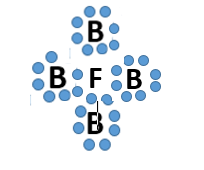
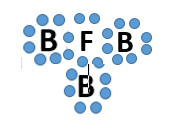
What is the correct Lewis structure for BF3?
a)
b)
c)
d)

BF3 (The formula is the Lewis Structure)

7.

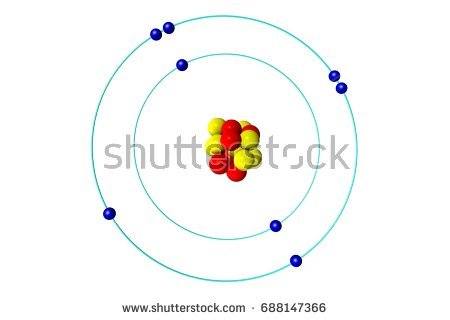
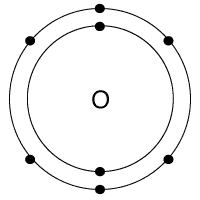
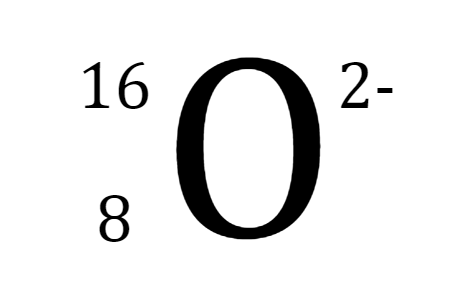
Which is the correct Lewis Structure for oxygen?

a)
b)
c)
d)
8.

Predict the bond between Mg and Cl

a)

covalent

b)

ionic

c)

metallic

d)

none of the above

9.

What happens when magnesium loses 2 electrons?

a)

It stabilizes to a net charge of 0

b)

It turns into an atom

c)

It becomes negatively charged

d)

It becomes positively charged

10.

What do positive ions tend to do?

a)

lose electrons

b)

gain electrons

c)

lose protons

d)

gain protons

11.

Which bond does this picture best represent?

a)

Metallic bond

b)

ionic bond

c)

covalent bond

d)

James Bond

12.

Covalent bonding is between a

a)

nonmetal and nonmetal

b)

metal and nonmetal

c)

metal and metal

d)

It depends on the situation

13.

Ionic bonding is between a

a)

nonmetal and nonmetal

b)

metal and nonmetal

c)

metal and metal

d)

Depends on the situation

14.

Why do atoms bond?

a)

They typically don't bond

b)

To add or take away energy levels

c)

To have a full valance shell.

d)

To have a full inner shell

15.
Why do bonds form?
a)
To fill the valence shell of electrons for the elements involved
b)
to release energy stored in the bonds
c)
because whenever you mix two chemicals, there will be a reaction
d)
because of attraction
16.
A substance which has a high melting point, conducts electricity when dissolved in water, and has a crystalline structure probably has what type of bond?
a)
Ionic
b)
Metallic
c)
Covalent
d)
Crystalline
17.
What type of bond is illustrated above?
a)
Metallic
b)
Ionic
c)
Covalent
d)
Wiggly
18.

Bonds formed by transferring electrons from one atom to another are

a)

ionic

b)

metallic

c)

non polar covalent

d)

covalent

19.

Bonds formed by sharing electrons between atoms are

a)

ionic

b)

metallic

c)

covalent

d)

dipole-dipole

20.

A compound is made of two nonmetals. It is

a)

ionic

b)

metallic

c)

covalent

21.

A compound forms between a metal and a nonmetal. It is

a)

ionic

b)

metallic

c)

covalent

22.

A compound that is a poor conductor and has low melting and boiling points is most likely

a)

ionic

b)

metallic

c)

covalent

23.

Predict the bond that is formed between Phosophorus and Chlorine?

a)

Ionic

b)

Covalent

c)

Metallic

d)

H-bond

24.

Which of the pair of elements form an ionic bond?

a)

Magnesium and Oxygen

b)

Magnesium and Sodium

c)

Iron and Zinc

d)

Nitrogen and Hydrogen

25.
Name this compound:   MgS
a)
Sulfur Magnesium
b)
Magnesium Sulfate
c)
Magnesium Sulfur
d)
Magnesium Sulfide
26.
What is the chemical name for the compound with the formula Na₂S?
a)
sodium sulfide
b)
sodium fluoride
c)
magnesium sulfide
d)
lithium oxide
27.
Which of the following gives the correct chemical formula for the compound Magnesium Phosphide?
a)
Mg2P3
b)
MgP
c)
Mg3P2
d)
MgP2
28.
Which of the following gives the correct chemical formula for the compound Calcium Nitride?
a)
Ca2N3
b)
CaN
c)
Ca3N2
d)
CaN2
29.
What is the correct chemical name for the molecular compound:  SF4
a)
Sulfur Fluoride
b)
Sulfur TetraFluoride
c)
TetraSulfide Fluoride
d)
Sulfur (IV) Fluoride
30.
What is the correct chemical name for the molecular compound:  CS2
a)
Carbon Sulfide
b)
Carbon diSulfide
c)
diCarbide diSulfide
d)
Carbon (II) Sulfide
31.
A(n) _________ is an ion with a positive (+) charge.
a)
anion
b)
cation
c)
ion
d)
solute
32.
When an atom loses an electron, it becomes a:
a)
positive ion
b)
negative ion
c)
neutral ion
d)
neutral atom
33.
What is the charge on a Hydrogen ion?
a)
+1
b)
1
c)
2
34.

In the Lewis Dot Structure, how many dots should Fluorine have?

a)

3

b)

5

c)

7

d)

8

35.

What is the name of the compound SO2

a)

Monosulfate oxide

b)

Sulfur Dioxide

c)

Monosulfur dioxide

36.
What is the charge on the calcium ion?
a)
1+
b)
2+
c)
2-
d)
1-
37.
What is the name for the NO3- ion?
a)
nitrate ion
b)
nitrite ion
c)
nitrogan ion
d)
nitride ion
38.
Which of the following is the correct Lewis structure for the compound PBr3?
a)
structure A
b)
structure B
c)
structure C
d)
structure D
39.
According to the octet rule most elements need _______ valence electrons.
a)
2
b)
8
c)
6
d)
18
40.

How do you write the formula for Sodium Chloride?

a)

NACL

b)

NaCl

c)

nacl

d)

KI

41.

Which pair of elements should form an ionic bond?

a)

Carbon and Oxygen

b)

Sodium and Fluorine

c)

Iron and Chromium

d)

Xenon and Silicon

42.
Ca2+ and N3- create...
a)
Ca2N3
b)
Ca3N2
c)
CaN3
d)
Ca2N
43.
What is the NAME of....
Na2S
a)
sodium (II) sulfide
b)
sodium sulfide
c)
disodium sulfide
d)
sodium sulfur
44.
What is the NAME of....
Mg3N2
a)
magnesium (III) nitride
b)
magnesium (II) nitride
c)
magnesium (II) nitrogen
d)
magnesium nitride
45.
What is the NAME of...
CrN
a)
chromium (II) nitride
b)
chromium (III) nitride
c)
chromium nitride
d)
chromium (I) nitride
46.
What is the NAME of...
PtO2
a)
platinum (II) oxide
b)
platinum (IV) oxide
c)
platinum oxide
d)
platinum (I) oxide
47.
What is the FORMULA for....
beryllium iodide
a)
Be2I
b)
BeI
c)
BeI2
d)
BI2
48.
The name of the compound NH4F is
a)
Nitrogen hydrogen fluorine
b)
Ammonium Fluoride
c)
Ammonia Fluoride
d)
Nitrogen tetrahydride fluoride
49.
The name of Al₂(SO₄)₃ is
a)
aluminum sulfur oxide
b)
aluminum sulfate
c)
aluminum trisulfate
d)
aluminum (III) sulfate
50.
The chemical formula of sodium sulfate is
a)
S₂SO₄
b)
NaSO₂
c)
NaSO₄
d)
Na₂SO₄
51.
What is the formula for tin (II) nitride?
a)
Sn3N2
b)
SnN2
c)
Sn3N
d)
SnN
52.
What is the formula for Magnesium Carbonate?
a)
MgCO3
b)
Mg(CO3)2
c)
Mg2CO6
d)
Mg2CO3
53.
Fe+3 combines with S-2 to form 
a)
Fe+4(S)=3
b)
Fe2S4
c)
Fe2S3
d)
Fe3S2
54.

Name the following ionic compound: LiNO3

a)

lithium nitrate

b)

lithium III nitrate

c)

lithium nitride

d)

lithium nitrogen oxide

55.
What is the correct formula for Sodium Oxide?
a)
NaO
b)
NaO2
c)
Na2O
d)
Na2O2
56.

What is the name of Ca(NO3)2

a)

calcium nitrite

b)

calcium II nitrate

c)

calcium nitrate

d)

calcium nitride

57.
The chemical formula of Iron (III)bromide is
a)
FeBr
b)
Fe(III)Br
c)
FeBr₃
d)
Fe₂Br₃
58.
What is the name of the following compound; FeCrO4?
a)
iron chromate
b)
iron dichromate
c)
iron (II) chromate
d)
Iron (II) dichromate
59.
NiSO4 is known as-
a)
nickel (II) sulfate
b)
nickel (II) sulfite
c)
nickel (II) sulfide
d)
nickel sodium tetraoxide
60.
Give the chemical formula for oxygen tetrabromide
a)

OBr4

b)
O2Br6
c)

OBr2

d)

O3Br6