
 Worksheets
Year 10 Business Test 1
Total questions: 30
Worksheet time: 1hrs 10mins
Demand refers to the willingness and (a) of buyers to purchase goods
The Law of Supply states that
As price increases quantity supplied increases
As price increases quantity supplied decrease
As price increases quantity demanded decreases
As price increases the happier you get
What are the four factors of production?
Land, labor, capital, and entrepreneurship
Water, wind, solar, and natural gas
Food, shelter, clothing, and healthcare
Education, entertainment, transportation, and communication
Briefly (approx. 2 sentences) define the following:
The economic problem
Briefly (approx. 2 sentences) define the following:
An Economic System
Briefly (approx. 2 sentences) define the following:
Price Equilibrium
Briefly (approx. 2 sentences) define the following:
Market Economy
Briefly (approx. 2 sentences) define the following:
Planned Economy:
Label the graph
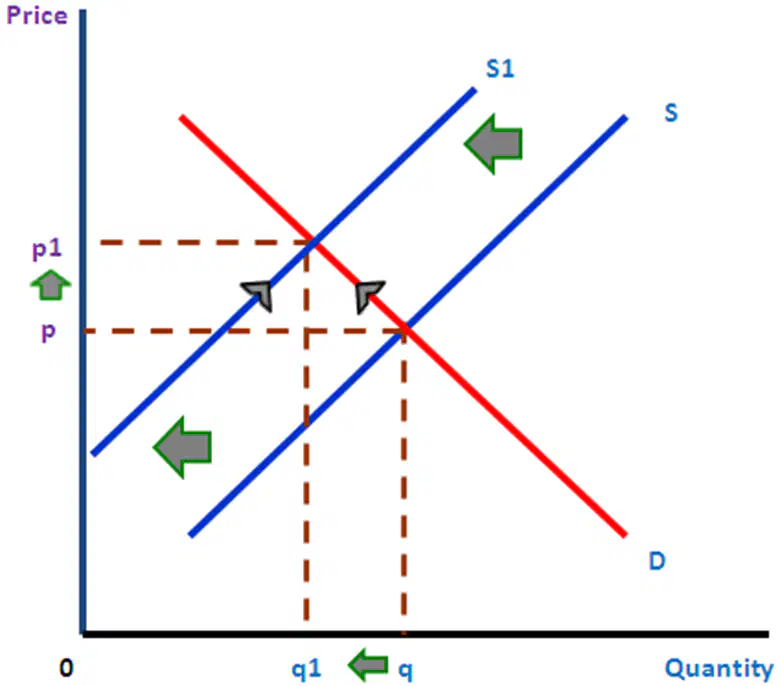
Describe the situation that this graph is reflecting. What is occurring in the graph?

Describe the situation that this graph is reflecting. What is occurring in the graph?
Growing Tomatoes
If everything is equal (no change up or down of supply and demand) everyone is happy. The grower is happy when they can sell all tomatoes and doesn’t have to destroy what is left unsold. And the buyers are happy that the price of tomatoes didn’t skyrocket.
1. Draw a graph that represents this situation, as described.

Growing Tomatoes
If everything is equal (no change up or down of supply and demand) everyone is happy. The grower is happy when they can sell all tomatoes and doesn’t have to destroy what is left unsold. And the buyers are happy that the price of tomatoes didn’t skyrocket. However, there is a severe water shortage one year and the tomatoes all die.
2. Draw a graph that represents this situation, as described.
Growing Tomatoes
If everything is equal (no change up or down of supply and demand) everyone is happy. The grower is happy when they can sell all tomatoes and doesn’t have to destroy what is left unsold. And the buyers are happy that the price of tomatoes didn’t skyrocket. However, there is a severe water shortage one year and the tomatoes all die. Another year later, a farm next door to the farmer opens and has twice the number of tomatoes for sale.
3. Draw a graph that represents this situation, as described.

1. What are the economic factors affecting supply and demand in this scenario? (2 to 3 sentences)
Read the following case study to answer the question above:
New iPhone
Apple has released the brand-new iPhone that does more than the previous iPhone. The maker buys advertising on TV, magazines and billboards. Young people decide that they just have to have this phone and they are willing to pay top dollar for it.
2. With an increase in demand, what does the company need to do to keep profitable? (2 to 3 sentences)
Read the following case study to answer the question above:
New iPhone
Apple has released the brand-new iPhone that does more than the previous iPhone. The maker buys advertising on TV, magazines and billboards. Young people decide that they just have to have this phone and they are willing to pay top dollar for it.
3. What can the company do to the price? Why would they respond in this way? (2 to 3 sentences)
Read the following case study to answer the question above:
New iPhone
Apple has released the brand-new iPhone that does more than the previous iPhone. The maker buys advertising on TV, magazines and billboards. Young people decide that they just have to have this phone and they are willing to pay top dollar for it.
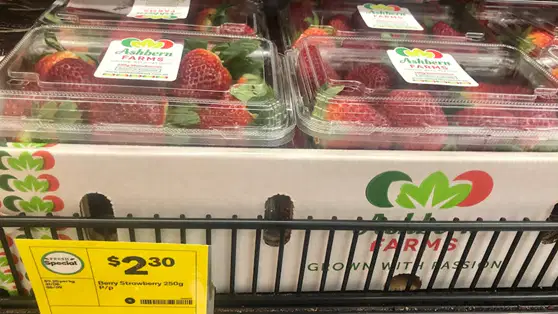
1. Why do the prices of strawberries fluctuate (change) ? (2 to 3 sentences)
Read the following case study to answer the question above:
Strawberry prices drop as supply increases, growers ask for consumer support at the checkout
~ By Jennifer Nichols [2 Sep 2022]
Key points:
• The price of strawberry punnets has dropped after a spike in June caused by flooding in growing areas
• With an increase in supply, farmers are asking consumers to buy extra punnets to help move them off shelves
• Growers are battling to recover after flooding, rain and rising production costs
From a record high of $11.99 for a 250-gram punnet in June, strawberry supply has now increased with the onset of spring, and Queensland-grown varieties are selling for as low as $2.30 a punnet.
Farmers who are still trying to recoup crippling losses caused by the combination of flooding and spiralling freight, fuel, fertiliser, plastic punnet and labour costs, are asking consumers for help by taking advantage of cheaper prices — and by moving fruit off shelves in stores.
"Spring has started. It's time to get healthy, they're high in vitamin C. It's a great time to do anything with strawberries," Suncoast Harvest owner Di West said.
She said suggested "smashing" strawberries into smoothies and juices, freezing them, making jams and sauces or mashing them into pink pancakes.
2. What are the causes for the shift in price? (2 to 3 sentences)
Read the following case study to answer the question above:
Strawberry prices drop as supply increases, growers ask for consumer support at the checkout
~ By Jennifer Nichols [2 Sep 2022]
Key points:
• The price of strawberry punnets has dropped after a spike in June caused by flooding in growing areas
• With an increase in supply, farmers are asking consumers to buy extra punnets to help move them off shelves
• Growers are battling to recover after flooding, rain and rising production costs
From a record high of $11.99 for a 250-gram punnet in June, strawberry supply has now increased with the onset of spring, and Queensland-grown varieties are selling for as low as $2.30 a punnet.
Farmers who are still trying to recoup crippling losses caused by the combination of flooding and spiralling freight, fuel, fertiliser, plastic punnet and labour costs, are asking consumers for help by taking advantage of cheaper prices — and by moving fruit off shelves in stores.
"Spring has started. It's time to get healthy, they're high in vitamin C. It's a great time to do anything with strawberries," Suncoast Harvest owner Di West said.
She said suggested "smashing" strawberries into smoothies and juices, freezing them, making jams and sauces or mashing them into pink pancakes.
3. What are the economic factors affecting supply and demand in this article? (2 to 3 sentences)
Read the following case study to answer the question above:
Strawberry prices drop as supply increases, growers ask for consumer support at the checkout
~ By Jennifer Nichols [2 Sep 2022]
Key points:
• The price of strawberry punnets has dropped after a spike in June caused by flooding in growing areas
• With an increase in supply, farmers are asking consumers to buy extra punnets to help move them off shelves
• Growers are battling to recover after flooding, rain and rising production costs
From a record high of $11.99 for a 250-gram punnet in June, strawberry supply has now increased with the onset of spring, and Queensland-grown varieties are selling for as low as $2.30 a punnet.
Farmers who are still trying to recoup crippling losses caused by the combination of flooding and spiralling freight, fuel, fertiliser, plastic punnet and labour costs, are asking consumers for help by taking advantage of cheaper prices — and by moving fruit off shelves in stores.
"Spring has started. It's time to get healthy, they're high in vitamin C. It's a great time to do anything with strawberries," Suncoast Harvest owner Di West said.
She said suggested "smashing" strawberries into smoothies and juices, freezing them, making jams and sauces or mashing them into pink pancakes.

1. Why did the demand of toilet paper increase? (2 to 3 sentences)
Read the following case study to answer the question above:
How did the Coronavirus Create a Toilet Paper Shortage?
May 19, 2020 Andrew Moore
Although the country is slowly reopening amid the coronavirus pandemic, there’s one household item you may still find missing on grocery store shelves: Toilet paper.
Toilet paper became a coveted item in late March when many cities and states across the country issued lockdowns in response to the coronavirus pandemic, prompting people to purchase large amounts of household goods.
Nearly half of all grocery stores were out of stock of toilet paper for some part of the day on April 19. Many attribute the shortage to disruptions in the supply chain. But the supply chain was — and remains — strong,
However, because grocery stores and other retailers usually only keep several weeks’ worth of toilet paper in their warehouses, the sudden increase in demand — largely fuelled by panic-buying and hoarding — has quickly depleted stocks.
“Consumers are experiencing nervousness and they are buying more than they should, depleting inventories of an industry that is very lean,” Gonzalez said. “It will take a couple of weeks for people to understand they have enough, and the inventories will increase on the shelves.”
Another reason for the sudden increase in demand is that people actually do need more toilet paper during the pandemic. The hygiene paper industry is divided into two markets: consumer (the kind of toilet paper you use at home) and commercial (bulky rolls of thin paper that you find in public restrooms, offices, restaurants and hospitals).
With people staying at home because of business closings and shelter-in-place orders, the demand for consumer toilet paper has skyrocketed while the demand for commercial toilet paper has decreased.
2. What is the economic problem represented in the situation in the article? (2 to 3 sentences)
Read the following case study to answer the question above:
How did the Coronavirus Create a Toilet Paper Shortage?
May 19, 2020 Andrew Moore
Although the country is slowly reopening amid the coronavirus pandemic, there’s one household item you may still find missing on grocery store shelves: Toilet paper.
Toilet paper became a coveted item in late March when many cities and states across the country issued lockdowns in response to the coronavirus pandemic, prompting people to purchase large amounts of household goods.
Nearly half of all grocery stores were out of stock of toilet paper for some part of the day on April 19. Many attribute the shortage to disruptions in the supply chain. But the supply chain was — and remains — strong,
However, because grocery stores and other retailers usually only keep several weeks’ worth of toilet paper in their warehouses, the sudden increase in demand — largely fuelled by panic-buying and hoarding — has quickly depleted stocks.
“Consumers are experiencing nervousness and they are buying more than they should, depleting inventories of an industry that is very lean,” Gonzalez said. “It will take a couple of weeks for people to understand they have enough, and the inventories will increase on the shelves.”
Another reason for the sudden increase in demand is that people actually do need more toilet paper during the pandemic. The hygiene paper industry is divided into two markets: consumer (the kind of toilet paper you use at home) and commercial (bulky rolls of thin paper that you find in public restrooms, offices, restaurants and hospitals).
With people staying at home because of business closings and shelter-in-place orders, the demand for consumer toilet paper has skyrocketed while the demand for commercial toilet paper has decreased.
3. What are the market, supply and demand factors affecting the situation below? (2 to 3 sentences)
Read the following case study to answer the question above:
How did the Coronavirus Create a Toilet Paper Shortage?
May 19, 2020 Andrew Moore
Although the country is slowly reopening amid the coronavirus pandemic, there’s one household item you may still find missing on grocery store shelves: Toilet paper.
Toilet paper became a coveted item in late March when many cities and states across the country issued lockdowns in response to the coronavirus pandemic, prompting people to purchase large amounts of household goods.
Nearly half of all grocery stores were out of stock of toilet paper for some part of the day on April 19. Many attribute the shortage to disruptions in the supply chain. But the supply chain was — and remains — strong,
However, because grocery stores and other retailers usually only keep several weeks’ worth of toilet paper in their warehouses, the sudden increase in demand — largely fuelled by panic-buying and hoarding — has quickly depleted stocks.
“Consumers are experiencing nervousness and they are buying more than they should, depleting inventories of an industry that is very lean,” Gonzalez said. “It will take a couple of weeks for people to understand they have enough, and the inventories will increase on the shelves.”
Another reason for the sudden increase in demand is that people actually do need more toilet paper during the pandemic. The hygiene paper industry is divided into two markets: consumer (the kind of toilet paper you use at home) and commercial (bulky rolls of thin paper that you find in public restrooms, offices, restaurants and hospitals).
With people staying at home because of business closings and shelter-in-place orders, the demand for consumer toilet paper has skyrocketed while the demand for commercial toilet paper has decreased.
If automobile manufacturers are producing cars faster than people want to buy them:
there is an excess supply and price can be expected to decrease.
there is an excess supply and price can be expected to increase.
there is an excess demand and price can be expected to decrease.
there is an excess demand and price can be expected to increase.
If a computer software company introduces a new program and finds that orders from wholesalers far exceed the number of units that are being produce:
there is an excess supply and price can be expected to decrease.
there is an excess supply and price can be expected to increase.
there is an excess demand and price can be expected to decrease.
there is an excess demand and price can be expected to increase.
Market equilibrium refers to a situation in which market price
(a)
If the price of a good increases while the quantity of the good exchanged on markets increases, then the most likely explanation is that there has been (a)
If the price of a good increases while the quantity of the good exchanged on markets decreases, then the most likely explanation is that there has been (a)
An increase in the demand for a good will cause
(a)
An increase in the supply of a good will cause
(a)

