
 Worksheets
Evolution Unit Review
Total questions: 51
Worksheet time: 42mins
What is evolution?
An idea that all species are related and change gradually over time
Man came from gorillas
it is a fight between species
An idea that all organisms are alike
What did Darwin notice was different about the Finches on each island?
they had different wings
they had different beak shapes
They had different coloring
All the finches were the same
survival of the fittest
use or disuse
acquired characteristics are inherited
Who would have stated "acquired traits" such as a giraffe needing a long neck so they stretch it over time
Darwin
Lamarck
What idea did Thomas Malthus contribute to Darwin's hypothesis?
Species evolve by using or losing their traits
Human population will increase faster than food and other resources
Natural selection is the driving force to evolution
That Earth changes at a constant rate by natural processes
Who is considered the co-founder of evolution and said that the driving force for evolution was natural selection?
Alfred Wallace
Charles Darwin
Thomas Malthus
Gregor Mendel
Who hypothesized that Earth has, and still is, being constantly changed due to natural forces?
Charles Darwin
Charles Lyell
Alfred Wallace
James Hutton

Who am I? I wrote Darwin about my theory of natural selection. He decided to publish his book before I could.
John Hutton
Charles Lyell
Alfred Russel Wallace
John Baptiste LaMarck
Thomas Malthus

Who am I? I wrote about human populations. Darwin built off of my research and came up with the idea of natural selection.
John Hutton
Charles Lyell
Alfred Russel Wallace
John Baptiste LaMarck
Thomas Malthus

Who am I? My idea was called the inheritance of acquired traits. Darwin disagreed with me but did believe traits could be passed down.
John Hutton
Charles Lyell
Alfred Russel Wallace
John Baptiste LaMarck
Thomas Malthus
Which type of cell is NOT capable of passing on a mutation to offspring?
somatic (body) cell
gamete (sex cell)
Species have adaptations over time that increase fitness.
True
False

How many genetic variants of E. coli were present in the culture from the initial swab?
1
2
3
4

What variants of E. coli are found on the dish grown with triclosan? (the dish with triclosan is the one on the right)
Only Variant s
Only Variant R
Only Variant Q
All 4 Variants

What adaptation is represented by the image?
Camouflage
Beak Design
Hibernation
Seed Dispersal
Organisms that can breed with each other are the same
population
gene pool
species
community
A population is a group of individuals of the same species that
that do not interact
that do not breed
that live anywhere.
live in the same area.
If a genetic trait supports fitness, its frequency will
remain constant
decrease
increase

Which of the following describes a population?
The total number of people, animals, and plants in New York City
The total number of apartments in New York City
The total number of people living in New York City
The amount of water in the Hudson River

Will competition increase or decrease the population of a species of animals?
Decrease
Increase
Fill in the blanks: A _________ adaptation is the way an animal acts in order to help them survive.
Physical
Behavioral
Simple
Memory
What type of adaptation affects body chemistry and metabolism?
Behavioral
Physiological
Structural

Physiological
Structural
Behavioral

Physiological
Structural
Behavioral
Which is NOT an example of mimicry:
The fur of an arctic fox turns white in winter to match the snow
An alligator snapping turtle's tonge looks like a worm, so he lures fish to his mouth
A bad tasting butterfly & a good tasting butterfly look similar, so birds don't eat either kind

Label the natural selection graphs correctly...
1 Stabilizing, 2 Directional, 3 Disruptive
1 Disruptive, 2 Stabilizing, 3 Directional
1 Directional, 2 Stabilizing, 3 Disruptive

Women often have complications during labor while giving birth to very large babies, whereas very small babies tend to be underdeveloped. As a result, medium sized babies are the ones that end up surviving to adulthood.
Stabilizing
Directional
Disruptive

the selection pressure favors the extreme phenotypes, dividing the population into 2 distinct groups
directional selection
stabilizing selection
disruptive selection

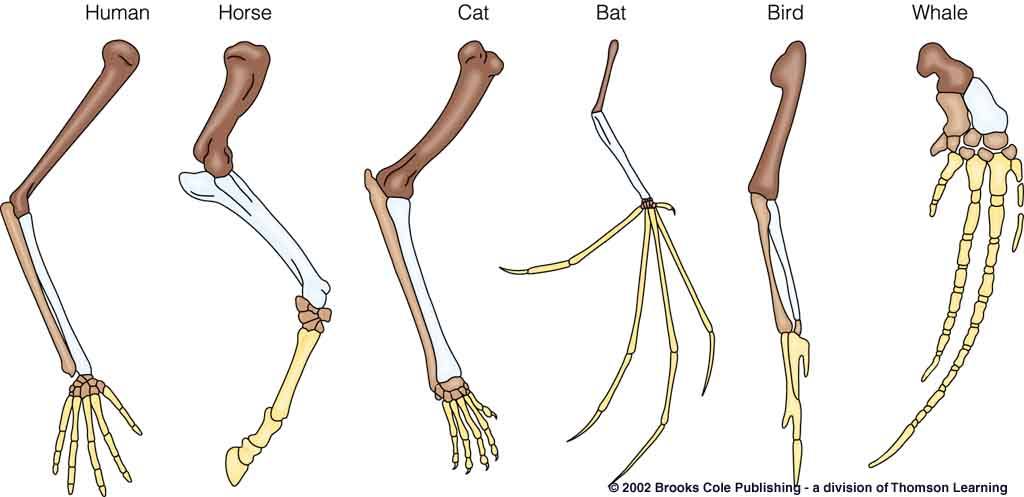
The three species pictured share a common ancestor and have adapted so that each lives in a different environment. This is an example of
Law of Superposition
Evolutionary Arms Race
Divergent Evolution
Convergent Evolution
Ants are the correct size and weight needed to open the flowers for the peony plant. The peony plant provides food for the ant and the ant fertilizes the peony’s flowers
Convergent
Divergent
Coevolution
When unrelated species evolve similar characteristics because they live in similar
environments
Divergent Evolution
Speciation
Convergent Evolution
Punctuated equilibrium
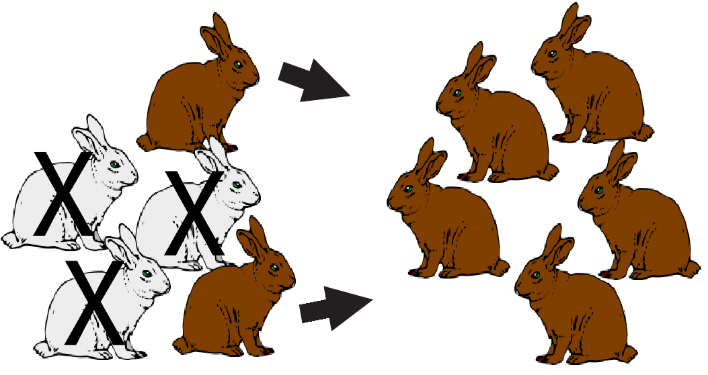
Occurs when a small group of individuals colonizes a new habitat.
Gene Pool
Mitosis
Speciation
Founders Effect
If all 5 Hardy-Weinberg assumptions are true, a population is said to be in genetic equilibrium. This means
it is evolving
it is not evolving

When two organisms evolve in response to each other, such as with bees and flowers.
Coevolution
Gradualism
Sexual selection
Divergent Evolution

Which species is most closely related to species D?
A
B
C

What characteristics do all of these animals have in common?
Vertebrate
Lungs
Endothermic
Mammal

What do both the squirrel and lion have in common that the other animals do not?
They are both vertebrates
They both have lungs
They are both mammals
They both lose their canine teeth.

