
 Worksheets
Radioactivity quiz
Total questions: 83
Worksheet time: 2hrs 58mins
What is a beta particle made of?
One proton
A helium particle
One electron
One proton and one neutron
Which of these processes describes a nuclear fusion reaction?
A nucleus absorbs energy to produce lighter nuclei.
A nucleus splits to produce energy and lighter nuclei
Two nuclei bind together to produce energy and heavier nuclei.
Two nuclei bind together to produce energy and a lighter nuclei.
Of the main types of radiation emitted from naturally radioactive isotopes, which is the hardest to block?
Alpha deca
Gamma Decay
Beta decay
They are all blocked using the same method
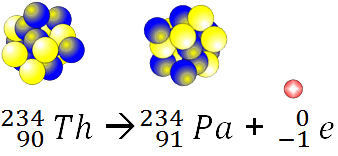
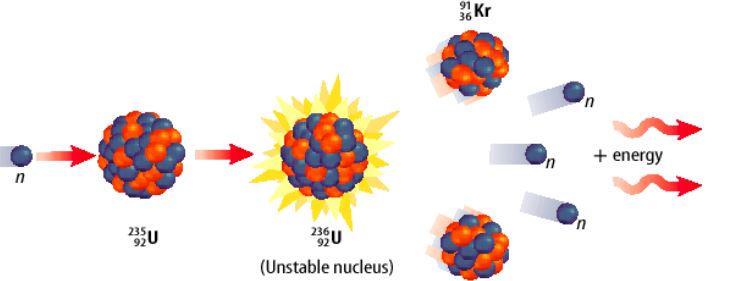
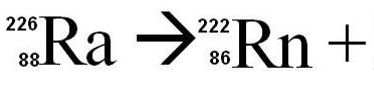

Neutrons ......
has positive electric charge with equal magnitude to that of an electron.
has no net electric charge.
has negative electric charge.
orbiting the nucleus.
What kind of force holds the nucleus together?
Strong Nuclear Force
Weak Nuclear Force
Gravitational Force
Electromagnetic Force

What is the number of neutrons in Cesium?
55 neutrons
76 neutrons
84 neutrons
106 neutrons
139 neutrons
The atomic number of a given element is
equivalent to which of the following?
Proton number in the nucleus
Neutron number in the nucleus
Sum of the protons and neutrons in the
nucleus
Sum of the protons, neutrons and electrons
If there are 146 neutrons in 238U, how many neutrons
are found in the nucleus of 235U?
141
143
145
147
Which type of radiation travels the furthest in air?
Alpha
Beta
Sound
Gamma
What is the range of beta radiation in air
A few centimetres (up to 5 cm)
A few metres
100 metres
More than 1km (almost infinite)
What material can be used to absorb gamma radiation?
Thin aluminium (a few mm thick)
Thick lead or concrete
A piece of wood
A sheet of paper
Which radiation is the most penetrating?
Alpha
Beta
Sound
Gamma
As well as alpha, beta and gamma radiation, the nucleus can also emit...
Sound
A neutron
Isotopes
Half-life
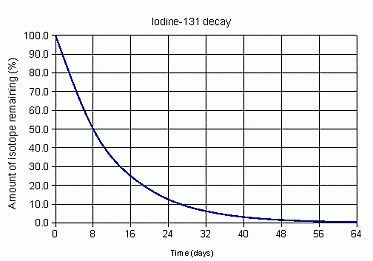
The % of the parent isotope remaining after 1 Half Life.
50%
25%
12.5%
6.25%
The % of the parent isotope remaining after 2 Half Lives.
50%
25%
12.5%
6.25%
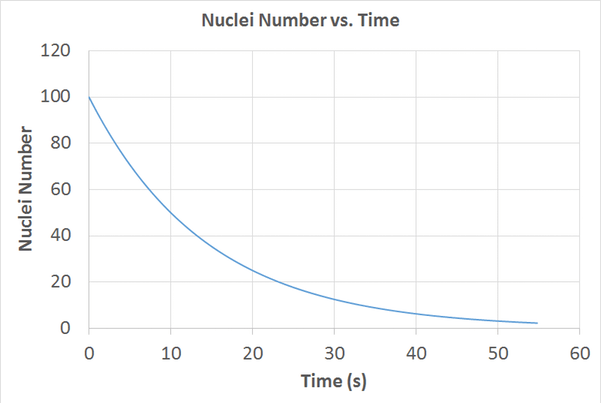
What is the Half life of this isotope?
5 seconds
10 seconds
15 seconds
20 seconds
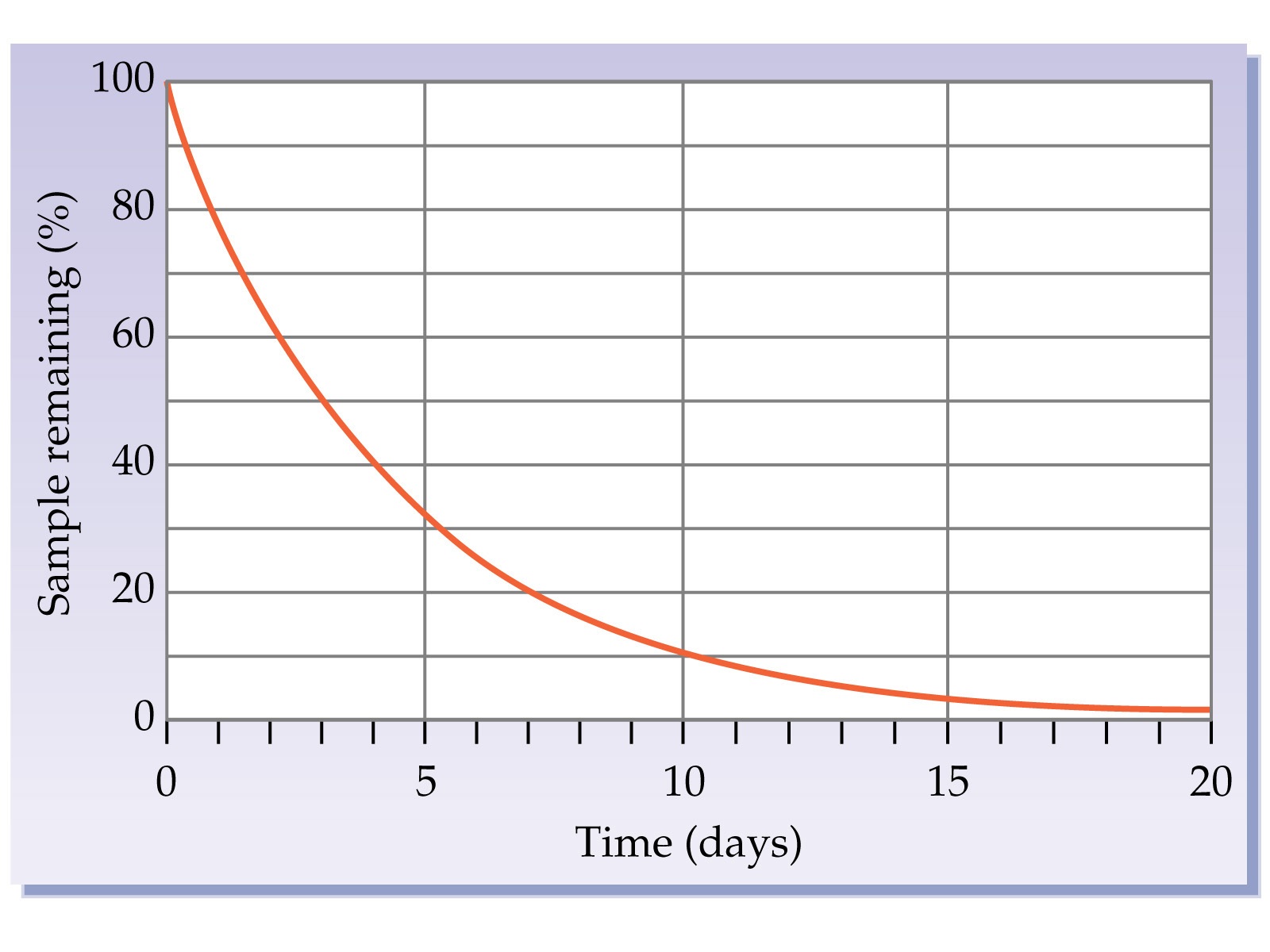
What is the Half Life of this isotope?
3 days
5 days
8 days
10 days

Why do some elements have half-lives?
they radioactively decay
half of their atom gets stolen
They are Twizzlers that break in half
What is the only difference between two different isotopes of the same element?
Number of neutrons
Number of protons
Number of electrons
Size of atom

After the third half-life, how much of the sample is left?
1/2
1/3
1/16
1/8
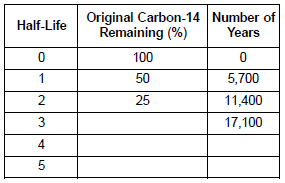
After 22,800 years, approximately what percentage of the original carbon-14 remains?
15%
12.5%
6.25%
3.125%
The % of the parent isotope remaining after 1 Half Life.
50%
25%
12.5%
6.25%
The % of the parent isotope remaining after 2 Half Lives.
50%
25%
12.5%
6.25%
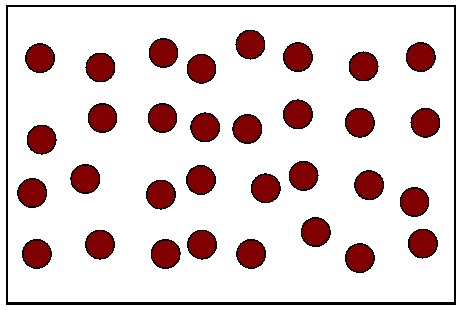
The diagram shows 32 atoms
32 of the Red are the parent isotope
0 of the atoms are daughter isotopes
How many half-lives have occurred?
0
1
2
3
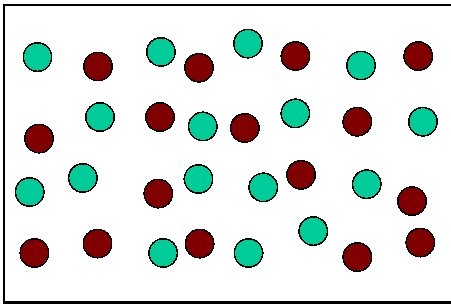
The diagram shows 32 atoms.
16 of the Red are parent isotopes
16 of the Green are daughter isotopes
How many half-lives have occurred?
0
1
2
3
What is the Half life of this isotope?
5 seconds
10 seconds
15 seconds
20 seconds
What is the Half Life of this isotope?
3 days
5 days
8 days
10 days
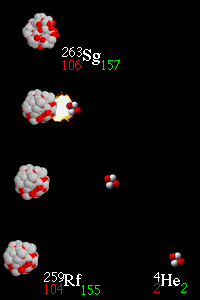
How many grams are left after 1 half life?
Which of these is the most suitable description of background radiation
a measure of the level of ionizing radiation present in the environment at a particular location
a measure of how much radiation you absorb
a measure of radiation that comes from space only
a measure of radiation that comes from the buildings
Which gas is the most common source of background radiation
Radium
Radio
Radon
Rubidium
A student measures the background count three times and gets these readings 20, 23 and 26 counts per second. Which of these is the correct average count?
3
22
23
51
Which of these best describes why radon is a dangerous radioactive gas
it can be breathed in and out
it can be breathed in and it can mutate DNA
it mutates all cells
It can be breathed in and it can go the the brain
which answer best states the two methods of detecting radiation
Geiger counter and a camera
Geiger counter and photographic film
A GM tube and a camera
GM tube and photographic film
After Radon, which of these is the biggest source of background radiation?
Buildings and ground
Nuclear power stations
Water
The sun
A sample of rock gives a count per second of 280. Why is this not a correct measure of the radioactivity of the rock
it is too high for any rock
It also includes the cosmic rays
it also contains the background count
they have removed the background count
Explain how to adjust the count to give the correct count of a radioactive sample
add the background count to the sample count
multiply the sample count by the background count
divide the sample count by the background count
subtract the background count from the sample count
A sample of a radioactive rock gives a count of 138. If the average background count is 27, calculate the count rate of the sample
165
3726
5
111
All radiation is harmful to life. Is this statement true or false?
true
false

