
Font size
 Worksheets
Evolution and Taxonomy
Total questions: 75
Worksheet time: 1hrs 6mins
Branch of biology that deals with the study of
the history of life forms and of the
evolutionary processes that produced the
diversity of life on Earth.
(a)
The slow gradual change in organisms over time.
(a)
States that natural history has been punctuated by extinction events that altered that way life and organisms develop.
Theory of Catastrophism
Lamarckism Theory
Theory of Natural Selection
Habitat Theory
George Cuvier proposed this theory.
Theory of Catastrophism
Lamarckism Theory
Theory of Natural Selection
Habitat Theory
Best known as Theory of Acquired traits
Theory of Catastrophism
Lamarckism Theory
Theory of Natural Selection
Habitat Theory
Animals changed their behavior, in turn, modified their organs, and their offspring inherited those "improved" structures.
Theory of Catastrophism
Lamarckism Theory
Theory of Natural Selection
Habitat Theory
Changes in organisms are acquired through adaptations to environment.
Theory of Catastrophism
Lamarckism Theory
Theory of Natural Selection
Habitat Theory
Charles Darwin proposed this theory
Theory of Catastrophism
Lamarckism Theory
Theory of Natural Selection
Habitat Theory
According to this theory, individual whose traits most fit to environment will be more likely to live and reproduce.
Theory of Catastrophism
Lamarckism Theory
Theory of Natural Selection
Habitat Theory
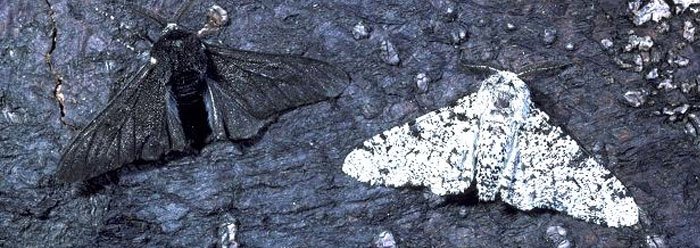
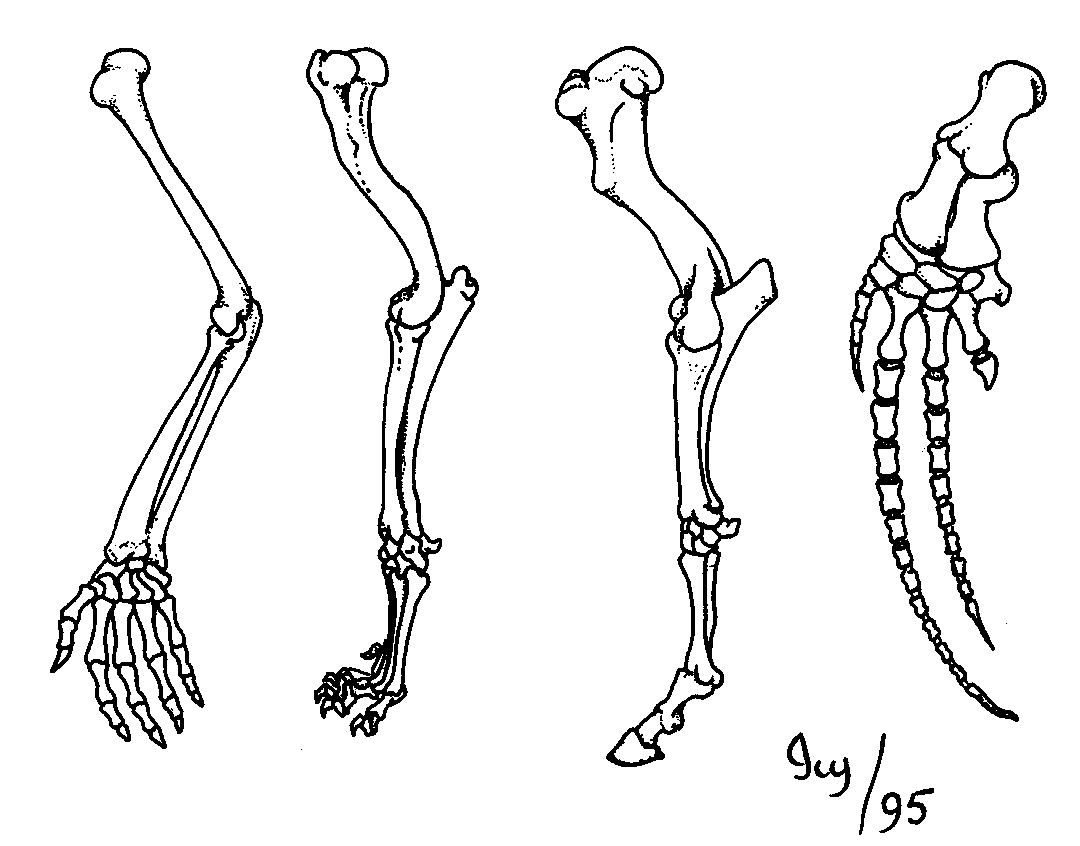


If the environment changes, natural selection may result to adaptation and may give rise to new species
(a)
Allopatric speciation occurs through reproductive isolation
True
False
Sympatric speciation occurs through geographic isolation
True
False
Which pairs of animals shows a correct example of homologous structures?
Wings of butterfly and wings of bat.
Flipper of whale and forelimb of cat.
Fingers of human and arm of starfish
Tongue of frog and proboscis of mosquito.
According to evolutionists, which is the best test to show the relatedness of two organisms?
Similarity in embryological development
Similarity in feeding behavior
Similarity in structure
Similarity of amino acid sequence in DNA

the movement of genes from one population to another
Gene Flow
Natural Selection
Genetic drift
organism with traits most fit to environment will survive, live, and reproduce.
Gene Flow
Natural Selection
Genetic drift
refers to changes in the gene pool (all genes in population) from generation to generation due to chance processes.
Gene Flow
Natural Selection
Genetic drift
Animals that immigrate or emigrate do not return to the land they left.
True
False
Immigration: moving out ; Emigration : Moving in
True
False
If 98 out of 200 individuals in a population express the recessive phenotype, what percent of the population would you predict to be heterozygous?
70%
30%
42%
49%
In a population of humans, the frequency of no dimples is 0.36. If having no dimples is the recessive phenotype, what is the frequency of the recessive allele?
0.6
0.36
0.64
0.18
The principle that, under certain conditions, genotype and allele frequencies in a population will remain unchanged is called
Mendel's law of segregation
Hardy-Weinberg Law
Mendel's law of independent assortment
Hardy Weinberg equation
64% of the population has the recessive phenotype. What is the percentage of the heterogeneous genotype?
.04
.32
.64
.2
.8
Arranging of organisms into groups based on similarities
Classification
Nomenclature
Identification
The naming of organisms
Classification
Nomenclature
Identification
the determination of an organism
Classification
Nomenclature
Identification
It is based on a view that species are distinct, separate, and unchanging.
Aristotle’s System
Linnaeus’s system
Classification based on morphology and behavior
Aristotle’s System
Linnaeus’s system
Linnaeus’ method of naming of organisms.
(a)
The study of diversity and the evolutionary history relationships among organisms.
(a)
The history of the evolution of a species or group, especially in reference to lines of descent and relationships among broad groups of organisms.
Phylogeny
Cladistics
Ancestral Character
Derived Character
A method of hypothesizing relationships among organisms — in other words, a method of reconstructing evolutionary trees.
Phylogeny
Cladistics
Ancestral Character
Derived Character
Shared with the species ancestral to more than one group: it can lead to different groups being classified together.
Phylogeny
Cladistics
Ancestral Character
Derived Character
A trait that arose in the most recent common ancestor of a particular lineage and was passed along to its descendants.
Phylogeny
Cladistics
Ancestral Character
Derived Character
A branching diagram that represents the proposed phylogeny or evolutionary history of a species of group
(a)
Who created the most commonly used system of taxonomy?
Niels Bohr
Watson and Crick
Charles Darwin
Carl Linnaeus
You find a species that seems to be unicellular and is eating smaller cells around it. It has organelles and a nucleus. Which kingdom is it MOST likely a part of?
Fungi
Bacteria
Protists
Plants
Which of the following is NOT a unicellular kingdom?
Prokaryotes
Protists
Archaea
Fungi
Which one is NOT a difference between plants and fungi?
Plants use cellulose but fungi use chitin
Plants are autotrophs but fungi are heterotrophs
Plants have cell walls but fungi don't
Plants make their own food and fungi decompose their food
You identify a small living organism that is eating something at your feet. It's visible but pretty tiny, you take it to a lab and find that it has cell walls made of chitin. Which is its domain and kingdom?
Prokaryote, Fungi
Eukaryote, Fungi
Prokaryote, Plant
Eukaryote, Plant
Which is NOT a eukaryote?
Plants
Animals
Archaea
Protists
Which of the following is the correct order for least related to most related?
Domain
Kingdom
Phylum
Class
Order
Family
Genus
Species
Species
Kingdom
Phylum
Class
Order
Family
Genus
Domain
Species
Genus
Family
Order
Class
Phylum
Kingdom
Domain
Domain
Kingdom
Class
Phylum
Order
Genus
Family
Species
Which of the following sets of animals would be the most closely related?
Animals in the same order
Animals in the same genus
Animals in the same class
Animals in the same family
Which of the following sets of insects would be the most closely related?
Insects in the same class
Insects in the same family
Insects in the same order
Insects in the same species
Which of the following taxonomic groups would contain plants with the greatest amount of variety and differences?
Kingdom
Phylum
Order
Family
Which of the following groups of vertebrates would contain the least related animals?
Vertebrates in the same genus
Vertebrates in the same species
Vertebrates in the same class
Vertebrates in the same family
Which of the following taxonomic groups would contain the most related set of animals?
Domain
Species
Family
Order
Which of the following sets of animals would contain the least closely related organisms?
Animals in the same phylum
Animals in the same genus
Animals in the same class
Animals in the same family
Which of the following groups of fungi would be the most closely related?
Fungi in the same phylum
Fungi in the same kingdom
Fungi in the same order
Fungi in the same class
Which of the following taxonomic groups would contain organisms with the greatest amount of genetic similarities?
Domain
Kingdom
Phylum
Class
The American lobster (Homarus americanus) is most closely related to which of the following organisms?
Cape lobster (Homarinus capensis)
Common lobster (Homarus gammarus)
Patagonian lobsterette (Thymops birsteini)
Scarlett clawed lobster (Nephropsis atlantica)
Black panthers (Panthera onca) are a color variant of a species of large cats. Black panthers would be most closely related to what organism listed below?
Tiger (Panthera tigris)
Cheetah (Acinonyx jubatus)
Puma (Puma concolor)
Jaguar (Panthera onca)

Which of the following pairs of organisms from the table shown to the left would be the most closely related?
Desert iguana and Box turtle
Chuckwalla and Bush anole
Box turtle and Bush anole
Desert iguana and Chuchwalla

