wayground logo

Free Printable Worksheets

Font size

S
M
L
XL
Worksheets

Spring - 1 - OR - Unit 9 Ch. 33-36

Total questions: 65

Worksheet time: 2hrs 10mins

Name
Class
Date
1.

Wearing a T-shirt of your favorite band, torn jeans, and dying your hair blue.

a)

comfort and protection

b)

social

c)

status

d)

self-expression

2.

School uniform

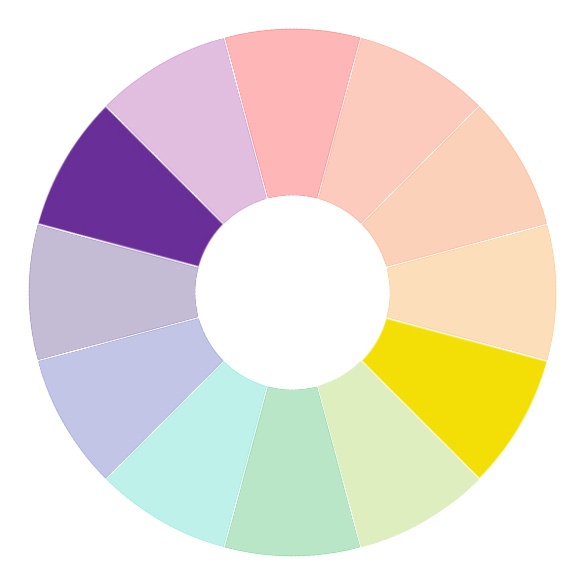
a)

comfort and protection

b)

social

c)

status

d)

self-expression

3.

Bicycle helmet

a)

comfort and protection

b)

social

c)

status

d)

self-expression

4.

Winter coat, gloves and boots

a)

comfort and protection

b)

social

c)

status

d)

self-expression

5.

Wearing a Louis Vuitton shirt

a)

comfort and protection

b)

social

c)

status

d)

self-expression

6.

Carrying a Dooney & Bourke purse

a)

comfort and protection

b)

social

c)

status

d)

self-expression

7.

The best way to dress to impress for an interview is to...

a)

wear jeans and a t-shirt

b)

wear a Nike jogging suit

c)

wear a business suit

d)

it doesn't matter what you wear

8.
Which reason is being described: we wear clothing to keep us safe from hazards and weather. For example, padding for football players, fire-resistant coats for chefs, or scarves for winter.
a)
Socializing
b)
Culture and Family
c)
Style
d)
Protection
9.
Which reason is being described: we wear clothing that goes along with traditions. For example, wearing black to a funeral or white to a wedding.
a)
Age
b)
Culture and Family
c)
School and Work
d)
Style
10.
Which reason is being described: we choose clothing based on what our age group. For example, kids wear play clothes or elderly people dress for comfort.
a)
Age
b)
Culture and Family
c)
School and Work
d)
Style
11.
Which reason is being described: we choose outfits based on the occasion, who we're going out with, or where we go. For example, wearing a formal outfit to prom or casual clothes for hanging out with friends.
a)
Style
b)
Cost
c)
School and Work
d)
Socializing
12.
Which reason is being described: we choose outfits based on our ability to purchase them while staying in our budget. For example, purchasing items from thrift stores that may be used but are still high quality.
a)
Style
b)
Cost
c)
Time
d)
School and Work
13.
Which reason is being described: we choose clothing so that we will be able to physically do what we want to do without feeling confined (too tight) or awkward. For example, we should be confident when wearing our clothing or we choose soft textures.
a)
Style
b)
Comfort
c)
Time
d)
School and Work
14.
Which reason is being described: we wear what is required as a uniform. For example, scrubs for medical professionals, dress code for school children, or uniforms for police officers. 
a)
Culture and Family
b)
Socializing
c)
Cost
d)
School and Work
15.

How can you expand your wardrobe?

a)

Combining clothes

b)

Using accessories

c)

Altering and Sewing

d)

Trading with a friend

e)

All of the above

16.

_______ can be curved, zig zag, or geometric (straight).

a)

color

b)

Space

c)

Form

d)

line

17.
Which element does this picture illustrate?
a)
line
b)
texture
c)
color
d)
shape
18.
What is the surface quality of a shape - rough, smooth, soft hard glossy etc.
a)
Texture
b)
Value
c)
Color
d)
Size
19.

An element of design referring to the way the elements are arranged to create a feeling of stability in a work. (equal visual weight)

a)

Balance

b)

Space

c)

Form

d)

Emphasis

20.
What do we call the empty or open area between, around, above, below, and within objects?
a)
Balance
b)
Movement
c)
Rhythm
d)
Space
21.

The volume and shape of a three-dimensional work, or an image that gives the illusion of being three dimensional.

a)

Line

b)

Form

c)

Texture

d)

Color

22.

Horizontal lines convey feelings of

a)

nature and softness

b)

strength and dignity

c)

excitement and movement

d)

relaxation and restfulness

23.

Vertical lines convey feelings of

a)

nature and softness

b)

strength and dignity

c)

excitement and movement

d)

relaxation and restfulness

24.

Diagonal lines convey feelings of

a)

nature and softness

b)

strength and dignity

c)

excitement and movement

d)

relaxation and restfulness

25.

Curved lines convey feelings of

a)

nature and softness

b)

strength and dignity

c)

excitement and movement

d)

relaxation and restfulness

26.
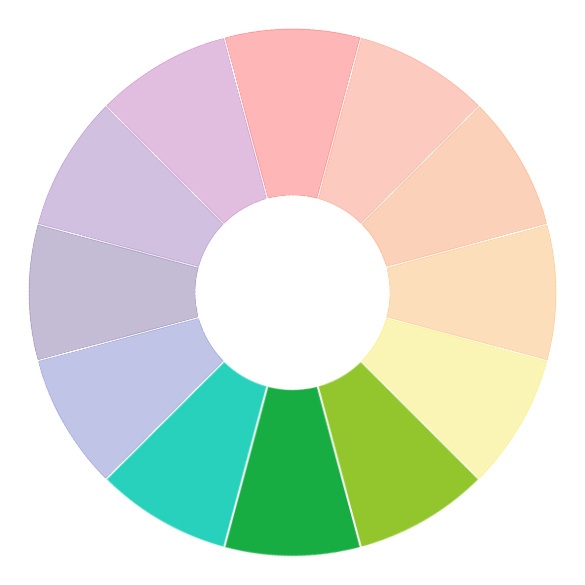
Three colors beside each other on the color wheel are also known as: 
a)
Analogous Colors
b)
Secondary Colors
c)
Cool Colors
d)
Complementary Colors
27.
Red, Yellow, & Blue are the "building blocks" of all color. What are these three colors also referred to as?
a)
Tertiary Colors
b)
Secondary Colors
c)
Primary Colors
d)
Complementary Colors
28.
Green, Orange, & Violet are created after mixing two Primary colors together. What are these colors also referred to as?
a)
Secondary Colors
b)
Primary Colors
c)
Tertiary Colors
d)
Analogous Colors
29.
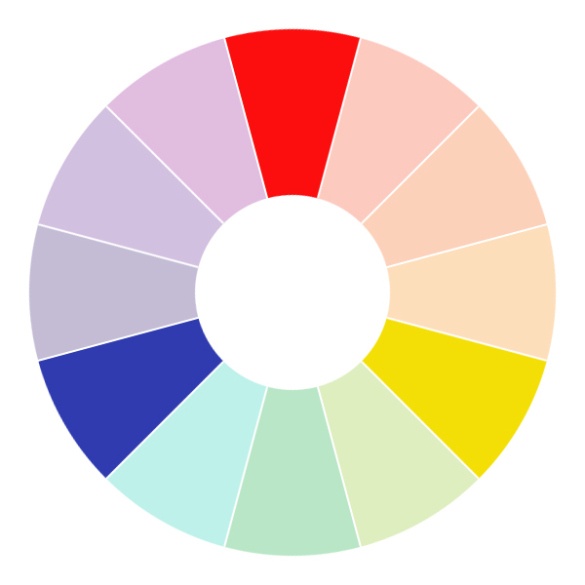
These colors are created after mixing a Primary and a Secondary color together:
a)
Analogous Colors
b)
Tertiary Colors
c)
Complementary Colors
d)
Warm Colors
30.
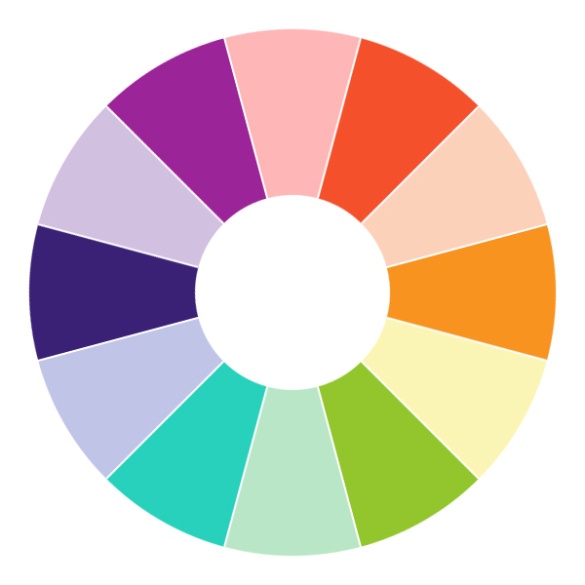
These colors are opposite from each other on the color wheel:
a)
Tertiary Colors
b)
Primary Colors
c)
Analogous Colors
d)
Complementary Colors
31.
A single hue/color and extended using its shades and tints.
a)
Analagous
b)
Monochromatic
c)
Triadic 
d)
Complimentary
32.
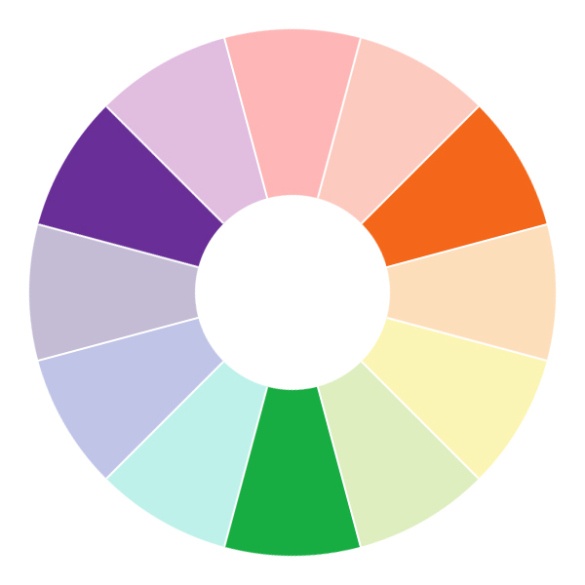
Three colors equally spaced from each other on the color wheel.
a)
Analagous
b)
Monochromatic
c)
Triadic
d)
Complimentary
33.

Beige and brown

a)

monochromatic

b)

complementary

c)

accented neutral

d)

analogous

e)

neutral

34.

White, black and gray

a)

monochromatic

b)

complementary

c)

accented neutral

d)

analogous

e)

neutral

35.

Black, gray, and white with touches of red

a)

monochromatic

b)

complementary

c)

accented neutral

d)

split-complimentary

e)

triadic

36.

Where would we find the information about the following? Explains about the care of a product

a)

advertising

b)

catalogs/online sites

c)

labels/hangtags

37.

Where would we find the information about the following? Identify fiber content

a)

advertising

b)

catalogs/online sites

c)

labels/hangtags

38.
ltems that a popular for only a short period of time.
a)
accessories
b)
acne
c)
dress code
d)
fads
39.

Styles that stay popular for a long time

a)

accessories

b)

classics

c)

dress code

d)

fads

40.

Junior size

a)

Cut for a trimmer, shorter-waisted figure

b)

Well-proportioned figures

c)

Height not weight

41.

Misses size

a)

Cut for a trimmer, shorter-waisted figure

b)

Well-proportioned figures

c)

Height not weight

42.

Petite sizes

a)

Cut for a trimmer, shorter-waisted figure

b)

Well-proportioned figures

c)

Height not weight

43.

What is the best way to check for fit?

a)

read the garment tag

b)

try it on

c)

have someone try it on for you

44.

Mark everything that is on a garment label.

a)

Size

b)

Fabric it is made out of

c)

% of fabric used

d)

wearing examples

e)

Where it is made

45.

True or false. You can wear a different size in different brands.

a)

true

b)

false

46.

Which of the following is a synthetic fiber?

a)

rayon

b)

silk

c)

cashmere

d)

polyester

47.

Which of the answers describe natural fibers?

a)

rayon, nylon, wool

b)

cotton, polyester, cashmere

c)

linen, cotton, silk

d)

silk, spandex, polyester

48.

Which statement correctly shows the size order from smallest to largest?

a)

Yarn-Fiber-Fabric

b)

Fiber-Yarn-Fabric

c)

Fabric-Fiber-Yarn

49.

Compounds that penetrate and color fibers.

a)

dyes

b)

finishes

c)

fabrics

50.

When you're weaving cloth, you use two sets of threads, called the ____________________________.

a)

warp and the weft

b)

wrap and the leaf

c)

left and right

51.

The warp threads run ______________________________.

a)

vertically

b)

horizontally

c)

zig-zag

52.

The weft threads run _____________________.

a)

vertically

b)

horizontally

c)

zig-zag

53.

A simple weave where the weft alternates over and under a warp end.

a)

Tabby weave

b)

Twill weave

c)

Basket weave

d)

Plain

54.

This is when you loop yarns together.

a)

knitting

b)

weaving

c)

crocheting

55.

There are two basic ways of constructing fabric

a)

knitting and sewing

b)

knitting and weaving

c)

weaving and crocheting

56.

Direction that yarns run in a woven fabric.

a)

grain

b)

selvage

c)

filling

57.

What am I ?

a)

pin cushion

b)

tomato

c)

fruit

d)

cushion

58.

What am I?

a)

tweezers

b)

seam ripper

c)

plucker

d)

picker

59.

What am I?

a)

pins

b)

hand sewing needles

c)

safety pins

d)

machine needles

60.

What am I ?

a)

straight pins

b)

safety pins

c)

needles

d)

T-pins

61.

What am I?

a)

measuring tape

b)

ruler

c)

yard stick

d)

seam ripper

62.

What am I?

a)

presser foot

b)

iron

c)

yard stick

d)

needle clamp

63.

What am I?

a)

machine needles

b)

hand needles

c)

pins

d)

none of the above

64.
A small, flat spool that holds the bottom thread.  
a)
Bobbin
b)
Throat Plate
c)
Foot Control
d)
Feed Dogs
65.
The direction in which the hand wheel should be turned
a)
towards you 
b)
away from you