wayground logo

Free Printable Worksheets

Font size

S
M
L
XL
Worksheets

DNA Fingerprinting Review

Total questions: 57

Worksheet time: 2hrs 49mins

Name
Class
Date
1.
Mr. Jones was killed in a car accident.  Afterwards, a former girlfriend filed a paternity suit claiming that Mr. Jones was the father of her child, and thus she was entitled to the man’s estate.  Which sample of DNA would have to be from Mr. Jones if he were the child’s father? 
a)
2
b)
3
c)
4
d)
5
2.
A boy moves to another country to live with his father.  Years later, the boy decides to move back to live with the woman who raised him.  Immigration officials suspected that the boy was the woman’s nephew, not her son, and therefore not legally entitled to residency.  Based on the DNA fragments, is it possible that she is the boy’s mother?
a)
Yes
b)
No
3.
Bob was found dead in his home.  Crime scene analysis showed signs of a struggle.  Blood was collected from the crime scene, the victim, and three suspects.  Which suspect likely committed the crime? 
a)
Sue
b)
Lisa
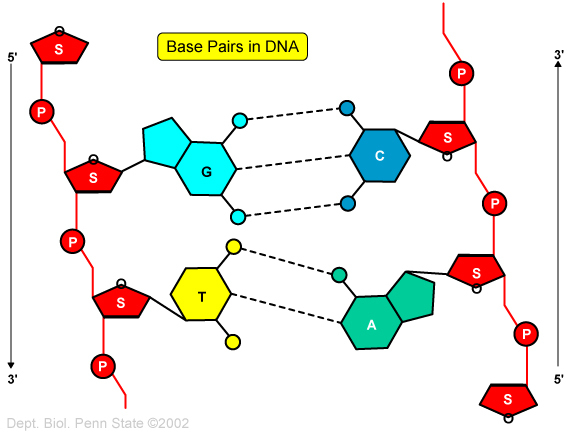
c)
John
d)
None of these
4.
Which male is the father of this child?
a)
Male 1
b)
Male 2
c)
Neither could be the father
d)
Either could be the father
5.
Which man is the father of this baby?
a)
Father 1
b)
Father 2
c)
Father 3
d)
None of them
6.
Whose blood was found at the crime scene?
a)
John
b)
Lisa
c)
Bob
d)
Sure
7.
Which man is the father of the child?
a)
1
b)
2
c)
3
d)
4
8.
Which two bear species are most closely related?
a)
Bear 1 and Bear 2
b)
Bear 1 and Bear 3
c)
Bear 2 and Bear 3
d)
There’s no way to tell
9.
Based on these results whose blood was found in the blood stain at the crime scene?
a)
Bob
b)
Sue
c)
John
d)
Lisa
10.
Which suspect is likely guilty?
a)
Suspect #1
b)
Suspect #2
c)
Suspect #3
11.
Which is the likely 'sire' (dog's dad) of the given puppy?
a)
Sire A
b)
Sire B
c)
Sire C
d)
Sire D
12.
Which man is the father of child #2 (5th Column)?
a)
Male #1
b)
Male #2
c)
Neither Is likely
13.
Which male is the likely father?
a)
Male 1
b)
Male 2
14.
DNA is recovered from a suspected dead soldier.  Which Parents are the likely parents of the soldier?
a)
Parents C and D
b)
Parents E and F
c)
Parents A and B
d)
Parents G and H
15.
What is the relationship between this child and parents?
a)
Biological to mom
b)
Biological to dad
c)
Biological to both
d)
Biological to neither
16.
Which suspect’s DNA matches the felon’s DNA left at the crime scene?
a)
Suspect 1
b)
Suspect 2
c)
Suspect 3
17.

DNA fingerprinting works because....

a)

Most genes are dominant

b)

All organisms contain RNA

c)

The most important genes are different among most people

d)

No two people, except identical twins, have exactly the same DNA

18.

A method of separating molecules, such as DNA, according to their size and electrical charge.

a)

Electrophoresis

b)

DNA Fingerprint

c)

DNA Probe

19.

Why do the fragments of DNA in gel electrophoresis travel away from the negative electrode?

a)

DNA is negatively charged so attracted to the positive end of the unit

b)

DNA is positively charged to attracted to the negative end of the unit

c)

the agarose gel in negatively charged

d)

the agarose gel is positively charged

20.
In gel electrophoresis, the largest DNA fragment will appear
a)
closest to the starting wells
b)
farthest from the starting wells
c)
three quarters away from the starting wells
d)
it depends on how many fragments there are
21.
DNA fingerprinting works because
a)
Most genes are dominant
b)
All organisms contain RNA
c)
The most important genes are different among most people
d)
No two people, except identical twins, have exactly the same DNA 
22.

A cell structure that contains genetic information along strands of DNA.

a)

Allele

b)

Chromosome

c)

DNA

23.

Pattern of DNA fragments obtained by examining a person's unique sequence of DNA pairs.

a)

DNA Fingerprint

b)

Allele

c)

Chromosome

24.

A method of separating molecules, such as DNA, according to their size and electrical charge.

a)

Electrophoresis

b)

DNA Fingerprint

c)

DNA Probe

25.

A method used to rapidly make multiple copies of a specific segment of DNA.

a)

PCR (Polymerse Chain Reaction)

b)

Electrophoresis

c)

DNA Probe

26.

A molecule that cuts a DNA molecule at a specific, base sequence.

a)

Allele

b)

Restriction Enzyme

c)

DNA Probe

27.
Which of the following best describes a DNA molecule?
a)
double helix
b)
contains ribose
c)
made of amino acids
d)
contains Uracil
28.
Which 2 molecules form the sides (backbone) of the DNA ladder?
a)
deoxyribose sugar and adenine
b)
deoxyribose sugar and a hydrogen bond
c)
deoxyribose sugar and the nucleus
d)
deoxyribose sugar and phosphate
29.
Nitrogenous bases are joined by which type of bond?
a)
polar bonds
b)
ionic bonds
c)
covalent bonds
d)
hydrogen bonds
30.
What does DNA stand for?
a)
Deoxyribonucleic acid
b)
Denitrogenous acid
c)
Deribonucleic acid
d)
Diribonucleic acid
31.
What are the three components of a nucleotide?
a)
sugar, hydrogen, nitrogen base
b)
sugar, oxygen, nitrogen base
c)
sugar, phosphate, nitrogen base
d)
sugar, phosphate, protein
32.
Cytosine always pairs with
a)
Adenine
b)
Thymine
c)
Uracil
d)
Guanine
33.
Guanine bonds with ______________.
a)
Adenine
b)
Guanine
c)
Cytosine
d)
Thymine
34.
What are the 4 nitrogen bases?
a)
adenine, thymine, cytoplasm, and guanine
b)
adenine, thymine cytosine, and guanine
c)
adenine, thymine, cytosine, and gylcerol
d)
adenine, thymine, cytosine, and glucose
35.
Which sequence of DNA bases would pair with this partial strand
ATG TGA CAG
a)
ATG TGA CAG
b)
TAC ACT GTC
c)
GTA AGT GAC
d)
CAT TCA CTG
36.

Which of the following is a base pair?

a)

Adenine - Cytosine

b)

Cytosine - Thymine

c)

Deoxyribose - Cytosine

d)

Cytosine - Guanine

37.

In 1984, Dr. Alec Jeffreys at the University of Leicaster observed that DNA from different individuals contains different polymorphisms. His laboratory developed a technique for isolating and analyzing these variable areas that is known as ___________________________________.

a)

DNA quantifying, or DNA profiling

b)

DNA fingerprinting, or DNA profiling

c)

DNA sorting, or DNA profiling

d)

DNA investigating, or DNA profiling

38.

The total amount of DNA in a cell, which is contained in chromosomes and mitochondria, is called the human _________________.

a)

gene

b)

allele

c)

genome

39.

How many pairs of chromosomes are found in the nucleus of a human cell?

a)

46

b)

26

c)

23

d)

28

40.
Which is the primary purpose of using restriction enzymes in gel electrophoresis?
a)
It allows the strands of DNA to be cut into various lengths for testing
b)
It restricts the number of base pairs that can be tested in a sample
c)
It makes the testing simpler by moving the strands into the gel faster
d)
It charges the DNA strands
41.
In gel electrophoresis, the largest DNA fragment will appear
a)
closest to the starting wells
b)
farthest from the starting wells
c)
three quarters away from the starting wells
d)
it depends on how many fragments there are
42.

A method used to rapidly make multiple copies of a specific segment of DNA.

a)

PCR (Polymerse Chain Reaction)

b)

Electrophoresis

c)

DNA Probe

43.

Tandem repeats of short DNA sequences with varying numbers of repeats found among individuals.

a)

STR (Short Tandem Repeat)

b)

PCR (Polymerase Chain Reaction)

c)

VNTR (Variable number of Tandem Repeats)

44.

When using gel electrophoresis to analyze samples of DNA, which explanation

best describes why some strands of DNA travel further in the gel than others?

a)

Strands of DNA are different sizes, and the smaller strands travel further than larger strands.

b)

Strands of DNA have different charges, and the more positively charged strands travel further than the negatively charged strands.

c)

Strands of DNA have different shapes, and the more aerodynamic strands travel further than the less aerodynamic strands.

d)

Strands of DNA have different densities, and the lighter strands travel further than the heavier strands.

45.

The FBI database that stores DNA profiles

a)

CODIS

b)

AFIS

c)

STRATUS

d)

FEDDNA

46.

mtDNA or mitochondrial DNA is

a)

can be the genetic source of heart disease, Alzheimers and some forms of diabetes

b)

passed from mother to child

c)

a form of class evidence

d)

all of the above

47.

Match the Base Pairs

a)

Adenine

1.

Thymine

b)

Cytosine

2.

Guanine

c)

Guanine

3.

Cytosine

d)

Thymine

4.

Adenine

48.

A restaurant is selling lower-grade beef products and advertising it as real. What is the most effective way for the FDA to identify the species of beef and pork served in these restaurants?

a)

by comparing the DNA fingerprints of the two samples of beef and pork

b)

by visually inspecting the beef and pork

c)

by comparing the cooking times of the samples of beef and pork

d)

by comparing the tastes of the beef and pork

49.

Once the strands of DNA are cut in various sizes, which explanation best describes why some strands of DNA travel further in the gel than others?

a)
Charge of the DNA fragments
b)
Temperature of the gel
c)
Concentration of the DNA fragments
d)
Size of the DNA fragments
50.

What is the function of restriction enzymes in DNA analysis?

a)

They replicate DNA strands

b)

They synthesize proteins

c)

They cut DNA at specific sequences

d)

They join DNA fragments together

51.

Which process separates DNA fragments based on their size using an electric field?

a)

PCR

b)

Gel electrophoresis

c)

Cloning

d)

DNA sequencing

52.

Which base pairs with thymine in a DNA molecule?

a)

Cytosine

b)

Adenine

c)

Uracil

d)

Guanine

53.

Which base pairs with thymine in a DNA molecule?

a)

Guanine

b)

Adenine

c)

Uracil

d)

Cytosine

54.

What is the primary function of restriction enzymes in genetic analysis?

a)

To join DNA fragments

b)

To cut DNA at specific sequences

c)

To sequence DNA

d)

To replicate DNA

55.

Which technique is commonly used to compare DNA samples for forensic identification?

a)

Protein synthesis

b)

Photosynthesis

c)

Cell division

d)

Gel electrophoresis

56.

What is the sugar found in the backbone of DNA?

a)

Fructose

b)

Glucose

c)

Deoxyribose

d)

Ribose

57.

Which of the following techniques is used to amplify a specific DNA segment?

a)

Protein synthesis

b)

Gel electrophoresis

c)

PCR (Polymerase Chain Reaction)

d)

DNA sequencing