
 Worksheets
Human Anatomy Quiz - Round 2
Total questions: 20
Worksheet time: 12mins
From wrist to fingertip, what is the order of bones?
Carpals, metacarpals, phalanges
Phalanges, metacarpals, carpals
Carpals, phalanges, metacarpals
Metacarpals, carpals, phalanges
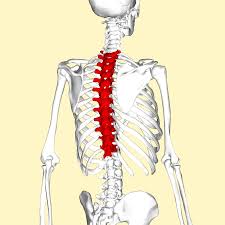

Which of the following is not a function of bones?
Protection
Blood cell formation
Storage
Absorption

Which of the following bones is INCORRECTLY matched with its type?
ribs--irregular
carpals--short
ulna--long
cranium--flat


What type of bone is the cranium

What does a tendon do?
Hold muscles together.
Hold joints in place.
Connect bone to bone.
Connect bone to muscle.
Flexion is a straightening movement around a joint
True
False
What connective tissues joins bone to bone?
(a)
Abduction is movement away from the midline of the body
True
False
Circumduction is the circular movement of a joint. It combines flexion, extension, abduction and adduction
True
False
Flexion is a straightening movement around a joint
True
False
What is the main function of the cranium?
Support
Protection
Mineral storage
Blood cell production

Classify the movement occurring in the picture
Flexion
Extension
Rotation
Abduction

What muscle in this picture is the agonist?
Quadriceps
Hip Flexors
Gluteus Maximus
Hamstring

What is the definition of antagonist?
The muscle within the pair that, at a given time, is relaxing to allow movement to occur.
A moving muscle.
The relaxing one.
The contracting muscle.
How does an antagonistic pair work?
Muscles move.
Paired muscles move.
Muscles relax and contract to move bones.
As one muscle relaxes the other contracts to allow movement at a joint.

