
 Worksheets
EOC Review
Total questions: 103
Worksheet time: 2hrs 48mins
4. Which biomolecules transport oxygen and other substances and also form part of most organelles?
Lipids
Carbohydrates
Proteins
Nucleic Acids
5. Which biomolecules provide quick energy for the cell and also provide materials to build the cell membrane/wall?
Carbohydrates
Proteins
Lipids
Nucleic Acids
9. Amino Acids are the monomers of __________.
Nucleic Acids
Proteins
Carbohydrates
Lipids
Just under an orca's skin lies a thick layer of blubber. Blubber helps insulate a whale from heat loss. Based on this information, which biomolecule is blubber primarily made of?
Lipids
Nucleic Acids
Proteins
Carbohydrates
11. People with albinism do not produce the melanin protein. Melanin allows for people to be protected from the sun and thus people with albinism are prone to severe sunburns. Which biomolecule would you infer is responsible for albinism?
Carbohydrate
Protein
Lipid
Nucleic Acid
A cell biologist finds a cell without chloroplasts, but it still contains a nucleus, cell membrane, and a cytoplasm. What kind of cell is this?
Prokaryotic
Eukaryotic
Plant
Animal
Which of the following equations represents the overall chemical reaction for photosynthesis?
6O2+ 6H2O → C6H12O6+ 6O2
C6H12O6 + 6H2O→ 6O2+ 6O2
6CO2+ 6H2O→ C6H12O6+ 6O2
6O2 + 6H2O→ C6H12O6 + 6CO2
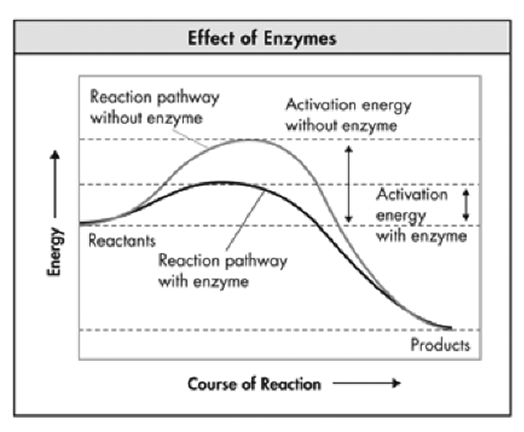
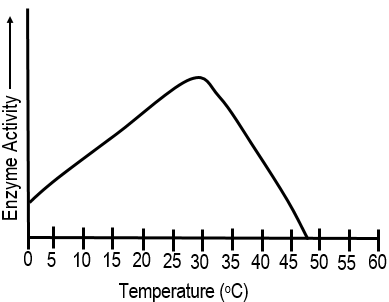
Temperatures that are too high can slow photosynthesis because
stomata stay open
enzymes are ruined
there is not enough CO2
there is too much water
Autotrophs (producers) can perform photosynthesis because they have -
Mitochondria
Ribosomes
A Nucleus
Chloroplasts
Which of the following is a product of cellular respiration?
Radiant Energy
Oxygen
Glucose
Water
What is the definition of OSMOSIS?
Diffusion of water through a selectively permeable membrane
Molecular structure that surrounds the cell and controls what enters and leaves the cell
Movement of molecules across the cell membrane against the concentration gradient
Movement of molecules across the cell membrane from an area of high concentration to low concentration

Identify the following structure
Phospholipid
Cell
Cell membrane
Protein

What is the name of 'A' found on the structure below
Lipid Bilayer (cell membrane)
Protein
Phosphate hydrophilic heads
Lipid hydrophobic tails

What is the name of 'B' found on the structure below
Protein
Lipic bilayer
Phosphate hydrophilic heads
Lipid hydrophobic heads
Why would the cell need energy to move molecules across the membrane?
the molecule is going against the concentration gradient
the molecule is to large to pass through the membrane
the lipid membrane requires energy anytime something is moving across the membrane
In passive diffusion, substances always move...
from an area of higher concentration to an area of lower concentration
from an area with more of the molecules to an area with fewer of the molecules
from an area of lower concentration to an area of higher concentration
from an area with fewer of the molecules to an area with more of the molecules
Which image best represents facilitated diffusion?


Why has water moved into the cell in the hypotonic solution?
The cell was deflated and needed to be inflated.
The concentration of solvent was higher inside than outside the cell.
The concentration of solute (salt) was higher outside the cell than inside.
The concentration of solute (salt) was higher inside the cell than outside.

A red blood cell is placed into a solution. The red blood cell has a lower concentration of protein and sugar than the solution, as shown in the diagram. What is most likely to occur?
Water from the solution will move into the red blood cell.
Water from the red blood cell will move into the solution.
Protein and sugar will move from the solution into the red blood cell.
Protein and sugar will move from the red blood cell into the solution.
ATG TGA CAG

A process in which DNA has the unique ability to make an exact copy of itself.
Replication
Translation
Transcription
Protein Synthesis
The correct sequence of mitosis:
metaphase, anaphase, telophase, prophase
prophase, metaphase, anaphase, telophase
prophase, anaphase, metaphase, telophase
telophase, metaphase, prophase, anaphase


Undifferentiated cells that can become one or more specialized types of cell are called_________
Stem Cells
Somatic Cells
Body Cells
Zygotes
Arrange the following levels of hierarchy from LARGEST to SMALLEST
Organism, Organ, Tissue, Cell
Cell, Tissue, Organ, Organism
Organism, Cell, Tissue, Organ
Tissue, Cell, Organ, Organism
Cancer is
a premature stop in the cell cycle.
uncontrolled mitosis.
programmed cell death.
WHAT DOES MEIOSIS CREATE?
CHROMOSOMES
GAMETES
DNA
TRAITS
MALE GAMETE IS KNOWN AS
EGG
SPERM
HOW MANY CHROMOSOMES DO HUMAN GAMETES HAVE?
46
23
47
22
CROSSING OVER ALLOWS FOR WHAT TO HAPPEN?
ALL CELLS TO STAY THE SAME
GENETIC VARIATION
REDUCTION OF CHROMOSOMES
CHROMOSOME NUMBER TO INCREASE

THIS IMAGE SHOWS WHAT IS HAPPENING WITH THE CHROMOSOMES?
NON- DISJUNCTION
METAPHASE
TELOPHASE
CROSSING OVER

Explain the karyotype of this individual
Male - no genetic defect
Male - Down's Syndrome
Female - no genetic defect
Female - Down's Syndrome
In what process is mRNA synthesized?
Transcription
Translation
DNA Replication
Mitosis

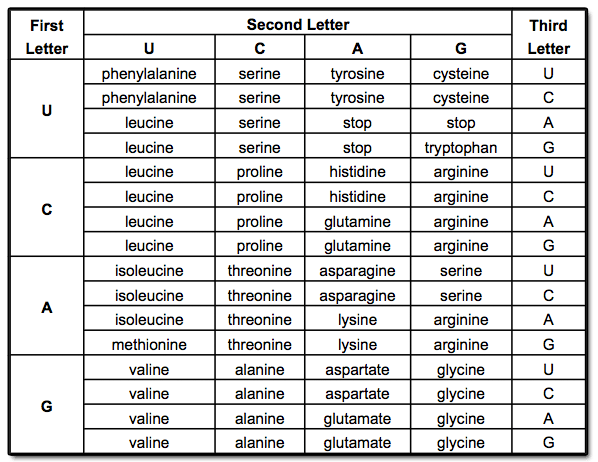
Choose the sequence of the mRNA strand that would match up with to the following DNA strand:
GTACAT
CATGTA
GAUCUA
CAUGUA
CUTGTU

What brings the amino acids to the ribosome to assemble a protein?
DNA
What determines the shape and function of a protein?
The sequence of amino acids
The type of ribosome that assembles the protein
The cell that manufactures the protein


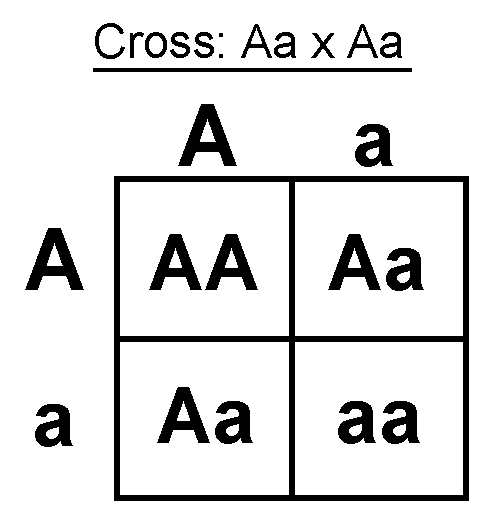
What is the genotypic ratio of the offspring?
3:1
1:3
1:2:1
2:2

What mutation has occurred here?
T-G-A-C-C-A
T-G-A-G-C-A
Substitution
Deletion
Insertion
Frameshift
Which of the following would result in a frameshift mutation?
Insertions only
Substitution only
Deletion only
Insertions and Deletions
ATTTGAGCC- Original
ATTGAGCC - Mutated
The example above is an example of a
Insertion- Frameshift
Deletion- Substitution
Deletion -Frameshift
All of the above

Which type of mutation does the model demonstrate?
Deletion
Substitution
Insertion
Translocation
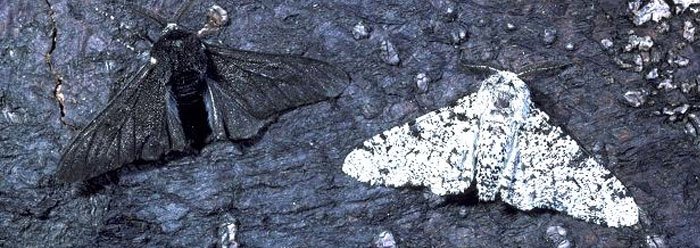

When organisms are better adapted to their environment they will survive and reproduce more successfully than organisms less adapted. This process is called what?
Selective breeding
Natural Selection
Cloning
Evolution of all species
What most likely caused the finches on the Galapagos Islands to have beaks that were different from the finches on the mainland?
There were different types of predators on the island.
There were different types of food available on the island.
The finches had no water to drink.
The finches on the mainland could not fly high enough.
Which one does not increase variation?
Gene flow
Migration
Mitosis
Crossing Over
Binomial nomenclature is a 2-name naming system based on
Family genus
Class order
genus species
Genus species
Which of the following is the correct order for least related to most related?
Domain
Kingdom
Phylum
Class
Order
Family
Genus
Species
Species
Kingdom
Phylum
Class
Order
Family
Genus
Domain
Species
Genus
Family
Order
Class
Phylum
Kingdom
Domain
Domain
Kingdom
Class
Phylum
Order
Genus
Family
Species

Which of the following pairs of organisms from the table shown to the left would be the most closely related?
Desert iguana and Box turtle
Chuckwalla and Bush anole
Box turtle and Bush anole
Desert iguana and Chuchwalla

A
B
C
D

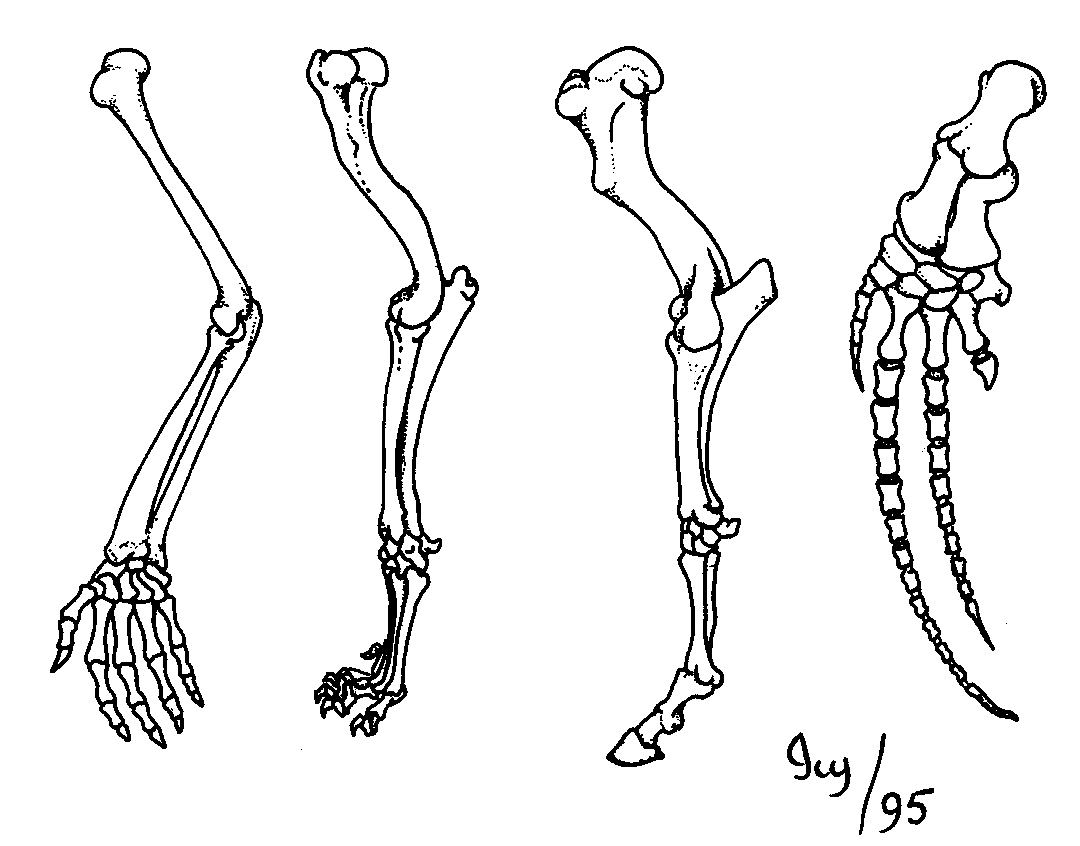
belong to the same species
must range great distances to eat
have very similar skeletal structures
are descended from a common ancestor

Which group of animals on this tree are most closely related to birds?
Saurischian dinosaurs
Ornithischian dinosaurs
Crocodiles
None of these are related to birds

Where is the alligator and T. rex's common ancestor?
Point A
Point B
Point C
Point D

Gathers oxygen from the environment and gets rid of carbon dioxide from the body.
cardiovascular system
respiratory system
endocrine system
lymphatic system
The excretory system gets rid of:
Nutrients
Cartilage
Waste
Oxygen
What can you infer about carbon dioxide from the function of the respiratory system?
It helps you breathe
It is more common than oxygen
It is harmful to your body
It is not found in the body
What is the main product of the endocrine system?
Bones
Blood
White blood cells
Hormones
Viruses need a ____________ in order to make copies of themselves.
bacterial cell
host cell
capsid
vaccine
During which cycle does a virus's genetic information become a part of the host cell's genetic information?
Lytic
Lysogenic
A virus that goes through the ______ cycle will allow you to feel symptoms immediately due to the cells lysing.
Lytic
Lysogenic
Cells that fight infection in our bodies.
Plasma
Platelets
Red Blood Cells
White Blood Cells


Plant roots have extensions called root hairs. These root hairs are important in the homeostasis of the plant. Which statement best explains the importance of the root hairs to the stems and leaves of the plant?
root hairs convert minerals into glucose for immediate use by cells
root hairs decrease the need for osmosis and diffusion in vascular tissue
root hairs prevent water loss in leaves through transpiration and gas exchange
root hairs increase the surface area of the roots for nutrient and water absorption
Xylem transports...
water
sugar
oxygen
carbon dioxide

Plants curling around a pole or mailbox is an example of:
Phototropism
Germination
Turgor pressure
Thigmotropism


What would happen to the bird if the green fish died out?
the bird population would grow
the bird population would die out
the smaller fish will die out

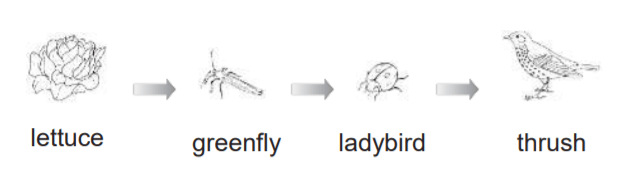
Who is the producer?
lettuce
greenfly
ladybird
thrush


Using a light microscope, a student identified the following characteristics of 4 organisms found in a sample of pond water. (look at the picture) Based on the table, which organisms most likely belong to the taxonomic group for bacteria?
organisms 1 and 2
organisms 2 and 3
organisms 1 and 4
organisms 3 and 4

