wayground logo

Free Printable Worksheets

NEW

Font size

S
M
L
XL
Worksheets

Cell and Cell Transport FC

Total questions: 28

Worksheet time: 1hrs 4mins
Name
Class
Date
1.
Movement of particles from high to low concentration. 
a)
Passive Transport
b)
Active Transport
2.
Osmosis is a form of ______________. 
a)
Passive Transport
b)
Active Transport
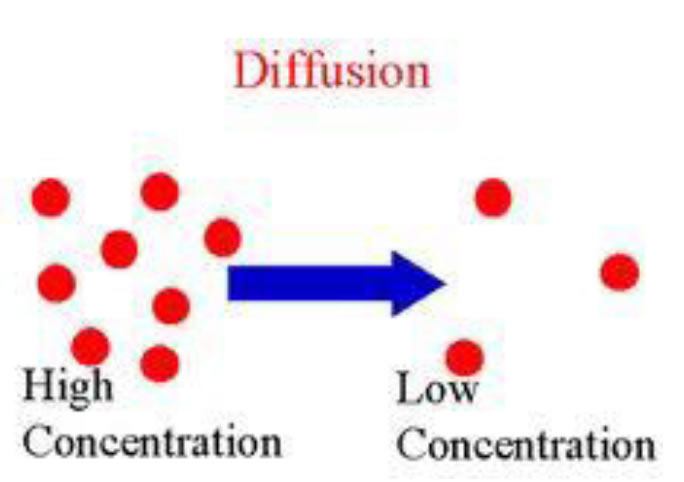
3.
a)
Passive Transport
b)
Active Transport
4.
What is it called when molecules move across the cell membrane from an area of high concentration to an area of low concentration through a carrier protein?
a)
Diffusion
b)
Osmosis
c)
Active Transport
d)
Facilitated Diffusion
5.
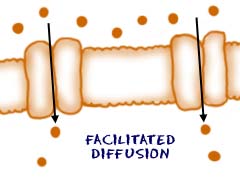
This picture represents what type of cell transport?
a)
endocytosis
b)
exocytosis
c)
osmosis
d)
passive transport
6.
Osmosis is the movement of _____ across a membrane.
a)
food
b)
energy
c)
oxygen
d)
water
7.
Which is true about active transport?
a)
It requires energy
b)
it does not require energy
c)
It moves substances down the concentration gradient
d)
it moves material from high to low concentration
8.
This cell organelle helps organisms maintain homeostasis by controlling what substances may enter or leave cells.
a)
vacuole
b)
nucleus
c)
cell membrane
d)
cell wall
9.
The cell below is in a _________ solution.
a)
Hypotonic
b)
Hypertonic
c)
Isotonic
10.
The cell below is in a _____________ solution.
a)
Hypertonic
b)
Hypotonic
c)
Isotonic
11.
A cell in an isotonic solution will
a)
swell
b)
shrink
c)
stay the same size
d)
impossible to tell
12.
When a cell is placed in a hypertonic solution water
a)
moves from the inside of the cell to the solution
b)
moves from the solution to the inside of the cell
c)
moves equally in and out of the cell
d)
none of these
13.
A cell will __________________ in a hypotonic solution.
a)
swell and perhaps burst (lyse)
b)
shrink
c)
the size of the cell will not change
d)
the size of the cell will change from large to small and from small to large
14.
Active transport requires _____ to move materials across the cell membrane.
a)
proteins
b)
sunlight
c)
oxygen
d)
energy
15.
When the concentration of particles inside of a cell is the same as the concentration of particles outside of the cell. 
a)
active transport
b)
concentration
c)
diffusion
d)
equilibrium
16.
The process where only water is allowed to pass through the cell membrane from a high to low concentration.
a)
meiosis
b)
respiration
c)
diffusion
d)
osmosis
17.
Cells use energy to move materials across a membrane (low to high concentration).
a)
Active transport
b)
Passive transport
c)
Diffusion
d)
Osmosis
18.
Cell membrane surrounds a particle and encloses it (for large particles)
a)
Endocytosis
b)
Exocytosis
c)
Permeable
d)
In high concentration
19.
Particles are removed from a cell (pushed out).
a)
Endocytosis
b)
Exocytosis
c)
Permeable
d)
In high concentration
20.
Something is ___________ ____________
when some molecules can cross the membrane while others cannot. 
a)
Selectively (or Semi) Permeable 
b)
Totally Transparent
c)
Liquid Licorice 
d)
Heavily Patrolled 
21.

The organelle that is the control center of the cell and contains nearly all of the cell’s DNA:

a)

Ribosome

b)

Centriole

c)

Nucleus

d)

Rough Endoplasmic Reticulum

22.

The organelle that assembles proteins in the cytoplasm:

a)

Ribosome

b)

Nucleus

c)

Mitochondrion

d)

Rough Endoplasmic Reticulum

23.

The organelle that modifies, sorts, and packages proteins and other materials from the ER for storage in the cell or release from the cell:

a)

Endoplasmic Reticulum

b)

Golgi Apparatus

c)

Vacuoles and Vesicles

d)

Ribosome

24.

The organelles that store materials like water, salts, proteins, and carbohydrates, and the other one that stores and moves materials between cell organelles, as well as to and from the cell surface:

a)

Cytoskeleton

b)

Lysosomes

c)

Chloroplast

d)

Vacuoles and Vesicles

25.

The organelle that helps the cell maintain its shape and is also involved in movement:

a)

Mitochondrion

b)

Lysosome

c)

Cytoskeleton

d)

Cell Membrane

26.

The organelle that captures the energy from sunlight and converts it into chemical energy stored in food during photosynthesis:

a)

Chloroplast

b)

Mitochondrion

c)

Cell Wall

d)

Nucleus

27.

The organelle that converts the chemical energy stored in food molecules into compounds that are more convenient for the cell to use:

a)

Cell Wall

b)

Cell Membrane

c)

Mitochondrion

d)

Centrioles

28.

The organelle that regulates materials entering and leaving the cell, as well as supporting and protecting it:

a)

Cell Wall

b)

Cell Membrane

c)

Centrioles

d)

Cytoskeleton