Wayground logo

Free Printable Worksheets

Font size

S
M
L
XL
Worksheets

Snow Day Physics Review

Total questions: 99

Worksheet time: 2hrs 10mins

Name
Class
Date
1.

An object in motion tends to stay in motion and an object at rest tends to stay at rest until acted on by an unbalanced force is which of Newton's laws?

a)

1st

b)

2nd

c)

3rd

d)

4th

2.

The acceleration of an object is dependent upon the net force acting upon the object and the mass of the object is which of Newton's laws?

a)

1st

b)

2nd

c)

3rd

d)

4th

3.

For every action there is an equal and opposite reaction is which of Newton's laws?

a)

1st

b)

2nd

c)

3rd

d)

4th

4.

What is defined a push or pull?

a)

force

b)

net force

c)

an unbalanced force

d)

a balanced force

5.

What is the term for when two forces are acting in opposite directions on an object and are equal in size and the object stays still

a)

net force

b)

balanced force

c)

accelerated force

d)

unbalanced force

6.

Forces that cause a change in motion of an object are called

a)

balanced forces

b)

net forces

c)

motion forces

d)

unbalanced forces

7.

Calculate the net force

a)

5

b)

10

c)

15

d)

0

8.

Calculate the net force

a)

20

b)

10

c)

0

d)

30

9.

Calculate the net force

a)

25

b)

65

c)

20

d)

15

10.

What is the net force?

a)

400

b)

800

c)

200

d)

600

11.

If you are pushing a 1200 kg car with an acceleration of 0.5 m/s2 , what is the force you have applied to the car?

a)

600

b)

2400

c)

4.16

d)

60

12.

calculate the force applied to a 5 kg shopping cart if it accelerates at 3 m/s2

a)

15

b)

1.67

c)

0.6

d)

1.57

13.

If you INCREASE the force applied to a 50 kg crate, what happens to the ACCELERATION of the crate

a)

acceleration increases

b)

acceleration decreases

c)

force increases

d)

this cannot be determined

14.

If you have a 500 kg motorcycle and you INCREASE the acceleration for 20 m/s2 to 40 m/s2, describe how you had to change the force applied to the motorcycle

a)

had to increase the force

b)

had to decrease the force

c)

had to increase the acceleration

d)

had to decrease the acceleration

15.

the sum of all forces acting on an object is called the

a)

net force

b)

balanced force

c)

motion force

d)

accelerated force

16.

The box exerts a downward force on the table, and the table exerts an equal and opposite upward force on the box.


Which best describes the net force acting on the box while the box remains at rest on the table

a)

balanced

b)

unbalanced

c)

motionless

d)

activated

17.

Based on Newton's 2nd Law of Motion, which statement is true about the acceleration of wagon A and wagon B if both are being pulled with the same external force

a)

wagon A will have a greater acceleration than wagon B

b)

wagon B will have a greater acceleration than wagon A

c)

wagon A and B will have the same accelerations

d)

the wagons will both have and acceleration of zero

18.

What can be said of friction?

a)

it works against you as you are trying to move an object

b)

it works with you as you are trying to move an object

c)

it lifts up an object as you are trying to move it

d)

it is never noticeable as you try to move an object

19.

Based on Newton's 2nd Law of Motion, which statement is true about the force of the wagon with the kids if the mass of kids is identical but wagon A is moving TWICE the speed because it has more people pushing than that of wagon B

a)

wagon A will have a greater force

b)

wagon B will have a greater force

c)

the force will be the same for both wagons

d)

the force will be zero for both wagons

20.
The momentum of an object depends upon the object's ___________&_____________.  
a)
size and shape
b)
mass and speed
c)
mass and veloctiy
d)
mass and energy
21.
The equation to calculate momentum is
a)
p=mv
b)
p=1/2mv2
c)
p=mgh
d)
p=mg
22.
Which has more momentum: a car stopped at a red light or a bike moving at 15 mph?
a)
car
b)
bike
c)
they are equal
d)
cannot determine using the info provided
23.
Determine the momentum of 1000-kg car moving southward at 20 m/s......... 
a)
20000 N
b)
20000 Joules
c)
20000 Kg * m/s south
d)
10000 kg * m/s south
24.
A 2.5 kg ball moving at 5 m/s collides with a 2.5 kg stationary ball in a perfectly elastic collision.  What is the velocity of the second ball after the collision? 
a)
5 m/s
b)
2.5 m/s
c)
10 m/s
d)
7.5 m/s
25.
A 9300 kg railroad car traveling at a velocity of 5 m/s strikes a second boxcar that weighs 5000 kg at rest. At what speed will the second boxcar move?
a)
18.6 m/s
b)
9.3 m/s
c)
7.5 m/s
d)
1.86 m/s
26.
Momentum is a ____________________ quantity
a)
science
b)
scalar
c)
vector
d)
energy
27.
A boy kicks a football with a force of 20 N, the time the force acts for is 0.3 s.
Calculate the impulse on the ball.
a)
1 N*s
b)
6 N*s
c)
33.3 N*s 
d)
None of these
28.
The impulse is ______ the change in momentum
a)
Greater than
b)
Equal to
c)
less than
d)
always double
29.
In any collision (crash) the ______ is ALWAYS constant
a)
Total Momentum
b)
total speed
c)
total Velocity
d)
Energy
30.
When two objects collide, the Pbefore is ____________ the Pafter.
a)
more than 
b)
less than 
c)
equal to
d)
unrelated to
31.
Which of the following has the greatest momentum? 
a)
a scurrying cockroach
b)
a parked semi-truck
c)
more information is needed
32.
When the speed of an object is doubled, its momentum
a)
remains unchanged in accord with the conservation of momentum.
b)
doubles
c)
quadruples
d)
decreases
33.
Which object listed below has the greatest momentum?
a)
A 0.05 kg object rolling at 0.2 m/s.
b)
A 0.15 kg object rolling at 2 m/s.
c)
A 0.15 kg object rolling at 1 m/s
d)
A 0.4 kg object rolling at 2 m/s.
34.
Which of the following has the least amount of momentum?
a)
An ant walking along the ground
b)
An ant at rest
c)
An elephant walking
d)
An elephant running
35.
What is the unit for momentum?
a)
m/sec
b)
kg/sec
c)
kg/m
d)
kg m/sec
36.
What is the unit for velocity?
a)
m/sec
b)
kg/sec
c)
kg/m
d)
kg m/sec
37.
What is the unit for mass?
a)
m/sec
b)
kg/sec
c)
kg
d)
kg m/sec
38.
A 0.250 kg cart moving at 0.400 m/s has how much momentum?
a)
0.1 kg-m/s
b)
1 kg-m/s
c)
10 kg-m/s
d)
100 kg-m/s
39.
Determine the momentum of 1000-kg car moving northward at 20 m/s......... 
a)
20000 N
b)
20000 Joules
c)
20000 Kg * m/s
d)
20000 kg * m/s north
40.
When is the potential energy the greatest in a roller coaster?
a)
a. at the bottom of the first hill
b)
b. at the top of the first hill
c)
c. at the top of the second hill
d)
d. at the bottom of the second hill
41.

When you eat fruits and vegetables, chemical bonds are releasing stored energy, this is...

a)

a. thermal energy

b)

b. sound energy

c)

c. electrical energy

d)

d. chemical energy

42.
Any time an energy conversion takes place, some of the original energy is converted to which one of the following?
a)
a. sound energy
b)
b. potential energy
c)
c. light energy
d)
d. thermal energy
43.
Which of the following is a conversion from light energy to chemical energy?
a)
a. turning on a stove to heat dinner
b)
b. turning on a lamp
c)
c. growing an apple tree
d)
d. making toast in a toaster
44.
After an energy conversion, you end up with the same total amount of energy as the original amount of potential energy. Which of the following laws explains this rule?
a)
a. law of energy changes
b)
b. law of conservation of energy
c)
c. law of power and energy
d)
d. law of potential energy
45.

The ability to do work

a)

A. chemical energy

b)

B. Friction

c)

C. electrical energy

d)

D. Energy

46.
a.  Energy stored in the nucleus of an atom.
a)
A. Sound Energy
b)
B. Potential Energy
c)
C. Nuclear Energy
d)
D. Thermal energy
47.
The energy of moving electrons
a)
A. Energy
b)
B. Energy Conversion
c)
C. Chemical Energy
d)
D. Electrical Energy
48.
Where is the potential energy the greatest?
a)
A
b)
B
c)
C
d)
D
49.
Energy from light waves.
a)
Radiant Energy 
b)
Chemical Energy 
c)
Nuclear Energy 
d)
Radiation 
50.

A student is holding the end of a pendulum. The student releases the pendulum. What energy transfers are taking place?

a)

potential energy is transferred to kinetic energy

b)

chemical energy to thermal energy

c)

mechanical energy to chemical energy

d)

kinetic energy is tranferred to potential energy
51.
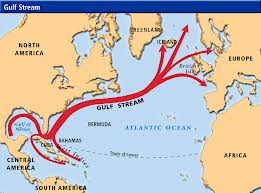
The Gulf Stream is a current that brings warm ocean water from the south to the north.
a)
conduction
b)
convection
c)
radiation
52.
Walking on the warm sand sand with your bare feet.
a)
conduction
b)
convection
c)
radiation
53.
Which direction will the heat flow while this person holds a hot cup of tea?
a)
from the cup to her hand
b)
from her hand to the cup
c)
no heat is transferred
54.
Which direction will the heat flow while this ice cap melts?
a)
there is no heat transfer
b)
from the icecap to the water
c)
from the water to the icecap
55.
In this experiment, the WARM red dye and the COLD blue dye was placed in the water at the same time. The warm red dye rose to the top while the cold blue dye sank to the bottom.
a)
conduction
b)
convection
c)
radiation
56.
Heat transfers from an area of ____temperature to an area of ___ temperature.
a)
high to low
b)
low to high
c)
high to high
57.
High temperature is connected to:
a)
Low kinetic energy.
b)
High kinetic energy.
c)
Zero net energy.
d)
Equal kinetic energies.
58.
What is thermodynamics?
a)
movement of heat
b)
it's magic
c)
measurement of heat
d)
none of them
59.
Energy due to motion is ____________ energy. 
a)
Potential 
b)
Energy
c)
Kinetic
d)
Friction
60.
A measure of the amount of matter in an object
a)
mass
b)
weight
c)
gravity
d)
pounds
61.
A force of attraction between 2 object that is directly related to mass and indirectly related to distance.
a)
mass
b)
weight
c)
gravity
d)
kilogram
62.
As mass increases, what happens to gravitational force?
a)
increases
b)
decreases
c)
stays the same
d)
i don't know
63.
As the distance between 2 objects increases, what happens to gravitational force?
a)
increases
b)
decreases
c)
stays the same
d)
i don't know
64.
Which of the following will not change in different gravitational fields?
a)
wieght
b)
force
c)
mass
d)
pounds
65.
Which of the following will change with different gravitational forces?
a)
mass
b)
amount of matter in an object
c)
weight
d)
kilograms
66.
What would happen to your weight if Earth's mass was cut in half?
a)
increase because gravitational force increases
b)
decrease because gravitational force decreases
c)
decrease because gravitational force increases
d)
increase because gravitational force decreases
67.
A measure of gravitational force on an object.
a)
gravity
b)
weight
c)
mass
d)
kilograms
68.
The force of gravity on Jupiter is a little more than 2 times the gravitational force on Earth. If an object has a mass of 50 kg and a weight of 490 N on Earth, what would be the object's approximate mass and weight on Jupiter?
a)
50 kg and 490 N
b)
100 kg and 490 N
c)
50 kg and 980 N
d)
100 kg and 980 N
69.
If Earth's mass was cut in half, what would happen to your mass?
a)
increase because gravitational force increases
b)
decrease because gravitational force decreases
c)
decrease because gravitational force increases
d)
nothing, mass is not affected by gravitational force
70.
Scientists measure weight using which SI unit?
a)
Pounds
b)
Newtons
c)
M/S
d)
Kg
71.
What do we call the path of an object when it goes around another object?
a)
Orbit
b)
Free Fall
c)
Projectile Motion
d)
Terminal Velocity
72.
What is an unbalanced force that causes an object to move in a circular path called?
a)
Free Fall
b)
Projectile Motion
c)
Terminal Velocity
d)
Centripetal Force
73.
When only the force of gravity is acting on an object, we say that the object is in ___________________________.
a)
Terminal Velocity
b)
Free Fall
c)
Projectile motion
d)
Centripetal Force
74.

Which of the following is an example of projectile motion?

a)

A baseball being pitched to a catcher.

b)

a feather falling in a vacuum

c)

a car driving up a mountain

d)

a book laying on a desk

75.
When an object is falling, and it reaches it's maximum speed because air resistance is equal to the force of gravity, the object has reached __________________________.
a)
Free Fall
b)
Terminal Velocity
c)
Projectile Motion
d)
Orbit
76.
What force causes objects falling near Earth's surface to slow down?
a)
Gravity
b)
Air Resistance
c)
Centripetal Force
d)
Newtons
77.
If a bowling ball and a feather were dropped at the same time, in a room with no air resistance (vacuum), which object will hit the ground first?
a)
Bowling Ball
b)
Feather
c)
Both would hit at the same time
d)
Neither one would hit the ground because air is what pushing things down.
78.
Which of the following features does NOT affect air resistance?
a)
Speed
b)
Size
c)
Shape
d)
Mass
79.
In what directions is a projectile accelerated?
a)
Horizontally
b)
Vertically downward
c)
Vertically upward
d)
Both horizontally and vertically downward
80.

According to Coulomb's Law, when the distance increases, the electrostatic force ____________.

a)

increases

b)

decreases

c)

remains unchanged

d)

has no relationship to distance

81.

The Coulomb is the unit for:

a)

Charge

b)

Force

c)

Distance

d)

Mass

82.

What happens to the force between two charged objects when you double the distance between them?

a)

it doubles

b)

it is cut in half

c)

it quadruples

d)

it is cut by 1/4

83.

If one of the charges doubles, what happens to the force?

a)

it doubles

b)

it gets cut in half

c)

it quadruples

d)

it is cut by 1/4

84.

What is the unit for electrostatic charge?

a)

Coulombs

b)

Newtons

c)

Meters

d)

Joules

85.

Coulomb’s law states that the force between two charged objects will __________ when the magnitude (value) of the object’s charge increases.

a)

increase

b)

decrease

c)

stay the same

d)

first increase, then decrease

86.

What would a negative value for Fe mean?

a)

The particles are moving away from each other

b)

The particles have the same charge

c)

The particles have opposite charges

d)

The particles are moving towards each other

87.

Select all answer that apply:


What kinds of particles do Coulomb's Law apply to?

a)

electrons

b)

protons

c)

neutrons

d)

neutral atoms

88.

A repulsive force exists between which two particles?

a)

Two neutrons

b)

An electron and a neutron

c)

An electron and a proton

d)

Two protons

89.

The variable "r" in Coulomb's Law would have what units?

a)

Joules

b)

Coulombs

c)

Newtons

d)

Meters

90.

Which is the value of the constant in Coulomb's equation?

a)

ke = 9·10-9

b)

ke = 9.8

c)

ke = 6.67·10-11

d)

ke = 9 ·109

91.

What does "r" measure?

a)

the distance between the two charged objects

b)

the amount of charge carried by the objects

c)

the amount of force between two charged objects

d)

the constant value for forces between the objects

92.

What does Fe stand for?

a)

the electrostatic force

b)

the symbol for iron

c)

the constant for the charges

d)

the charges of the particles

93.

What will be the units of F (or Fe)?

a)

Newtons

b)

Meters

c)

Coulombs

d)

Joules

94.

As the value of r increases, what happens to the value of F?

a)

F increases

b)

F decreases

c)

F never changes, q does

d)

Cannot know from the information

95.

What does q measure?

a)

the distance between the two charged objects

b)

the amount of charge carried by the object

c)

the amount of force between two charged objects

96.

Why are there two q's in the equation?

a)

because there are two charged objects

b)

because there are protons and electrons

c)

because the particles are moving away from each other

d)

because the particles are moving towards each other

97.

What can you do to increase the value of k?

a)

change the force

b)

change the distance

c)

change the charge

d)

nothing can be done to change the value of k; it is a constant

98.

An attractive force exists between which two particles?

a)

Two neutrons

b)

An electron and a neutron

c)

An electron and a proton

d)

Two electrons

99.

Coulomb's Law is __________ proportional.

a)

directly

b)

inversely

c)

polymetrically

d)

exponentially