
 Worksheets
ACADEC 2025 Science Test #2
Total questions: 100
Worksheet time: 2hrs 54mins
A negatively charged particle ____________________
possesses more protons than electrons
possesses more electrons than protons
has equal numbers of protons and electrons

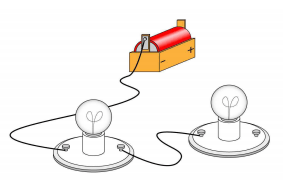
The circuit shown on the picture above is an example of a /an _______
Closed Circuit
Open Circuit

What can we do to make this circuit pictured a "closed circuit" so the bulb lights up?
connect wire to the terminal
disconnect the wire from the lightbulb
screw in the lightbulb
replace the battery

The unit to measure power
watt
ohm
volt
ampere
The measure of electrical resistance
watt
ohm
volt
ampere
The unit for electric current
watt
ohm
volt
ampere
Sub atomic particles that have a negative charge
protons
neutrons
electrons
circuits
Electric current is the flow of ______________________
electrons
protons
neutrons
atoms

(Look at picture for question)
A device that restricts or opposes the flow of electrons
A device that allows easy flow of electrons
A device that can be used as a battery
A device that measures electric current
A 1.5 volt battery will give 1 coulomb of charge how many joule(s) of energy?
1.5 Joules of energy
0.2 Joules of energy
1 Joule of energy
0 joule of energy
What form of energy is stored in a battery?
chemical energy
gravitational potential energy
kinetic energy
thermal energy
A circuit is connected in series with a 20 volt source. There are three resistors placed in the circuit. The resistances are 8 ohms, 10 ohms, and 4 ohms. What is the total power of the circuit?
0.91 W
18.18 W
440 W
8800 W
A student makes the following claim about electron flow through a circuit that includes a battery and a bulb:
“The current through the circuit is called direct current because the electrons move from the negative side of the battery, through the circuit, to the positive side of the battery."
The student is incorrect and is actually describing Alternating Current
The student is incorrect because the electrons go from positive to negative
The student is incorrect because electrons don't flow through the wire
The student is correct
A battery is wired to a single lightbulb in series. How can the current in the wire be described?
The current goes into the lightbulb and uses all the current
The current goes through the lightbulb and uses some of the current
The current goes through the circuit and none is removed
Two resistors are wired in parallel and have an equivalent resistance of 8 ohms. Which of the following could be the resistance of R1?
8 ohm
7 ohms
5 ohms
10 ohms
A voltmeter should be wired in (a)
A voltmeter should be wired in ________ and a ammeter should be wired in _______
series, parallel
parallel, series
series, series
parallel, parallel
Equivalent resistance of a circuit means ___________
resistance of a single resistor
all resistors have an equal resistance
total resistance of the circuit
Which appliance costs the most?
TV I=4A V=120V t=4.0 hrs
Vacuum I=6A V=120V t=0.10 hrs
Heater I=10A V=120V t=0.75 hrs
Gaming Console I=8A V=120V t=2.5 hrs
TV
Vacuum
Heater
Gaming Console
A series circuit with two lightbulbs is attached to a 10 volt battery. Which of the following circuit elements should the student use to ensure the bulbs do not blow when too much current goes through the circuit?
fuse
switch
resistor

What is the total current in the circuit?
2.08A
0.96A
11.53A
9.8A
Which way does charge flow in a circuit? ___________ to __________
Positive, Negative
Negative, Positive
North, South
East, West
What is the formula for electric power?
P=IV
P=I2R
P=RV2
All of the above are correct.

Which circuit will have the brightest lightbulbs?

Which circuit continues to function after the removal of one of the resistors?

Use the diagram to answer the following question. What is the total Power of the circuit?
Total Power = 17.5 W
Total Power = 30.0 W
Total Power = 25.0 W
Total Power = 14.4 W
What is the interaction of electric charges that causes the flow of electrons from one place to another called?
Static Electricity
Electric Current
Electricity
Insulation
Electricity travels at the speed of ______.
Sound
Light
Water
Wind
Fill in the blank: A substance that allows electric current to pass through is called a ______.
A) Insulator
B) Conductor
C) Resistor
D) Capacitor
Electricity is the interaction of electric charges and the flow of ______ from one place to another.
protons
neutrons
electrons
ions
What is the property of protons and electrons that make up every atom?
Mass
Electric charge
Volume
Density
Fill in the blank: Materials that do not allow electric current to flow through them easily are called ________.
Conductors
Insulators
Semiconductors
Resistors
Which best briefly summarizes the law of electric charges?
Charges always repel.
Charges always attract.
Charges that are opposite in nature attract; charges that are the same in nature repel.
Charges that are opposite in nature repel; charges that are the same in nature attract.
What is the buildup of electrical charges in one place called?
Neutrons
Static Electricity
Insulator
Conductor
What unit is electric current measured in?
Ω (Ohms)
V (Volts)
A (Amps)
W (Watts)
Which of the following would be the best example of a conductor?
a. a tire
b. a plastic spoon
c. a log
d. aluminum foil
All wires used to carry electricity should be covered with _____.
a. a colored material
b. a conducting material
c. an insulating material
d. none of these.
Which form of electric discharge appears in nature?
sunlight
thunder
lightning
northern lights

Why does a negatively-charged balloon stick to a neutral wall?
A negatively-charged balloon sticks to a neutral wall due to electrostatic induction. Electrons in the wall are pushed away, leaving behind protons, creating an attractive force.



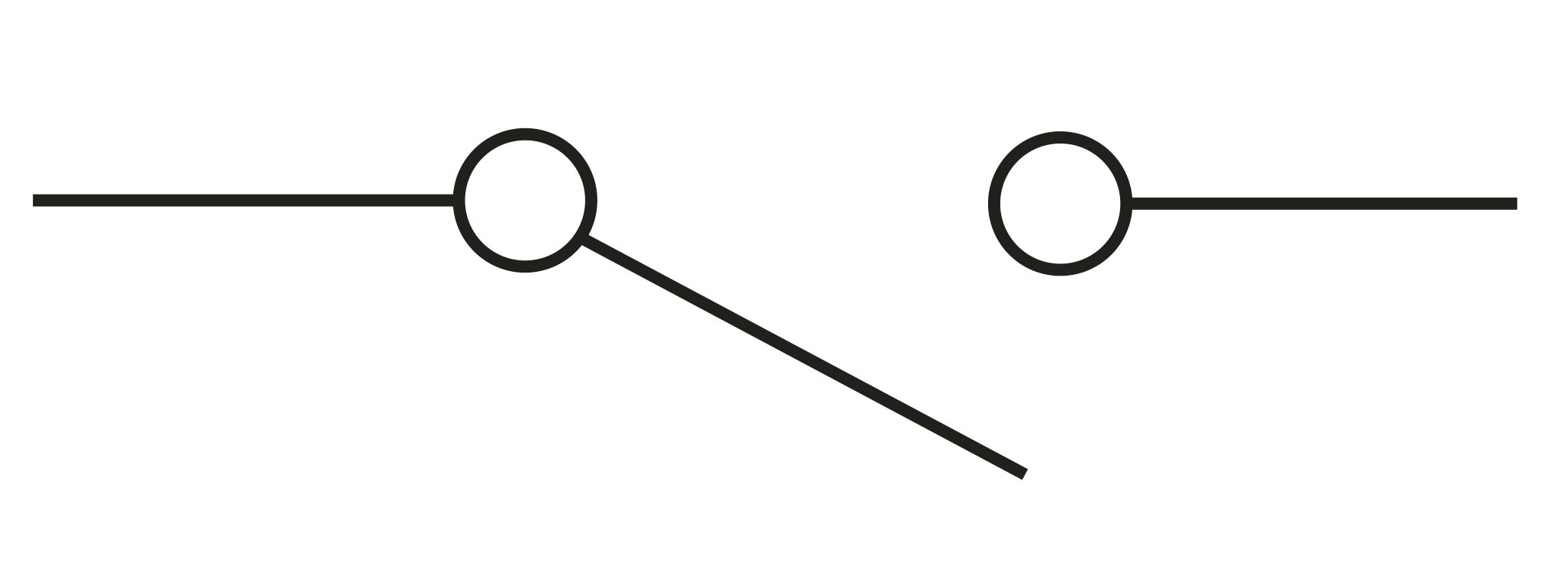
wire

light bulb

battery

switch

electric circuit


Why electrical wiring usually are covered with a layer of plastic?
To make it look pretty
To help electricity flow along the wire
To make it safe
To add more energy

Why is a battery important in an electrical circuit?
As a source of energy.
As a path for electricity to flow through.
As a connector to connect all parts of a circuit.
The force or push that causes electric charges to move is called ______.
resistance
voltage difference
current
static electricity
Electric charges always flow from _____ areas to _____ areas.
positive, negative
negative, positive
positive, neutral
neutral, negative
. A material through which electrons do NOT flow easily is a(n) _____.
insulator
fuse
conductor
circuit breaker
Which of the following statements about electric charge is true?
Objects must be touching on another to exert electrical force.
Electrical forces act at a distance.
Air cannot conduct electricity; it is conducted only by solid materials.
Opposite electric charges always repel one another.
Mr. Robinson and his class are conducting an experiment. The class needs to choose a good insulator. Which of the following could be used as an insulator?
plastic plate
silver spoon
copper wire
gold necklace
Which of the following will increase the resistance of a wire?
using a thicker/wider wire
using a shorter wire
increasing the temperature of the wire
using silver instead of copper
What is the current produced by a 9-volt battery flowing through a resistance of 0.2 ohms?
1.8 amps
45 amps
0.022 amps
8.8 amps
Which two areas of physical science are closely related to the development of electric motors and generators?
sound and light
electricity and sound
light and magnetism
electricity and magnetism
Which of the following will decrease the strength of the magnetic field around a wire?
increasing the current flowing through the wire
using less loops around the iron core
flipping the direction of the current flowing through the wire
using a larger iron core
Silver has a resistance of 0.0198 ohms. What voltage would produce a current of 100 amps?
1.98 V
0.000198 V
5,050 V
100.0198 V
This contains a piece of metal that melts if it gets too hot in order to open a circuit.
conductor
insulator
fuse
circuit breaker
The function of a generator is to change ____.
chemical energy to electrical energy
electrical energy to chemical energy
electrical energy to mechanical energy
mechanical energy to electrical energy
This exerts a force that causes other electric charges to move.
electrical poles
electrical fields
insulators
conductors
Which circuit below contains the greatest voltage?
A circuit with a current of 20 amps and a resistance of 16 ohms
A circuit with a current of 10 amps and a resistance of 10 ohms
A circuit with a current of 25 amps and a resistance of 16 ohms
A circuit with a current of 20 amps and a resistance of 10 ohms
What process is the method by which a neutral object obtains an electrical charge from a distance?
convection
conduction
radiation
induction
The Law of Conservation of Charge states that _____.
charge can be created and destroyed but NOT transferred.
charge cannot be created and destroyed but it can be transferred.
charge cannot be created and destroyed and it cannot be transferred.
none of the above
Alexandra was preparing to go on a hike in the woods. She gathered the equipment she would need and placed it on the kitchen counter. By chance, she placed her compass near an electrical outlet. Although the compass was not moving, the compass needle turned because ______.
the electric current in the outlet produced a magnetic field
the compass could only be used outdoors
the kitchen counter was made of a magnetic substance
the kitchen had a microwave oven
In a closed circuit containing one resistor and a battery, if the voltage in the battery increases, the current going through the resistor increases. Why does this occur?
As the electrons are sped up, they bunch closer together.
As the electrons have more energy, they vibrate more rapidly.
As the electrons are pushed more by the battery, they move faster through the circuit.
As the distance around the circuit increases, the electrons take longer to travel around.
Laser printers work with the use of heat and positive and negative charges. The laser etches a negative charge on spots of the printer drum in the form of text or images. The plastic ink dust is attracted to the places on the drum with this negative charge. What is the charge of the plastic ink dots themselves?
electron
negative
neutral
postive
Protons
Positively charged particles in an atom
Electrons
Negatively charged particles in an atom
Neutrons
Particles in the atom that have no charge
Ferromegnetism
When non-magnetic materials become attracted to magnets
Electroscope
A device that detects electric charge on an object
Electromagnets
Temporary magnet made by placing a piece of iron inside a current carrying coil of wire.
Voltmeter
A device that measures the voltage difference in a circuit
Series Circuit
Circuit that has only one pathway for current to travel through
Parallel Circuit
Circuit that has more than one pathway for current to travel through



