wayground logo

Free Printable Worksheets

Font size

S
M
L
XL
Worksheets

Physics Diagnostic Test

Total questions: 97

Worksheet time: 2hrs 46mins

Name
Class
Date
1.
Acceleration occurs when an object changes its speed or ______.
a)
direction
b)
force
c)
inertia
d)
mass
2.
Which runner stopped for a rest?
a)
Albert
b)
Bob
c)
Charlie
3.
Which runner won the race?
a)
Albert
b)
Bob
c)
Charlie
4.
How long did one of the runner's rest?
a)
8 seconds
b)
13 seconds
c)
5 seconds
d)
50 seconds
5.
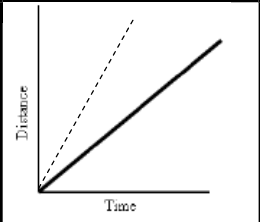
What does this graph represent?
a)
Constant speed
b)
Acceleration
c)
Not moving
6.
What does this graph represent?
a)
Constant Speed
b)
Acceleration
c)
Not moving
7.
What kind of acceleration is shown here?
a)
positive
b)
negative
c)
none
d)
varies
8.
What kind of acceleration is shown here?
a)
positive
b)
negative
c)
none
d)
varies
9.
What kind of acceleration is shown here?
a)
none
b)
positive
c)
negative
d)
varies
10.
What is the velocity?
a)
not moving
b)
increasing
c)
positive
d)
negative
11.
A golf ball accelerates off a tee at 15m/s2, changing its velocity from 0m/s to 50 m/s down the fairway. How long did it take the golf ball to accelerate?
a)
750 seconds
b)
35 seconds
c)
0.3 seconds
d)
3.3 seconds
12.
A roller coasters accelerates from an initial velocity of of 6.0 m/s to a final velocity of 70 m/s over 4 seconds.  What's the acceleration?
a)
24 m/s2
b)
18 m/s2
c)
16 m/s2
d)
16 m/s
13.

At what point is the person not moving?

a)

A and C

b)

B and D

c)

D and E

d)

A and E

14.

At what point is the person returning to the house?

a)

A

b)

B

c)

D

d)

E

15.
Which formula is used to find average velocity?
a)
Vavg = (rfinal - rinitial)/(tfinal - tinitial)
b)
Vavg = (rinitial - rfinal)/(tinitial - tfinal)
c)
Vavg = (afinal - ainitial)/(tfinal - tinitial)
d)
Vavg = (ainitial - afinal)/(tinitial - tfinal)
16.
An object travels a distance of 12.8 m in 15 seconds. What is its average velocity?
a)
15 m/s
b)
12.8 m/s
c)
0.85 m/s
d)
1.17 m/s
17.
A bike travels at a constant speed of 4 m/s for 5 seconds. How far does it go?
a)
4 m
b)
10 m
c)
20 m
d)
1.5 m
18.
If an airplane has an initial distance of 10 m, and an initial time of 500 s. After it has a final time of 1000 s and a final distance of 18 m. What is the velocity?
a)
0.016 m/s
b)
250 m/s
c)
1.6 m/s
19.
If a cat has a initial time of 0s, and an initial distance of 0s. Later it has a final time of 50 s, and a final distance of 70 m. What is the velocity?
a)
1.4 m/s
b)
0.714 m/s
c)
1.142 m/s
20.
What is the total displacement of the object represented in this motion graph?
a)
5 meters
b)
4 meters
c)
2 meters
d)
0 meters
21.
What is the total distance of the object represented in this motion graph?
a)
5 meters
b)
4 meters
c)
2 meters
d)
0 meters
22.
What is the total distance of the object represented in this motion graph?
a)
0 meters
b)
10 meters
c)
11 meters
d)
20 meters
23.
What is the total displacement of the object represented in this motion graph?
a)
0 meters
b)
10 meters
c)
11 meters
d)
20 meters
24.
What is the total distance of the object represented in this motion graph?
a)
0 meters
b)
20 meters
c)
30 meters
d)
60 meters
25.
What is the total displacement of the object represented in this motion graph?
a)
0 meters
b)
20 meters
c)
30 meters
d)
60 meters
26.
What is the total displacement of the object represented in this motion graph? 
a)
0 meters
b)
- 50 meters
c)
50 meters
d)
100 meters
27.
What is the total distance of the object represented in this motion graph?
a)
0 meters
b)
300 meters
c)
450 meters
d)
600 meters
28.
If you drop a banana, how fast is it going after 2 seconds?
a)
4.9m/s
b)
9.8m/s
c)
19.6m/s
d)
29.4m/s
29.
If you throw a baseball straight up, what is its velocity at the highest point?
a)
9.8 m/s2
b)
9.8 m/s
c)
0 m/s2
d)
0 m/s
30.
The more mass an object has, the faster it will fall.
a)
True
b)
False
31.
What is the horizontal acceleration of a projectile?
a)
0 m/s2
b)
9.8 m/s2
32.
Energy of motion is which type of energy?
a)
Potential
b)
Kinetic
c)
Sound
d)
Gravitational
33.
What kind of energy is represented in this picture?
a)
Thermal
b)
Potential
c)
Nuclear
d)
Mechanical
34.
What kind of energy does this device use?
a)
Chemical
b)
Electrical
c)
Thermal
d)
Chemical
35.
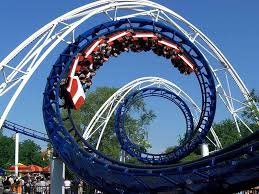
On a roller coaster, where is maximum potential energy?
a)
At the bottom of a big hill
b)
When going around a corner
c)
When going upside down
d)
At the top of a big hill
36.
On a roller coaster, where is maximum kinetic energy?
a)
At the bottom of a big hill
b)
When going around a corner
c)
When going upside down
d)
At the top of a big hill
37.
According to which law of energy, energy can't be created or destroyed?
a)
First law of motion
b)
The law of tacos
c)
Laws of Energy
d)
law of conservation of energy
38.
The ability to do work is
a)
power
b)
energy
c)
thermal
d)
kinetic
39.
Work divided by time equals...
a)
energy
b)
power
40.
The unit of work is the ...
a)
joule
b)
force
41.
Force multiplied by distance equals...
a)
work
b)
power
42.
If you pull at an angle instead of in the direction in which the object moves, MORE of your force does work.
a)
True
b)
False
43.
The FARTHER you move an object, the more work you do.
a)
True
b)
False
44.

Which of the following is the best example of work being done.

a)

doing homework

b)

lifting a box

c)

pushing a stationary box

d)

holding a box

45.
A 5000N block is lifted 10 m. How much work was done?
a)
50000 J
b)
5000 J
c)
500 J
d)
50 J
46.
Conservation is the act of conserving, or protecting the environment, plants, and animals. Why is this so important? What are some things you can do to help conserve our environment? 
a)
leave water on, leave TV on, run dishwasher with 1 plate
b)
run the washing machine with 1 shirt
c)
leave the refrigerator door open
d)
turn off water, turn off lights, turn off TV
47.
An endangered species is
a)
One whose numbers are so small that it is at risk of extinction
b)
One whose not been spotted after many years.
c)
One whose numbers are abundant.
48.
Which of these describes a species that has become extinct?
a)
fewer members of the species are dying than being born
b)
more members of the species are dying than being born
c)
very few members of a species are alive
d)
all members of a species have died
49.
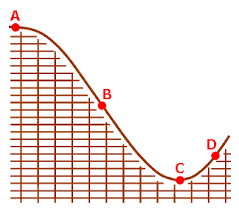
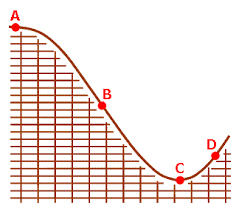
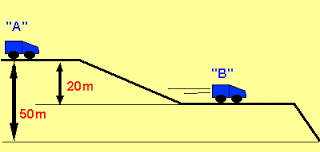
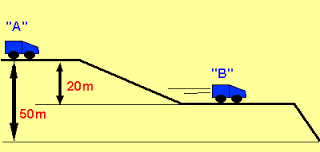
At which point(s) on the roller coaster is the gravitational potential energy at its maximum?
a)
A
b)
B
c)
C
d)
D
50.
At which point(s) on the roller coaster is the kinetic energy at its maximum?
a)
A
b)
B
c)
C
d)
D
51.
In diagram 2, if the mass of the car is 600 kg, what is the change in potential energy from point A to point B?
a)
411,600 J
b)
294,000
c)
176,400 J
d)
117,600 J
52.
In diagram 2, if the 600 kg cart is initially at rest, what is its velocity at point B?
a)
19.8 m/s
b)
15.0 m/s
c)
10.3 m/s
d)
3.8 m/s
53.

1. A ball has a 17 J of kinetic energy and its mechanical energy is 25 J. If the ball has a mass of 3.2 kg, what is its height above the ground?

a)

0.26 m

b)

0.52 m

c)

5.2 m

d)

25 m

54.

The mass which is lost during the decay is called the

a)

mass

b)

effective mass

c)

mass defect

d)

mass of proton

55.

Nuclear energy is

a)

the energy obtained from the total mass during a radioactive decay

b)

the energy obtained from the mass defect during an isotope making

c)

the energy obtained from the total mass during a fusion reaction

d)

the energy obtained from the mass defect during a radioactive decay

56.

Which is incorrect?

a)

E = energy released (J)

b)

m = mass defect (kg)

c)

m = total mass (kg)

d)

c = speed of light

57.

Nuclear Fission

a)

is a process of splitting a heavy nucleus into two lighter nuclei. Accompanied with the release of enormous amount of energy from the mass defect

b)

is a self-sustaining reaction in which the products of the reaction can initiate another similar reaction. Accompanied with the release of enormous amount of energy from the mass defect

c)

is a process of combination of two lighter nuclei to form a heavier nuclei. Accompanied with the release of enormous amount of energy from the mass defect

58.

This is a

a)

chain reaction

b)

nuclear fusion reaction

c)

nuclear fission reaction

d)

atomic mass defect reaction

59.

Radium-226 undergoes alpha decay to become radon-222. The equation is :

226 Ra 222 Rn + 4 He.

88 86 2


Calculate the energy released if

Ra-226 = 226.025406 u

Rn-222 = 222.017574 u

He = 4.002603 u

a)

7.81 x 10 - 11 J

b)

7.81 x 10 - 12 J

c)

7.81 x 10 - 13 J

d)

7.81 x 10 - 14 J

60.
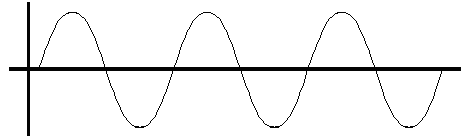
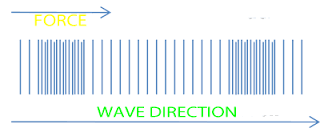
What type of wave is this?
a)
Longitudinal
b)
Transverse
61.
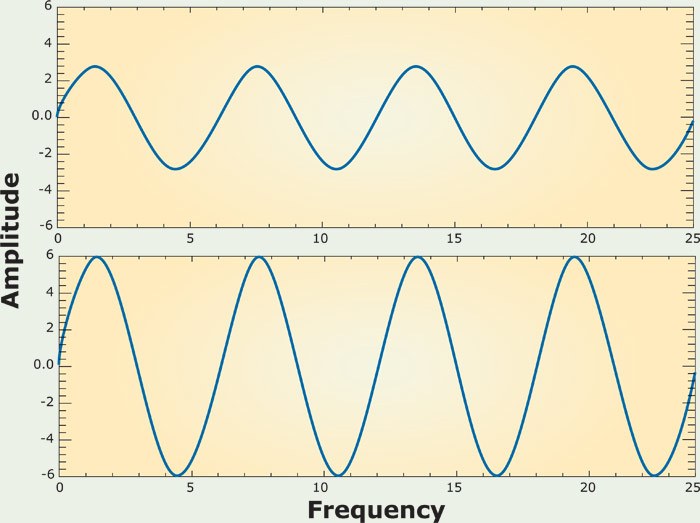
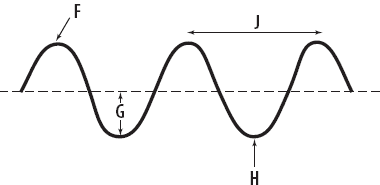
Which property of these waves differs?
a)
Frequency
b)
Wavelength
c)
Amplitude
d)
Pitch
62.
Which waves do NOT need a medium?
a)
Sound
b)
Ocean
c)
Seismic
d)
Light
63.
What type of waves have compressions and rarefactions?
a)
longitudinal
b)
transverse
64.
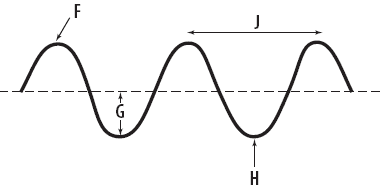
Which letter shows amplitude?
a)
F
b)
G
c)
H
d)
J
65.
Which letter identifies the wavelength?
a)
F
b)
G
c)
H
d)
J
66.

In the diagram, which letter represents the angle of incidence?

a)

A

b)

B

c)

C

d)

D

67.

Which diagram represents specular reflection?

a)

A

b)

B

68.
Law of reflection state that - The angle of incidence is .................. to the angle of reflection.
a)
equal
b)
double
c)
half
69.
........... – the angle between the normal and the reflected ray.
a)
Angle of incidence
b)
Angle of reflection
c)
Angle of coincidence
d)
Angle of direction
70.
What is reflection?
a)
Reflection is the bouncing  of light off the surface that it strikes on.
b)
Reflection is the absorbing of light off the surface that it strikes on.
c)
Reflection is the bending of light off the surface that it strikes on.
d)
Reflection is the scattering of light off the surface that it strikes on.
71.
........... – the angle between the normal and the incident ray.
a)
Angle of incidence
b)
Angle of reflection
c)
Angle of coincidence
d)
Angle of direction
72.
How does light travel
a)
It curves around corners
b)
Really slow
c)
In a straight line
d)
In circles
73.

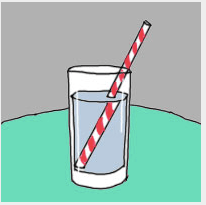
Why does the straw appear to be bent?

a)

light is reflected

b)

light is absorbed

c)

light is turned

d)

light is refracted

74.
a)
Reflection
b)
Refraction
75.
a)
Reflection
b)
Refraction
76.

What type of interference is represented in this diagram?

a)

Constructive

b)

Destructive

77.

What type of interference is represented in the diagram?

a)

Constructive

b)

Destructive

78.

What's happening at A?

a)

Two crests are combining to create constructive interference.

b)

A crest and a trough are combining to create destructive interference.

c)

Two crests are combining to create destructive interference.

d)

A crest and trough are combining to create constructive interference.

79.

What is happening at B?

a)

Two crests are combining to create constructive interference.

b)

A crest and a trough are combining to create destructive interference.

c)

Two crests are combining to create destructive interference.

d)

A crest and a trough are combining to create constructive interference.

80.

What type of interference do noise cancelling headphones use?

a)

Constructive Interference

b)

Destructive Interference

81.

True or False? Longitudinal waves cannot exist in the same place at the same time as transverse waves.

a)

True

b)

False

83.

What does a change in amplitude in a mechanical wave also change/create?

a)

Speed

b)

Constructive Interference

c)

Destructive Interference

d)

Frequency

e)

None of the above

83.

What does a change in amplitude in a mechanical wave also change/create?

a)

Speed

b)

Constructive Interference

c)

Destructive Interference

d)

Frequency

e)

None of the above

84.
When the crest of one wave passes through the trough of another wave, ______ takes place.
a)
resonance
b)
diffraction
c)
destructive interference
d)
constructive interference
85.
A tuning fork starts to vibrate when a certain note is played on the piano, This is an example of _______.
a)
resonance
b)
refraction
c)
diffraction
d)
reflection
86.
According to the Law of reflection, a light ray striking a mirror
a)
continues moving through the mirror in the same direction
b)
moves into the mirror at a slightly different angle
c)
bounces off the mirror toward the direction it came from
d)
bounces off the mirror at the same angle it hits.
87.
A ray of light traveling from air into crown glass strikes the surface at an angle of 30 degrees. What is the angle of refraction? (air n=1, crown glass n=1.532)
a)
39.7 degrees
b)
19.2 degrees
c)
59.1 degrees
d)
12.3 degrees
88.
Glass has a _____________ index of refraction than air.
a)
Equal
b)
Greater
c)
Less
d)
Impossible to say
89.
The study of the behavior of light is called...
a)
Physics
b)
Lightning science
c)
Optics
d)
Lightology
90.
Light travels through a liquid at 2.25 EE 8 m/s. What is the index of the liquid?
a)
1.33
b)
1.0
c)
1.523
d)
2.45
91.

What is not a field that makes up an electromagnetic wave?

a)

electric

b)

magnetic

c)

digitial

d)

none of the above

92.

What electromagnetic wave . has . the shortest wavelengths and the highest frequencies?

a)

Gamma Rays

b)

Ultraviolet Rays

c)

Radio Waves

d)

X Rays

93.

What happens to wavelength as the frequency of a wave increases?

a)

increase

b)

stays the same

c)

decreases

d)

becomes faster

94.

What electromagnetic wave has the longest wavelengths and lowest frequencies?

a)

Microwaves

b)

Ultraviolet Rays

c)

Infrared Waves

d)

Radio Waves

95.

What does the picture below illustrate?

a)

Visible Light Spectrum

b)

Electromagnetic Spectrum

c)

Frequency Indicator

d)

Color Line

96.

What is the saying that can help you remember the order of the visible spectrum?

a)

ROYGBIV

b)

RYOBIVG

c)

ROYBVIG

d)

RIBYOVG

97.

How are we able to see the color white?

a)

All colors except red are absorbed

b)

All colors are absorbed

c)

All colors are reflected

d)

All colors except red are reflected