
 Worksheets
Unit 7 Test Review B
Total questions: 167
Worksheet time: 3hrs 57mins
Is the following a pure substance or mixture? Baking Soda ( NaHCO3 )
pure substance
mixture
Is the following a pure substance or mixture? Trimix (oxygen, nitrogen, and helium) found in a scuba tank
pure substance
mixture
Is the following an element or compound? A silicon (Si) chip.
element
compound
Is the following an element or compound? hydrogen peroxide (H2O2)
element
compound
Is the following a homogeneous or heterogeneous mixture? coffee mixed with cream and sugar
homogeneous mixture
heterogeneous mixture
Is the following homogeneous or heterogeneous? Fruit salad
homogeneous mixture
heterogeneous mixture
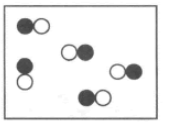
Classify the particle diagram.
element
compound
mixture of elements
mixture of compounds
mixture of elements and compounds
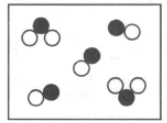
Classify the particle diagram.
element
compound
mixture of elements
mixture of compounds
mixture of elements and compounds
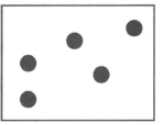
Classify the particle diagram.
element
compound
mixture of elements
mixture of compounds
mixture of elements and compounds

Classify the particle diagram.
element
compound
mixture of elements
mixture of compounds
mixture of elements and compounds

Classify the particle diagram.
element
compound
mixture of elements
mixture of compounds
mixture of elements and compounds
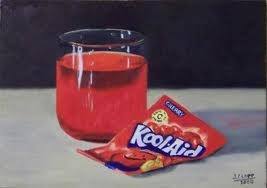
How would you classify this image?
homogeneous mixture
heterogeneous mixture

How would you classify this image?
homogeneous mixture
heterogeneous mixture
Is the following a pure substance or mixture? Brass (Cu and Zn)
pure substance
mixture

How would you classify this image?
homogeneous mixture
heterogeneous mixture

Pure substances are
elements and compounds
heterogeneous mixtures
solutions
homogeneous mixtures

Which of these samples shown best represents an mixture?
A
B
C
D
Which of these samples shown best represents an element?
A
B
C
D
Which of these samples shown best represents a compound?
A
B
C
D
Metals and Nonmetals make up the category of
compounds
elements
magnetic
ions
The state of matter where particles are very spread out and moving quickly.
gas
liquid
solid
Helium
The phase change when a solid becomes a liquid.
freezing
sublimation
melting
condensation
As heat energy increases, temperature...
increases
decreases
remains the same
varies
The phase change when a gas becomes a liquid.
condensation
evaporation
deposition
sublimation
The phase change when a liquid becomes a gas.
melting
boiling
sublimation
evaporation


solid, liquid, gas and plasma


Which state of matter has the most attraction between particles?
solid
liquid
gas
Which state of matter has the most energy in its particles?
solid
liquid
gas
Which state of matter has the most tightly packed particles?
solid
liquid
gas
Which state of matter is made up of either atoms or molecules?
solid
liquid
gas
All are correct

A solid has _______________ . (Pick 3)
A lot of space between particles
Very little space between particles
Particles with no definite pattern.
Particles that hold a very definite pattern.
Particles that only vibrate in place.
A liquid has _______________ . (Pick 3)
A lot of space between particles.
Very little space between particles.
Particles that have have no definite pattern.
Particles hold that a very definite pattern.
Particles that freely flow past each other.
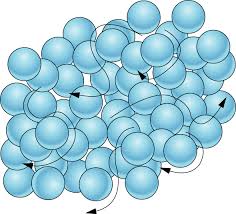
What state of matter?
Solid
Liquid
Gas
Plasma
Which of the following is NOT a part of the Kinetic Theory of Matter?
All matter is made up of tiny particles.
Particles are always moving in random paths
Occasionally, particles stop moving.
The type of movement of particles depends on the amount of energy.
Which of the following states of matter has the LOWEST level of energy?
Solid
Liquid
Gas
Plasma
The energy of an object as it is in motion is defined as
Potential Energy
Elastic Energy
Electric Energy
Kinetic Energy

What happens to the average kinetic energy of matter when it is heated?
It increases
It stays the same
It decreases
It cannot be determined

What state of matter is shown in the image?
Solid
Liquid
Gas
Thermal Energy
If the atoms of an object are moving fast, the temperature would be...
High
Low
When the temperature of matter decreases the particles ...
speed up and move farther apart
slow down and move farther apart
speed up and move closer together
slow down and move closer together
The random motion of the particles in a substance is greatest when the substance is:
condensed
gas
frozen
liquid
What is the measure of the average kinetic energy of the particles in an object?
Heat
Motion
Thermal Energy
Temperature
Particles in a solid move __________, than particles in a gas
faster
slower
more randomly
more fluidly
Particles in a liquid move __________, than particles in a solid
faster
slower
less randomly
less fluidly
Absolute zero is the temperature (in Kelvin), at which, only in theory...
space and time merge together
energy goes to infinity
time stands still
all particles stop moving
What leads to a change of phase in matter?
A change in the number of particles
A change in the amount of kinetic energy
A change in the direction of particle movement
A change in the shape of the container
The energy of movement is ___.
potential energy
kinetic energy
mechanical energy

These properties describe a ___.
solid
liquid
gas

These properties describe a ___.
solid
liquid
gas

These properties describe a ___.
solid
liquid
gas
Which of the following states of matter has the LOWEST level of kinetic energy?
Solid
Liquid
Gas
Plasma
Which state of matter have the weakest intermolecular forces (attraction between the different particles)?
solid
liquid
gas
Phase of matter where particles move around each other while being slightly attracted to each other through intermolecular forces
Plasma
Solid
Liquid
Gas


Temperature is a measure of the average _____________ energy of the particles of a substance.
potential
kinetic
gravitational
heat


When a phase change (the state of matter) is changing, what is true about the temperature?
(Examples are melting, boiling, condensing, freezing, etc.)
Remains the same
Is rising
Is deceasing
Temperature does not matter
As pressure _______________, the volume of the gas ______________.
Increases, decreases
Decreases, Increases
Gains, increases
___________________ is the amount of force applied per unit of area.
Force
Particles
Pressure
Volume
______________'s Law states that pressure of a gas increases if the volume decreases and pressure of a gas decreases if the volume increases, when temperature is constant.
Charles
Boyle
Jacques
Avocados
_____________'s Law states that the volume of a gas increases with increasing temperature, if the pressure is constant.
Charles
Boyle
Boyd
Avocados
"STP" in chemistry is the abbreviation for:
Stone Temple Pilots
Standard Temperature and Pressure
Scientifically Treated Petroleum
Space Test Program
"STP" is equal to the following:
273 K, 1 atm
22 K, 1 atm
0 K, 273 atm
273 C, 760 mmHg
Pressure is caused by:
Gas molecules colliding with surfaces
Gas molecules reacting with each other
Gas molecules colliding with each other
Gravity

At a constant pressure, if the temperature is increased, what happens to the volume?
Increases
decreases
stays the same

What is 50oC in Kelvin?
223
323
100
50
An inflated balloon with a volume of 0.75 L at 30 degree Celsius was placed inside the freezer where the temperature is -10 degree Celsius. What will happen to the volume of the balloon if the pressure remains constant?
Decreases
Doubles
Increases
Remains the same
A 5 L balloon contains H2 gas at a temperature of 23 degrees Celsius. What is temperature of the gas in Kelvin?
805 K
0 K
-250 K
296 K
If a hairspray can is heated, what can be expected of the pressure of the gas inside the can?
The pressure will increase
The pressure will decrease
The pressure will remain constant
The pressure will equalize
A student measures the pressure and volume of an empty water bottle to be 1.4 atm and 2.3 L. She then decreases the pressure to 0.65 atm. What is the new volume?
2.1 L
5.0 L
8.2 L
3.9 L
What is the pressure of a car tire that had an initial pressure of 1.8 atm but was heated from 38°C to 123°C?
0.9 atm
2.1 atm
1.6 atm
3.4 atm
A 6.00 L sample of nitrogen at 10.0oC and 1.00 atm is compressed into 2.00L cylinder. What pressure will the gas exert in the cylinder at 60.0oC?
3.53 atm
18 atm
A 25.0 ml bubble is released from a diver’s air tank at a pressure of 4.0 atm and a temperature of 11.oC. What is the volume of the bubble when it reaches the ocean surface, where the pressure is 1.0 atm and the temperature is 18.0oC?
163.64 mL
102.46 mL
If I have 5.6 liters of gas in a piston at a pressure of 1.5 atm and then compress the gas until its volume is 4.8 L, what will the new pressure inside the piston be?
3.54
2.13
1.75
6.23
Three gases are mixed together in a container with a total pressure of 4.8 atm. If two of the gases have pressures of 1.2 atm and 1.5 atm, what is the pressure of the third gas?
2.5 atm
1.8 atm
2.1 atm
1.3 atm
Suppose your tire pressure is 30psi when the temperature is 30oC. What temperature would you expect the tire to be if the pressure increased to 35psi?
81oC
354oC
-13oC
not enough information
At constant pressure, a balloon's volume changed from 15L to 45L. If the final temperature was 350K, what was the initial temperature?
2 K
1050 K
117 K
not enough information
If 2.6L of a gas at 3.1 atm is compressed to 1.3L, what would the new pressure be?
1.55 atm
2.6 atm
6.2 atm
The pressure stays the same
The combined gas law allows us to determine relationships between temperature, pressure and the volume of gases, including those used in a gas balloon. What is the final pressure if 155.0 mL of a gas at 22.0 o C and 374 mmHg is cooled to 0.00 o C and has a final volume of 102.0 mL
526 mm Hg
614 mmHg
73.4 mmHg
39.1 mmHg
What does STP (standard temperature and pressure) stand for?
0.0 degree Celcius and 1 atm
1.0 mmHg and 273 degree Kelvin
1.0 degree Celcius and 0 atm
1.0 atm 273 degree Celcius
The pressure inside a tire is 225 kPa. Express this value in atm.
22792.5 atm
171000 atm
2.22 atm
0.296 atm
The pressure inside a tire is 225 kPa. Express this value in mm Hg.
22792.5 mm Hg
171000 mm Hg
2.22 mm Hg
1688 mm Hg
The pressure of a gas is 725 mm Hg. Convert this into units of atm.
551000 atm
0.9539 atm
73442.5 atm
7.157 atm
The pressure on the top of a mountain is 0.843 atm, what will be the height of the mercury column in a barometer?
0.0011 mm Hg
641 mm Hg
85.4 mm Hg
0.00832 mm Hg
The pressure of air in a valley below sea level is 117 kPa, what will be the height of the mercury in a barometer?
1.15 mm Hg
11852 mm Hg
878 mm Hg
0.154 mm Hg
What is 45.6 kPa in units of atm?
34656 atm
349 atm
0.06 atm
0.450 atm
What is 45.6 kPa in units of mm Hg?
34656 mm Hg
342 mm Hg
0.06 mm Hg
6.08 mm Hg
What is 1520 mm Hg expressed in units of kPa?
11403 kPa
202.6 kPa
2.00 kPa
15.0 kPa
Express 3.6 atm as mm Hg.
0.0047 mm Hg
365 mm Hg
0.036 mm Hg
2736 mm Hg
A gas is at a pressure of 760 mm Hg. What is its pressure in psi?
14.7 psi
1 psi
205 psi
0.547 psi
The gas in my car's tires is at 32 psi. How many kiloPascals (kPa)is this?
.00426 kPa
.0028 kPa
.00218 kPa
220.571 kPa
Convert
100oC to Kelvin373 K
273 K
212 K
0 K
Convert
450 K to Celsius723oC
277oC
177 oC
623oC
Convert
300 K to Celsius573oC
37oC
27oC
600oC
Convert
0oC to Kelvin−273 K
273 K
32 K
−32 K
Convert
0 K to Celsius273oC
−273oC
32oC
−32oC
What is the boiling point of water on the Fahrenheit scale?
0oF
373oF
100oF
212oF
What is the boiling point of water on the Celsius scale?
0oC
373oC
100oC
212oC
What is the boiling point of water on the Kelvin scale?
0K
373K
100K
212K
What is the freezing/melting point of water of the Fahrenheit scale?
−273oF
0oF
32oF
273oF
What is the freezing/melting point of water of the Celsius scale?
−273oC
0oC
32oC
273oC

