
 Worksheets
Final Exam Review Physical Science
Total questions: 169
Worksheet time: 2hrs 56mins
A Helium atom is emitted during which type of decay?
Gamma
Fusion
Beta
Alpha
An electron is emitted during what type of decay?
Gamma
Fusion
Beta
Alpha
Which definition best describes radioactivity?
The distance from which the valence electrons reside from the charged nucleus
The process by which radio waves are received
The process by which people get superpowers
The emission of energy from an unstable atom or element
Which definition best describes a half life?
The time in which it takes for half of a substance to decay
The time in which it takes for all of a substance to decay
The time in which it takes for one fourth of a substance to decay
The time in which it takes to decay 22 percent of a substance
Select the type of decay that is the strongest. (Hint: think about which one needs a lead block in order to stop)
Alpha
Beta
Gamma
Fission
Which type of decay is the weakest? (HINT: these particles can be stopped by your shirt)
Alpha
Beta
Gamma
Fission

Thorium undergoes nuclear decay by the following equation. Complete the equation.


Neptunium undergoes nuclear decay by the following equation. Complete the equation.


Write the equation for the following process:
The alpha decay of Radon-198


A radioactive substance is going through nuclear decay. It has a half life of 22 days. If I start with 250 grams of this substance, how much is left after 88 days?
31.3 g
15.6 g
62.5 g
125 g
Cesium-137 has a half life of 30 years. If I have 10 grams left after 120 years, how many grams did I start with?
320
80
160
40

Based on the Bohr Model shown, where on the periodic table would you most likely find this element?
Group 3
Group 14
Group 1
Group 2

How many valence electrons are present in the Bohr Model shown?
4
12
14
10

If the atom in the Bohr Model shown was neutral, how many protons would it have in its nucleus?
14
10
2
4
Which part of the atom has the most mass?
electron
proton
neutron
nucleus
Which of the following pictures does NOT accurately represent a noble gas?


Of the following, which is most likely to form an anion?


Which of the following needs to gain only one electron to satisfy the octet rule?


How many electrons will Sodium-23 have if it is neutral?
23
12
11
13
Carbon-14 is a radioactive isotope. How many protons does Carbon-14 have?
12
2
6
14
Carbon-12 and Carbon-14 are common isotopes of carbon. What question makes the most sense to ask if you are trying to determine what each atom is made of?
Why are the atomic numbers different?
Why are the masses different?
Why are the ions different?
Most of the periodic table is made of...
gases
nonmetals
metalloids
metals
When looking at the periodic table, what question would be the best to ask to understand its organization?
Why aren’t the elements in alphabetical order?
Why aren’t the elements in evenly distributed rows and columns?
Why are there so many transition metals?
What charge would a halogen like Fluorine have when it forms an ion?
-1
-7
+1
+7
Germanium (Ge) is a lustrous, hard-brittle, grayish-white element in the carbon group. It is a semiconductor that is stable in air and water.
Is it a.....?
metal
nonmetal
metalloid
Which of the following Lewis Dot Structures would accurately represent lithium?


Based on periodic table trends, where would an element that is a gas probably be located?
the bottom
the right side
no connection can be made
the left side
When looking at the Lewis dot diagrams for elements in the same group, what would be the best question to ask about their connection?
Why can't the electrons be represented by squares?
Why do all elements in the same group have the same amount of valence electrons?
Why don't elements have more than 8 electrons represented?
Why does the element symbol go in the middle?
Which Lewis Dot Diagram accurately represents an alkaline earth metal?


An element is described as being lustrous, malleable, and ductile. It has two valence electrons. When it forms an ion it has a 2+ charge. Which element would this most likely describe?
Magnesium
Fluorine
Nitrogen
Hydrogen
What do the elements N, O, F, Cl, and P have in common?
They are all in the same period
They are all in the same group
They are all nonmetals
They are all metals
What do the elements F, Cl, Br, and I have in common?
They are all in the same period
They are all solids at room temperature
They are all in the same group
They are all metals
An unknown element is brittle, a gas at room temperature and a poor conductor of heat and electricity. It is also very reactive with other elements. Which of the following would most likely be this element's dot diagram?


You are experimenting with various elements to try and identify them. You measure their conductivity and realize the element you have is not a good conductor of electricity. Which one of these would represent the element described?
Metals
Nonmetals
Metalloids
Not enough information is provided

You are trying to identify the metal in a group of elements, so you start with finding the density of each element. Density is a measure of the amount of matter or compactness of a substance. The table below is the data you collected. Which element do you think is MOST likely to be a metal?
a
b
c
d
Which two families on the periodic table are the MOST reactive?
Alkaline Earth Metals and Rare Earth Metals
Alkali Metals and Halogens
Transition Metals and Noble Gases
Carbon Family and Boron Family
When athletes “carb-load” before exercise or an event, they eat a lot of carb-heavy foods that contain __________ energy. When they exercise or compete, that energy is transformed into _________ energy for motion.
Light; sound
Electromagnetic; nuclear
Chemical; kinetic
Mechanical; chemical
What kind of energy is released through changing the nucleus of an atom through fission or fusion?
Light
Thermal
Chemical
Nuclear

What temperature is the heat of fusion for the substance shown on the heating curve?
50 degrees celsius
100 degrees celsius
-50 degrees celsius
0 degrees celsius
True or False: A substance with a high specific heat will heat up faster than a substance with low specific heat.
True
False
The standard unit of energy is:
Velocity
Joule
Mass
Calorie
Specific Heat is the amount of heat required to raise the temperature of one gram (or sometimes one kilogram) of a substance by one degree Celsius. You and your friends decide to go to Panama City Beach, the sand and the ocean both absorb the same amount of sunlight. The sand heats up ________ than the ocean because the ocean’s specific heat is 6 times larger than the sand.
6 times slower
6 times faster
2 times faster
2 times slower
Which of the following allows animals to live in water without being boiled alive?
Water's low specific heat
Water's high specific heat
Water's high specific gravity
Water's nuclear decay
Which of the following is NOT a type of potential energy?
Elastic
Gravitational
Chemical
Radiant
Describe the energy transformation that occurs when fireworks go off.
Solar to electrical
Electrical to light
Chemical to electromagnetic to sound
Solar to chemical

The heating curve of iron is shown below. Describe what is happening between points D and E.
The sample of iron is melting.
The sample of iron is boiling.
The sample of iron is being heated in the solid state.
The sample of iron is being heated in the liquid state.
The sun transfers heat to Earth by which of the following:
Conduction
Convection
Radiation
Beta particles
A cinder block sits on a platform that is 20 m high. If it has a mass of 8 kg, find its energy, using one of the formulas listed.
KE = 1/2 * m * v2
PE = m*g*h
160 J
1,568 J
0 J
784 J
A pot of water is boiling on the stove. The pot heats up by heat transferring from the stove to the pot. This is an example of _________________.
Conduction
Convection
Radiation
Osmosis
Lauryn serves a volleyball with a mass of 2.1 kg. The ball leaves her hand with a speed of 30 m/s. Find the energy of the ball.
KE = 1/2 * m * v2
PE = m*g*h
31.5 J
1,890 J
945 J
126 J
A boy licks a metal pole in the middle of a very cold winter, and his tongue gets stuck to it. Pick the best scientific explanation of the phenomenon.
The specific heat of the metal pole is very high causing heat to transfer quickly.
The specific heat of the metal pole is very low causing heat to transfer quickly.
The boy’s tongue is a good insulator so heat can be transferred quickly.
The metal pole is a good insulator so heat can be transferred quickly.

Shown is a heating curve for water. What do the blue lines on this graph represent?
Temperature changes
Changes in specific heat
Changes in the amount of water being heated
Phase changes
The amount of energy required to melt one gram of a substance at its melting point is called the _________.
Heat of Vaporization
Specific Heat
Heat of fusion
Heat of solidification

Using the chart shown, you are placing a variety of substances under the sun on a hot day. Which of the following substances would you expect to be the hottest after an hour?
Silver
Copper
Asbestos
Water

Using the chart shown, if you wanted to build a fast-cooking solar oven, would you choose lead, aluminum, wood or concrete?
Lead
Aluminum
Wood
Concrete
If the temperature of 2 kg of lead increases from 25 °C to 35 °C, how much heat has been absorbed by the lead? Use the formula Q=mc∆T to answer this question.
2560 J
2000 J
250 J
250,000 kg
A toaster is plugged into a home outlet of 120 volts. How much current does the toaster draw if the toaster’s resistance is 15 ohms?
0.12 amps
8.0 amps
105 amps
1800 amps
Which term best describes a material that allows electric current to flow freely? Which term best describes a material that blocks the flow of electric current?
Electric Motor; Electromagnet
Electromagnet; Generator
Conductor; Insulator
Insulator; Conductor
To make an electromagnet stronger, you can
Use a wire with a high resistance to wrap around the core
Use an aluminum rod for the core
Use a larger nail for the iron core
Increase the number of coils of wire wrapped around the nail
A person received an electrical shock when reaching for the metal doorknob. The shock was caused by the _________.
Discharge of an imbalance of electrons
A high number of electrons on the doorknob
Highly conductive surface of the doorknob
Low resistance of the person skin
A device that converts electrical current into mechanical energy is a(n)
Generator
Electric Motor
Commutator
Transformer
In a circuit, how do electrons move?
From positive to negative, through a conductor such as a wire.
From negative to positive, through an insulator such as plastic.
From positive to negative, through an insulator such as plastic.
From negative to positive, through a conductor such as wire.
Which claim about current is shown to be mathematically supported from the relationship between voltage, current and resistance?
Claim 3: I=V*R
Claim 2: I=V-R
Claim 1: I=V+R
Claim 4: I=V/R
Many generators create electricity with ___________.
Moving magnets and coils of wire
Energy stored in chemical bonds
Nuclear Isotopes
Motors
For a current of 2 amperes and a voltage of 12 volts, what is the resistance in ohms? (Use Ohm’s Law to answer this question)
6 ohms
10 ohms
14 ohms
24 ohms
The location of the strongest magnetic forces is the ____.
Magnetic domains
Magnetic poles
Electromagnets
Magnetic fields

Circuit A is wired in _____________, while Circuit B is wired in _______________.
Parallel; Series
Parallel; Parallel
Series; Parallel
Series; Series
When a glass or plastic rod is rubbed with silk, wool, or fur, a static charge is produced because the friction transfers __________.
Protons
Neutrons
Electrons
Molecules

Will the magnets in the picture attract or repel each other?
repel
attract
neither
there is no way to tell

How would increasing the voltage of the battery affect the lightbulb in the circuit in the picture?
There is no way to tell because the lightbulb is independent of the battery’s voltage output
Increasing voltage would not affect the lightbulb at all
Increasing voltage would cause the lightbulb to dim
Increasing voltage would cause the lightbulb to become brighter
What is one drawback of series circuits?
They are prone to overheating and catching on fire.
They require more wire than parallel circuits.
If one bulb goes out, the others may explode from too much power.
If one bulb goes out, all of the bulbs after it will go out as well.
Which of the following opposes the push from voltage?
Resistance
Current
Circuits
Amperes
Current is measured in
Ohms
Voltz
Amps
Watts
What does “induction” mean when referring to charge transfer?
The transfer of electrons through electric fields over a distance.
The transfer of electrons through rubbing objects against one another.
The transfer of electrons through direct contact with another object.
The transfer of electrons through a vacuum.
What is the definition of magnetism?
A charge imbalance that results in the buildup of excess electric charge on an object.
The property of some materials that allows them to give off an attractive or repulsive force.
The sudden flow of electric charge between two charged objects, due to a buildup of static electricity.
The net movement of electric charge in a single direction.
The region around a magnet where the magnetic forces act is the ____.
Magnetic field
Magnetic pole
Electromagnetic domain
Magnetic domain

The highes point of a wave above the line of origin.
Trough
Crest
Wavelength
Amplitude

The distance between two consecutive crests.
Wavelength
Medium
Frequency
LIne of Origin

the height of the wave.
Matter
Wavelength
Energy
Amplitude
A wave that moves matter and vibrates our eardrums so we can hear.
Seismic waves
Light waves
Sound waves
Water waves

What type of wave is shown in the picture? (up and down)
Transverse Wave
Longitudinal Wave

What type of wave is shown in the picture?
Transverse Wave
Longitudinal Wave
Transverse waves are made up of.......
Crests and Troughs
Compressions and Rarefactions

Which wave has the largest amplitude?
Green
Blue
Red
The total number of waves produced in one second is called the ________ of the wave.
Vibration
Echo
Frequency
Amplitude
What happens when you increase the amplitude of a sound?
It makes the sound travel faster
It makes the sound louder
It increases the wavelength of the sound
It increases the frequency of the sound
A measure of how high or low a sound is
vibration
sound
pitch
music

The lowest point of a wave below the line of origin
Crest
Frequency
Trough
Valley

The line running through the center of the wave.
Amplitude
Equator
Equilibrium
Middle Line
A disturbance in a medium that transfers energy from place to place.
Science
Solids
Matter
Wave
Waves transfer _________.
Energy
Matter
Candy
Boats

What is A supposed to be?
wavelength
crest
trough
amplitude

What is B supposed to be?
wavelength
crest
trough
amplitude

What is C supposed to be?
wavelength
crest
trough
amplitude

What is D supposed to be?
wavelength
crest
trough
amplitude

What is A supposed to be?
short wavelength
long wavelength
high frequency
low frequency

What is B supposed to be?
short wavelength
long wavelength
high frequency
low frequency

What is C supposed to be?
short wavelength
long wavelength
high frequency
low frequency

What is D supposed to be?
short wavelength
long wavelength
high frequency
low frequency
Balance the equation:
CO2 + H2O → C6H12O6 + O2
Answer as _:_:_:_
(a)
How many atoms of N are present in the following chemical formula? Mg(NO3)2
1
2
3
6
What is the correct formula created when Calcium and Flourine combine?
CaF
FCa
CaF2
Ca2F2
Al + N2 → AlN
(a)
How many total atoms are present in the following compound? Ba(NO3)2
4
6
8
9
SiCl4 + H2O → H4SiO4 + HCl
(a)
Al + HCl → AlCl3 + H2
(a)
KClO3 → KClO4 + KCl
(a)
AlBr3 According to the chemical formula shown, how many atoms of Al are present?
1
2
3
4
Al2(SO4)3 + Ca(OH)2 → Al(OH)3 + CaSO4
(a)
Which of the following IS a physical change?
Getting a haircut
Rusty metal
A compound
sour milk
The smallest particle of an element; made of electrons, protons, and neutrons
Atoms
Elements
Molecules
Products
The process by which one or more substances change to produce one or more different substances
Chemical Process
Reactant
Chemical Reaction
A chemical reaction or process that releases heat.
Endothermic
Exothermic

Identify the following process: We light a matchstick.
Physical change
Chemical change
Chemicals that help start or speed up a reaction...
Reactants
Products
Catalysts
CH4
How many CARBON atoms are in this compound?
1
2
3
4
CH4
How many HYDROGEN atoms are in this compound?
1
2
3
4
C6H12O6 + 6O2 → 6 CO2+ 6H2O
What type of chemical reaction is this?
Combustion
Double Displacement
Synthesis
6CO2+ 6H2O → C6H12O6 + 6O2
What is a PRODUCT of this reaction?
Water
Carbon dioxide
Glucose
6CO2+ 6H2O → C6H12O6 + 6O2
The carbon atoms are balanced with ____ on each side of the reaction.
1
6
2
Adding chlorine gas to a solution of potassium iodide gives solid iodide and a solution of potassium chloride. This is an example of what kind of chemical reaction?
Combustion
Synthesis
Single Displacement
Double Displacement
a force exerted by an object with mass to
another object with mass. It is also called as gravity.
(a)
What is force in physics?
A power in star wars
A push or pull on an object
A stop on an object
The start of an object
What can force do to an object?
Accelerate an object
Slow down an object
Have the object remain in place
Have the object change shape
All of the above
What is the measure of force?
Newtons
Light years
Inches
Gallons
What is the unit for FORCE?
N (Newtons)
lbs (pounds)
g (grams)
m/s (meters per second)


What type of force was at work in the parachute?
elastic spring force
frictional force (air resistance)
magnetic force
gravitational force


___________ is an opposing force that makes objects in motion slow down.
force
speed
friction
mass

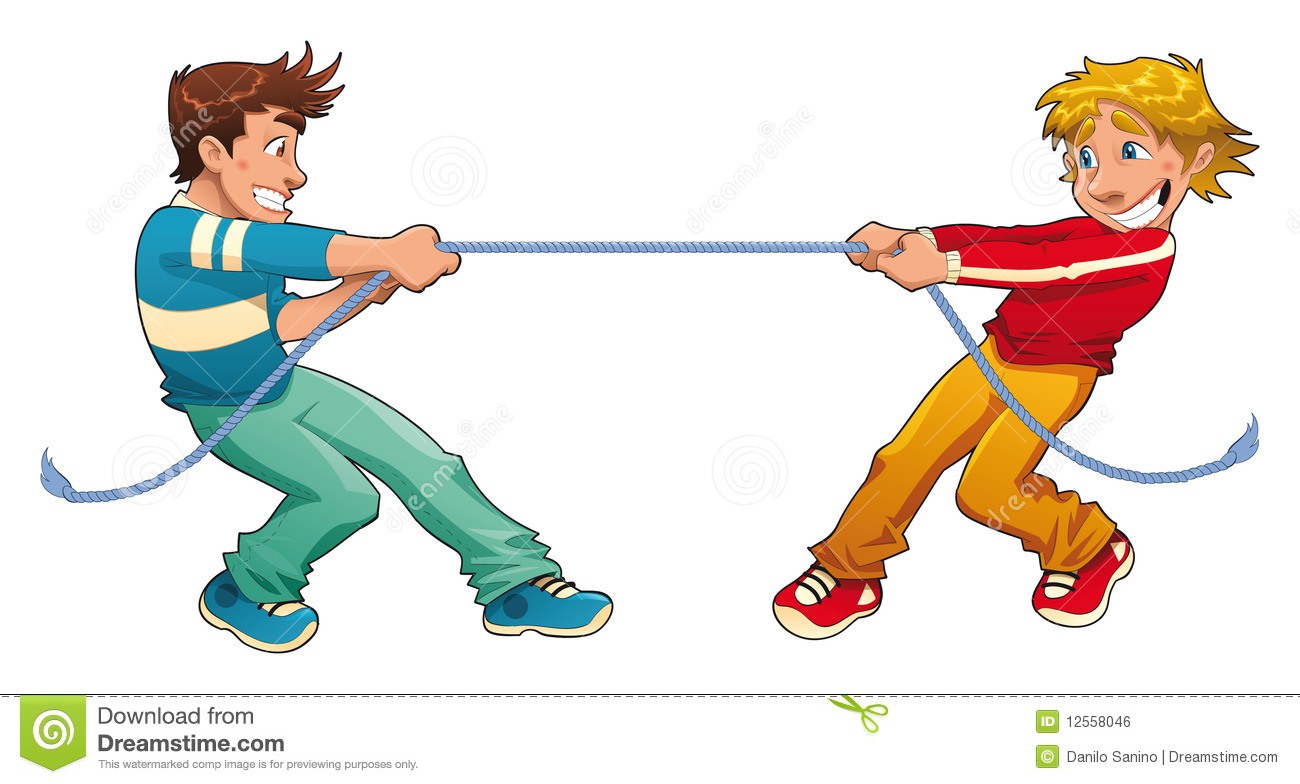
The girls in this picture represent ________ forces (or 2 objects in equilibrium).
Balanced Force
When forces are balanced, there is no change in motion
When two forces act upon each other in opposite directions, and they are both the same size.
Equal in size and opposite in direction
Occurs when objects change in motion and can happen in two different ways.

Which image is an example of a balanced force?
Image 1
(Top Image)
Image 2
(Bottom Image)

Which boy will have an easier time getting down the hill?
Boy A , because he is experiencing less friction than boy B.
Boy B, because he is experiencing more friction than boy A.
How does the mass of an object affect it's motion?
It has no effect
The less the mass the less effect a force will have
The greater the mass the greater the effect a force will have
The greater the mass the less effect a force will have
Why do elements bond?
To be friends
To create a new element
To become stable
To get bigger
Which of these is not a real bond in chemistry?
James
Ionic
Covalent
Metallic
Which of the following describes covalent bonds?
Bonds form because of opposite charges
electrons are shared to fill outer electron shells
Electrons are transferred between atoms
Covalent bonds are magical
The octet rules states that most elements want to have _____ valence electrons.
2
4
6
8
Chemical bond is ...
the physical mixing of two different atoms.
the force that holds two atoms together
the energy used up when two atoms combined.
the temperature that changes the phase of matter.
Which of the following atoms is most likely to bond with another atom?


How many valence electrons does Oxygen (O) have?
6
8
15
16
Which statement best describes the relationship between atoms & molecules.
molecules are made of atoms that are chemically bonded together.
atoms are made of molecules that are chemically bonded together.
molecules are made of a mixture of atoms and compounds.
atoms are made of protons, neutrons & electrons.

