Worksheets
Honors Bio Midterm Review 2023
Total questions: 169
Worksheet time: 3hrs 50mins
What happens when enzymes are heated to a high temperature?
The enzymes die.
The shape of the enzyme's active site changes
The enzymes' amino acid sequence changes.
The enzymes remain the same
Which factors can change the shape of an enzyme and thus denatures (inactivates) a enzyme?
Excessive heat and changes in pH
Nothing can
Exposure to light and sound
Exposure to bacteria and Amoebas
Only plant cells have a cell wall.
True
False -- all cells have a cell wall
False -- animal cells also have cell walls
False -- bacteria and fungi also have cell walls
Which of the following is NOT found in all cells?
Cell membrane
Ribosomes
Cytoplasm
Mitochondria
Select all of the eukaryotic organisms.
Animals
Plants
Protists
Bacteria
Fungi
Cellular Respiration occurs in what cell organelle?
chloroplast
cytoplasm
mitochondria
animal
What are the 3 reactants of photosynthesis? The reactants are the things needed for photosynthesis to occur.
oxygen, glucose, sunlight
sunlight, oxygen, water
water, oxygen, carbon dioxide
carbon dioxide, sunlight, water
What are the 2 products of photosynthesis? The products are the things made in the process of photosynthesis.
water, sunlight
glucose, carbon dioxide
oxygen, glucose
sunlight, oxygen
Plant cells do not perform cellular respiration.
True -- only animal cells perform cellular respiration
False -- plant cells perform both photosynthesis and cellular respiration
What is a similarity in chemosynthesis and photosynthesis
they both produce carbon dioxide
they both use light
the both are used by plants
they both produce sugar

This image is an example of a phospholipid. Which part of a phospholipid is HYDROPHOBIC?
the phosphate "head"
the lipid "tails"


An animal cell placed in a hypertonic solution will
Stay the same
Shrink- get smaller
Swell- get bigger


Carbon dioxide is fixed in the _______that occurs in the _________
light dependent; thylakoid
light dependent; stroma
light independent; thylakoid
light independent; stroma
Which of the following would NOT cause a change in the rate of photosynthesis
lack of oxygen
lack of carbon dioxide
lack of water
lack of light
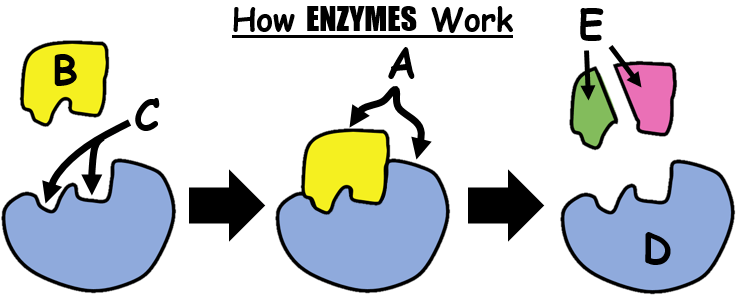
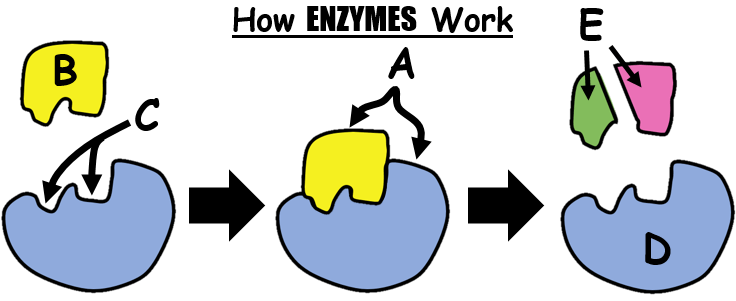
Which of the following properties of water allows for organisms to live in frozen ponds?
Capillary action
Density (float / sink)
Cohesion
Adhesion

Using the key, what species does this organism belong to?
Rana clamitans
Rana catesbeiana
Rana sephenocephala
Rana virgatipes

What process is represented by the equation below?
Photosynthesis
Aerobic respiration
Anaerobic respiration
Nitrogen fixation
Mitchell is creating a model of a plant cell. Mitchell wants to include organelles that are involved in energy production for the cell. Which organelles should Mitchell include?
Mitchell should use mitochondria to store energy and cytoplasm to release energy from food.
Mitchell should include the nucleus to transform light energy and chloroplasts to store energy.
Mitchell should include cytoplasm to store energy and lysosomes to release energy from food.
Mitchell should include chloroplasts to transform light energy and mitochondria to release energy from food.

Sydney created a cell model for her science project as shown above. Sydney needs to label her model. Which statement BEST describes the type of model Sydney created?
Sydney has created a plant cell model because only plant cells contain chloroplasts and a cell wall.
Sydney has created an animal cell model because only animal cells contain a nucleus and a cell wall.
Sydney has created a plant cell model because only plant cells contain cytoplasm and a cell membrane.
Sydney has created an animal cell model because only animal cells contain chloroplasts and a cell membrane.
Which describes an interaction between the Golgi apparatus and another organelle to maintain a cell's homeostasis?
The Golgi apparatus stores nutrients provided by the mitochondria.
The Golgi apparatus sorts and packages proteins created by ribosomes.
The Golgi apparatus collects genetic information to be used by the nucleus.
The Golgi apparatus sends and receives chemical signals for the membrane.
In a cell, the information that controls the production of proteins must pass from the nucleus to what other cell structure?
mitochondrion
cell membrane
chloroplast
ribosome
The fluid-mosaic model of the cell membrane suggests that the membrane is primarily composed of proteins and lipids. Which of the following is a function of proteins in the cell membrane?
to allow substances to cross the plasma membrane via active transport
to provide a hydrophilic head so that water can enter the cell
to package and sort molecules to be sent in vesicles
to read messenger RNA to assemble amino acids
Which of the following is the most accurate statement comparing cell membranes and cell walls?
Cell walls prevent everything from entering the cell, while cell membranes allow some things to enter.
Cell membranes function mostly as selectively permeable gatekeepers while cell walls function mainly as support systems.
Cell membranes are found only in animal cells; cell walls are found only in plant cells.
Cell walls function mostly for photosynthesis while cell membranes function mostly for cellular respiration.
An environmental toxin is discovered that interferes with certain cellular functions. When affected cells are examined, it is observed that proteins are normally found in the plasma membrane are instead found in the cytoplasm. Other proteins are also located improperly. Which structure is most likely affected by the toxin?
Lysosomes
Mitochondria
Cell Wall
Golgi apparatus

Which term best completes the concept map above?
an animal cell
a prokaryotic cell
a virus
a plant cell

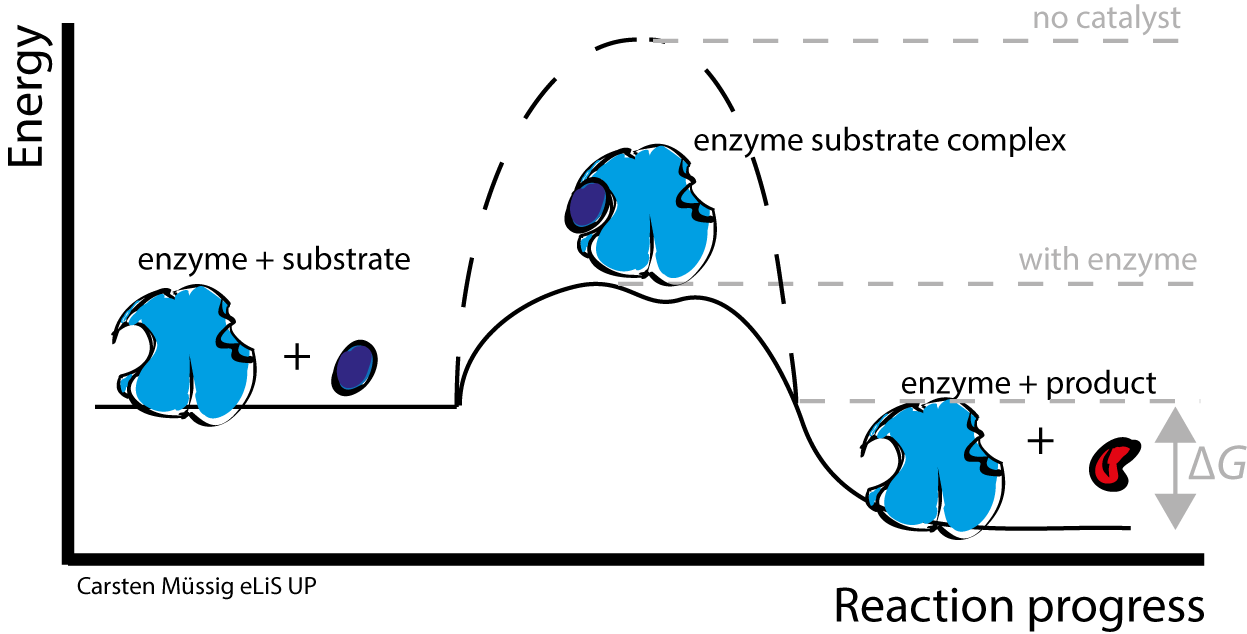
The diagram above shows how living things use enzyme in chemical reactions to release energy. How do enzymes affect the reactions in which they take part?
Most enzymes slow down chemical reactions.
Enzymes are converted into products in the reaction.
Enzymes increase the activation energy of the reaction.
Enzymes decrease the activation energy of the reaction.

A student set up the following investigation. An artificial membrane separates two fluid-filled compartments. This membrane is permeable to water but impermeable to sucrose. Both compartments initially hold the same amount of fluid, which consists of sucrose dissolved in water. The fluid in compartment A is a 20% sucrose solution. The fluid in compartment B is a 35% sucrose solution. Which prediction is correct?
Water will move from compartment A to compartment B by osmosis.
Water will move from compartment B to compartment A by osmosis.
Sucrose will move from compartment A to compartment B by diffusion.
Sucrose will move from compartment B to compartment A by diffusion.

Use the illustration of a cell in its environment above to answer the question. Based on the distribution of these molecules, what will most likely happen after a certain amount of time?
The concentration of CO2 will remain the same inside the cell.
The concentration of O2 will remain the same outside the cell.
The concentration of CO2 will decrease outside the cell.
The concentration of O2 will increase inside the cell.

Which means of particle transport is shown in the figure above?
Osmosis
Diffusion
Facilitated diffusion
Active transport
Maggie places cells of Elodea, a freshwater plant, on a wet-mount microscope slide. She uses a saltwater solution to prepare the slide. When she observes the cells under the microscope, what is she MOST LIKELY to see?
The cells will shrink within the cell walls.
The cells will swell, expanding the cell walls.
The cell walls will dissolve, releasing the cell.
The cells will not be affected and remain unchanged.
A balloon allows water but not sugar to pass through it. The balloon contains a 10% sugar solution. A beaker contains a 5% sugar solution. Which statement is true?
When placed in the beaker, the balloon will gain water by osmosis.
When placed in the beaker, the balloon will lose water by osmosis.
When placed in the beaker, the balloon will gain water by active transport.
When placed in the beaker, the balloon will lose water by active transport.

SB5c
An organism is multicellular and can be seen without a microscope. The bar graph shows the numbers of some of the organelles in one of the cells from the organism.
From which kingdom is this organism?
Animalia
Archaebacteria
Fungi
Plantae

Sb1b
Which graph shows the most effective enzyme reduction of the amount of required activation energy?
A
B
C
D
Sb3a
Scientists conducted an experiment to determine how different wavelengths of light affected photosynthesis. They used two groups of the same plants. The leaves of Group 1 were covered with transparent green plastic. The leaves of Group 2 were not covered with any plastic. The results show that the plants photosynthesized best when their leaves were not covered in any plastic. Which hypothesis do the results support?
If leaves are uncovered, then their chloroplasts will produce more oxygen than the leaves that are covered in green plastic.
If leaves are covered in green plastic, then their mitochondria will absorb more carbon dioxide than the mitochondria of uncovered leaves.
If leaves are uncovered, then their chloroplasts will release more carbon dioxide than the chloroplasts of leaves covered in green plastic.
If leaves are covered in green plastic, then their mitochondria will produce more oxygen than the leaves that are uncovered
The cell theory is...
All living organisms are composed of at least one cell.
building blocks of life. All cells come from
All of the above
Cells arise only from previously existing cells.
A prokaryotic cell is...
Cells that don't contain a nucleus but do contain other membrane-bound organelles.
Cells that contain a nucleus but no other membrane-bound organelles.
Cells that contain a nucleus and other membrane-bound organelles.
Cells that don't contain a nucleus or any other membrane-bound organelles.

Which statement best explains how sweating during exercise maintains homeostasis?
It regulates mineral concentrations in cells
It regulates body temperature
It maintains water balance
It maintains sugar balance in cells
Which statement best explains why animals are considered heterotrophic?
They are able to produce food through the process of photosynthesis.
They are able to produce food through the process of respiration.
They are able to obtain nutrients by decomposing plant and animal tissue.
They are able to obtain nutrients by consuming other organisms or their products


Which animal is the turtle most closely related to?
Human
Frog
Cat
Viper
A species of cave beetle that lives in total darkness is blind but has remnants of what looks like eyes. These “eyes” are...
adaptations
vestigial structures
homologous structures
embryology
When a genetically distinct population of organisms arises that cannot interbreed with other populations
Natural Selection
Artificial Selection
Speciation
Convergent evolution occurs when natural selection causes distantly related organisms to
merge into one continuous population because of reversals in continental drift.
evolve both analogous and homologous characteristics.
evolve similar structures in response to similar environmental challenges.

The type of selection that may eliminate intermediate/ “in between” phenotypes is
stabilizing
disruptive
directional

What do viruses have in common with living cells? They both...
store genetic information
have chloroplasts
use glucose for cellular respiration
have endoplasmic reticulum

Which viral life cycle kills its host cell by lysing (exploding)?
lytic
mitosis
lysogenic
S phase

This diagram shows a Paramecium, a unicellular protist. When a chemical is added to the pond water in which the Paramecium lives, the Paramecium stops moving. Which structure is most likely affected?
1
2
3
4
Which adaptation do ferns, gymnosperms, and angiosperms have that mosses do not have?
chloroplasts
flowers
stomata
vascular tissue

I am an autotroph
I am multicellular
What am I?
I am eukaryotic
I reproduce sexually
I am multicellular
What kingdom do I belong to?
I am prokaryotic
I am found in extreme ecosystems
What kingdom do I belong to?
Who am I?
The Linnaean taxonomic system classifies organisms into divisions called taxa. If two organisms belong to the same taxonomic group, they are related. Similarity at which of these levels indicates the closest relationship?
Kingdom
Class
Order
Genus

A cladogram is pictured here. All the animals to the right of the hagfish would have the common characteristic of...
fur
claws or nails
lungs
jaws
Viruses
do not have hereditary material.
are not separated from their environments.
lack an independent metabolism.
have traits that do not evolve.
Viruses
lack the genes necessary for transcription.
need a host cell to provide nutrients.
need a host cell to break down cellular membranes.
lack ribosomes necessary to produce their own proteins.

Which microscope could be used to see the INNER PARTS of dead cell's organelles (smaller parts)?
Dissecting Microscope
Compound (Light) Microscope
Scanning Electron Microscope
Transmission Electron Microscope

Which microscope could be used to see the OUTER PARTS of dead cell's organelles (smaller parts)?
Dissecting Microscope
Compound (Light) Microscope
Scanning Electron Microscope
Transmission Electron Microscope

In _____ selection, individuals with both extreme forms of the trait are at a selective advantage.
directional
stabilizing
disruptive
natural
_____ selection favors one extreme form of trait in a population.
directional
stabilizing
disruptive
natural

The name of the scientist who proposed the theory of evolution by acquired traits.
Charles Darwin
Jean Baptist Lamarck
Greggor Mendel
Carolus Linneaus
When a population develops a different genetic makeup that is not reflective of the majority of other populations of the same species. The change is unrelated to evolution.
Genetic Drift
Natural Selection
Population Bottleneck
Founder Effect
The disproven mechanism of evolution that states organisms can pass on physical traits gained through behaviors in their lifetimes.
Genetic Drift
Natural Selection
Population Bottleneck
Acquired Traits
Geologist, said the earth was very old.
Lyell
Darwin
Shakespeare
Hutton
If humans and penguins share similarities in an enzyme this could be an example of:
Biochemical/molecular evidence
Embryological evidence
Anatomical Evidence
An animal has several inherited characteristics that makes it much fitter than its rivals. According to Natural Selection it should:
Help the others that are less fortunate
Survive longer, have more and better babies.
Be equals with its kin
High fitness individuals in a population:
Live longer and have more offspring
Live longer but have less offspring
Neither live longer nor have more offspring
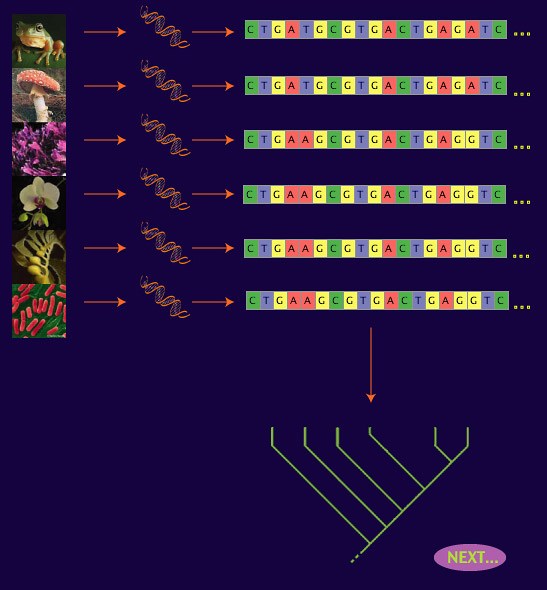

Which species’ DNA is most similar to the DNA of the toothed whale?
Hippopotamus
Baleen Whale
Grazing Mammals
Camels
Had idea that acquired traits would be passed to offspring.
Malthus
Darwin
Lamarck
Lyell
Geologist, said the earth was very old.
Lyell
Darwin
Shakespeare
Hutton
Vertebrate embryos:
Have similar stages of development, due to a common ancestor
Have different stages of development, due to a common ancestor
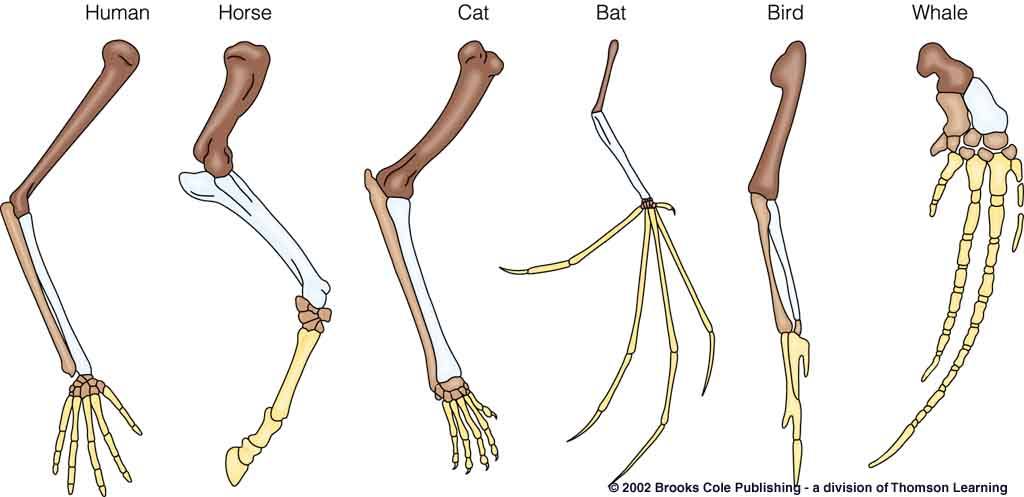
Tetrapods (4 limbs) have very similar bone structures. This leads biologists to believe:
They all had a common ancestor
Their common ancestor was probably a lamprey
Their limbs are convergent evolution
If humans and penguins share similarities in an enzyme this could be an example of:
Biochemical/molecular evidence
Embryological evidence
Anatomical Evidence
Which is artificial selection?
Breeding dogs for specific traits.
Coyote species diverging from the wolves.
Natural selection would select for:
Better camouflage for hiding
Bigger, redder, neck sack to attract females.
Bigger antlers to beat up other deer.
Loss of alleles.
An animal has several inherited characteristics that makes it much fitter than its rivals. According to Natural Selection it should:
Help the others that are less fortunate
Survive longer, have more and better babies.
Be equals with its kin
Genetic variation in a population can be increased with:
Mutations
Genetic drift
Founders effect
Genetic bottleneck.
High fitness individuals in a population:
Live longer and have more offspring
Live longer but have less offspring
Neither live longer nor have more offspring

Bird wings and bat wings are similar, but bats and birds are not closely related. This means their wings are an example of :
Convergent evolution
Divergent evolution
A species of frog, over time and through mutations, becomes two species as it spreads from swamp to swamp. This is an example of:
Adaptive radiation
Coevolution
Convergent evolution
What is suggested by the similarity of early embryos of different species of vertebrates?
no evolutionary relationships between the groups
evolution from a distant common ancestor
similar environments in the past
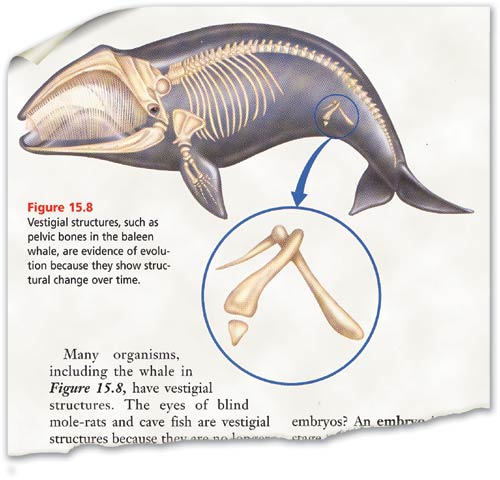
The hip bones in a whale are examples of
homologous structures
analogous structures
fossils
vestigial structures
Which species’ DNA is most similar to the DNA of the toothed whale?
Hippopotamus
Baleen Whale
Grazing Mammals
Camels
True or False: Humans DNA contains the gene that codes for the enzyme to make Vitamin C, but it is nonfunctional.
True
False
A human appendix, a whale's hip bones and a human tail are all:
nonexistent
homologous structures
examples of embryology
vestigial structures
Of all the places he visited, the ___________________ Islands influenced Darwin’s ideas about evolution the most.
Galapagos
Hawaiian
Bora Bora
Aleutian
What word describes a trait that helps an organism survive in its environment?
natural selection
mutation
camouflage
adaptation
Do organisms "decide" to evolve and change?
Yes, they know they need to change to survive
No, they change because of natural selection
What adaptation prevented moths from being eaten by birds?
camouflage coloring
fast flying
long necks
bright colors
Dark colored moths living on light colored trees have _____.
high fitness
low fitness
more resources
good luck
What happened when the trees turned dark color?
Moths that were light color survived and reproduced successfully
Moths that were dark color survived and reproduced successfully
Moths that were light color turned dark color to hide
Moths went extinct because they were all light color and got eaten
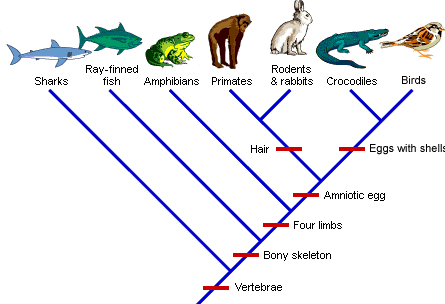
According to this cladogram, primates are most closely related to....
Amphibians
Rodents & rabbits
Crocodiles
Birds
What is the value of a transitional fossil?
Transitional forms show the evolutionary steps between species.
Transitional forms are evidence of punctuated equilibrium.

50 million years ago, the Pakicetus had nostrils toward the front of it's skull Gray whales, modern-day descendants of the Pakicetus have nostrils toward the back of the skull. The Aetiocetus lived 25 million years ago, and it's nostril was in the middle of the skull. In this case, the Aetiocetus serves as a ______________.
index fossil
transitional fossil
What is an example of a vestigial structure in a human?
liver
appendix
What is the study of the similarities and differences in unborn fetuses, or developing organisms?
Paleoclimatology
Comparative embryology
_______________, or selective breeding, is one way that humans impact evolution. One example is how the Belgian Blue cow has been bred to have greater muscle mass.
Artificial selection
Homologous

SELECT ALL THAT APPLY: Which of the following must be true in order for organisms to be considered the same species?
They must be able to mate
They must be able to produce viable offspring
They must have structural similaries
They must have the same bone structure


Members of a species can breed with other members of the same species.
True
False