
 Worksheets
Review Quiz
Total questions: 166
Worksheet time: 2hrs 9mins
Isotopes of an element have a different number of...
Protons
Neutrons
Electrons
Mass
How do you calculate mass number?
Mass x percent
Protons + Electrons
Protons + Neutrons
Neutrons + Protons + Electrons


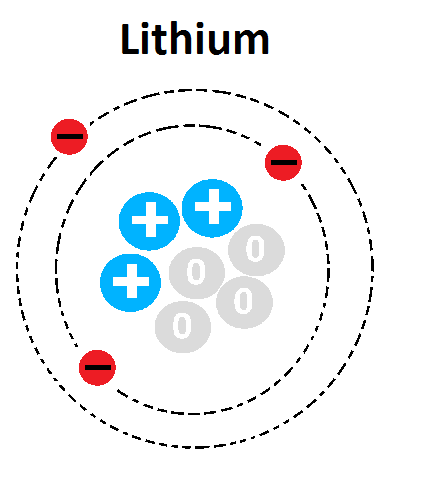
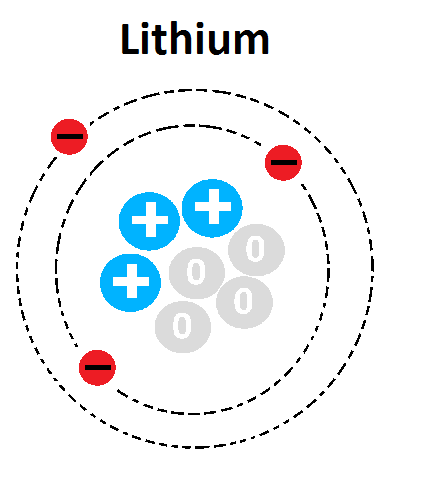
What is the mass number of this atom?
1
3
4
7
Atoms of the same element which have a different number of neutrons are called _________________.
ions
isotopes
quarks
molecules
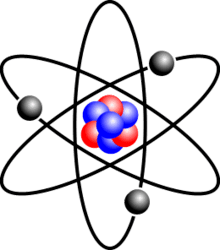
Which subatomic particle has a negative charge in the atom?
proton
neutron
electron
quark
If an atom has 10 electrons, how many protons does it have?
0
1
10
5
When the valence shell of an atom is full, the atoms is chemically _____________.
Full
Radioactive
Stable
Unstable
An atom with an electrical charge is called an _____________.
Atom
Isotope
Covalent
Ion
The electrons found in the outermost shell are called _____________ electrons.
Energy
Valence
Negative
Covalent
A positively charged atom (more protons than electrons) is called a __________.
Anion
Cation
Isotope
A negatively charged atom (more electrons than protons) is called a __________.
Anion
Cation
Isotope
Atoms with the same number of protons but different numbers of neutrons (Carbon 14 and Carbon 12) are called ___________.
Anion
Cation
Isotope
A chemical _____________ is a new substance that forms when atoms of two or more elements are bonded together.
Compound
Isotope
Ion
Formula
Atoms become ___________ when their outer energy shell (valence shell) is full.
Stable
Unstable
____________ bonds form when they share electrons.
Ionic
Covalent
Isotope
______________ bonds form between two oppositely charged ions (cation-anion)
Ionic
Covalent
Isotope
The smallest unit of an element
atom
element
cells
ion
A particle inside the nucleus of an atom that has a positive charge.
electron
positron
proton
neutron
Is the amount of protons in the nucleus of an atom.
Atomic Structure
Atomic Mass
Atomic Number
Atomic Weight
A part of an atom that has a negative charge, found outside of the nucleus of the atom.
Neutron
Proton
Electron
Negatron
A neutral particle in the nucleus of an atom, has not positive or negative charge.
Proton
Atom
Electron
Neutron
An atom that has an electric charge
Neutron
Isotope
Ion
Atom

Which element is this?
Nickel
Neon
Sodium
Nitrogen

What is this element?
Beryllium (atomic #4)
Boron (atomic #5)
Carbon (atomic #6)
Nitrogen (atomic #7)

How many valence electrons?
2
3
4
5
What is a valence electron?
Electrons in the first energy shell
Electrons in the second energy shell
Electrons in the outer shell
Total number of electrons

What element is represented in this Bohr Model?
Carbon
Hydrogen
Aluminum
Lithium
How many electrons can fit on the 1st energy level (orbital) for any Bohr Model?
2
6
8
10

What is a Bohr Model?
a simplified representation of an atom
vertical column in periodic table
horizontal row in periodic table
Only shows the element symbol and it's outer most electron shell

Which element does this Bohr model represent?
Aluminum
Silicon
Magnesium
Cobalt
How many energy levels does neon (Ne) have?
1
18
2
10
Do boron (B) and aluminum (Al) have the same number of energy levels?
Yes
No
Sodium (Na) and Sulfur (S) have the same number of energy levels?
Yes
No
An atom has a full first energy level and 7 electrons in its second level. How many electrons does this atom have?
2
7
9
Need more information
The electron configuration of an atom is 1s22s22p6. The number of electrons in the atom is what?
1s22s22p63s2
Aluminum
Magnesium
Aufbau Principle
Bohr's Law

Which shape represents the shape of an "s" orbital?
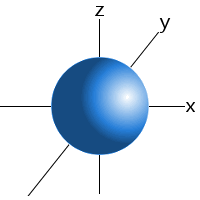
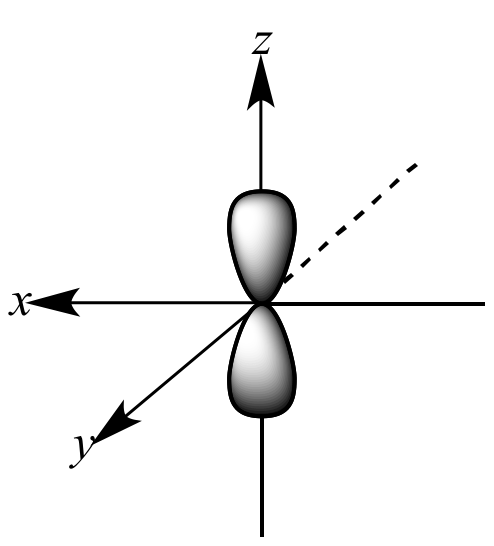
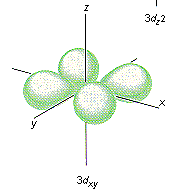
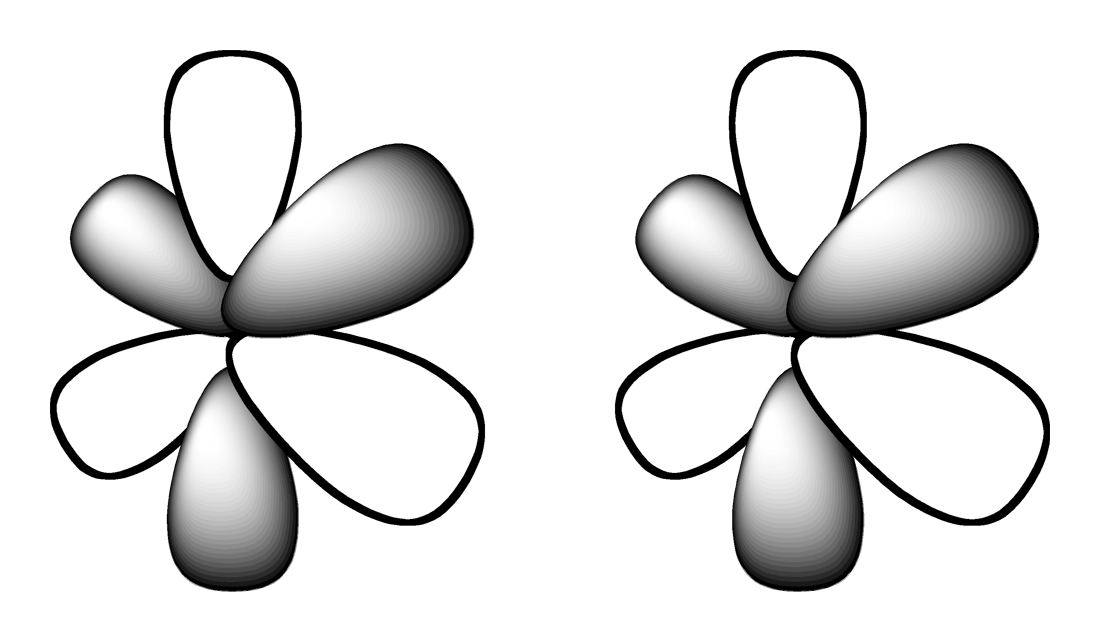
How many orbitals does an 's' sublevel have?
1
3
5
7
What is the shape of 'p' orbitals?
Dumbbell shaped
Peanut shaped
Spherical shaped
Hybrid structure
The number of orbitals in 'p' sub level
2
3
4

How many electrons can a d sublevel hold?
14
10
2
6
A three-dimensional region around a nucleus where an electron may be found is called ---?
orbit
circle
orbital
circuit
The s sublevel resembles this type of shape
dumbell
clover
sphere
double clover
The rule that says electrons enter sublevels with the lowest energy first
Pauli Principal
Hund's Rule
Aufbau Principal
Law of Conservation of Energy
The rule that says each orbital much receive one electron before an orbital in that sublevel can have two
Hunds Rule
Aufbau Principal
Pauli Principal
Law of Conservation of Energy


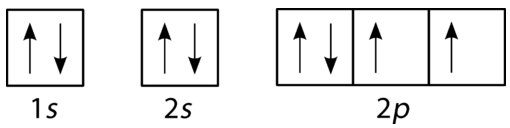


What element has this electron configuration?
hydrogen
helium
lithium
beryllium

What element has this orbital notation?
lithium
beryllium
boron
carbon

What element has this electron configuration?
helium
lithium
beryllium
boron

What element has this electron configuration?
boron
carbon
nitrogen
oxygen

Which element is represented by this orbital notation?
carbon
nitrogen
oxygen
fluorine

Which element is represented by this electron configuration?
neon
sodium
magnesium
aluminum

Which element is represented by this orbital notation?
neon
sodium
magnesium
aluminum
Which of the following is the electron configuration for silicon?


Which is the electron configuration for beryllium?


How many dots would you put around carbon, a group 14 element?
4
6
8
18

This could be the dot diagram of
Mg
Cl
C
O

This is a correct dot diagram for neon (Ne)
true
false
How many electrons should sodium, atomic number 11, have around its Lewis dot model?
1
2
3
4
How would you draw a Lewis dot diagram for Magnesium?


Which of these is correct?


What bond type shares electrons?
Covalent bond
Ionic bond
Metallic bond


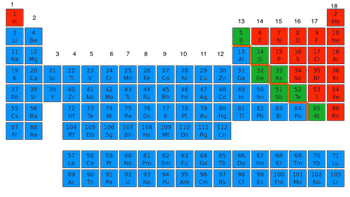
Where are metals located on the periodic table?
right side of the staircase
on the staircase
left side of the staircase

This is a correct dot diagram for carbon (C)
true
false
Which of these is correct?


What is the the outermost shell with electrons?
Shells
Isotope
Orbit
Valence
How many electrons can go in the first energy level?
2
8
18
32
Each row on the periodic table represents:
an energy level
a sublevel
an electron
an orbital
Electron configuration of helium (He)
1s1
1s2
2s1
2s2 2p1
Electron configuration of boron (B)
1s2 2s1 2p1
1s2 2s2 2p1
1s2 2s1
1s1 2s1 2p1
Electron configuration of fluorine (F)
1s1 2s2 2p5
1s2 2s2 2p7
1s2 2s2 2p5
1s1 2s1 2p5
According to the Octet Rule, atoms of elements react with each other in order to attain ____ electrons in their outermost energy level or shell.
2
4
6
8
10
Which of the following elements LOSES 1 electron in order to attain an octet?
potassium
calcium
helium
boron
fluorine

Which of the following elements GAINS 1 electron in order to attain an octet?
Na
Ca
He
Cl
How many valence electrons does Be have?
1
2
4
6
Does Be fulfill the Octet Rule?
Yes
No
How many electrons will Be gain/lose to satisfy the Octet Rule?
Lose 2
Lose 4
Gain 2
Gain 6
When atoms LOSE electrons, they get a...
Positive (+) charge
Negative (-) charge
No charge (zero)

What does Neon need to do fulfill the Octet Rule?
Gain 2
Lose 2
Nothing - it already fulfills the Octet Rule.
When atoms GAIN electrons, they get a...
Positive (+) charge
Negative (-) charge
No charge (zero)
Where is a Valence electron located?
The innermost shell
The nucleus
The outmost shell
A __________ goes up and down on the periodic table.
Group
Period
A _________ goes side to side on the periodic table.
Group
Period

What element is in period 4, group 1?
K - Potassium
V - Vandium
C - Carbon
Ti - Titanium

What two elements are in the same Period?
K - Potassium and Na - Sodium
Li - Lithium and Mg - Magnesium
B - Boron and C - Carbon
Zn - Zinc and N - Nitrogen

What element is in group 2, period 6?
Sr - Strontium
Ba - Barium
S - Sulfur
O - Oxygen
The _______ tells us how many energy shells an element has.
group
period
atomic number
element symbol
The _________ tells us how many valence electrons an element has.
Group
Period
Atomic Number
Element

The is family has properties of both metals and nonmetals.
Alkali
Halogens
Nonmetals
Metalloids
Sulfur is a...
metal
nonmetal
metalloid
Noble gases are inert because
They are highly reactive
They are unreactive
They are noble
They have 8 electrons in their outer most energy level

A bond between two nonmetal atoms is a __________ bond.
ionic
nuclear
metallic
covalent
Ionic bonds form between ---
nonmetals.
metals and nonmetals.
If an atom gains an electron, what charge will it have?
positive
negative
neutral
Where is most of the mass of an atom found?
nucleus
electron cloud
atomic number
mass number
How many total electrons can the 2nd shell or energy level hold?
1
2
8
18
What happens to the valence electrons of an atom when it is a covalent bond?
transfers electrons
shares electrons
does nothing
Dot diagrams represent ____.
outer shell electrons
protons
neutrons
all electrons
What is the octet rule?
it states atoms need to be happy
it states atoms need 8 valence electrons to be stable
it states atoms need 6 valence electrons to be stable
it states atoms need to share electrons to be stable
What type of chemical bonds are between metals and nonmetals?
ionic bonds
covalent bonds
metallic bonds

Which occurs during a physical change?
Gas bubbles
Precipitate forms
New substance forms
The shape changes
Which is more easily reversed?
Physical Change
Chemical Change
Neither
The chemical bond between a non-metal and another non-metal will be a ________ bond.
metal
ionic
covalent
polar
The chemical bond between a metal and a non-metal will be a _____ bond.
metal
ionic
covalent
polar
Beryllium and sulfur will form a ______ bond
ionic
covalent
metalloid
NaCl
ionic
covalent
metallic
Atoms are most stable when their outer electron level is complete.
true
false
How are covalent bonds formed?
by atoms sharing some of their electrons
by electron transfer from one atom to another
by atoms exchanging electrons
by atoms hanging out together
Why do elements bond?
to become friends
to create a new element
to become stable
to reduce the number of atoms
Objects that have opposite charges will
repel each other
attract each other
push away from each other
avoid each other
Group numbers on the periodic table help us determine
the size of an atom
the color of an element
the atomic number of an element
the number of valence electrons an atom has
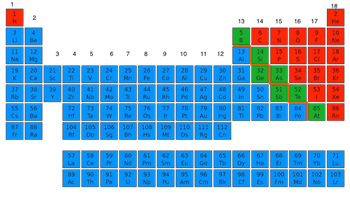
What color indicates the nonmetals?
blue
red
green
the colors do not indicate nonmetals
What color shows where metals are located on the periodic table?
blue
green
red
the colors do not indicate metals
The chemical bond between a metal and a non-metal will be a _____ bond.
metal
ionic
covalent
polar
When sodium loses an electron to chlorine, sodium becomes a .......
positive ion
negative ion
When chlorine gains an electron from sodium, chlorine becomes a ...
positive ion
negative ion

