wayground logo

Free Printable Worksheets

Font size

S
M
L
XL
Worksheets

Your last assignment in Chemistry--so you know it has to be fun!

Total questions: 167

Worksheet time: 4hrs 12mins

Name
Class
Date
1.
Alpha particles.....
a)
a) are positively charged.
b)
b) consist of two protons and four neutrons.
c)
c) can penetrate any thickness of matter
d)
d) All of the above 
2.
The most penetrating type of radiation is the ____.  
a)
alpha particle
b)
gamma ray
c)
beta particle
d)
uranium
3.
A helium nucleus with two protons and two neutrons is called a(n) ____.  
a)
alpha particle
b)
electroscope
c)
beta particle
d)
gamma ray
4.
Negatively charged particles emitted from a nucleus at a high speed are ____.  
a)
alpha particle
b)
gamma rays
c)
beta particles
d)
X rays
5.
The three types of nuclear radiation in increasing order of penetrating power are ____.  
a)
  alpha, beta, gamma 
b)
X ray, beta, gamma
c)
alpha, gamma, beta 
d)
X ray, gamma, beta 
6.

What type of radioactive decay is shown here? Notice it is emitting an electron.

a)

Alpha decay

b)

Beta decay

c)

Gamma decay

7.
What type of radiation can be stopped by clothing or a piece of paper?
a)
Alpha radiation
b)
Beta radiation
c)
gamma radiation
8.
What type of nuclear reaction occurs in the Sun?
a)
Nuclear fission
b)
beta decay
c)
alpha decay
d)
Nuclear fusion
9.
In a nuclear reactor, electricity is produced from what element?
a)
Plutonium
b)
Uranium 235
c)
Radon 220
d)
Lead 232
10.
The rate at which a radioactive element decays is its ____.
a)
quarter life
b)
whole life
c)
wonderful life 
d)
half life
11.

The amount of material left after TWO half lives is ____ of the original amount.

a)

1/2 or 50%

b)

1/4 or 25%

c)

1/8 or 12.5%

d)

1/16 or 6.25%

12.
Where does radioactivity have application in our lives?
a)
Medicine
b)
Energy (electricity)
c)
Agriculture
d)
All of the above
13.

What makes something radioactive?

a)

it it has too many electrons

b)

an unstable nucleus

c)

contaminated sewage

d)

It decays over time

14.

A radioactive element has a half life of 100yrs, how long would it take for a 200g sample to become 100 grams?

a)

200yrs

b)

100yrs

c)

50yrs

d)

300yrs

15.
_______________ is the process by which unstable atoms emit radiation until they become stable.
a)
Radiation
b)
Chemical Reaction
c)
Radioactive Decay
d)
Isotopes
16.

Radioactivity

a)

Process in which an unstable nucleus emits charged particles

b)

Time required for one half of a sample of a radioisotope

c)

nuclear radiation that occurs naturally

17.

Barium-122 has a half-life of 2 minutes. A fresh sample weighing 80 g was obtained. How much barium-122 will be left after 10 minutes?

a)

0.25g

b)

2.5g

c)

25g

d)

80g

18.
The half-life of strontium-90 is 25 years. How much strontium-90 will remain after 100 years if the initial amount is 4.0 g?
a)
3.0g
b)
0.25mg
c)
0.3g
d)
0.25g
19.
When nuclei decay, massive amounts of __________ is released.
a)
energy
b)
jello
c)
protons
d)
neutrons
20.
After 4 half-lives, 1g of a sample of Krypton-85 remains unchanged.  What was the original mass of the sample?
a)
16g
b)
32g
c)
0.0625g
d)
4g
21.

What can happen if you are exposed to too much radiation?

a)

cancer

b)

radiation sickness

c)

death

d)

all of these choices

22.

Uncontrolled fission chain reaction

a)

nuclear power plants

b)

atomic bomb

c)

the sun

d)

stars

23.

the term used to date rocks and fossils

a)

nuclear dating

b)

fission decay

c)

radioactive dating

d)

radioactive fossil finding

24.

Iodine-131 has a half life of 8 days and decays into Xenon-131. Which one is the parent isotope?

a)

Iodine-131

b)

Xenon-131

c)

cannot be determined

25.

Iodine-131 has a half life of 8 days and decays into Xenon-131. Which one is the daughter isotope?

a)

Iodine-131

b)

Xenon-131

c)

cannot be determined

26.

Name this molecule:

a)

methane

b)

ethane

c)

propane

d)

butane

27.

Name this molecule:

a)

methane

b)

ethane

c)

propane

d)

butane

28.

Name this molecule:

a)

methane

b)

ethane

c)

propane

d)

butane

29.

Name this molecule:

a)

methane

b)

ethane

c)

propane

d)

butane

30.

Name this molecule:

a)

pentane

b)

hexane

c)

heptane

d)

octane

31.

If an alkane has 10 carbon atoms, how many hydrogen atoms will it have?

a)

20

b)

22

c)

40

d)

42

32.

Is the name of single bonded, saturated hydrocarbons.

a)

Alkanes

b)

Alkenes

c)

Alkynes

d)

Tanins

33.

Is the name of doubled bonded, unsaturated hydrocarbons.

a)

Alkanes

b)

Alkenes

c)

Allkynes

d)

Tanins

34.

Is the name of triple bonded, unsaturated hydrocarbons.

a)

Alkanes

b)

Alkenes

c)

Alkynes

d)

Tanins

35.

is the alkene with 3 carbons in its chain.

a)

Ethene

b)

Propene

c)

Methene

d)

Decene

36.

What is the correct name for the alkyne shown?

a)

butyne

b)

1-butyne

c)

2-butyne

d)

1-methyl-1-propyne

37.
Hydrocarbons are compounds that contain
a)
  Carbon and Nitrogen
b)
Carbon and Hydrogen 
c)
  Carbon, and Oxygen
d)
Carbon, Oxygen, and  Hydrogen 
38.
Which of the following elements must be present in any organic compound?
a)
Carbon
b)
Oxygen
c)
Potassium
d)
Hydrogen
39.
Which of the following compounds is an example of hydrocarbon?
a)
CO2
b)
C2H6
c)
C2H5OH
d)
CH3COOH
40.
Give the name of this compound...
C3H8
a)
Propene
b)
Butyne
c)
Butene
d)
Propane
41.

Which is the structures with IUPAC nomenclature


2,2,4-trimethylpentane

a)
b)
c)
d)
42.

What chemical is this? (C5H10)

a)

Pentene

b)

Pentane

c)

Hexane

d)

Heptene

43.

What is the name of this hydrocarbon?

a)

1 - butane

b)

1 - butene

c)

2 - butane

d)

2 - butene

44.

What is the Coefficient?

a)

4

b)

3

c)

1

d)

0

45.

What is the subscript of Nitrogen?

a)

4

b)

3

c)

1

d)

0

46.

How many Carbon are in the compound?

a)

4

b)

5

c)

20

d)

9

47.

How many Bromine atoms are there in the compound?

a)

4

b)

7

c)

12

d)

6

48.

How many Phosphorous atoms are there in the compound?

a)

2

b)

3

c)

5

d)

6

49.

How many Hydrogen atoms are in the molecule?

a)

3

b)

4

c)

12

d)

1

50.

How many Strontium atoms are in the compound?

a)

6

b)

2

c)

3

d)

5

51.

How many atoms of oxygen are in the compound?

a)

3

b)

4

c)

1

d)

12

52.

How many Phosphorous atoms are in the molecule?

a)

2

b)

4

c)

1

d)

8

53.

How many Oxygen atoms are in the compound?

a)

8

b)

4

c)

16

d)

6

54.

How many electrons can the first energy level (s level) hold?

a)
1
b)
2
c)
8
d)
0
55.
What atom matches this electron configuration?
1s22s22p63s2
a)
Neon
b)
Magnesium
c)
Aluminum
d)
Potassium
56.
What electron configuration matches an oxygen atom?
a)
1s22s22p63s2, 3p64s23d104p5
b)
1s22s22p4
c)
1s22s22p6
d)
1s22s22p63s23p64s23d1
57.
Which electron configuration belongs to Chlorine (Cl)?
a)
1s2s2p3s3p5
b)
1s2s2p3s3p6
c)
1s2s2p3s3p7
58.
What atom matches this electron configuration?
1s22s22p63s23p64s23d10
a)
Zinc
b)
Copper
c)
Nickel
d)
Germanium
59.

What atom matches this electron configuration? 1s22s22p63s23p64s23d8

a)
Zinc
b)
Copper
c)
Nickel
d)
Germanium
60.

The 4 orbitals are

a)

s, p, d, f

b)

a, b, c, d

c)

2, 4, 6, 8

61.
How many electrons can the d sublevel hold?
a)
8
b)
10
c)
2
d)
4
62.

What do you start all electron configurations with?

a)

1s2

b)

1d10

c)

1f14

d)

1p6

63.

What atom matches this electron configuration? [Xe] 6s2

a)
Mercury
b)

Barium

c)
Platinum
d)
Thallium
64.
What is the shorthand electron configuration for Sulfur atom?
a)
[Ar] 3p4
b)
[He] 3s23p4
c)
[Ne] 3s23p4
d)
[Na] 3s23p3
65.
What noble gas should be used to write the shorthand configuration for Te?
a)
Ar
b)
Kr
c)
Xe
d)
Sb
66.

How many electrons can the f sublevel hold?

a)
8
b)
10
c)
2
d)

14

67.

What atom matches this electron configuration? 1s22s22p63s23p1

a)
Neon
b)
Magnesium
c)
Aluminum
d)
Potassium
68.

Which of the following is the correct abbreviated noble gas electron configuration for chlorine?

a)
[Ne]3s23p5
b)
[He]2s22p63s23p5
c)
[Mg]3p5
d)
[Ne]1s22s22p63s23p5
69.

What is the abbreeviate noble gas electron for Sulfur atom?

a)
[Ar] 3p4
b)
[He] 3s23p4
c)
[Ne] 3s23p4
d)
[Na] 3s23p4
70.

What is the charge of an atom that has gained one electron?

a)
-1
b)
-2
c)
+1
d)
+2
71.

Which would be the correct electron configuration for the Fe+4 ion?

a)

1s2 2s2 2p6 3s2 3p6 4s2 3d6

b)

1s2 2s2 2p6 3s2 3p6 4s2 3d3

c)

1s2 2s2 2p6 3s2 3p6 3d4

d)

1s2 2s2 2p6 3s2 3p6 4s1 3d6

72.

What is the correct Lewis Dot Structure for ammonia NH3

a)
b)
c)
d)
73.

Which is the correct molecular structure for carbon dioxide?

a)
b)
c)
d)
74.

How many total valence electrons are participating in bonding in the molecule above?

a)

8

b)

4

c)

2

d)

3

75.
Which of the following is the correct Lewis dot structure for the molecule fluorine (F2)?
a)
A
b)
B
c)
C
d)
D
76.

NH3 has how many lone pairs?

a)

0

b)

1

c)

2

d)

3

77.

CCl4 has how many double bonds?

a)

0

b)

1

c)

2

d)

3

78.

Carbonate (CO32-) has how many double bonds?

a)

0

b)

1

c)

2

d)

3

79.

In HCN (Carbon is usually the central atom) what kind of bond is between the C and N

a)

Single

b)

Double

c)

Triple

80.

CHCl3 has how many double bonds?

a)

0

b)

1

c)

2

d)

3

81.

CH2O has which of the following?

a)

Multiple double bonds

b)

Multiple single bonds

c)

One double bond

d)

One single bond

e)

A lone pair

82.

Which of the following elements are an exception to the octet rule and require less than 8 valence electrons?

a)

H

b)

Li

c)

Be

d)

B

e)

C

83.

True or False: Shorter bonds are stronger bonds with larger bond energy.

a)

True

b)

False

84.

True or False: Double and triple bonds are longer, weaker bonds than single bonds.

a)

True

b)

False

85.

Which of these would require the least energy in order to break the bonds?

a)

single bond

b)

double bond

c)

triple bond

86.

Longer bonds are _ than shorter bonds

a)

weaker

b)

stronger

87.

Shorter bonds are _ than longer bonds.

a)

weaker

b)

stronger

88.

When the bond is stronger, the bond energy is

a)

smaller

b)

larger

89.

When the bond is weaker, the bond energy is

a)

smaller

b)

bigger

90.

The energy required to break a bond and break atoms of a molecule apart

a)

bond length

b)

bond energy

c)

bond strength

d)

none of these

91.

Which of these is the shortest bond?

a)

single bond

b)

double bond

c)

triple bond

92.

Which of these is the strongest bond?

a)

single bond

b)

double bond

c)

triple bond

93.

Which of these has the largest bond energy?

a)

single bond

b)

double bond

c)

triple bond

94.

True or False: Energy is required to break a bond and energy is released when new bond(s) form.

a)

True

b)

False

95.

A process in which atoms are rearranged when bonds are broken and reformed. The identity of the matter changes in the process.

a)

chemical reaction

b)

physical change

96.

When the bond is shorter, the bond energy is

a)

smaller

b)

larger

97.

When the length of the bond is greater, the bond energy is

a)

smaller

b)

larger

98.
 A lone pair is defined as
a)
A pair of bonding electrons
b)
One non-bonding electron
c)
A pair of non-bonding electrons
d)
A pair of electrons on the central atom
99.
What is the VSEPR theory used to predict?
a)
Bond Strength
b)
Polarity
c)
Molecular Shape
d)
Electronegativity
100.

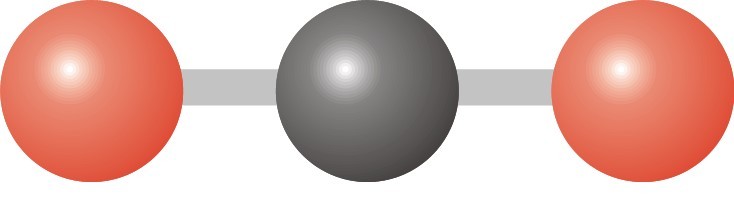
What is the name of this VSEPR structure

a)

tetrahedral

b)

trigonal planar

c)

bent

d)

linear

101.

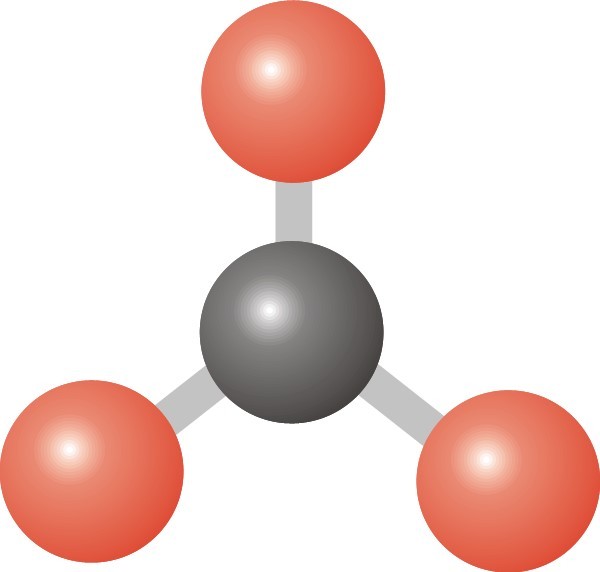
What is the name of this VSEPR shape?

a)

trigonal planar

b)

bent

c)

tetrahedral

d)

trigonal pyramidal

102.

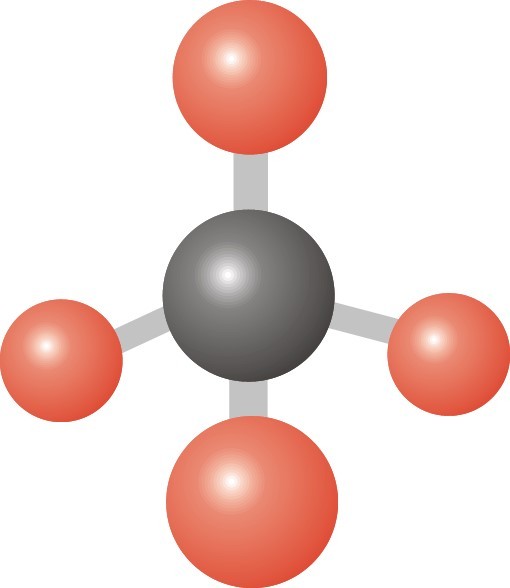
Who is the name of this VSEPR shape?

a)

trigonal planar

b)

tetrahedral

c)

bent

d)

trigonal pyramidal

103.

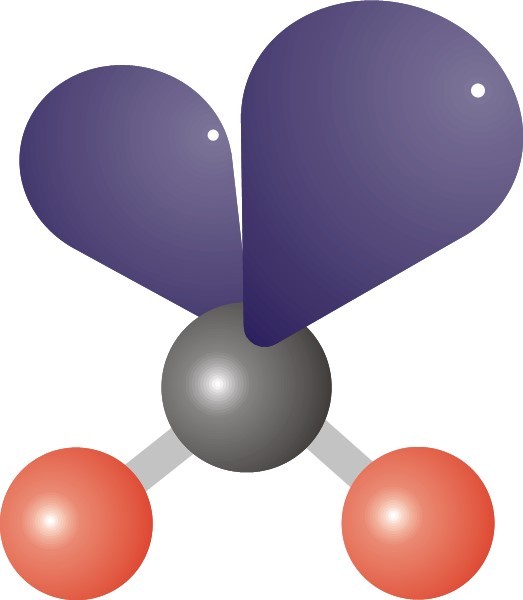
What is the name of this VSEPR shape? (The dark shapes are lone electron pairs)

a)

trigonal planar

b)

tetrahedral

c)

bent

d)

linear

104.

What is the name of this VSEPR shape? (The dark shapes are lone electron pairs)

a)

trigonal planar

b)

bent

c)

trigonal pyramidal

d)

tetrahedral

105.
According to VSEPR, molecules adjust their shapes to keep which of the following as far away as possible?
a)
Pairs of valence electrons
b)
Inner shell electrons
c)
Mobile Electrons
d)
Electrons closest to the nucleus
106.
What is the measure of a tetrahedral bond angle?
a)
90 Degrees
b)
109.5 Degrees
c)
120 Degrees
d)
180 Degrees
107.

Which of the following shapes has unbonded pairs of electrons on the central atom? 

a)

Linear

b)

Bent

c)

Trigonal Planar

d)

Tetrahedral

108.
Which of the following molecular shapes would have a bond angle of 180 Degrees?
a)
Bent
b)
Trigonal Planar
c)
Tetrahedral
d)
Linear
109.
The bond angle for a trigonal planar molecule is 
a)
90 Degrees
b)
109.5 Degrees
c)
120 Degrees
d)
180 Degrees
110.

Which shapes both contain unbonded pairs of electrons? 

a)

Bent and Trigonal Pyramidal

b)

Trigonal Planar and Bent

c)

Tetrahedral and Linear

d)

Trigonal Pyramidal and Linear

111.

How many unshared pairs of electrons will a trigonal pyramidal molecule have? 

a)
1
b)
2
c)
3
d)
4
112.
What is the bond angle for this molecule?
a)
109.5
b)
120
c)
107
d)
90
113.
Choose the correct shape for this molecule:
a)
Trigonal planar
b)
Trigonal pyramidal
c)
Tetrahedral
d)
Linear
114.

Which of the following images represents a Trigonal Planar molecular geometry?

a)
b)
c)
d)
115.

The trigonal pyramidal structure is best described as...

a)

tetrahedral with one lone pair

b)

tetrahedral with two lone pairs

c)

trigonal planar with one lone pair

d)

linear with one lone pair

116.

One central atom has two atoms bonded to it, and no lone pairs. Its VSEPR shape will be...

a)

linear

b)

bent

c)

trigonal planar

d)

tetrahedral

117.

One central atom has two atoms bonded to it, plus two lone pairs. Its VSEPR shape will be...

a)

linear

b)

bent

c)

trigonal planar

d)

tetrahedral

118.

Which of these shapes definitely does NOT have four electron domains?

a)

tetrahedral

b)

trigonal pyramidal

c)

linear

d)

bent

119.

A trigonal planar shape has __ electron domains.

a)

1

b)

2

c)

3

d)

4

120.

A trigonal pyramidal shape has __ electron domains

a)

1

b)

2

c)

3

d)

4

121.

How many electron domains does this moelcule have

a)

3 nonbonding

b)

3 bonding and 1 nonbonding

c)

3 nonbonding and 1 bonding

d)

1 bonding

122.
Why do ionic bonds form?
a)
so the number of protons equals the number of electrons
b)
to fill the outermost energy level
c)
so an atom can become unstable
123.
An electron has what kind of charge?
a)
no charge
b)
positive 
c)
negative
d)
it depends
124.
An atom that has gained or lost electrons is called ...
a)
a winner
b)
an isotope
c)
an ion
d)
a loser
125.
Atoms that gain electrons become...
a)
negatively charged
b)
positively charged
c)
remain neutrally charged
d)
21
126.
If an aluminum atom has 13 protons (+) and 10 electrons (-), what is it's charge?
a)
Al3+
b)
Al13+
c)
Al10+
d)
Al10-
127.
If an oxygen atom has 8 protons (+) and 10 electrons (-), what is it's charge?
a)
O10-
b)
O8+
c)
O2-
d)
O10+
128.
The attraction between oppositely charged ions is called a(n) _______________.
a)
ionic bond
b)
polyatomic ion
129.
What is the charge on a noble gas & why?
a)
0; they don't exchange electrons
b)
+1; they give away an electron
c)
-1; they gain an electron
d)
1; they form only single bonds
130.
An ionic bond is the attraction between:
a)
oppositely charged ions
b)
similarly charged ions
c)
neutral ions
d)
neutral atoms
131.
What type of elements will form an ionic bond?
a)
Metals + Metals
b)
Nonmetals + Nonmetals
c)
Metals + Nonmetals
d)
None of the above
132.
To form a charge of +2 an atom must _ electrons.  To form -3 it must _ electrons.
a)
Gain 2; Lose 3
b)
Gain 3; Lose 2
c)
Lose 2; Gain 3
d)
Lose 3; Gain 2
133.
What is the name given to the outermost electron(s)?
a)
outside electrons
b)
plutonian electrons
c)
ionic electrons
d)
valance electrons
134.
Ionic bonds form because
a)
Two ions of the same charge are attracted to each other
b)
Two ions of different charges are attracted to each other
c)
Two atoms share their electrons
d)
Two or more atoms share protons
135.
An ionic bond may or may not include a metal.
a)
True
b)
False
136.
An ionic bond involves two elements...
a)
Transferring electrons
b)
Sharing electrons
137.

A substance made of the combined atoms of two or more elements are called ​ (a)   are held together with chemical ​ (b)   . Bonds are a ​ (c)   that holds compounds together. When compounds are written we use a chemical ​ (d)   , which tells you which elements and how many of each are in the compound.

Choose from the below words
compounds
bonds
Force
formula
property
change
elements
138.

Label the following parts of a chemical formula.

139.

Represents the oxidation number or how many electrons are lost or gained. (a)  

Choose from the below words
Subscript
Superscript
Ionic
Covalent
140.

An Ionic Bond is which of the following

a)

Loses or gains electrons

b)

Shares electrons

c)

Between metal & Non-metals

d)

Forms multiple bonds

e)

Forms between opposite charges

141.

A covalent Bond is which of the following

a)

Between non-metal & non-metal

b)

Shares electrons

c)

Between metal & Non-metals

d)

Forms multiple bonds

e)

Forms between opposite charges

142.

Why do elements bond? (a)  

Choose from the below words
To gain new properties
To create a new element
To become stable
To get bigger
143.

What kind of bond forms when atoms exchange electrons?

(a)  

144.

If an atom gains a negative electron it becomes more

(a)  

145.

If carbon gained 4 electrons what would its charge be?

(type your answer as a number with a minus for negative - and a plus sign for positive +)

Ex: +18 or -18

(a)  

146.

If an atom losses a negative electron it becomes more

(a)  

147.

If carbon lost 4 electrons what would its charge be?

(type your answer as a number with a minus for negative - and a plus sign for positive +)

Ex +18 or -18

(a)  

148.

Which of the following describes covalent bonds?

a)

Bonds form because of opposite charges

b)

electrons are shared to fill outer electron shells

c)

Electrons are transferred between atoms

d)

Covalent bonds are magical

149.

Predict the bond that will form between Be and F.

(a)  

150.

Predict the bond that will form between Se and Cl.

(a)  

151.

Which of the following atoms is most likely to bond with another atom?

a)
b)
c)
d)
152.

Label the parts of the chemical formula.
153.
An ionic bond forms when 
a)
Valence electrons are shared
b)
a sea of mobile electrons surround the cations
c)
valence electrons are transferred between atoms
d)
none of the above
154.

Label the image using the list of labels

155.

You should do what with the coefficient and the subscript of an atom Ex: 2H2O (a)  

Choose from the below words
Add
Subtract
Multiply
Divide
156.

Which substance contains bonds that involve a transfer of electrons from one atom to another? (a)  

Choose from the below words
CO2
NH3
KBr
Cl2
157.
As you move down a group, atomic radius increases because - 
a)
you add more and more neutrons
b)
you add more and more protons
c)
you add more and more shells (energy levels)
d)
you add more atomic mass
158.
The atom with the largest atomic radius in Group 18 is - 
a)
Ar
b)
He
c)
Kr
d)
Rn
159.
As you move across the periodic table from left to right, the atomic radius decreases.  This is because - 
a)
the number of protons increases, so attraction to electrons increases
b)
the number of energy levels increases
c)
the number of electrons increases
d)
the atomic mass increases
160.
The atom with the largest atomic radius in Period 4 (row 4) is - 
a)
K
b)
Kr
c)
Fe
d)
Fe
161.
Francium (Fr) has the lowest ionization energy in Group 1 because - 
a)
it has the smallest number of valence electrons
b)
it has the greatest atomic mass
c)
it has the greatest number of protons, so it attracts its electrons the strongest
d)
its 1 valence electron is very far from the nucleus, so little energy is needed to remove it
162.
The element with the smallest ionization energy in Period 6 is - 
a)
Rn
b)
Cs
c)
Os
d)
Tm
163.
As you move across the periodic table atoms tend to get smaller because, ______________.
a)
the atoms have more mass.
b)
the atoms have less mass
c)
the atoms have more protons.
d)
the atoms have less electrons.
164.
The energy required to remove electrons is the definition of: 
a)
Electronegativity
b)
Atomic Number
c)
Atomic Radius
d)
Ionization
165.
Electronegativity is...
a)
the ability of an atom to attract/ accept electrons
b)
the ability of an atom to lose electrons
c)
the energy required to remove an electron from a specific atom
d)
how easy it is to make friends. 
166.
Which has the greater Electronegativity: 
N or C?
a)
C
b)
N
167.
Electronegativity __________ from left to right within a period and __________ from top to bottom within a group.
a)
decreases, increases 
b)
increases, increases
c)
increases, decreases 
d)
stays the same, increases