
 Worksheets
Exam Review
Total questions: 167
Worksheet time: 3hrs 52mins

In the image above, what is the percentage of the offspring has the possibility of inheriting blood type O?
0%
25%
50%
100%
Which of the following are genotypes for blood type B?
IA IA and IA IB
IB IB and ii
IB IB and IB i
IA IB and IA IB


The four butterflies represent the F1 generation. Which statement best represents the phenotypes of this generation?
All the butterflies are males
Two of the offspring will not be able to reproduce
The F1 generation is the result of a dihybrid cross
Two of the butterflies will have mutations

A female that is homozygous recessive (aa) mates with a male that is heterozygous (Aa). Which circle graph shoes the genotype probability of the offspring?
F: 50% aa and 50% Aa
G: 25% aa; 25% AA; 50% Aa
H: 100% Aa
J: 100% aa
Crossing over between nonsitster chromatids during meiosis is significant in heredity. This process most likely leads to an increase in which of the following?
Dominant Traits
Number of gametes
Polyploidy
Genetic Variation
An organism that has two different alleles for a trait (hybrid)
homozygous
heterozygous
TT,tt,PP,pp,SS,ss are examples of alleles that are?
homozygous
heterozygous


The letters that represent the different forms of a gene.
Traits
Alleles
Phenotype
Two alleles/letters for one trait that are the same.
Homozygous/ Purebred
Heterozygous/ Hybrid
Recessive

a photograph or picture of chromosomes grouped in ordered pairs is a ______________
pedigree
Punnett Square
Venn Diagram
Karyotype


Based on the karyotype, what is the sex of this baby?
Male
Female

Where is DNA located?
cell
nucleus
mitochondria
cytoplasm
What do the letters DNA stand for?
double stranded nucleic acid
dioxide nitrogenous acid
deoxyribonucleic acid
double negative acid
When does DNA replication take place?
mitosis
meiosis
S phase
cell division
What is Chargaff's rule
DNA always has equal numbers of each of the bases
DNA strands are equivalent
DNA in any cell in any organism always has a 1:1 ratio
The adenosine and thymine bases are always equal in quantity, as are guanine and cysteine.
Which 2 scientists took diffraction x-ray photographs of DNA crystals to identify the double helix structure?
James Watson and Frances Crick
George Beadle and Edward Tatum
Linus Pauling and Erwin Chargaff
Rosalind Franklin and Maurice Wilkins
The three parts of a nucleotide are
phosphate group, nucleotide base, ribose sugar
phosphate group, hydrogen bond, bases
phosphodiester bond, phosphate group, deoxyribose sugar
DNA, chromosome, chromatin
Watson and Crick were the first to suggest that DNA is
a short molecule
a DNA molecule
a double helix
the genetic material
The bases have two different structures, they are
purines and pyrimidines
acids and bases
helix and globular
double and single bonded
What is the role of hydrogen bonds in DNA
Unzips the 2 strands
holds the ribose and phosphate groups together
holds the bases together, joining the 2 strands
holds amino acids together
The role of DNA helicase is to
create complementary nucleotides
unzips strands, breaking H bonds
glues Okazaki fragments together
coil the double helix up into the twisted form
What is the replication fork?
The enzyme responsible for replicating DNA
The junction between the unwound part and the open part of the DNA strand.
origin of replication where DNA is copied
a fork in the DNA that tells it to go left or right.
The role of DNA polymerase is to
open the DNA strands for replication
bind the Okazaki fragments together
tell the RNA primer what to do
add complementary nucleotides
What binds Okazaki fragments together?
ligase
helicase
primerase
polymerase
DNA polymerase only adds nucleotides to the ____________ end of a DNA strand.
3'
5'
replication fork
point of origin
On which strand of DNA are Okazaki fragments formed?
leading
lagging
complementary
deoxyribose
What is meant by base pairing?
Nucleotides pair adenine with guanine and cytosine with thymine
nucleotides pair adenine with cytosine and guanine with thymine
bases pair off as they are removed from the DNA strand
complementary double helixes pair off as bases
What is the base pairing rule?
A-C
T-G
A-G
T-C
A-T
C-T
A-T
C-G
What is the complementary sequence to the DNA strand
5' CGATT 3'
3' GGTAA 5'
3' CGATT 5'
3' AATGC 5'
3' GCTAA 5'
What three things make up a Nucleotide?
Phosphate, Sugar, Base
Phosphate, Protein, Base
Phosphate, Sugar, Lipid
Sugar, Protein, Lipid
When during the Cell Cycle does DNA replicate?
G1
S Phase
G2
Mitosis
Who were the two scientists that got credit for discovering the structure of DNA?
Watson & Crick
Wilkins & Watson
Wilkins & Crick
Franklin & Crick
What is the structure of DNA called?
Twisted Helix
Repeating Oval
Double Helix
Who took Photo 51?
James Watson
Rosalind Franklin
Francis Crick
Maurice Wilkins

Which enzyme untwists and unzips DNA for replication?
Helicase
Ligase
Polymerase

Which enzyme adds free nucleotides and proofreads DNA during replication?
Helicase
Ligase
Polymerase

Which enzyme joins the segments made during replication?
Helicase
Ligase
Polymerase

Which scientist(s) determined the base pairing rules of DNA ?
Franklin
Watson & Crick
Chargaff
Hooke

Which TWO organic compounds are our chromosomes made up of?
Carbohydrates
Lipids
Nucleic Acids
Protein

What do you find at the END of eukaryotic chromosomes?
Telomeres
Centromeres
Spindle Fibers
Centrioles
Process of making mRNA
replication
translation
extraction
transcription

Enzymes, which are specialized proteins, help perform the tasks of DNA replication. Which enzyme is responsible for unzipping the two strands of DNA so that replication can take place?
DNA polymerase
DNA ligase
Catalase
Helicase

A segment of DNA produces methionine, threonine, histidine, aspartate and glycine when translated. A substitution mutation occurs and causes the synthesis of the segment as shown.
Which is a new peptide chain when the new DNA segment is translated?
methionine, leucine, histidine, aspartate, glycine
methionine, phenylalanine, histidine, aspartate, glycine
methionine, proline, histidine, aspartate, glycine
methionine, serine, histidine, aspartate, glycine

Part of an important cellular process involving a DNA strand is modeled here.
What is the purpose of this cellular process?
preserving genetic information for future generations
deleting the information in the sequence produced from the DNA template
transcribing information in the DNA sequence for use by the cell
producing more nucleotides for the DNA sequence

A student builds a model of a DNA strand.
Which of these models of a DNA strand shows bases that are complementary to the ones on the student's DNA model?


The arctic fox inhabits northern area of North America. The same arctic fox is shown in the drawing during different times of the year.
What causes this change in the fur color?
the genes for fur color change as the arctic fox grows older
gene expression for fur color is regulated by magic
the arctic fox has two traits for fur color that are determined at birth
gene expression for fur color is regulated by temperature
What are the three types of DNA mutations?
addition
insertion
deletion
substitution
Which of the following are genetic disorders that can result from mutations in human DNA?
cystic fibrosis
flu
phenylketonuria
breast cancer

Which letter in the picture below depicts the lagging strand in DNA replication?
Letter A since it is copied from 5' to 3'
Letter A since it is copied from 3' to 5'
Letter B since it is copied from 3' to 5
Letter B since it is copied from 5' to 3'
Which letter in the given picture depicts the okazaki fragments?
A - lagging strand
C - leading strand
B - lagging strand
C - replication fork

The Purines are
Adenine
Cytosine
Guanine
Thymine

What did Rosalind Franklin,Maurice Walkins, James Watson,Francis Crick discover?
DNA is the main component of a gene
DNA is found in cells
DNA consists of a double helix structure
DNA is made up of 4 bases
Who proposed that DNA was not a protein?
Oswald Avery
James Watson
Martha Chase
Harry Styles
Who used paper chromatography to investigate the four nitrogen bases?
Francis Crick
Oswald Avery
Erwin Chargaff
21 Savage
Who used x-rays to figure out the structure of DNA?
Rosalind Franklin
Oswald Avery
A$AP Rocky
Alfred Hershey
Who worked along side Rosalind Franklin?
James Watson
Erwin Chargaff
Oswald Avery
Maurice Walkins
What were Alfred Hershey & Martha Chase responsible for?
Proved that DNA carries genetic information
Discovered the 4 nitrogen bases
Founded Pokemon GO
Discovered that DNA is made up of a double helix
Who utilized the "blender experiment" in their research?
Erwin Chargaff
Alfred Hershey & Martha Chase
Francis Crick
Rosalind Franklin
Who conducted an experiment using pneumocossus bacteria?
James Watson
Oswald Avery
Erwin Chargaff
Travis Scott
Who was NOT a part of the discovering that DNA was structured in a double helix form?
Oswald Avery
Rosalind Franklin
Maurice Walkins
James Watson
What bond holds the two DNA strands together?
Hydrogen
Nitrogen
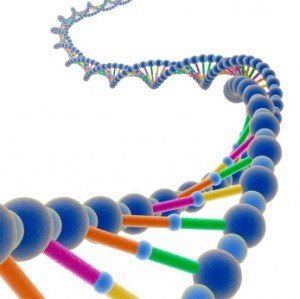

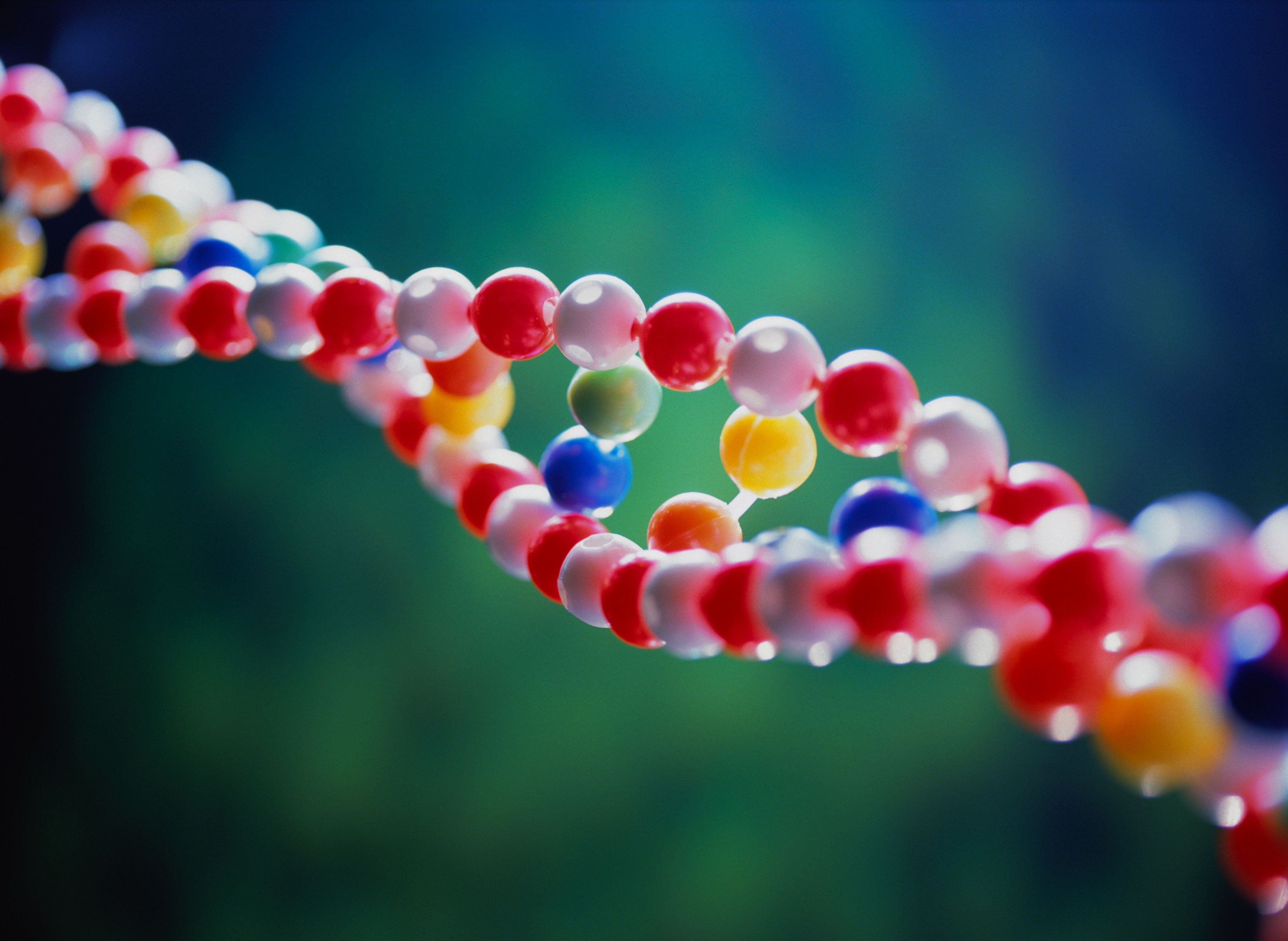
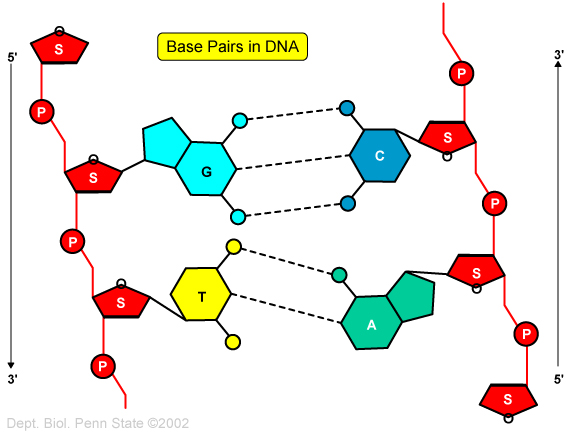

The names of the two molecules above are:
molecule X is a carbohydrate, molecule Y is a nucleic acid
molecule X is a Nucleic Acid, molecule Y is a Nucleic Acid
molecule X and molecule Y are both nucleic acid
molecule X and molecule Y are both carbohydrates

Specialized Cells have...
All of their genes switched ON
All of their genes switched OFF
Some of their genes switched OFF
I don't know they like can choose?!?!
Which are external factors that influence gene expression?
Select two answers
Mutations
Temperature
Gender
Genetics
Drugs
Processing of eukaryotic mRNA occurs in the
Cytoplasm
Mitochondria
Nucleus
Golgi
Alternative splicing allows the inclusion/exclusion of exons in the mRNA. Which of the following is not a possibility of alternative splicing?
Selective splicing
Alternative 5' donor site
Alternative 3' acceptor site
Selective intron splicing
Alternative polyadenylation site
Alternative promoters play a role in tissue and cell specificity
True
False
There are two major classes of RNA found in eukaryotes
True
False
Which of the following is the protein-coding RNA?
tRNA
mRNA
rRNA
miRNA
Which of the following are non-protein coding RNAs
tRNA
rRNA
mRNA
miRNA
siRNA
A primer is necessary in RNA and DNA synthesis
True
False
Unlike DNA synthesis, RNA synthesis does not have to copy the entire genome. It only copies what it needs.
True
False
The information on the template strand is read out in the 5' to 3' direction and the synthesizes in the 3' to 5' direction.
True
False
RNA polymerase binds to which part of the DNA?
Operator
Promotor
5' Cap
Primer
In DNA, there is the coding strand as well as the template strand. The mRNA that is being transcribed will be identical to the template strand
True
False
There are three forms of DNA dependant RNA polymerases (I, II, and III). Which of the following is responsible for producing mRNA, lncRNA, miRNA, and snRNA
RNA Polymerase I
RNA Polymerase II
RNA Polymerase III
All of the above can code for these RNA types
In eukaryotic cells, transcriptions and translation occur simultaneously.
True
False
What are the steps of RNA synthesis Select all that apply.
Initiation
Replication
Elongation
Repair
Termination
Which of these most accurately explains the elongation phase?
The RNA molecule begins forming in the 5' to 3' direction antiparallel to the template strand.
The RNA molecule begins forming in the 3' to 5' direction antiparallel to the template strand
The RNA molecule begins forming in the 5' to 3' direction antiparallel to the coding region
The RNA molecule begins forming in the 3' to 5' direction antiparallel to the coding region
Which of the following is the enzyme used in the process of transcription?
DNA polymerase
RNA polymerase
Primase
Helicase
Which of the following describes the process of alternative RNA splicing?
Different mRNA molecules are made from different sections of DNA
Different mRNA molecules are made from cutting out different exons from the same pre-mRNA
Different mRNA molecules are absorbed from the environment for recombination
Different mRNA molecules are absorbed from the mitochondria for translation
Where on the DNA does the enzyme responsible for transcription bind?
Promoter
Enhancer
Polyadenylation sequence
Start codon
Which of the following describes the correct mRNA sequence from the template strand of 5' - CGGTTA - 3'?
5' - GCCAAT - 3'
5' - GCCAAU - 3'
5' - UAACCG - 3'
5' - TAACCG - 3'
Which of the following enhance the binding of the enzyme responsible for transcription?
Transcription factors
TATA box proteins
Inhibitors
Protons
What is gene expression regulation and why is it important in biology?
Gene expression regulation is important in biology because it allows cells to mutate and become cancerous
Gene expression regulation is not important in biology because it only affects non-essential functions
Gene expression regulation is not important in biology because it has no impact on the organism's overall health
Gene expression regulation is important in biology because it allows cells to respond to their environment, differentiate into specific cell types, and maintain proper functioning of the organism.
Describe the process of DNA replication and its significance in biology.
DNA replication only occurs in non-living organisms.
DNA replication is the process of making an identical copy of a DNA molecule. It ensures genetic continuity and allows for the transmission of genetic information from one generation to the next.
DNA replication has no significance in biology and is just a random occurrence.
DNA replication is the process of creating a completely different DNA molecule.
What are the key enzymes involved in DNA replication and what are their functions?
Protein helicase, Protein polymerase, and Protein ligase
ATPase, GTPase, and UTPase
DNA helicase, DNA polymerase, and DNA ligase
RNA helicase, RNA polymerase, and RNA ligase
What is the role of RNA polymerase in the process of transcription?
It repairs damaged DNA strands
It regulates gene expression
It synthesizes RNA from a DNA template.
It converts RNA into DNA

One nucleotide base is changed so only one amino acid
is affected
Substitution Mutation
Point Mutation
Translocation
Inverse Mutation

A substitution mutation that has no effect
on amino acids sequence
Insertion Mutation
Translocation
Silent Mutation
Deletion Mutation

A nucleotide base is inserted or deleted shifting the entire DNA sequence. Entire protein will be changed.
Substitution Mutation
Silent Mutation
Frameshift Mutation
Translocation

A frameshift mutation where a nucleotide base
is removed from the DNA sequence.
Deletion Mutation
Substitution Mutation
Translocation
Silent Mutation

A frameshift mutation where a nucleotide base is added
to the DNA sequence
Insertion Mutation
Deletion Mutation
Substitution Mutation
Chromosomal Mutation

Part of a chromosome
is deleted
Deletion Mutation-Gene
Translocation
Deletion Mutation -Chromosomal
Crossing Over

Part of a chromosome is repeated
Gene Mutation
Point Mutation
Deletion Mutation
Duplication Mutation

Part of a chromosome is reversed.
Inversion Mutation
Deletion Mutation
Translocation
Point Mutation

Part of one chromosome is transported and attached
to a non-homologous chromosome
Inversion Mutation
Translocation Mutation
Duplication Mutation
Point Mutation
T-G-A-C-C-A
T-G-A-G-C-A
The mutated DNA segment is TTCGCAAG. This is an example of ___ mutation.
ABC-DEF
mutated chromosome
AC-DEF
This is a _____________ mutation.
ABC-DEF
mutated chromosome
ABBC-DEF
ABC-DEF
mutated chromosome
AED-CBF
A mutation in which only one nucleotide is altered is called a:
Frameshift Mutation
Deletion Mutation
Point Mutation
Insertion Mutation
What type of mutation involves substituting a DNA base with a different base but still forms the same protein?
Nonsense Mutation
Missense Mutation
Inversion Mutation
Silent Mutation
What type of mutation causes a premature stop codon to appear in the amino acid sequence?
Deletion Mutation
Nonsense Mutation
Missense Mutation
Silent Mutation

What type of mutation is shown in the picture?
Deletion Mutation
Insertion Mutation
Silent Mutation
Missense Mutation

What type of mutation is shown in the picture?
Silent Mutation
Insertion Mutation
Missense Mutation
Nonsense Mutation
In molecular cloning, a __________ is used to insert a fragment of DNA into the host cell.
plasmid
DNA fragment
bacterium
virus
In reproductive cloning, the egg cell of one organism is used by removing the __________ nucleus and then combining the __________ nucleus from a cell from a second individual. Once the cell starts to divide, it is placed in a surrogate mother.
DNA, RNA
RNA, DNA
haploid, diploid
diploid, haploid
Organisms that have foreign DNA inserted from a different species are called
transgenic
transmutated
adenoviruses
haploid
What cell organelle carries its own DNA passed down from the mother and is used to trace genealogy?
ribosome
golgi apparatus
mitochondria
vesicles
In order to manipulate genetic material, DNA must be extracted from cells. What is the correct order of the process used to manipulate DNA?
enzymes inactivate proteins, buffering compounds break-down cell, alcohol to bring out DNA
gelatinous mass of DNA broken down using buffering compounds, alcohol to remove DNA, enzymes to inactivate proteins
buffering compounds to break-down cell, enzymes to inactivate proteins, alcohol to bring out DNA
none of the choices are correct
The process where an electric current is used to separate nucleic acids based on size and is used in forensics is called
gel electrophoresis
cloning
transgenic manipulation
PCR
The process used to make copies of DNA when not much is available and is often used in forensics is called
gel electrophoresis
cloning
PCR
transgenics
The vector used in genetic engineering is a(n)
bacterium
adenovirus
bacteriophage
transgenic donator
Polymerase Chain Reaction
Is used to make copies of specific regions of DNA
Uses a special form of DNA polymerase and primers to copy DNA
is used in crime scenes and paternity cases to compare DNA samples
All of the choices are correct
some of the choices are correct
The polymerase chain reaction is important because it allows us to
Make many copies of a targeted segment of DNA
Insert eukaryotic genes into prokaryotic plasmids
Incorporate genes into viruses
Make DNA from RNA
A desired DNA segment is inserted into small circular DNA from prokaryotes called a __________ and then is inserted into a bacterial host and the resulting combination is called ____________.
Virus, a eukaryote
Plasmid, a eukaryote
Plasmid, recombinant DNA
Virion, recombinant DNA
Proteins that suppress the transcription of a gene are called
plasmids
vectors
inducers
repressors
The term for when all of the genes needed to synthesize a particular protein are located in the same location on a chromosome.
operon
inducer
vector
repressor

When there is an over abundance of an amino acid present in a cell, a molecule will bind the the operator and RNA synthesis is blocked preventing the production of more of this amino acid. This process is called
RNA synthase
Negative regulation
Positive regulation
TRP operon
This produces multiple identical copies of a gene for basic research
restriction enzymes
gene cloning
DNA ligase
gel electrophoresis
This seals the sticky ends of restriction fragments to make recombinant DNA
restriction enzymes
gene cloning
DNA ligase
reverse transcriptase
This cuts DNA molecules at specific locations
restriction enzymes
DNA ligase
polymerase
ATP
Genetically engineered plants
are more difficult to engineer than animals
include a transgenic rice plant that could help prevent vitamin A deficiency
are being rapidly developed, but traditional plant breeding programs are still the only method to develop new plants
are banned throughout the world

Bacterial DNA that is often circular or in the shape of a ring is called a:
Clone
Plasmid
Fragment
Recombinant DNA

167-171.
Answer the questions below after watching the video
Why is gene regulation necessary in human cells?
To ensure that all genes are expressed in every cell
To increase the production of hydrochloric acid in stomach cells
To prevent the expression of unnecessary genes in certain cells
To decrease the overall DNA content in each cell
What is an operon?
A cluster of genes regulated together
A type of enzyme that breaks down lactose
A sequence of DNA that stops gene expression
A protein that enhances gene expression
What role does RNA polymerase play in the operon model?
It acts as a repressor to prevent gene expression
It binds to the promoter to initiate transcription
It breaks down lactose into simpler sugars
It binds to the operator to block gene expression
What happens when lactose is not present in the environment of a bacterium?
The repressor is inactivated, allowing gene expression
RNA polymerase is blocked by the repressor, stopping gene expression
Lactose binds to the repressor, changing its shape
The operon is removed from the bacterium's DNA
How does the presence of lactose affect the Lac Operon?
It activates the repressor, which then blocks the operon
It binds to the repressor, preventing it from blocking the operon
It increases the degradation rate of mRNA
It decreases the affinity of RNA polymerase for the promoter

