
 Worksheets
HEES Unit One FInal Review
Total questions: 162
Worksheet time: 4hrs 43mins
Which sphere of the Earth includes all the water on the planet?
Atmosphere
Hydrosphere
Biosphere
Geosphere
Which sphere of the Earth includes all living organisms?
Atmosphere
Hydrosphere
Biosphere
Geosphere
Which sphere of the Earth includes the air and gases that surround the planet?
Atmosphere
Hydrosphere
Biosphere
Geosphere
Which sphere of the Earth includes all the solid parts of the planet, such as rocks and minerals?
Atmosphere
Hydrosphere
Biosphere
Geosphere
Which sphere of the Earth includes all the water bodies, such as oceans, lakes, and rivers?
Atmosphere
Hydrosphere
Biosphere
Geosphere
Which sphere of the Earth includes all the plants, animals, and other living organisms?
Atmosphere
Hydrosphere
Biosphere
Geosphere
Which sphere of the Earth includes the Earth's crust, mantle, and core?
Atmosphere
Hydrosphere
Biosphere
Geosphere
Which sphere of the Earth includes the layer of gases that surround the planet?
Atmosphere
Hydrosphere
Biosphere
Geosphere
Which sphere of the Earth includes all the water vapor, clouds, and weather?
Atmosphere
Hydrosphere
Biosphere
Geosphere
Which sphere of the Earth includes all the land and landforms?
Atmosphere
Hydrosphere
Biosphere
Geosphere

What is the geosphere?
all the air and gases on the planet
all the frozen water on the Earth
the non-living soil, rocks, and minerals of the Earth
the rivers, lakes, and oceans of the Earth

What is the biosphere?
all the air and gases on the planet
made up of living things
the non-living soil, rocks, and minerals of the Earth
the rivers, lakes, and oceans of the Earth

What is the hydrosphere?
all the air and gases on the planet
made up of living things
the non-living soil, rocks, and minerals of the Earth
the rivers, lakes, and oceans of the Earth

What is the atmosphere?
all the air and gases on the planet
made up of living things
the non-living soil, rocks, and minerals of the Earth
the rivers, lakes, and oceans of the Earth


What spheres are interacting when a volcano erupts and releases hot gases into the air?
biosphere & atmosphere
hydrosphere & biosphere
geosphere & atmosphere
geosphere & biosphere
What two spheres are interacting with decomposing organisms release nutrients into the soil?
atmosphere & biosphere
biosphere & geosphere
geosphere & hydrosphere
cryosphere & geosphere
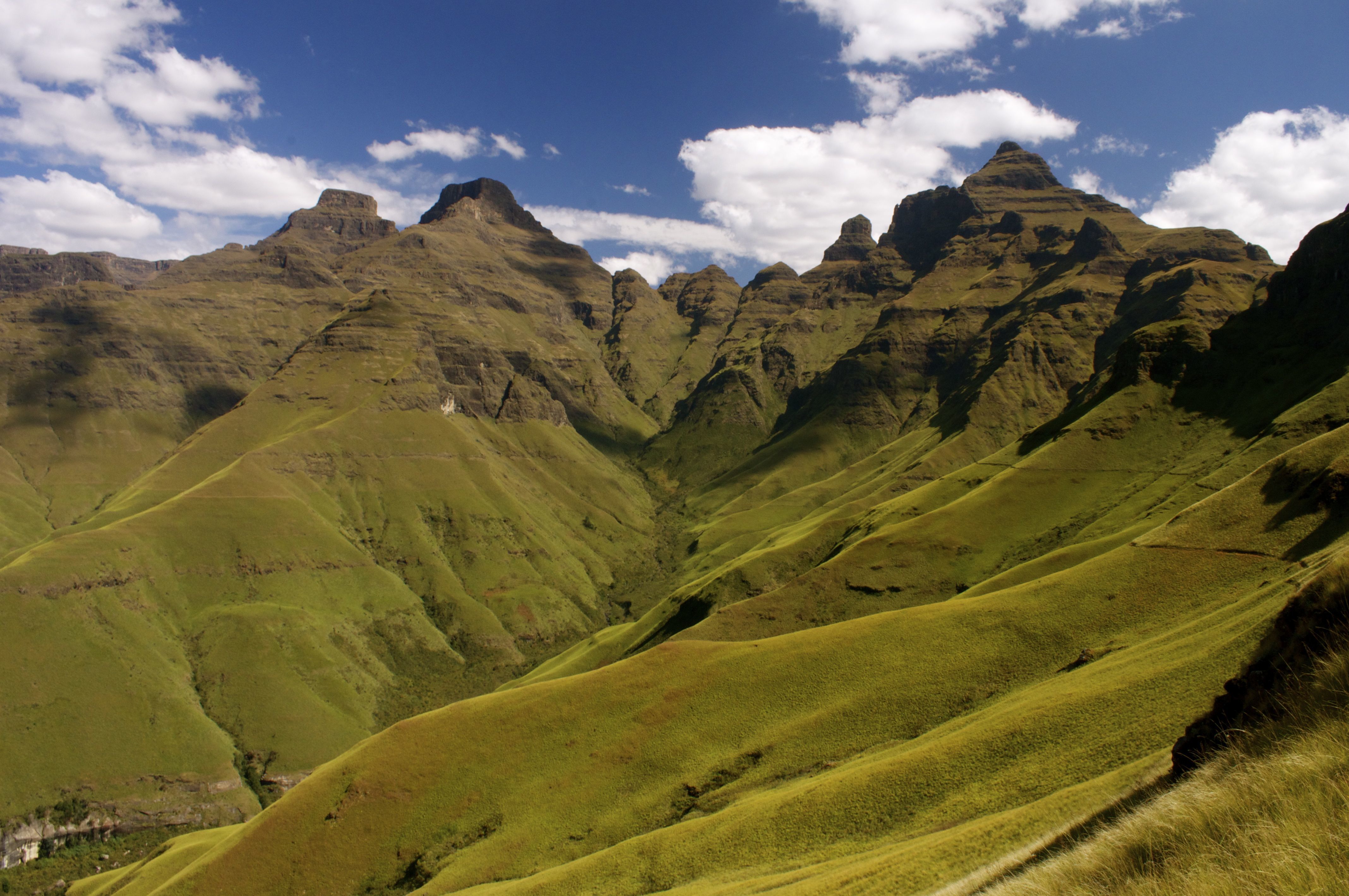
This sphere includes the continents, the ocean floor, all the rocks on the surface, and all of the sand in the deserts.
Hydrosphere
Biosphere
Atmosphere
Geosphere
Select all that apply. Water flowing over land and changing the shape is evidence of the interaction between
The atmosphere
The hydrosphere
The geosphere
The biosphere
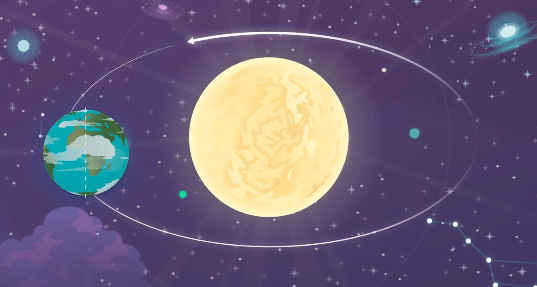
How long does it take for the Earth to make one full revolution around the Sun?
one day
one week
one month
one year
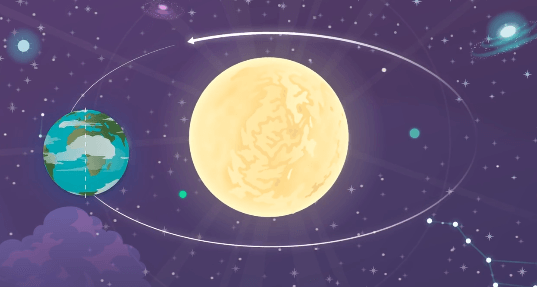
The movement of the Earth around the Sun is called its _____
revolution
rotation
precession
regression


The amount of time it takes Earth to rotate on its axis is
365 days
24 hrs
month
year


In this diagram, the motion of the yellow satellite can best be described as -
Rotation
Revolution


What causes the moon's phases
Where you are standing on Earth
the amount of sunlight reflected onto the moon from the sun
The tilt of Earth
how fast the moon is moving
The spinning of the earth on its axis that causes day and night is called
orbit.
axis.
rotation.
revolution.
The path of an object in space around another object is a(n)
orbit.
axis.
rotation.
tilt
It takes about _____ for the earth to complete one rotation.
28 days
24 hours
365 hours
365 days

April 29th
July 4th
May 4th
September 12th


The point in a planets orbit where it is FARTHEST away from the sun
The point in a planets orbit where it is CLOSEST to the sun
Kepler's 1st Law says this about the orbits of planets
they are elliptical.
they are perfect circles.
they are always perfect polygons (square, pentagon, hexagon, etc.,)
they are parabolic.
Kepler's 3rd Law states that the farther away a planet is from the sun, the _______ it takes it to orbit the sun once (year).
longer
shorter
According to Kepler's 2nd Law when do planets move the fastest?
A new planet is discovered orbiting a single star. The planet has one moon. According to Kepler’s first law, what do scientists know about the orbit of the planet around the star?
The orbit is circular
The orbit is elliptical
A scientist is searching for areas where new solar systems might form. What feature is the scientist looking for?
a star similar to the Sun
a cloud of dust and gas
an oxygen-rich atmosphere
a gravitational acceleration of 9.8 m/sec2
If a planet's eccentricity is closer to zero it more like a(n)
circle
highly eccentric ellipse
Which scientist came up up with the three laws of planetary motion?
Newton
Kepler
Einstein
Hawking

The diagram below shows a moon revolving around a planet in an elliptical orbit. Using your knowledge of Kepler's Law, at which position is the moon traveling fastest?
location 1
location 2
location 3
location 4

The diagram below shows a moon revolving around a planet in an elliptical orbit. Using your knowledge of Kepler's Law, at which position is the moon traveling slowest?
location 1
location 2
location 3
location 4

Which planet will take the most amount of time to revolve around the Sun (longest year)?
Mercury
Venus
Earth
Mars
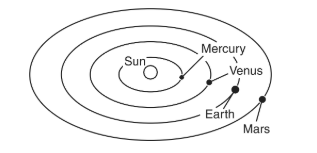
Which planet will take the least amount of time to revolve around the Sun (shortest year)?
Mercury
Venus
Earth
Mars

Which Law is it?
This Law states that a planets path around the sun is elliptical.
Kepler's 1st Law
Kepler's 2nd Law
Kepler's 3rd Law

Which Law is it?
This Law states that a planets distance from the sun impacts its time to complete 1 orbital revolution (year).
Kepler's 1st Law
Kepler's 2nd Law
Kepler's 3rd Law

Which Law is it?
This Law states that planets move faster closer to the sun and slower farther away from the sun. The planets cover the same area and take the same amount of time.
Kepler's 1st Law
Kepler's 2nd Law
Kepler's 3rd Law
Kepler's 2nd Law states that planets move faster closer to the sun and slower farther away from the sun. What force is causing this to happen?
inertia
gravity
Which of the following is one of Kepler's Laws of Planetary Motion?
Planets move on elliptical orbits with the Sun at one focus.
The gravitational force between two objects decreases as the distance increases.
An object in motion remains in motion.
Inner planets orbit in a different direction than outer ones.
An ellipse is drawn around two points called the…
aphelion
perihelion
axis
foci
Suppose the gravitational force between two massive spheres is 100 N. If the first mass is tripled (3m_1) , what is the new force between the masses?
33 N
50 N
100 N
200 N
300 N
Suppose the gravitational force between two massive spheres is 70 N. If the distance between the spheres is cut in half (½ d), what is the force between the masses?
280 N
140 N
70 N
35 N
17.5 N
The gravitational force of Earth on an object DOES NOT depend upon the object’s mass.
True
False
If you travel outside our solar system, then you can escape the gravitational force of Earth.
True
False
Kepler’s 2nd Law states that the area swept out by a planet’s motion will be the same regardless of where it is in its orbit. A comet moves much faster when it is closer to the Sun than when it is further out from the Sun. What is the primary cause in the change of the comet’s orbital velocity?
Jupiter's gravitational field.
The sun's solar wind.
The sun's gravitational field.
Saturn's magnetic field.
The Moon orbits the Earth as the Earth orbits the Sun. The Moon’s orbit is elliptical, and changes its distance from the Earth by around 10 over the course of an orbit. Any ellipse has two centers, which are called foci. For the Moon’s orbit, what must exist at one of the two foci?
The Earth
The Sun
The Moon
Mars
The invisible line that passes through the center of the Earth from the North Pole to the South Pole is called Earth's ____
The correct order of the planets from closest to furthest away from the sun is:
Mars,Venus,Earth,
Mercury,Saturn
Jupiter, Uranus, Neptune
Earth,Venus,Mars
Jupiter, Neptune,
Mercury,Saturn,
Uranus
Mercury,Venus,Earth
Mars,Jupiter,
Saturn,Uranus
Neptune

The center of mass between two objects orbiting one another in space (i.e. the sun and Earth) is called...
Nutation
Barycenter
Equinox
Precession
Which of the following is not a rule to be considered a planet?
be rounded by gravity
orbit a star
have a cleared orbit
contains living organisms
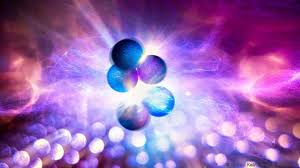
This process, called nuclear fusion, is the energy source of all __________.
There may be more than one answer for this questions.
planets
suns
stars
plants
When hydrogen is "fused" together on the Sun, what new element is created?
Helium
Carbon Dioxide
Oxygen
Light

Which element is used as the fuel in nuclear fusion reactions?
(a)
Takes two small nuclei and combines them into a larger nucleus
Fission
Fusion
Where does nuclear fusion occur in the sun?
Surface
Corona
Core
Convective zone
Do all stars make energy through fusion?
Yes
No
Just our sun
Only large stars
Stars have loads of proton - proton chain reactions happening in its core. What charge do protons have?
neutral - no charge
positive
negative
neutrino
The Sun core....
The region of the sun where energy is produced.
The region of the sun where solar flare happen.
The sun spots are generated at core
The carry particles of ligh
Where is most of the helium and carbon located in the sun?
Core
Convective zone
Radiative zone
Surface
What is the fuel source for the suns energy?
gravitational energy
carbon atoms
hydrogen atoms
thermal energy
hydrocarbon molecules
What is the primary fuel used in nuclear fusion reactions in stars?
Hydrogen
Helium
Carbon
Oxygen
Which process involves combining two light atomic nuclei to form a heavier nucleus?
Nuclear Fission
Nuclear Fusion
Radioactive Decay
Nuclear Splitting
In which part of the sun does nuclear fusion primarily occur?
Surface
Corona
Core
Convective Zone
What is the main byproduct of nuclear fusion in the sun?
Helium
Carbon
Oxygen
Nitrogen
Which of the following is a challenge in achieving controlled nuclear fusion on Earth?
High temperature requirement
Low energy output
Abundance of fuel
Simple containment
What is the role of plasma in nuclear fusion reactions?
It acts as a fuel
It provides the necessary temperature
It contains the reaction
It is a byproduct
Which of the following is a potential benefit of nuclear fusion as an energy source?
Produces long-lived radioactive waste
Limited fuel supply
High greenhouse gas emissions
Abundant fuel and low waste

What results from livestock and other agricultural practices and by the decay of organic waste in municipal solid waste landfills?
Carbon Dioxide
Methane
Water Vapor
Fluorinated Gases
Nitrous Oxide
Which of the following natural events is NOT a source of carbon dioxide?
Wildfire
Decomposing plants and animals
Volcanic eruption
Earthquake
Cutting down large forests (deforestation) can result in:
little to no changes
more homes for animals
less plants to absorb carbon dioxide, a greenhouse gas

Which of the following is contributing to an INCREASE in carbon dioxide in the atmosphere?
deforestation
photosynthesis
oceans
all of the above
the loss of animal species
Solar radiation is the most indirect near the ___________.
equator
poles
The imaginary horizontal lines running parallel on the Earth is called _______
Grid
Latitude
Longitude
Heat zone


True or False- The Sun's energy being absorbed differently at different latitudes contribute to the uneven heating of earth.
True
False
True or False- The Sun's energy being absorbed differently by land and water contribute to the uneven heating of earth.
True
False
Energy from the sun is called ___.
radiation
conduction
convection
The transfer of energy from one particle of matter to another within an object or between two objects that are in direct contact
conduction
convection
radiation


_______is a measure of the reflective characteristics of the Earth's surface.
Albedo
Greenhouse Effect
Climate

What has the highest albedo?
the oceans
Ice in the Arctic or Antarctic
the ground
roads
GAMMA RAYS
It is used in thermal imaging
Overexposure to this can result in sunburns and skin cancer
Has the highest energy of all electromagnetic radiation and is the most damaging to human tissue
Has the longest wavelengths and the lowest frequency
What are spring and neap tides?
occur when the sun and moon are directly in line with the earth and their gravitational pulls reinforce each other to make the highest tides.
occur when the sun, earth, and moon form a right angle and the sun's gravitational pull counteracts the moon's pull making a weaker high tide.
occur when the sun, earth, and moon form a right angle and the sun's gravitational pull counteracts the moon's pull making a strong high tide.
Tides that occur when the moon is rotating
How do tides occur?
Tides refer to the fall and rise of the surface of the Earth's oceans.
The movement of the ocean waves
When the earth and the moon face each other
All of the Above
How do tidal patterns occur?
Tidal currents that are produced by small quantities of water
Tidal currents are produced by the large quantities of water moving toward or away from shore as the tides change.
None of the Above
All of the above

