wayground logo

Free Printable Worksheets

Font size

S
M
L
XL
Worksheets

Heat and States of Matter

Total questions: 157

Worksheet time: 5hrs 39mins

Name
Class
Date
1.

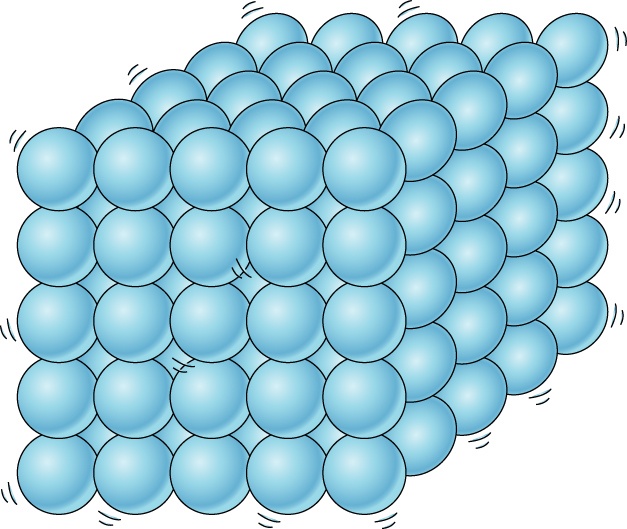
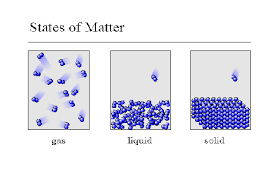
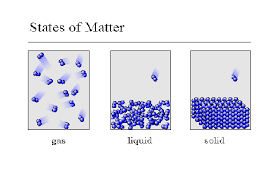
State of matter with a definite shape and definite volume.

a)

solid

b)

liquid

c)

gas

2.

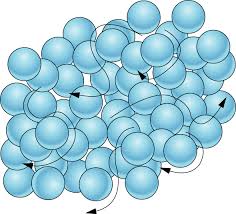
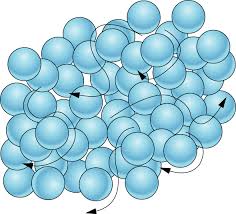
State of matter with a definite volume, but no definite shape.

a)

solid

b)

liquid

c)

gas

3.

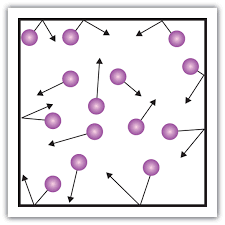
State of matter with no definite shape and no definite volume.

a)

solid

b)

liquid

c)

gas

4.

Particles are closely spaced.

a)

solid

b)

liquid

c)

gas

5.

Particles vibrate in place and do not change relative positions.

a)

solid

b)

liquid

c)

gas

6.

Particles move relative to each other, but remain in contact with each other.

a)

solid

b)

liquid

c)

gas

7.

Particles are not so closely spaced and slide past each other.

a)

solid

b)

liquid

c)

gas

8.

Particles are widely spaced except when they collide.

a)

solid

b)

liquid

c)

gas

9.

Basic state of matter with the least amount of energy.

a)

solid

b)

liquid

c)

gas

10.

Basic state of matter with the greatest amount of energy.

a)

solid

b)

liquid

c)

gas

11.

What happens to particles when their temperature increases?

a)

The particles move slower

b)

The particles move faster

c)

The particles lose mass

d)

The particles gain mass

12.

What happens when the speed of particles decreases?

a)

Their temperature decreases

b)

Their temperature increases

c)

Their mass decreases

d)

Their mass increases

13.

When ice sits out on a counter and melts, it is because the ice has...

a)

gained mass

b)

gained energy

c)

lost mass

d)

lost energy

14.

When water sits in the freezer and freezes into ice, it is because the water has...

a)

gained mass

b)

gained energy

c)

lost mass

d)

lost energy

15.

The amount of space something takes up is its...

a)

Mass

b)

Volume

c)

Thermal Energy

d)

Temperature

16.

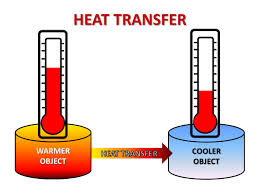
The transfer of thermal energy from a warmer object to a cooler one is...

a)

Heat

b)

Volume

c)

Thermal Energy

d)

Temperature

17.

___________ is anything that has mass and takes up space.

a)

Molecules

b)

Matter

c)

Volume

18.

In which state of matter are the molecules close together and vibrate slowly?

a)

Liquid

b)

Solid

c)

Gas

19.

Which state of matter has no definite shape and no definite volume?

a)

Liquid

b)

Solid

c)

Gas

20.

Which state of matter has a definite shape and a definite volume?

a)

Solid

b)

Liquid

c)

Gas

21.

Which states of matter take the shape of their container?

a)

Liquids and gases

b)

Solids and liquids

c)

Gases and solids

d)

Solids, liquids, and gases

22.

When you add or remove heat to an object, you are adding or removing _________.

a)

Mass

b)

Energy

c)

Volume

d)

Matter

23.

For a solid to change to a liquid, heat must be __________ .

a)

Added

b)

Removed

24.

What is the process called when a gas turns into a liquid?

a)

Condensation

b)

Melting

c)

Freezing

d)

Evaporation

25.

What is the process called when a solid changes to a liquid?

a)

Freezing

b)

Evaporation

c)

Melting

d)

Condensation

26.

What is the process called when a liquid changes into a gas?

a)

Freezing

b)

Evaporation

c)

Melting

d)

Condensation

27.

What state of matter?

a)

Solid

b)

Liquid

c)

Gas

d)

Plasma!!!

28.

What state of matter?

a)

Solid

b)

Liquid

c)

Gas

29.

What state of matter?

a)

Solid

b)

Liquid

c)

Gas

30.

Which is not true about the liquid state of matter?

a)

The liquid state has a definite volume and a definite shape.

b)

The liquid state takes on the shape of its container.

c)

The liquid state has a definite volume and an indefinite shape.

d)

The particles in a liquid can easily move past each other.

31.

The state of matter in which a material has a definite volume and a definite shape is the:

a)

Solid

b)

Liquid

c)

Gas

d)

Plasma

32.

Which process could cause a material to change state from gas to liquid?

a)

Adding heat

b)

Adding energy

c)

Removing particles

d)

Removing energy

33.

If I add heat to a solid, how will the motion of the particles be affected?

a)

They will move slower

b)

They will stop moving

c)

They will move faster

d)

They will move to a different container

34.

How can you stop the movement of particles?

a)

Increase the temperature

b)

Decrease the temperature

c)

You can't.

d)

Hold them still with your hands.

35.
At higher temperatures
a)
particles in an object have less energy
b)
particles in an object move faster
c)
a gas contracts
36.
A gas
a)
has a definite shape but no definite volume
b)
has a definite volume but no definite shape
c)
has fast-moving particles
37.
Freezing
a)
Solid to gas
b)
Liquid to solid
c)
Gas to solid
d)
Liquid to gas
38.
Boiling
a)
liquid to gas
b)
gas to solid
c)
gas to liquid
d)
solid to liquid
39.
What is happening when my ice cream changes from a solid to a liquid?
a)
freezing
b)
melting
c)
burning
d)
evaporation
40.
Particles of a liquid
a)
are tightly packed together and stay in a fixed position.
b)
have no viscosity.
c)
decrease in volume with increasing temperature.
d)
are free to move around one another but still touch.
41.
Which has a greater distance between particles?
a)
Solid
b)
Liquid
42.
What does this picture represent? 
a)
solid
b)
liquid 
c)
gas
d)
plasma
43.
Where is there a low concentration of dye?
a)
at the bottom of cup
b)
in the color
c)
at the top of cup 
d)
no concenteraion gradient
44.
What line segment represents only the solid state?
a)
A-B
b)
B-C
c)
C-D
d)
D-E
45.

When heat is added, particles in a solid, liquid, or gas...

a)

Are not affected

b)

Move faster

c)

Move slower

d)

None of the above

46.
Between which points is the temperature of the substance increasing?
a)
A-B only. 
b)
A-B, C-D, E-F
c)
B-C only. 
d)
B-C, D-E
47.
What state of matter is segment 5?
a)
Solid
b)
Liquid
c)
Gas
d)
Plasma
48.
Define a liquid.
a)
Indefinite shape, indefinite volume
b)
Definite shape, definite volume
c)
Found in stars
d)
Definite volume, indefinite shape
49.
A substance's heating curve is shown in the graph.  What is its boiling point?
a)
100 C
b)
60 C
c)
80 C
d)
20 C
50.

What process changes a gas to a liquid?

a)

Melting

b)

Freezing

c)

Evaporation

d)

Condensation

51.

Fog results from the process called...

a)

Evaporation

b)

Boiling

c)

Condensation

d)

Liquidification

52.

What state of matter is MOST organized?

a)

Solid

b)

Liquid

c)

Gas

53.

What state of matter is EASIEST to compress?

a)

Solid

b)

Liquid

c)

Gas

54.

The point at which a liquid has enough energy to become a gas is called its...

a)

boiling point

b)

melting point

55.

The point at which a liquid has lost enough energy to become a solid is called its...

a)

melting point

b)

freezing point

56.
When water is heated from 10°C to 15°C What is the change in temperature?
a)
10 °C
b)
5 °C
c)
15 °C
d)
25 °C
57.
When a  piece of aluminum foil is taken out of the oven and cools from 100°C to 50°C.
What is the change in temperature?
a)
50°C
b)
0°C
c)
100°C
d)
150°C
58.
When a baked potato at 10 °C is heated to 180 °C in the oven its temperature change is
a)
170 °C
b)
10 °C
c)
180 °C
d)
190 °C
59.
Specific heat of water is  4.18 J/g°C. Specific heat of wood is 1.760 J/g°What material needs more heat energy to raise the temperature?
a)
Water
b)
Wood
c)
Both are same
60.

What is the formula to calculate heat energy required to raise the temperature of any substance?

a)

Q=mc∆t

b)

Q=mH

c)

Q= ½mv

d)

m=QC

61.

The heat absorbed while a solid is melting is known as....

a)

heat of fusion

b)

heat of solid

c)

heat of liquid

d)

heat of vaporization

62.

Heat always flows from a __________________ to a cooler object.

a)

warmer

b)

cooler

c)

liquid

d)

gas

63.

Higher temperatures indicate

a)

slower motion of molecules

b)

molecules at rest

c)

faster motion of molecules

64.

Temperature when a substance changes from a solid to a liquid

a)

freezing point

b)

heat of fusion

c)

thermal expansion

d)

melting point

65.

The Temperature when a liquid turns to a solid

a)

freezing point

b)

heat of fusion

c)

thermal expansion

d)

melting point

66.

The amount of heat needed to change 1 gram of a substance from the liquid phase to the gas phase is ___

a)

Heat of Vaporization

b)

Boiling point

c)

Heat Energy

d)

Phase change

67.

Temperature when a substance changes from a liquid to a gas

a)

Heat of Vaporization

b)

Boiling point

c)

Heat Energy

d)

Phase change

68.
When water is heated from 10°C to 15°C What is the change in temperature?
a)
10 °C
b)
5 °C
c)
15 °C
d)
25 °C
69.

The amount of energy required to raise the temperature 1ºC for every gram is called____?

a)

Thermal Energy

b)

Specific Heat

c)

Temperature

d)

Kinetic Energy

70.
What would be the effect on the particles if more heat is supplied to the system?
a)
They would slow down
b)
They would stop moving
c)
They would speed up
d)
There would be no effect
71.

Using the heat equation, what would the formula look like if we were solving for change in temperature?

a)

Q m = ∆T C

b)

Q / (m C) = ∆T

c)

Q m / C = ∆T

d)

m c Q = ∆T

72.

The symbol for specific heat is .......

a)

C

b)

Q

c)

m

d)

T

73.
What is the equation to measure change in Thermal Energy?
a)
Q=mc∆t
b)
Q=mc
c)
Q= ∆mct
d)
m=QC
74.
How does heat flow?
a)
Always from cold to warm
b)
Always from warm to cold
c)
Both warm to cold & cold to warm
d)
It depends on the temperature
75.

The unit for heat energy is

a)

°C\degree C

b)

J

c)

J/gC

d)

g

76.

What letter do we use to represent mass?

a)

Q

b)

m

c)

c

d)

ΔT\Delta T

77.

What does  ΔT\Delta T  represent?

a)

 tf tit_{f\ }-t_i  

b)

 ti tft_{i\ }-t_f  

c)

t - celsius

d)

celsius - t

78.
The energy transferred between the particles of two objects because of the temperature difference between the two objects is called ________________.
a)
heat
b)
insulator 
c)
conductor 
79.

Convert 35⁰F to Celsius (5/9 x (0F - 32))

a)

1.6⁰

b)

1.7⁰C

c)

2.0⁰

d)

16.6⁰C

80.

Convert 72⁰F to Celsius (5/9 x (0F - 32))

a)

2.2⁰C

b)

222⁰C

c)

22.2⁰C

d)

161.6⁰C

81.

Convert 99.6°F to Celsius (5/9 x (0F - 32))

a)

37.6°C

b)

37.5°C

c)

73.1°C

d)

375°C

82.

Convert 103°F to Celsius (5/9 x (0F - 32))

a)

39°C

b)

394°F

c)

75°C

d)

39.4°C

83.

Convert 30°C to Fahrenheit (1.8 x 0C) + 32

a)

860°F

b)

86°F

c)

63.8°F

d)

56°F

84.

Which of the follow represents a normal body temperature of 98.6°F in °Celsius? 5/9 x (0F - 32)

a)

37°C

b)

370°C

c)

72.5°C

d)

72.6°C

85.

Convert 25.6°C to Fahrenheit (1.8 x 0C) + 32

a)

48.1°F

b)

781°F

c)

78.1°F

d)

14.1

86.

Convert 15°C to Fahrenheit (1.8 x 0C) + 32

a)

63.8°F

b)

84.6°F

c)

-9.4°F

d)

59°F

87.

Convert 0°C to Fahrenheit (1.8 x 0C) + 32

a)

0°F

b)

1.8°F

c)

32°F

d)

3.2°F

88.

100 Celsius is ? Kelvin (K = Celsius + 273)

a)

173 K

b)

373K

c)

273 K

d)

0 K

89.
Temperature is the ________ of energy.
a)
Transfer
b)
Measure
90.
Heat is the _______ of energy.
a)
Transfer
b)
Measure
91.
Which choice below deals with how fast the particles of an object move?
a)
Heat
b)
Temperature
92.
The molecules of a gas vs. a solid....
a)
Move faster in a gas.
b)
Move faster in a solid.
93.
If you put a burger on the grill...
a)
It's particles will speed up.
b)
It's particles will slow down.
94.

A liquid's freezing point is -38°C and its boiling point is 357°C. How many Kelvins are there between the boiling point and the freezing point of this liquid?

a)

319

b)

357

c)

395

d)

592

95.

Absolute zero

a)

indicates the complete absence of heat/energy

b)

is the coldest possible temperature

c)

is when all molecular motion stops

d)

All of the above

96.
Which material is the best conductor of heat?
a)
glass
b)
styrofoam
c)
metal
d)
wood
97.
What materials would be good insulators for a handle on a pan or pot that would be used on the stove?
a)
wood or plastic
b)
metal or rubber
c)
wood or rubber
d)
copper or steel
98.
Why does a metal lawn chair get hot in the sun when the grass sitting in the same sunlight remains cool to the touch?
a)
Heat travels easily through plants but not metals.
b)
Heat travels easily through both plants and metals.
c)
Heat travels easily through metal objects but not through plants.
99.
Conduction can only occur between two objects when –
a)
one object is less dense than the other.
b)
both objects are in physical contact with each other.
c)
one of the objects is made of a metal.
d)
both objects are exactly the same temperature.
100.
Which of the following is an example of conduction?
a)
Solar energy warming a room.
b)
Heat rising from the coils of a stove.
c)
Hot air drying a wet towel.
d)
Heat moving from a clothes iron to a shirt.
101.
Which of the following are kinds of heat transfer.
a)
Conduction
b)
Convection
c)
Radiation
d)
All of the above
102.
Jenny poured some hot chocolate into a cup and stirred it with a metal spoon.  She noticed the spoon was really warm.  What is the best explanation for this?
a)
The spoon is a conductor.
b)
The spoon reflects heat.
c)
The spoon is an insulator.
d)
She touched the spoon first and waited to touch the cup.
103.
Radiation is heat transfer by-
a)
Touch
b)
Circles
c)
Waves
104.
The way the heat is moving from the hot coffee is called...
a)
convection
b)
radiation
c)
insulation
d)
conduction
105.
When the 2nd story of a house is warmer than the 1st floor of a house is heat transfer through 
a)
conduction
b)
convection
c)
radiation
d)
thermal equilibrium
106.
What  is the formula to calculate heat energy required to raise the temperature of any substance?
a)
Q=mc∆t
b)
Q=mc
c)
Q= ½mv
d)
m=QC
107.
The energy of moving particles
a)
heat
b)
thermal energy
c)
school
d)
temperature
108.
Is a measure of how hot or cold something is 
a)
Cold
b)
Heat
c)
Temperature
d)
Thermal Energy 
109.
The flow of thermal energy from warmer objects to cooler objects 
a)
Ice Cold
b)
Heater
c)
Heat
d)
Convection 
110.
A high specific heat means...
a)
It heats up quickly with energy added
b)
It requires more energy to change temperature
111.

_____________ is the form of energy that is transferred between systems or objects with different temperatures.

a)

Temerature

b)

Heat

c)

Specific Heat

d)

Mechanical Energy

112.

Which of the following is not a method for heat transfer?

a)

Radiation

b)

Insulation

c)

Conduction

d)

Convection

113.

How does heat energy reach the Earth from the Sun

a)

Convection

b)

Radiation

c)

Conduction

d)

Insulation

114.

A lava lamp is an example of which type of heat transfer?

a)

Conduction

b)

Convection

c)

Radiation

115.
Heat transfers from an area of ____temperature to an area of ___ temperature.
a)
high to low
b)
low to high
c)
high to high
d)
It can travel high to low and low to high. 
116.
Which of the following is an example of convection?
a)
A hair dryer is drying up your hair.
b)
When the AC or heater changes the temperature.
c)
When a car engine turns hot after being turned on.
d)
When you are making soup and the water is rising and lowering.
117.
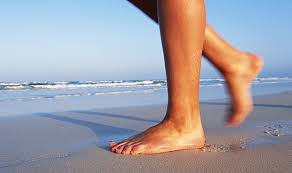
Walking on the warm sand sand with your bare feet demonstrates this type of heat transfer. 
a)
conduction
b)
convection
c)
radiation
118.
Johnny accidentally grabbed the handle of the hot pot.
a)
conduction
b)
convection
c)
radiation
119.

_________________ is the transfer of energy through or by electromagnetic waves.

a)

Conduction

b)

Convection

c)

Radiation

120.
An insulator is a material that:
a)
Transfers thermal and electrical energy
b)
Transfers electrical energy and slows thermal energy
c)
Slows electrical energy and allows thermal energy to pass
d)
Slows thermal and electrical energy from transfering
121.
A great conductor of energy is:
a)
wood
b)
plastic
c)
metal
d)
cloth
122.
What is NOT an example of an insulator in the kitchen?
a)
An oven mitt
b)
Pots and pans
c)
A wooden spoon
d)
A plastic measuring cup
123.
Mittens help keep your hands warm in winter because:
a)
They are conductors of heat.
b)
They are fuzzy.
c)
They are conductors of electrical energy.
d)
They are insulators.
124.
The specific heat is the amount of energy needed to raise the temperature one degree Celsius of 1 gram of a substance.
a)
True
b)
False
125.
What is the symbol for Thermal Energy?
a)
Q
b)
T
c)
m
d)
Cp
126.
What unit do you use to measure Thermal Energy?
a)
J/Kg ºC
b)
Kg
c)
ºC
d)
J
127.
A high specific heat means...
a)
It heats up quickly with energy added
b)
It requires more energy to change temperature
128.

Which will heat up faster?

a)

copper

b)

granite

c)

iron

d)

basalt

129.

Which will heat up slower?

a)

water

b)

lead

c)

granite

d)

iron

130.

Which of the following best explains why the sand at the beach is hotter than the water?

a)

Sand has a higher specific heat than water.

b)

Sand has a lower specific heat than water.

c)

There is more water than sand at the beach.

d)

There is more sand than water at the beach.

131.
How does heat flow?
a)
Always from cold to warm
b)
Always from warm to cold
c)
Both warm to cold & cold to warm
d)
It depends on the temperature
132.

The amount of energy required to raise the temperature 1ºC for every gram is called____?

a)

Thermal Energy

b)

Specific Heat

c)

Temperature

d)

Kinetic Energy

133.
If you place some Gatorade in a cooler with ice...
a)
It's particles will speed up.
b)
It's particles will slow down.
134.
To turn a liquid into a gas, you _____ energy.
a)
Add
b)
Remove
135.

What is the equation for specific heat capacity?

a)

Q=mcΔTQ=mc\Delta T

b)

Q=mcΔTQ=\frac{mc}{\Delta T}

c)

Q=ΔTmcQ=\frac{\Delta T}{mc}

d)

Q=cΔTmQ=\frac{c\Delta T}{m}

e)

Q=mΔcTQ=m\Delta cT

136.

What are the units for specific heat capacity?

a)

J kg / °C

b)

J / kg / °C

c)

J / °C

d)

J / kg

e)

kg °C / J

137.

What is happening between A and B?

a)

Melting

b)

Boiling

c)

Condensing

d)

Freezing

e)

None of these options

138.

What is happening between B and C?

a)

Melting

b)

Boiling

c)

Condensing

d)

Freezing

e)

Sublimation

139.

What is happening between D and E?

a)

Melting

b)

Boiling

c)

Condensing

d)

Freezing

e)

Sublimation

140.

What does section B show?

a)

Melting

b)

Boiling

c)

Condensing

d)

Freezing

e)

None of these options

141.

What does section D show?

a)

Melting

b)

Boiling

c)

Condensing

d)

Freezing

e)

None of these options

142.

What does section C show?

a)

Melting

b)

Boiling

c)

Condensing

d)

Freezing

e)

None of these options

143.

What state is the matter in at E?

a)

Solid

b)

Liquid

c)

Gas

d)

Plasma

e)

Not enough information to say

144.

If  Q=mcΔTQ=mc\Delta T  , what is ΔT\Delta T   

a)

 ΔT=Qmc\Delta T=\frac{Q}{mc}  

b)

 ΔT=mcQ\Delta T=\frac{mc}{Q}  

c)

 ΔT=Qmc\Delta T=Qmc  

d)

 ΔT=mQc\Delta T=\frac{m}{Qc}  

e)

 c=QmΔTc=\frac{Q}{m\Delta T}  

145.
Calorimeters use insulating materials to:
a)
encourage affordable materials in science experiments in schools.
b)
preserve the heat of the environment outside the Styrofoam cup.
c)
prevent heat from escaping to the environment.
d)
keep the liquid inside the Styrofoam cup from overheating.
146.

Name the device used to measure the changes in thermal energy.

a)

calorie

b)

specific heat

c)

calorimeter

d)

styrofoam cup

147.

The S.I unit of energy is Joule

a)

true

b)

false

148.

Exchange of heat in a Calorimeter depends upon

a)

mass

b)

difference in temperature

c)

specific heat

d)

none of the above

149.
Conduction is heat transfer by -
a)
Touch
b)
Circles
c)
Waves
150.
Warm air rises and the cool air sinks demonstrates this type of heat transfer. 
a)
conduction
b)
convection
c)
radiation
d)
Insolation 
151.
The heat from a hot burner to a pot is transferred by ______.
a)
convection
b)
insulation
c)
radiation
d)
conduction
152.
The sun warming your skin is an example of heat transfer through 
a)
conduction
b)
convection
c)
radiation
d)
thermal electricity
153.
Radiation is a method of thermal energy transfer that moves -
a)
through empty space.
b)
when objects touch.
c)
only through solids.
d)
in the motion of fluids.
154.
What type of heat transfer takes place in solids?
a)
Conduction
b)
Convection
c)
Radiation
155.
What happens to particles as they heat up?
a)
They slow down
b)
Nothing
c)
They don't move
d)
They speed up
156.
This is an example of a(n)
a)
Conductor of heat
b)
Insulator of heat
c)
Insulator of electrical
d)
None of the above
157.
What type of material makes the best insulators?
a)
Aluminum
b)
Copper
c)
Styrofoam
d)
Metal