wayground logo

Free Printable Worksheets

Font size

S
M
L
XL
Worksheets

Chemistry-General revision-part 3

Total questions: 144

Worksheet time: 2hrs 40mins

Name
Class
Date
1.
The earth is shaped like a...
a)
Circle
b)
Sphere
c)
Disk
d)
Chicken
2.
The crust is all of the following, except...
a)
a thin layer
b)
a brittle layer
c)
a rocky layer
d)
a plastic layer
3.
This is the thick middle layer in the solid part of Earth
a)
Outer core
b)
Mantle
c)
Inner core
d)
Crust
4.
True or false:  The main difference between the outer and inner core is the outer core is liquid.
a)
True
b)
False
5.
We can't drill through the crust because of all of the following except...
a)
it is too dense
b)
it is too hot
c)
it is too much pressure
d)
it is too thick
6.
In the image, X is...
a)
the crust
b)
the mantle
c)
the outer core
d)
the inner core
7.
In the image, T is...
a)
the crust
b)
the mantle
c)
the outer core
d)
the inner core
8.
In the image, N is...
a)
the crust
b)
the mantle
c)
the inner core
d)
the outer core
9.
In the image, E is...
a)
the crust
b)
the upper mantle
c)
the lower mantle
d)
thcore
10.
In the image, M is...
a)
the crust
b)
the upper mantle
c)
the lower mantle
d)
the core
11.
The volcanoes on the Hawaiian Islands form due to which of the following?
a)
Divergent Boundary
b)
Hot Spot
c)
Subduction Boundary
d)
Transform Boundary
12.
What is Magma when it reaches the surface of Earth?
a)
Lava
b)
Mafic Magma
c)
Felsic Magma
d)
None of these
13.
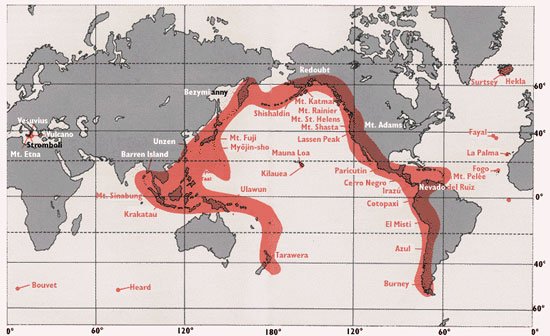
This is the name for the chain of volcanos around the edge of the Pacific Plate.
a)
Circle of Fire
b)
Ring of Lava
c)
Ring of Fire
d)
Circle of Magma
14.
What is molten rock that has formed deep within the Earth?
a)
Hot Spot
b)
Magma
c)
Lava
d)
Volcano
15.
The thinnest layer of the Earth is the ___________.
a)
mantle
b)
crust
c)
core
16.
What is the thickest layer of the Earth?
a)
the crust
b)
the mantle
c)
the outer core
d)
the inner core
17.
What describes the outer core?
a)
solid
b)
liquid
c)
viscous
d)
gas
18.
Why is the inner core solid?
a)
its unknown
b)
what it's made of
c)
the pressure
d)
it is colder than the outer core
19.
Which layer of Earth is made up of tectonic plates?
a)

outer core

b)

inner core

c)

crust and upper mantle

d)

mantle and outer core

20.
Which of the following causes Earth's tectonic plates to move?
a)
Energy from the Sun
b)
Magnetic Pole Reversal
c)
Convection currents in the mantle
d)
Faults in Mountain Ranges
21.

2.1 Which of the following substances contain acid?

a)

An orange

b)

Bleach

c)

Distilled water

d)

Washing powder

22.

2.1 Which of the following substances contain an alkali?

a)

Baking powder

b)

Coca cola

c)

Distilled water

d)

Vinegar

23.

2.1 A common alkali used in the lab is

a)

hydrochloric acid

b)

sodium chloride

c)

hydrogen sulphate

d)

sodium hydroxide

24.

2.1 Which of the following acids do we have in our stomach?

a)

Ethanoic acid

b)

Hydrochloric acid

c)

Nitric acid

d)

Sulphuric acid

25.

2.1 A car battery contains

a)

a strong acid

b)

a weak acid

c)

neutral

d)

a weak alkali

26.

2.1 Is this substance acidic, basic, or neutral?

a)

Acidic

b)

Basic

c)

Neutral

27.

2.2 Which hazard symbol might you see on a strong acid?

a)

Corrosive

b)

Irritant

c)

Explosive

d)

Toxic

28.

2.1 Is this substance acidic, basic, or neutral?

a)

Acidic

b)

Basic

c)

Neutral

29.

2.2 What is the hazard shown in this hazard sign?

a)

Corrosive

b)

Irritant

c)

Danger

d)

Caution

30.

2.2 What is the hazard shown in this hazard sign?

a)

Explosive

b)

Corrosive

c)

Irritant

d)

High level Irritant

31.

2.3 A substance that turns blue litmus red is

a)

an acid

b)

an alkali

c)

neutral

d)

water

32.

2.3 A substance that turns blue litmus red is

a)

an acid

b)

an alkali

c)

neutral

d)

water

33.

2.3 A substance that turns red litmus blue is

a)

an acid

b)

an alkali

c)

neutral

d)

water

34.

2.3 How would you classify the substance being tested?

a)

Acid

b)

Base

c)

Both

d)

Neither

35.

2.5 The pH of a weak acid would be:

a)

1-2

b)

5-6

c)

8-9

d)

12-13

36.

2.5 If pH is 7 what is the substance acidic, Base, neutral, or neither

a)

Acidic

b)

Base

c)

Neutral

d)

neither

37.

2.5 The pH of a strong acid would be:

a)

1-2

b)

5-6

c)

8-9

d)

12-13

38.

2.5 pH 7 is

a)

red

b)

green

c)

blue

d)

purple

39.

2.5 The pH of a strong base would be:

a)

1-2

b)

5-6

c)

8-9

d)

13-14

40.

2.6 According to the image, the substance tested is a...

a)

Acid

b)

Base

c)

Neutral

d)

Strong Acid

41.

2.6 What is the pH of the substance being tested?

a)

2

b)

4

c)

6

d)

8

42.

2.6 A solution with a pH of 8.6 would be...

a)

Acid

b)

Base

c)

Neutral

d)

Acid and Base

43.

2.6 A pH of 14 is a .....

a)

strong acid

b)

weak acid

c)

Strong base

d)

Weak base

44.

2.7 One benefit of pH paper is that it...

a)

Tells you the pH of a substance

b)

Only tells you if a substance is an acid or a base

c)

It is very accurate

d)

It is expensive

45.

2.7 One drawback to a pH Meter is that it

a)

Is very expensive

b)

is not very accurate

c)

only tells you if a substance is an acid or a base

d)

is messy

46.

2.6 Which of the following is true about acids and bases?

a)

The lower the pH, the stronger the acid

b)

the higher the pH, the stronger the acid

c)

The lower the pH, the more neutral the acid

d)

The higher the pH, the weaker the base

47.

2.8 What is the reaction called between an acid and alkali

a)

Neutralisation

b)

Combustion

c)

Redox reaction

d)

Decomposition

48.

2.9 Which sentence below best describes how the pH changes when an alkali is neutralised by an acid?

a)

The pH stays the same

b)

The pH stays the same but then drops rapidly to pH 7.

c)

The pH drops gradually as more and more acid is added to the mixture.

d)

The pH goes straight to 7 as soon as any of the acid is added.

49.

2.10 Magnesium + hydrochloric acid --> _____________ + hydrogen


What is missing?

a)

Magnesium oxide

b)

Magnesium hydride

c)

Magnesium chloride

d)

Magnesium hydroxide

50.

2.10 Sodium hydroxide + _______________ --> sodium chloride + water


What is missing?

a)

sulphuric acid

b)

hydrogen

c)

hydrochloric acid

d)

oxygen

51.

2.10 Copper oxide + _______________ -> copper sulphate + water


What is missing?

a)

sulphuric acid

b)

hydrochloric acid

c)

hydrogen

d)

oxygen

52.

2.11 What are the products when an acid reacts with a metal oxide?

a)

salt + water

b)

salt + carbon dioxide + water

c)

salt + Hydrogen gas

53.

2.12 Complete the following reaction:

Hydrochloric acid + magnesium hydroxide -->

a)

Magnesium chloride + water

b)

Magnesium + water

c)

Magnesium chloride + hydrogen gas

d)

Magnesium chloride + water + carbon dioxide

54.

2.13 A wasp sting is alkaline. Which one of these substances would neutralise the sting?

a)

Vinegar

b)

Bleach

c)

Baking soda

d)

Pure water

55.

2.13 Indigestion medicine is taken to neutralise excess stomach acid. What type of substance is this medicine?

a)

Alkali

b)

Acid

c)

Neutral

56.

A small amount of NaCl is dissolved in water to make a solution. In this solution

a)

water is the precipitate

b)

water is the solute

c)

NaCl is the solvent

d)

NaCl is the solute

57.

Which one is dilute?

a)

10 g of sugar dissolved in 100 ml of water

b)

10 g of sugar dissolved in 50 ml of water

c)

20 g of sugar dissolved in 100 ml of water

d)

20 g of sugar dissolved in 50 ml of water

58.

Granulated sugar dissolves ................. than sugar cubes

a)

slower

b)

faster

59.

A ............................... contains the maximum amount of solute for a given quantity of solvent at a constant temperature and pressure.

a)

super saturated solution

b)

saturated solution

c)

unsaturated solution

60.

The amount of solute dissolved in a measure of solvent is______

a)

dilute

b)

concentration

c)

volume

61.

A soft drink that is more diluted is ______ in color and ______ in taste

a)

darker, weaker

b)

lighter, weaker

c)

darker, stronger

d)

lighter, stronger

62.

The maximum amount of solute that can be dissolved in a given solvent at a given temperature and presure

a)

Solubility

b)

Density

c)

Concentration

d)

Saturation

63.

When lemonade is made ice is added after the sugar is dissolved because

a)

Solubility increases with decrease in temperature

b)

Solubility decreases with decrease in temperature

c)

Temperature do not affect solubility

d)

Ice will dissolve sugar faster

64.

Solutions are made up of..

a)

a soluble and a solvent

b)

a solute and a solvent

c)

a suspension and a sediment

d)

a suspension and a colloid

65.
When a certain amount of solvent cannot hold any more solute it is called a ________ solution.
a)
Diluted
b)
Saturated
66.

The amount of material dissolved in a measure of liquid is______

a)

dilute

b)

concentration

c)

volume

67.

when you __________ a solution, you make it less concentrated, usually by adding more liquid

a)

concentrate

b)

dilute

c)

stir

d)

mix

68.

A soft drink that is more concentration is _____ in color and _______ in taste

a)

lighter, stronger

b)

darker, weaker

c)

lighter, weaker

d)

darker, stronger

69.
An acid reacts with metal to produce 
a)
Carbon dioxide 
b)
Hydrogen gas
c)
Hydrogen gas and water 
d)
Salt and hydrogen gas 
70.

What is the difference between a solution that is dilute and one that is concentrated?

a)

dilute has more solute

b)

dilute has less solute

c)

They have the same amount of solute

d)

dilute solutions are at a higher temperature

71.
Which mixture separation method would use to separate sugar from water?
a)
filtration 
b)
magnet
c)
boiling/evaporation
d)
sorting physically
72.
a)

solute

b)

solvent

73.

Solutes dissolve quicker in _________ water.

a)

cold

b)

warm

74.

Solutes dissolve quicker if you stir them.

a)

true

b)

false

75.
The substance being dissolved in a solution.
a)
sands
b)
solute
c)
solvent
d)
alloy
76.
The substance in which a solute is dissolved
a)
sands
b)
solvent
c)
alloy
d)
negative particles
77.
Pure water has a pH of 7. Pure water _______.
a)
is a base
b)
is a neutral substance
c)
could be either an acid or a base
d)
is an acid
78.
Many cleaning solutions are bases. Which of the following is a property of most bases?
a)
feels slippery
b)
white color
c)
can only be liquid
d)
tastes sour
79.
Human blood has a pH between 7.35 and 7.45. Which of the following best describes human blood?
a)
strongly acidic
b)
slightly acidic
c)
strongly basic
d)
slightly basic
80.
Which is the stronger acid?
a)
pH 1
b)
pH 4
c)
pH 8
d)
pH 13
81.
Which item is an acid?
a)
Drain cleaner
b)
Ammonia
c)
An orange.
82.
What does the pH scale measure?
a)
the concentration of acids and bases
b)
the malleability of a metal
c)
the temperature of the water in a swimming pool
d)
the amount of phosphorus in a compound
83.
Bleach is a strong base, what is the pH level of bleach?
a)
13
b)
14
c)
1
d)
2
84.
According to the pH range which substance is more acidic than lemon juice
a)
Hydrochloric acid
b)
cabbage
c)
milk
85.

Which is NOT a property of a base?

a)

Tastes sour

b)

Slippery

c)

Bitter taste

d)

Turns red litmus to blue

86.

Which factor is shown in the picture?

a)

temperature

b)

particle size

c)

stirring

d)

use of spoon

87.

Which factor affecting solubility is shown in the picture?

a)

temperature

b)

height

c)

stirring

d)

particle size

88.

How does particle size affect solubility?

a)

bigger particles dissolve faster

b)

smaller particles can occupy the space in water faster

c)

bigger particles spread faster than smaller particles

89.

Which of the following does not affect the solubility of solid solutes?

a)

Volume of solvent

b)

Temperature

c)

Stirring

d)

Amount of mixture

90.

Solubility is  ____________ as temperature is increases

a)

Increasing

b)

Decreasing

c)

Natural

d)

None of this

91.
Having the ability to be drawn into a wire describes which property?
a)
Malleable
b)
Ductile
c)
Brittle
d)
Nonconductor
92.
An unknown substance has the following properties: luster, brittle, a nonconductor of electricity, and high density.  How would it be classified?
a)
Metal
b)
Nonmetal
c)
Metalloid
93.

Which elements are to the right of the zig zag?

a)

metals

b)

nonmetals

c)

metalloids

94.

Sulfur is considered:

a)

malleable

b)

brittle

c)

ductile

d)

a good conductor

95.

Sulfur is considered:

a)

malleable

b)

brittle

c)

ductile

d)

a good conductor

96.

How did you find out if an element is a good conductor?

a)

it lit up a light bulb

b)

hit it with a hammer

c)

bubbled in the presence of acid

d)

turned black

97.

copper can be used to make statues like the statue of liberty

a)

therefore copper is malleable

b)

therefore copper is ductile

c)

therefore copper is shiny

d)

therefore copper is a conductor

98.

Which of the metals was the most reactive?

a)

magnesium

b)

zinc

c)

copper

d)

aluminum

99.

Which of these was NOT a conductor?

a)

sulfur

b)

magnesium

c)

zinc

d)

aluminum

100.

Substances that can be hammered into thin sheets are:

a)

metals

b)

nonmetals

c)

both metals and nonmetals

101.

Which elements are to the LEFT of the zigzag?

a)

metals

b)

nonmetals

c)

metalloids

102.
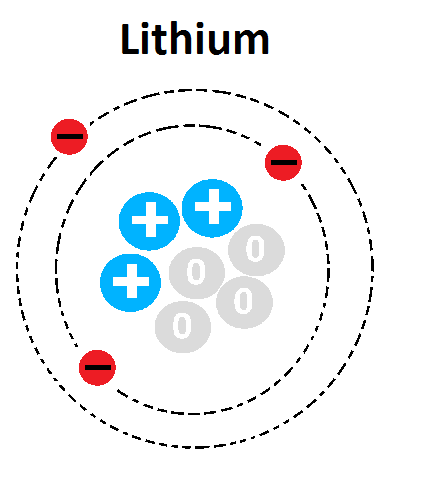
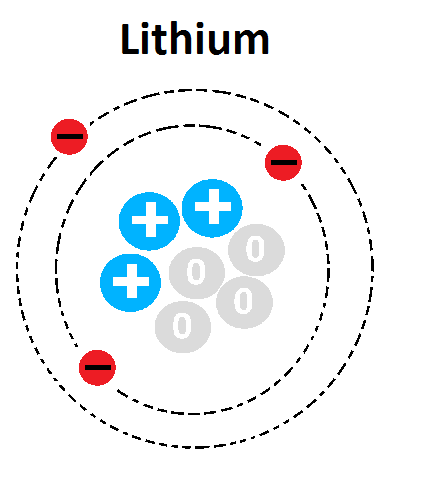
What is the atomic number?
a)
the number of protons
b)
the number of protons and neutrons
c)
the number of neutrons
d)
the number of protons and electrons
103.
What is the mass number defined as?
a)
the number of protons
b)
the number of protons and neutrons
c)
the number of neutrons
d)
the number of protons and electrons
104.
What is the atomic number of this atom?
a)
1
b)
3
c)
4
d)
7
105.

What is the mass number of this atom?

a)

1

b)

3

c)

4

d)

7

106.

An element has the mass number 12 and atomic number 6. The number of neutrons in it is:

a)

6

b)

10

c)

4

d)

8

107.

If an atom has 10 electrons, how many protons does it have?

a)

0

b)

1

c)

10

d)

5

108.

equal to the number of protons plus neutrons in the nucleus of an atom

a)

atomic mass

b)

atomic number

c)

isotope

d)

valence electrons

109.

Which of the following states of matter has a definite volume and a definite shape?

a)

solid

b)

liquid

c)

gas

d)

plasma

110.

Which state of matter takes the shape of the container that it is in?

a)

solid

b)

liquid

c)

gas

d)

plasma

111.

How many electrons are in an atom with an atomic number of 50?

a)

5

b)

50

c)

8

d)

2

112.

ALL atoms of the same element have:

a)

same number of proton

b)

different number of neutron

c)

same number of nucleon

d)

different number of electron

113.

The fluorine atom has an atomic number of

a)

19

b)

9

114.

What is the mass number and atomic number ?

a)

Mass number = 7, atomic number = 14

b)

Mass number = 14, atomic number = 7

115.

How many neutrons are there in one atom of magnesium?

a)

12

b)

6

c)

24

116.

What is neutron number?

a)

the number of neutrons in the nucleus of an atom, equal to the mass number plus the atomic number of the atom

b)

the number of neutrons in the nucleus of an atom, equal to the mass number minus the atomic number of the atom

117.
How do gases behave in a container?
a)
Cluster together
b)
form a solid
c)
They take the shape of their container
d)
leak out 
118.
Which states allow easy flow of particles
a)
Gas and Solid
b)
Gas and Liquid
c)
Solid and Liquid
d)
Gas only
119.
What sorts of things are made of particles?
a)
Everything in the universe
b)
Anything solid
c)
Water 
d)
Most solids, liquids and gases. 
120.
Can Solids be compressed?
a)
No
b)
Yes
c)
Sometimes (it depends what it's made of)
d)
Generally no
121.
Which of the following is a property of a liquid
a)
Can't be compressed
b)
Can be compressed
c)
Particles are far appart
d)
Particles hold the object's shape 
122.
Which state of matter can be compressed?
a)
Solid
b)
Liquid 
c)
Gas
123.
What happens to particles as they heat up?
a)
They slow down
b)
Nothing
c)
They don't move
d)
They speed up
124.

Which state of matter has particles that move the least/slowest?

a)

solid

b)

water

c)

gas

125.
Adding HEAT to matter causes its particles to:
a)
move faster and farther apart
b)
Move slower and farther apart
c)
Move faster and closer together
d)
Move slower and closer together
126.
Which of the following occurs when a liquid becomes a gas?
a)
the particles slow down
b)
the particles beak away from one another
c)
the particles move closer together
127.
How do the particles of matter move as the matter changes state in the diagram?
a)
The particles released energy and move as matter changed state?
b)
The particles released energy and moved more quickly.
c)
The particles gained energy and moved more slowly.
d)
The particles gained energy and moved more quickly.
128.
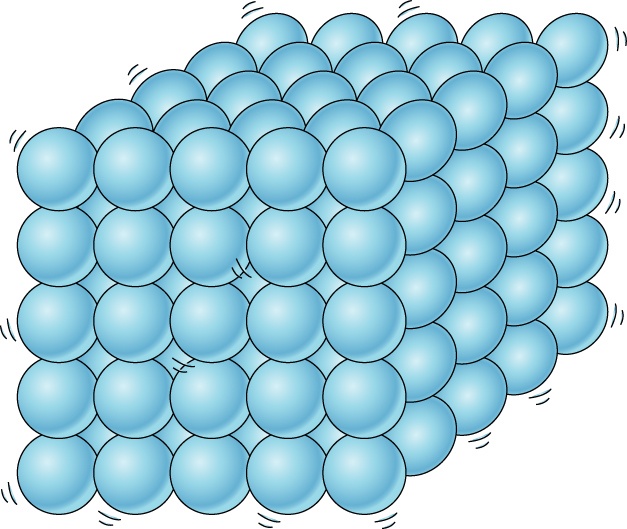
Which description best matches this particle model?
a)
Particles are closely packed, vibrate fixed position, strong intermolecular forces.
b)
Particles are closely packed, no movement, strong intermolecular forces
c)
Particles are closely packed, move around each other, medium intermolecular forces
129.
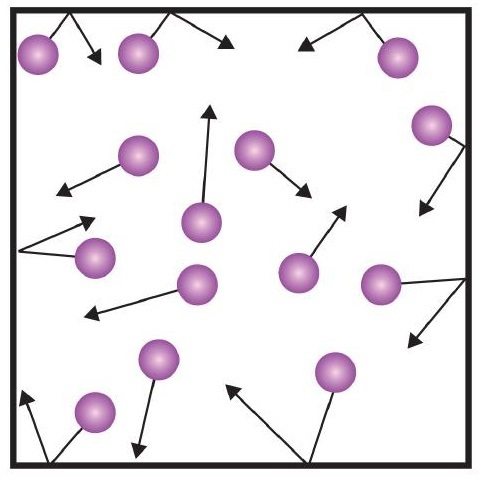
Which description best matches this particle model?
a)
Particles move fast in specific directions, weak intermolecular force
b)
Particles have a lot of space between them and move fast in random directions.
c)
Particles have lots of energy and have a medium intermolecular forces between them. 
130.

Which state of matter has tightly packed particle in fixed positions?

a)

solid

b)

liquid

c)

gas

131.
The movement of particles from high concentration to low concentration is called?
a)
Thermal Expansion
b)
Diffusion
c)
Compression
d)
Mass Conservation
132.
Which description best matches this particle model?
a)
Closely packed and can't move a lot. 
b)
Particles are close together but can move a little. 
c)
Particles have lots of energy and can move around. 
133.
Contains only one kind of atom.
a)
Element
b)
Compund
c)
Mixture
134.
Contains two or more atoms combined
a)
Elements
b)
Compounds
c)
Mixtures
135.
Is sugar (C12H22O11) an element or a compound?
a)
Element
b)
Compound
136.
Which of the following is an element?
a)
Sugar
b)
Salt
c)
Water
d)
Oxygen
137.
A pure substance...
a)
is an element or a compound
b)
is an element or a mixture
c)
is a compound or a mixture
d)
is a mixture
138.
This picture represents which of the following?
a)
element
b)
compound
c)
mixture
139.
NaHCO3 is an example of —
a)
an abbreviation
b)
a compound
c)
a mixture
d)
an element
140.

Which contains only elements?

a)

A

b)

B

c)

C

d)

D

141.

Which contains only elements (no compounds)? (Choose all)

a)

A

b)

B

c)

C

142.
This picture represents which of the following?
a)
element
b)
compound
c)
mixture
143.
This picture represents which of the following?
a)
element
b)
compound
c)
mixture
144.
Classify the picture with the correct label.
a)
Element
b)
Compound
c)
Mixture of Elements
d)
Mixture of Compounds