
 Worksheets
Unit 5 Components of Fitness Review
Total questions: 22
Worksheet time: 11mins
Name
Class
Date
1.
Which of the following is NOT a component of SKILL related fitness?
a)
Flexibility
b)
Power
c)
Balance
d)
Agility
2.
What is defined as, "The length of time between a stimulus and your response to that stimulus."
a)
Coordination
b)
Reaction time
c)
Speed
d)
Power
3.
The ability to change your body's position quickly to control your body's movements.
a)
Agility
b)
Balance
c)
Coordination
d)
Reaction Time
4.
The ability to keep an upright position while moving or standing still.
a)
Balance
b)
Agility
c)
Coordination
d)
Reaction Time
5.
The ability to use two or more body parts together at the same time.
a)
Coordination
b)
Balance
c)
Reaction Time
d)
Agility
6.
The ability to use your strength quickly.
a)
Power
b)
Muscular Strength
c)
Muscular Endurance
d)
Speed
7.
The amount of time it takes to move once you realize you need to act.
a)
Reaction Time
b)
Balance
c)
Speed
d)
Coordination
8.
The ability to move quickly or cover a distance in a short period of time.
a)
Coordination
b)
Balance
c)
Speed
d)
Agility
9.
How many Skill Related Components in Fitness are there?
a)
5
b)
6
c)
7
d)
8
10.
Maintaining equilibrium while in motion is what type of Balance?
a)
Physical
b)
Dynamic
c)
Moving
d)
Static
e)
Still
11.
Maintaining equilibrium while stationary is what type of Balance?
a)
Physical
b)
Dynamic
c)
Still
d)
Moving
e)
Static
12.
Refers to your body's ability to efficiently and effectively intake oxygen and deliver it to your body's tissues by way of the heart, lungs, arteries, vessels, and veins.
a)
Cardiovascular Endurance
b)
Body Composition
c)
Flexibility
d)
Muscular Strength
e)
Muscular Endurance
13.
A particular muscle group's ability to continuously contract against a given resistance.
a)
Cardiovascular Endurance
b)
Body Composition
c)
Flexibility
d)
Muscular Strength
e)
Muscular Endurance
14.
Refers to the amount of force a particular muscle group can produce in one, all-out effort. In strength training terms, it's your one-rep max.
a)
Cardiovascular Endurance
b)
Body Composition
c)
Flexibility
d)
Muscular Strength
e)
Muscular Endurance
15.
When using the FITT principle. What is meant by "type"?
a)
The type of facility used to train in
b)
The type of shoes I wear
c)
The type of training I will be doing
d)
The type of resistance machines I will use
16.
In the FITT principle, what does the "F" stand for?
a)
Fit
b)
Fast
c)
Frequency
d)
Fancy
17.
What do the two "t's" stand for in FITT?
a)
Time & Type
b)
Tiles & Texture
c)
T-Rex & Type
d)
Torso & Time
18.
When referring to the FITT principle. "Time" means what?
a)
How often
b)
How hard
c)
Duration of each session
d)
Type of training
19.
How hard you exercise?
a)
Frecuency
b)
Intensity
c)
Time
d)
Type
20.
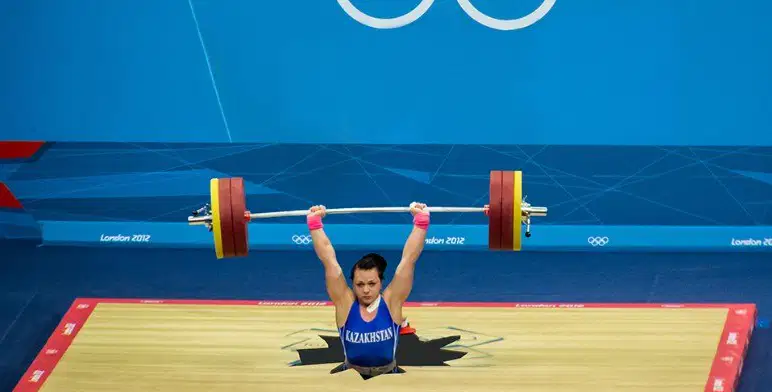
A muscle forced to operate beyond its customary intensity by increasing the load?
a)
Training
b)
Specificity
c)
Progression
d)
Overload
21.
Refers to the range of motion you have around a given joint.
a)
Cardiovascular Endurance
b)
Body Composition
c)
Flexibility
d)
Muscular Strength
e)
Muscular Endurance
22.
The body's ratio of fat mass to fat-free mass
a)
Cardiovascular Endurance
b)
Body Composition
c)
Flexibility
d)
Muscular Strength
e)
Muscular Endurance
100 %

