
 Worksheets
SEM 4 MID-1 Exam Botany Dr NVR
Total questions: 161
Worksheet time: 2hrs 1mins
What molecule will your body generally use first for energy?
carbohydrates
lipids
amino acids
nucleic acids
Given the chemical formula for glucose (C6H12O6), what type of molecule is it?
pritein
carbohydrate
nucleic acid
What is true of a prokaryotic cell?
they have a nucleus
they are NOT condiered to be alive
they reproduce by binary fission
they do not have a cell wall
What is the smallest unit of life
cell
atom
molecule
organ
1. Which of the following is a characteristic of a prokaryotic cell?
Cellulose cell wall
Mitochondrion
Absence of nucleus
Large subunit (80S) ribosome
Which of the following is NOT a characteristic of all living things?
growth and development
ability to swim
respond to the environment
ability to reproduce
What is DNA?
Deoxyrebonucliec Acid
Deoxirybonucleic Acid
Deoxyribonucleic Acid
Deoxyriebonucleic Acid


This is the powerhouse of a cell
Cytoplasm
Rough ER
Ribosome
Mitochondria
collects, processes, and packages proteins for the cell
mitochondria
gogli apparatus
smooth ER
rough ER
Prokaryotes do NOT have....
membrane bound organelles
DNA or RNA
Cell membrane
Life
C6H12O6
Water
Glucose
Oxygen
Carbon Dioxide
Who is the author of the book "The Micrographia"
Robertson
Robert Brown
Robert Hook
C. Darwin
Cell wall is the secretion product of
Cytoplasm
Tonoplast
Plasmalemma
Nucleoplasm
Eukaryotic cell differs from Prokaryotic cell in having
Well defined nucleus
Endoplasmic Reticulum
Mitochondria
Golgi complex
Nucleus was discovered by
(a)
Identify semi-autonomous cell organelles
Chloroplast
Mitochondria
Both
None of the above
The common feature for nucleus, chloroplast and mitochondria is
Cristae
Lamellae
Nucleic acids
Double membranous
Staining material of chromosome is
Methyl Isocyanate
Methyl green
Methyl blue
Acetocaramine
Who stated that "DNA is a genetic material"
Schleiden and Schwann
Sutton and Bovery
Jacob and Monod
Mac Leod and Mc Carty
Ribosomes are sites of
Protein synthesis
Chlorophyll synthesis
Carbohydrate synthesis
None of the above
The bond present between two strands of DNA is
Hydrogen
Carbon
Oxygen
Nitrogen

Identify and comment on the image of cell organelle shown.
(a)
The energy currency of cell is
ADP
ATP
GTP
CTP
Which of these structures contains RNA but not DNA?
nucleus
mitochondrion
chloroplast
ribosome

All cells contain which of the following
Endoplasmic reticulum
plasma membrane
nucleus
mitochondria
If a person receives an X and a Y chromosome, that person is:
Female
Male
Physically challenged Individual
All of the above

Where are proteins made?
Golgi body
Mitochondria
Chromosomes
Ribosomes
The gym
Which of the following is NOT a cell theory...
All cells come from pre-existing cells
All non-living things are made of cells
Cells are the basic unit of structure and function of all living things
what is the function of a lysosome?
To create energy for the cell
To command the cell what to do
To remove waste using digestive enzymes from the cell
To protect the cell
What is the purpose of the nucleus?
It is the command center, contains DNA, and cell division
It protects the cell
It stores energy for the cell
It gets rid of waste in the cell
What is the difference between mitochondria and chloroplast?
Mitochondria produces energy and chloroplasts breaks down energy
There is no difference. They are the same.
Mitochondria breaks down energy from food and chloroplasts produce energy from sunlight.
Mitochondria contains DNA and chloroplasts are green
Which of these is NOT a unique structure to plant cells?
cell wall
central vacuole
chloroplas
nucleus
Which part of the cell STORES water and minerals?
mitochondria
nucleus
cell membrane
vacuole
Where does PHOTOSYNTHESIS happen in plants?
in the nucleus
everywhere in the cell
in the cytoplasm
in the chloroplasts
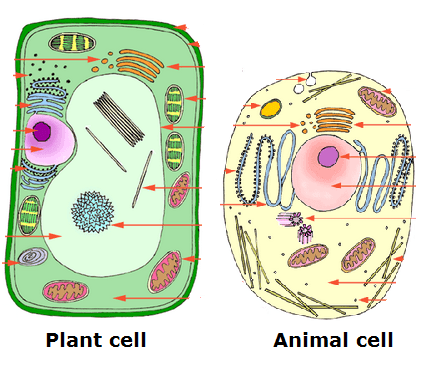
What distinguishes a plant cell from an animal cell? (How do you tell them apart) Hint: There's 3 ways (Check all 3)
Central Vacuole
Mitochondria
Cell Wall
Ribosomes
Chloroplasts
Which organelle produces proteins?
Vacoule
Ribosome
Mitochondrion
Nucleus
Which organelle is involved in the formation of spindle fibre?
Nucleus
Ribosome
Mitochondrion
Centriole

Which structure controls the movement of substances into and out of the cell?
A
B
C
D
Which structure in Amoeba sp. is involved in osmoregulation?
Pseudopodium
Lysosome
Nucleus
Contractile vacoule
What is the effect to the cell if there is no SER?
no energy product
no synthesis of lipid
no synthesis of protein
no modification of protein

What is P that can be found on this Amoeba?
Vacoule
Pseudopodium
Plasma membrane
Nucleus

Diagram shows a process that occurs in Amoeba sp. What is the organelle involved in this process?
Ribosome
Mitochondrion
Lysosome
Nucleus
Which structure in Amoeba sp. is involved in osmoregulation?
Pseudopodium
Lysosome
Nucleus
Contractile vacoule
True or false: Bacteria and plant cells both have a cell wall
True
False
What is the name of the structure which holds the cell and its contents together?
Cell Wall
Centriole
Cell Membrane
Vacuole
The gel-like fluid that fills a cell is called what?
Centriole
Vacuole
Cytoplasm
Plasma
True or false: Both plant and animal cells have a vacuole.
False
True
On which cells would I mostly find the flagella structure?
Plants
Animals
Funghi
Bacteria
The organelle responsible for plant photosynthesis.
Ribosomes
Chloroplast
Lysosome
Mitochondria
The function of the cell wall is...
Transport nutrients into the cell
Stop water from getting out of the cell
To provide structure and support
Make the cell look good
True or false: All bacteria are harmful.
True
False
In what cell would I most likely find a large vacuole?
Animal
Fungi
Bacteria
Plant
What is DNA for?
DNA moves the cell around
DNA maintains the shape of the cell
DNA stores the information on how the cell should grow and reproduce
DNA prevents the bacterial cell from drying out
We measure cells in what units?
centimetres
nanometres
millimetres
microns/micrometres
The circular image we can see our specimens on through a light microscope is called what?
Stage
Field of view
Microscope
Light
How do mitochondria regulate energy in a cell?
Mitochondria transfer energy between cells as energy is needed.
Mitochondria convert energy in nutrients into usable energy.
Mitochondria absorb and convert energy from the sun.
Mitochondria convert energy from the nucleus into usable energy.
Which of these is NOT a unique structure to plant cells?
cell wall
central vacuole
chloroplas
nucleus

This is the powerhouse of a cell
Cytoplasm
Rough ER
Ribosome
Mitochondria
Prokaryotes do NOT have....
membrane bound organelles
DNA or RNA
Cell membrane
Life
The classical cell theory contains the following tenets EXCEPT
A. Cells form by free-cell formation.
B. All cells come from pre-existing cells.
C. Cells are the basic unit of living organisms.
D. Living organisms composed of one or more cells.
Which of the prokaryotic and eukaryotic cell characteristics is NOT CORRECTLY matched?
A. Eukaryotes have linear chromosomes; prokaryotes have circular chromosomes.
B. Prokaryotes have two different RNA polymerases; eukaryotes have three different RNA polymerases.
C. Prokaryotes have mRNAs that often polycistronic; eukaryotes have mRNAs that are monocistronic.
D. Eukaryotes have membrane-bound organelles; prokaryotes do not have membrane-bound organelles.
Which of the following statements is in the CORRECT order of bonds, listed form the strongest to weakest?
A. Covalent bond, ionic bond, hydrogen bond, van der waals interaction.
B. Ionic bond, hydrogen bond, van der waals interaction, covalent bond.
C. Hydrogen bond, van der waals interaction, covalent bond, ionic bond.
D. Van der waals interaction, covalent bond, ionic bond, hydrogen bond.
Type of chemical bonds form in the molecules influenced by
A. Electrostatic – electron attraction
B. Electromagnetic – magnetic attraction
C. Electropositivity – a degree to which the atom pulls proton and holds them together
D. Electronegativity – a degree to which the atom pulls electron and holds them together
Two or more polypeptide chains join in aggregates to form a
A. Tertiary protein structure
B. Primary protein structure
C. Secondary protein structure
D. Quaternary protein structure
Which of the following aspects is NOT significant for a high magnification of microscope?
A. High contrast
B. High resolution
C. High fluorescence
D. High numerical aperture
A suitable microscope used to view small, unstained specimens that makes living cells more visible.
A. Dark field microscope
B. Bright field microscope
C. Fluorescence microscope
D. Confocal Laser microscope
Which of the following microscopes is used to reveal very fine detail structure and realistic colour of a small specimen?
A. Dark field microscope
B. Bright field microscope
C. Fluorescence microscope
D. Confocal Laser microscope
Magnification can be adjusted electronically and a specimen is viewed in 3D image.
A. Dark field microscope
B. Bright field microscope
C. Fluorescence microscope
D. Confocal Laser microscope
Which of the following microscopes is practical to study the internal structure of cells?
A. Light microscope
B. Stereo microscope
C. Scanning electron microscope
D. Transmission electron microscope
Which of the following statements is CORRECTLY matched of the enzyme and location it is synthesized?
A. Catalase synthesized in lysosome.
B. Nucleases synthesized in nucleus.
C. Hydrolases enzyme synthesized in ER.
D. Oxidative enzyme synthesized in endosome.
Which of the following processes is NOT involves degradation of intracellular and extracellular components?
A. Autophagy
B. Exocytosis
C. Endocytosis
D. Receptor mediated endocytosis
Known as ‘Self-eating’ due to the natural and regulated mechanism of disposal obsolete parts and damaged cells in the organelle.
A. Autophagy
B. Exocytosis
C. Endocytosis
D. Receptor mediated endocytosis
Genetic disorder that occurs in young boy resulted in deterioration of myelin sheath of neurons.
A. Zellweger Syndrome (PXRI)
B. Mucopolysaccharidosis I (MPS-I)
C. Inclusion – Cell Disease (I-cell disease)
D. X-linked adrenoleukodystrophy (X-ALD)
Which of the following statements is TRUE on how the lysosomal proteins are recognised and sorted in Trans Golgi Network (TGN)
A. The proteins recognized and sorted by peroxisome.
B. The proteins recognized and sorted by endosome and lysosome.
C. The proteins carry a unique marker, ‘Mannose-6-phosphate’ which recognized by the transmembrane M6P receptor that present on the Trans-Golgi Network.
D. The proteins carry a unique marker, ‘Mannose-6-phosphate’ which recognized by the transmembrane M6P receptor that present on the Cis-Golgi Network.
Which of the following coated vesicle involve in transportation of materials from TGN to endosomes, lysosomes and plant vacuoles?
A. COPI – coated vesicles
B. COPII – coated vesicles
C. COPIII – coated vesicles
D. Clathrin – coated vesicles
Movement of materials in retrograde or backward direction normally observed in
A. Cisternal transport model
B. Vesicular transport model
C. Cisternal maturation model
D. Vesicular maturation model
Which of the followings is NOT the main structures of cytoskeleton?
A. Microtubules
B. Motor proteins
C. Microfilaments
D. Intermediate filaments
Transit peptides transported into chloroplasts are recognized by _______ in the outer membrane and _______ in the inner membrane.
A. Hsp 70; Hsp 60
B. Hsp 60; Hsp 70
C. TOC complex; TIC complex
D. TIC complex; TOC complex
1. In nuclear export, interaction with ________ causes a conformational change, either the importin dissociates from cargo (molecule imported from cytoplasm to nucleus) or exportin binds to cargo (molecule exported from nucleus to cytoplasm).
A. RanBP
B. Ran – GAP
C. Ran – GDP
D. Ran – GTP


What are the two types of cell transport?
Passive and Active
Active and Facilitated
Passive and Facilitated
None of the above

In passive transport, substances move across the cell membrane ________ the concentration gradient
AGAINST
ALONG
WITH
BETWEEN

Which describes a hypotonic environment?
Too much water in the cell will cause the cell to burst - the percentage of water is higher outside the cell than inside the cell
Too little water in the cell will cause the cell to shrink - the percentage of water is lower outside the cell than inside the cell
Concentrations of water are equal inside and outside the cell

Which describes a hypertonic environment?
Too much water in the cell will cause the cell to burst - the percentage of water is higher outside the cell than inside the cell
Too little water in the cell will cause the cell to shrink - the percentage of water is lower outside the cell than inside the cell
Concentrations of water are equal inside and outside the cell

Which describes an isotonic environment?
Too much water in the cell will cause the cell to burst - the percentage of water is higher outside the cell than inside the cell
Too little water in the cell will cause the cell to shrink - the percentage of water is lower outside the cell than inside the cell
Concentrations of water are equal inside and outside the cell

The movement of particles from an area of high concentration to an area of low concentration
active transport
osmosis
diffusion
random movement

When material passes into and out of a cell at equal rates and there is no difference in concentration between the inside and outside of the cell, the cell is in a state of...
dynamic equilibrium
diffusion
osmosis
active transport

The movement of materials that does NOT require energy is called...
active transport
passive transport
massive transport
proactive transport

When a cell forms a vesicle around unwanted particles and expels it OUT of the cell.
Pinocytosis
Endocytosis
Receptor-mediated
Exocytosis

Why are diffusion and osmosis important to cells?
It allows them to take in materials/substances without using energy.
It allows them to reproduce.
It allows them to absorb sunlight.
It allows cells to use all energy.

What does selectively-permeable mean?
Allow certain things to enter and leave the cell
Nothing gets through
The cell lets only large substances through

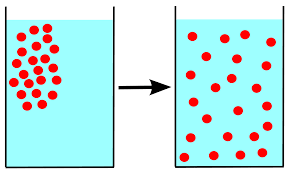
Passive transport requires ________________
concentration gradients
no energy
motion
energy
The diffusion of particles through the cell membrane from high to low concentration is called ....
exocytosis
active transport
passive transport
osmosis
When the smell of perfume spreads throughout a room, it is an example of ....
passive transport
diffusion
active transport
osmosis
If a gummy bear is placed in salt water, the mass of the gummy bear will decrease because water will move out of the gummy bear. What process does this represent?
osmosis
fermentation
respiration
diffusion

