
Font size
 Worksheets
SSA Review: Nature and Earth Science
Total questions: 76
Worksheet time: 6hrs 49mins
Which variable does the investigator/scientist change?
Dependent
Control
Independent
Outcome
Scientific __________ predict WHAT HAPPENS in the natural world
Law
Theory
SELECT ALL THAT APPLY:
Which variable does your data and results come from?
Dependent
Control
Independent
Outcome
Ahmya wants to know if fish swim faster to Broadway music or the Blues. She has two fish tanks, with the same kind and number of fish in each. She plays Broadway music for one hour each day for one tank and the Blues for one hour each day for the other. She puts her findings in a scientific journal.
Name the dependent variable in this experiment.
Length of music exposure
Music type
Type of fish
How fast the fish swim
Ahmya wants to know if fish swim faster to Broadway music or the Blues. She has two fish tanks, with the same kind and number of fish in each. She plays Broadway music for one hour each day for one tank and the Blues for one hour each day for the other. She puts her findings in a scientific journal.
Name the independent variable in this experiment.
Length of music exposure
Music type
Type of fish
How fast the fish swim
Ahmya wants to know if fish swim faster to Broadway music or the Blues. She has two fish tanks, with the same kind and number of fish in each. She plays Broadway music for one hour each day for one tank and the Blues for one hour each day for the other. She puts her findings in a scientific journal.
Name two control variables in this experiment.
Length of music exposure
Music type
Type of fish
How fast the fish swim
Why is it important that scientists modify scientific theories when important new information is discovered?
To confuse people
To keep science interesting and fresh
To ensure theories are as accurate and effective as possible
To make sure non-scientists can't understand theories

The independent variable is Day. The dependent variable is Temperature
The independent variable is Temperature. The dependent variable is Day

What is the independent variable on this table?
Distance
Time
10
63

Newton’s third law of motion states that for every action there is an equal and opposite reaction. How does this law differ from a theory?
A theory explains a set of well tested observations; a law describes a pattern in nature.
A law explains a pattern in nature in more detail than a theory.
Theories are based on more evidence than laws.
Laws can be changed with the addition of new evidence but theories cannot.
Theories are based on more evidence than laws.

A biologist is investigating the effects of growth hormone on the rate of metamorphosis in butterflies. Which of the following methods of investigation would work best for the biologist investigating any possible effects?
Models
Controlled experiments
Systematic observations
Random sampling of populations
Lynn tested the effect of different types of cooking oil on the amount of time it takes for a drop of water to fall through a container of oil. He poured the same amount of canola oil, olive oil, and coconut oil each into three different clear containers. He had his partner start a stopwatch at the exact moment he placed a water drop onto the surface of each oil. He recorded the time it took for each water drop to fall through the oil and analyzed the data.
Which variable must Lynn hold constant in order to accurately investigate the effect of different cooking oils on a water drop falling through the oil?
Oil color
Oil Type
Size of oil containers
The time for a water drop to fall through the oil
A researcher is studying the effect of decreased oxygen (O2) levels in the water used in the tanks of fish hatcheries. The procedure used in the investigation is:
-Prepare five tanks of water.
-Add ten healthy adult trout to each tank.
-After the fish adjust to the tanks, reduce the flow of O2 going into the water in four of the tanks, using incrementally different levels in each tank.
The fifth tank is the control. Which statement correctly describes how the control tank should be set up?
It should have oxygen levels that are typical of the hatchery
It should have zero trout
It should have trout with reduced lung capacities
It should have higher than typical oxygen levels

Carlos conducted an experiment involving temperature and reaction rate. When the experiment was complete, he used his data to create this graph, fitting a line to his data points.
Based on these results, which statement about Carlos's experiment is most accurate?
As temperature increases, reaction rate remains steady
As reaction rate increases, temperature decreases
As temperature increases, reaction rate increases
As reaction rate decreases, temperature increases

What was the test (independent) variable in this experiment?
Water temperature
Time exposed to sunlight
Amount of water in each beaker
The color of water
Colton wonders how the density of a material will affect the amount of force needed to move an object through that material.
Which of the following experiments is best suited to investigate his question?
Compare the force needed to move a cube through ketchup when working against gravity and when working perpendicular to it.
Compare the force needed to move a sphere through ketchup to the force needed to move the same sphere through syrup.
Compare the force needed to move a large sphere through syrup to the force needed to move a small sphere made of the same material through syrup.
Compare the force needed to move a cube through ketchup to the force needed to move a sphere made of the same material and volume through ketchup.
A _ is a standard for comparison.
hypothesis
control
dependent variable


What was the dependent variable?
Which of the following is an example of a model?
mathematical equation
tool
scientist
observation
You make a(n) ________ when you interpret something you observe.
prediction
observation
inference
evaluation
True or False: A factor that can change in an experiment is called a variable.
True
False
True or False: A hypothesis is not the same as a fact.
False
True
Which of these is NOT an example of a way scientists communicate their results?
taking out an advertisements in the newspaper
publishing articles in scientific journals
giving talks at scientific meetings
exchanging information on the internet
SC.7.N.1.2
Scientists frequently repeat the experiments of others scientists. Why is this important in science?
a. Scientists often ask each other for help in performing experiments.
b. Replication of experiments helps to confirm and verify results.
c. Scientists frequently perform other scientists’ experiments in order to practice their technique.
d. Repeating experiments is an effective way to make sure a laboratory is in optimal condition.
a
b
c
d
SC.6.N.1.2
Experiments are often repeated many times by the same or different scientists. What is the most important reason more than one scientist should conduct an investigation using the same methods?
a. If the results are the same, replication of the investigation helps to confirm the results.
b. The competition makes the scientists work more carefully.
c. More than one scientist is interested in the problem.
d. Different scientists might perform the experiment differently.
a
b
c
d

Which choice best explains why the scientific model of the atom has changed over time?
The discovery of new evidence resulted in changes to the atomic theory.
Advancements in atomic models proved the atomic theory was accurate.
The atomic theory was modified with the discovery of a new element.
Changes in atomic models show that the atomic theory was based on opinion.
Explaining why theories change
For what reasons could a theory be changed or replaced? Check all that apply.
New technology is developed that provides more information about the theory.
New experimental methods are designed to test a theory
A new, untested hypothesis is proposed
New information is discovered that does not support the theory


Which of the following orders the rock layers accurately from oldest to youngest?
1, 2, 3, 4, 5
5, 4, 3, 2, 1
2, 3, 4, 5, 1
1, 2, 3, 5, 4

Erosion and weathering can both cause changes to the surface of Earth. Which of the following happens only because of erosion and NOT because of weathering?
Rocks form deep underground.
Rocks become smooth and round.
Rocks are broken apart into small pieces.
Rocks are moved from one place to another.
Which of these BEST describes how an igneous rock forms?
cooling of magma
weathering of other rocks
colliding of tectonic plates
pressing together of smaller rocks
Which statement is the best description of what
happens in the rock cycle?
Rocks on old mountains are gradually weathered away, while mountain building and volcanism form new mountains.
Once formed, rocks stay in place until rocks above them are weathered away and they reach the surface.
As sedimentary rocks are buried deep below other rocks, they are changed by heat and pressure, eventually return to the surface, and are weathered again.
Younger sedimentary rocks are always deposited on top of older metamorphic or igneous rocks.
A group of students found metamorphic rocks near a campsite. The presence of metamorphic rocks is most likely evidence of
dinosaur activity
sediment deposition
high pressure
wind-borne sand
Schist and quartzite are examples of metamorphic rocks. Which processes are necessary for the formation of metamorphic rocks?
cooling and weathering
cooling and pressure
heating and pressure
weathering and heating

Is there a pattern to the locations of earthquakes and volcanoes around the globe?
No, earthquakes and volcanoes are random.
Yes, earthquakes and volcanoes usually occur near the boundaries of tectonic plates.
yes, earthquakes and volcanoes usually occur in the middle of tectonic plates.
No, earthquakes and volcanoes usually occur under water.

What are greenhouse gases?
Gases that trap heat from the sun
Gases that make the earth warm
Carbon dioxide, water vapor, and methane gas
All of these

What is the problem with using fossil fuels? Check all that apply.
They create greenhouse gases
They don't create a lot of electricity
They are non-renewable
They are renewable
What causes wind?
differences in air pressure
differences in gravity
difference in oxygen
differences in the thermosphere
What causes differences in air pressure?
even heating of the Earth
Even cooling of the earth
uneven heating of the earth
global warming
Which of the following best describes weather?
day to day conditions of the atmosphere at a place in regards to heat, dryness, sunshine, wind, rain, etc.
long-term conditions (months/years) of the atmosphere at a place in regards to heat, dryness, sunshine, wind, rain, etc.
Which of the following best describes climate?
day to day conditions of the atmosphere at a place in regards to heat, dryness, sunshine, wind, rain, etc.
long-term conditions (months/years) of the atmosphere at a place in regards to heat, dryness, sunshine, wind, rain, etc.
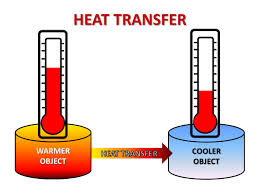
A material that reduces the flow of heat is a(n)
conductor
insulator
metal
radiator

Waves dropping sand onto land until a beach is formed is an example of...
physical weathering
erosion
deposition
chemical weathering

Acid rain slowly wearing away rock over time is an example of...
chemical weathering
physical weathering
erosion
deposition


The top picture shows a sea breeze. What will happen to the breeze over night?
The wind will blow in the opposite direction.
The wind will blow in the same direction.
The wind will blow east to west.
The wind will blow west to east

To increase wind speeds...
increase humidity.
decrease the difference in air pressure.
decrease wind speeds.
increase the difference in air pressure.

Sea Breezes form because...
land heats up more quickly than water during the day.
the wind will blow in the opposite direction.
the land heats up more slowly during the day.
the land and water are the same temperature during the day.
After a scientist publishes a paper, someone else finds evidence that the paper’s conclusions may not be correct. The scientist is unhappy, but studies the new evidence anyway. What should the scientist do as a result of this scientific debate?
redo his experiment as a result of this debate and modify the new results so that they support his original findings
not redo his experiment as a result of this debate because he knows that the other scientist’s evidence is incorrect.
not redo his experiment as a result of this debate because he knows the new findings must be correct and his previous work will be thrown out.
redo his experiment as a result of this debate and either confirm this new evidence or change his previous results so that the findings are more accurate.
James is designing an experiment. His plans include placing 30 bean seeds each in 3 identical 30-centimeter-by-30-centimeter square containers and providing the same amount of sunlight and water to each container. He will place each container in a different room, with each room at a different temperature. Which of these hypotheses is the most appropriate for this research project?
If the size of the container increases, then the number of seeds that germinate will increase.
If the temperature of the room decreases, then the number of seeds that germinate will decrease.
If the amount of water given to the seeds increases, then the number of seeds that germinate will increase.
If the number of seeds planted in the container increases, then the number of seeds that germinate will decrease
A paleontologist is trying to figure out if a meteorite impact killed all the dinosaurs. Because many scientists use common methods to investigate and answer problems, the paleontologist wants to ask experts in other fields to assist him in the investigation. Which of the following would be the best way for the paleontologist to approach the problem?
Work with a biologist and study other kinds of disasters that resulted in large animal populations becoming extinct.
Work with an astronomer to predict when the next meteorite will hit Earth and to determine what kinds of animals would be killed.
Work with a botanist in order to search for dinosaur fossils in other continents and note where there is an abundance of fossilized plant materials, which would indicate a change in environment.
Work with a chemist to study the evidence a meteorite impact leaves, like isotopes of elements not found in Earth’s layers, then look for evidence of dinosaur fossils in the layers of rock that formed after those layers.
Which of the following statements correctly describes the difference between repeating an experiment and replicating an experiment?
Repeating an experiment means to do the same experiment over again and replicating means doing a different experiment.
Repeating an experiment means another person does the same experiment and replicating means to make multiple sets of measurements.
Repeating an experiment means to make multiple sets of measurements and replicating means another person does the same experiment.
Repeating an experiment means another person does the same experiment and replicating means the same person does the same experiment again.
A biologist was in a forest when he came across a family of squirrels hiding nuts for the winter. The biologist was interested in this behavior, so he stayed and watched the squirrels for a few hours. He recorded what he observed in a notebook. Why is this type of research NOT considered an experiment?
The biologist observed the squirrels and did not test variables
The biologist did not observe the squirrels for long enough to collect data.
The biologist came across the squirrels by chance and had no formal plan.
The biologist did not collect valid data because the conditions were not controlled.
Sierra is researching plants for her science fair project. She visits a gardening store and notices that the directions on the back of a seed packet include a warning about planting too many seeds near each other. Sierra wonders what the effect of a crowded environment on the growth of plants would be, so she designs an experiment to test the effect of seed spacing on plant height. She plants 10 seeds in each of the 4 planters. Each planter has different spacing between the seeds (0.5 centimeters (cm), 2 cm, 4 cm, and 8 cm). All of the plants are grown from the same type of seeds, placed in the same growing conditions, and given the same amount of water each day. Sierra's hypothesis states that if seeds are planted very close together, then plant height will be reduced. What is the outcome variable (dependent variable) in Sierra's experiment?
the height of the plants
the type of seeds planted
the amount of water given to the seeds
the distance between the planted seeds
A few hundred years ago, observations led to a theory called spontaneous generation, which stated that living things could appear from nonliving things. In the seventeenth century, experiments were conducted that resulted in observations that disproved this theory. This led to the present-day theory that living things can only come from other living things. Which statement best describes what this change in scientific theories tells us about science?
Scientific theories do not need to be based only on factual and observable evidence
Scientific theories are not accurate because they constantly change as new evidence is discovered.
Science is based on factual observations so it should remain the same and not change over time.
Science knowledge changes because it is open to new evidence as it is discovered and observed.

