
 Worksheets
Lesson 1 & 2 Review
Total questions: 50
Worksheet time: 1hrs 15mins
This type of mixture has large enough particles that you can see the different types of particles.
Homogeneous
Heterogeneous
Colloid
Solution
A colloid mixture does not have particles large enough to settle to the bottom, but they are large enough to
be filtered out of the solution.
be pulled out by hand.
float to the top.
scatter light waves.
A mixture with such small particles that you cannot see the individual particles.
Suspension
Sublimation
Heterogeneous
Homogeneous
This word means "the same throughout".
Homogeneous Mixture
Heterogeneous Mixture
Suspension Mixture
Compound Mixture
This words means "different throughout".
Homogeneous Mixture
Heterogeneous Mixture
Colloid Solution
Compound Mixture
Which of the following examples is a Heterogeneous mixture?
Tap Water
Beach Sand
Vanilla Cake Mix
Bottle of Cola
Which of the following examples is a Homogeneous mixture?
Tap Water
Beach Sand
Chocolate chip cookie
Mud water
Which of the following examples is a Colloid?
Mud water
Sprite
milk
Fog
Which of the following examples is a Solution?
Mud water
Well water
butter milk
Fog
Which of the following examples is a Suspension?
Mud water
Well water
milk
Fog
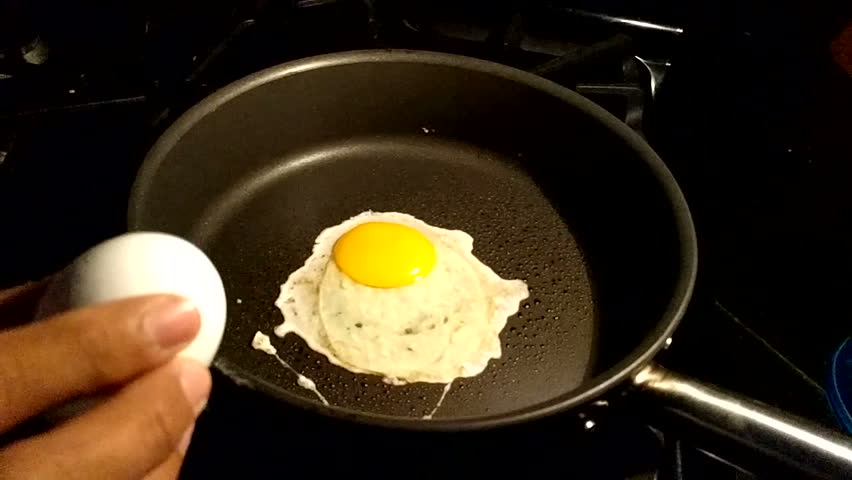
Cooking an egg is an example of...
A chemical change
A physical change
Melting
Dissolving
Melting ice is an example of...
A physical change
A chemical change
Purification
Magic


If this reaction occurs in a sealed container, will the mass of the container and everything in it increase, decrease, or stay the same and why?

How many different elements are on the Product side of this equation?
2FeCl3 + 3MgO ---> Fe2O3 + 3MgCl2
4
8
2
214
What instrument would you use to detect an endothermic or exothermic reaction?
triple beam balance
ruler
thermometer
The initial temperature of the reactants was 20oC, and the final temperature was 45oC. The reaction was
exothermic
endothermic

The graph above is from which type of reaction?
Endothermic reaction
Exothermic Reaction

The graph above is from which type of reaction?
Endothermic reaction
Exothermic reaction
The minimum amount of energy needed to get a chemical reaction started is called _______.
Activation energy
Concentration
Catalyst
Enzyme
The amount of one material in a certain volume of another material is called _______.
Activation energy
Concentration
Catalyst
Enzyme
A material that increases the rate of a chemical reaction by lowering the activation energy is called _______.
Activation energy
Concentration
Catalyst
Enzyme
A material that decreases the rate of a reaction is called ______.
Catalyst
Inhibitor
Combustion
Fuel
Catalyst that speeds up chemical reactions in living cells.
enzyme
catalyst
inhibitor
activation energy
Indicate whether each of the following will: Increase / Decrease / have No effect on the rate of reaction.
Increasing temperature
Increase
Decrease
No Effect
Indicate whether each of the following will: Increase / Decrease / have No effect on the rate of reaction.
Decrease Particle Size
Increase
Decrease
No Effect
Indicate whether each of the following will: Increase / Decrease / have No effect on the rate of reaction.
Decrease Reactant Concentration
Increase
Decrease
No Effect
The part of the solution that gets dissolved is:
solute
solvent
colloid
heterogeneous
LOTION is an example of:
solution
colloid
BRASS is made when copper dissolves in Zinc. This is an example of:
solution
colloid
SMOKE is formed when solid particles of ash are suspended in the air. This is an example of a:
solution
colloid
How many valence electrons are in an atom of Aluminum?
13
27
3
27-13=14
An atom of Sulfur has 6 valence electrons. What does it need to become stable like Argon's electron configuration?
It must gain 6 e-
It must gain 2 e-
It must lose 6e-
It must lose 2 e-

