
 Worksheets
Period 8 & 9 APUSH
Total questions: 54
Worksheet time: 44mins
The court case that ended segregation in public schools
Brown v. Board
Plessy v. Ferguson
Miranda v. Arizona
Engel v. Vitale
Tinker v. DesMoines
LBJ's plan for increased domestic spending on anti-poverty & anti-racism programs
New Deal
New Frontier
Great Society
Welfare for All
Southern Strategy
The overall strategy of the US during the Cold War
Truman Doctrine
Containment
Marshall Plan
Domino Theory
What organization was formed to pursue world peace in 1945?
United Nations
NATO
Warsaw Pact
League of Nations
Nixon's policy of relaxing tensions with the USSR
Detenté
Containment
Domino Theory
Brinksmanship
This Civil Rights Legislation outlawed Housing Segregation
Civil Rights Act of 1964
Civil Rights Act of 1968
Civil Rights Act of 1965
Civil Rights Act of 1967
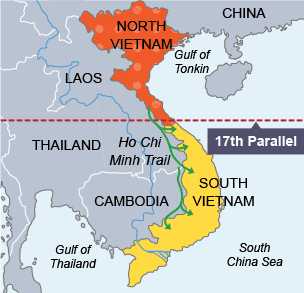
The controversial event that led to the US directly intervening in Vietnam.
Gulf of Tonkin
Tet Offensive
Operation Rolling Thunder
My Lai Massacre

Who built the Berlin Wall?
Soviet Union
East Germany
West Germany
China



During the Berlin Blockade, the U.S. flew supplies to west Berlin. This was called the __________________________.
Berlin Rescue Mission
National Airlift Method
Berlin Airlift
Berlin air rescue

What is the primary aim of the USA PATRIOT Act of 2001?
To increase funding for military contracts
To prevent acts of terrorism against the United States
To promote the growth of small businesses
To limit the amount of foreign investments in the United States
What was the US government's immediate response to the September 11, 2001 attacks
The US declared war on Afghanistan
The War on Terror began and Afghanistan was invaded
The US withdrew forced from bases in the Middle East
A UN coalition invaded Iraq to overthrow Saddam Hussein

4) What are effects of scandals like Bill Clinton and Watergate?
Campaign finances have to be regulated
People lose trust in the government
Elected officials face scrutiny about their personal lives
Media outlets focus on policy issues of presidents.
The largest decrease in the percent of Americans living below the poverty line accompanied which of the following federal policy initiatives
Great Society
The New Deal
The Fair Deal
Welfare to Work
The Supreme Court decision on Brown v. Board of Education of Topeka essentially reversed which of the following earlier Court decisions?
Marbury v. Madison
Plessy v. Ferguson
Roe v. Wade
Dred Scott v. Sanford
The rock ‘n’ roll of Elvis Presley, Jerry Lee Lewis, and the Rolling Stones derived primarily from
European folk music
cowboy songs
Scotch-Irish ballads
African American rhythm and blues
The George W. Bush administration created which of the following executive agencies?
Department of Homeland Security
National Security Agency
Federal Emergency Management Agency
Environmental Protection Agency
Kent State University was the site in 1970 of which of the following events?
A highly publicized sit-in advocating women’s rights
The first event in observance of Earth Day, which sought to increase public awareness of environmental degradation
An antiwar demonstration in which four students were killed by members of the National Guard
A rock concert second only to the Woodstock concert in the number of attendees
In the early 1960s, Malcolm X challenged the leadership of Martin Luther King, Jr., in the Civil Rights movement by arguing that
nonviolent protest could succeed only when African American and White activists cooperated
African Americans must defend themselves against racism by using violence if necessary
court litigation was a more effective strategy to gain civil rights than were sit-ins or mass protest rallies
African Americans should develop economic and cultural ties with African nations
The 1962 book that helped launch the national environmental movement was
Michael Harrington’s The Other America
Jack Kerouac’s On The Road
Alice Walker’s In Search of Our Mothers’ Gardens
Rachel Carson’s Silent Spring
African American pressure prompted President Harry Truman to advance civil rights by
signing the Voting Rights Act
agreeing to outlaw the newly formed States’ Rights Party
issuing Executive Order 9981 desegregating the armed forces
proposing a constitutional amendment banning Jim Crow laws
Which of the following was true of women in the five years following the Second World War?
They contributed to a sudden decline in the birth rate by employing new family planning techniques.
Large numbers left their industrial jobs to make room for returning soldiers
Young women participated in a revolution in manners and morals that challenged the values of their parents
Those working outside the home demanded equality in pay and promotion opportunities.
The Montgomery Bus Boycott started because ________ was arrested.
Thurgood Marshall
Malcom X
Rosa Parks
Martin Luther King Jr.

Earth Day was created for the purpose of -
celebrating the diversity of mankind
honoring the world's agricultural workers
raising awareness of environmental issues
promoting peace throughout the world
The Watergate Scandal
refers to the massacre of over 300 unarmed civilians, including elderly, women, and children, in South Vietnam by U.S. Troops.
was the Nixon administration's failed response to the oil crisis in the United States caused by the OPEC cartel's decision to embargo all oil exports to the U.S.
refers to the political espionage attempted by Nixon campaign aides who tried to bug the Democratic National Committee headquarters, eventually leading to Nixon's resignation
was the main reason that Lyndon B. Johnson made the remarkable decision to not run for a second term in office
The high inflation rates of the late 1960s and early 1970s were due in part to
major state and federal tax increases
increased investment in major industries
spending on social-welfare programs and the Vietnam War
deregulation of key transportation and defense industries

During which event did Eisenhower send troops to Arkansas in order to desegregate a high school?
Tuskegee Airmen
Little Rock Nine
Atomic Bombs
Flying Tigers


What is the G.I. Bill?
legislation that allowed returning WWII soldier to further their education and afford homes at the government's expense
legislation that helped soldiers with PTSD after the world wars
legislation that kicked out those who had taken up soldiers' jobs during the war so they could have their jobs bck
legislation that eliminated the draft

What two nations were in competition with each other during the Cold War?
Spain and Portugal
England and France
Germany and Italy
United States and Soviet Union
What word best describes Ronald Reagan?
Liberal
Conservative
Progressive
Socialist
Which amendment lowered the voting age to 18 years old?
23th
24th
25th
26th

