Wayground logo

Free Printable Worksheets

Font size

S
M
L
XL
Worksheets

Semester 2 Review

Total questions: 68

Worksheet time: 1hrs 8mins

Name
Class
Date
1.
An offspring will receive how many alleles from each parent to determine a specific trait?
a)
one
b)
two
c)
three
d)
five
2.
Which of the following is a phenotype?
a)
BB
b)
Bb
c)
bb
d)
Blue eyes
3.
having two of the same genes for the trait (sometimes called purebred).
a)
homozygous
b)
hetrozygous
c)
protein
d)
chromosome
4.
One form of a gene is called_______________
a)
a DNA
b)
a Phenotype
c)
a trait
d)
an allele
5.
A heterozygous long-tusked elephant is crossed with a homozygous recessive short-tusked elephant. What is the probability of the offspring having short tusks?
a)
0%
b)
25%
c)
50%
d)
75%
6.

Which of the following genotypes is homozygous dominant?

a)

Yy

b)

yY

c)

yy

d)

YY

7.

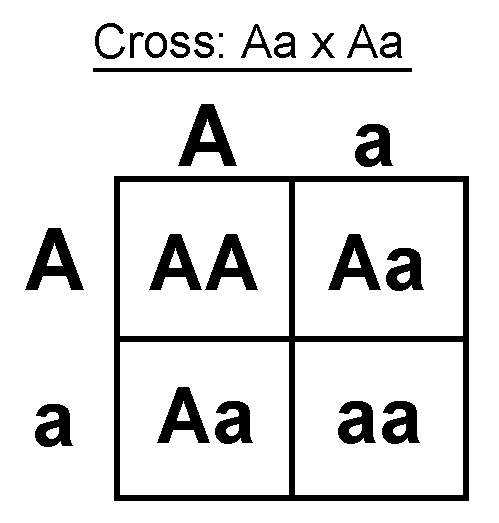
What are the phenotype percentages of the offspring?

(A-Brown fur color; a-white fur color)

a)

50 % Brown fur and 50% White fur

b)

25 % Brown fur and 75% White fur

c)

75 % Brown fur and 25% White fur

d)

0% Brown fur and 100% White fur

8.
Why are there no white rabbit babies?
a)
The white gene is not present in any of the babies.
b)
It takes two recessive genes to show the trait.
c)
Grey is a better color.
d)
Baby five will be white.
9.
Where the better adapted organisms survive to pass traits along to offspring.
a)
Evolution
b)
Natural Selection
c)
Extinction
d)
Artifical Selection
10.
Why are advantageous traits more likely to be passed onto offspring?
a)
Because they are more likely to survive and reproduce.
b)
Because they come from dominant alleles.
c)
Because they come from recessive alleles.
d)
Because the trait is an acquired phenotype.
11.
Natural selection is when ____________ decides who survives and who doesn't
a)
nature
b)
humans
c)
animals
d)
years
12.
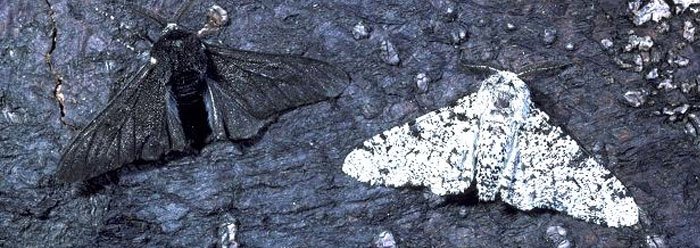
The trees these moths used to live on were white, but have been covered in soot from coal factories. Which moth will be more successful in this environment?
a)
Dark moth
b)
Light moth
c)
Both will be equally successful
d)
Neither will be successful
13.
Structures with the same parts have different functions; suggests that organisms share a common ancestry
a)
vestigial structures
b)
homologous structures
c)
adaptive radiation
d)
fossil
14.
The diagram shows fossils in different rock layers. Which of these statements about the age of these fossils is most likely correct?
a)
Fossil A and C are the same age
b)
Fossil B is older than fossil C
c)
Fossils A is older than fossil B
d)
Fossil D is older than fossil C
15.

Whales are aquatic mammals that contain a pelvis (hip) bone. Even though it does not aid in its movement, the function must have been used by a common ancestor of the whale. Thus, the pelvis is referred to as a(n)

a)

vestigial structure

b)

analogous structure

c)

homologous structure

16.
Where humans have bred organisms together based on traits we like.
a)
Evolution
b)
Natural Selection
c)
Extinction 
d)
Artificial Selection
17.
Genetic differences between organisms of the same species
a)
Variation
b)
Adaptation
c)
Behavior
d)
Environment
18.
The difference in the physical traits of an individual from those of other individuals in a group is called a(n)
a)
change
b)
adaption
c)
species
d)
variation
19.
An error in DNA copying that results in a new trait
a)
Homeostasis
b)
Mutation
c)
Natural Selection
d)
Selective Breeding
20.

Genes that are beneficial to the species will....

a)

evolve a new species

b)

will not be passed down to its' offspring

c)

become more common over time

d)

cause the extinction of a species

21.

When unrelated species evolve similar characteristics because they live in similar

environments

a)

Divergent Evolution

b)

Speciation

c)

Convergent Evolution

d)

Punctuated equilibrium

22.

Binomial nomenclature is a 2-name naming system based on

a)

Family genus

b)

Class order

c)

genus species

d)

Genus species

23.
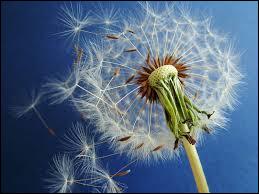
Dandelion, What kingdom does it belongs to?
a)
Plant Kingdom
b)
Animal Kingdom
c)
Fungi Kingdom
d)
Protista Kingdom
24.
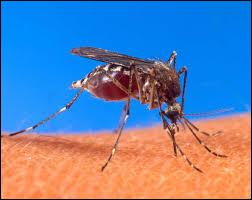
Mosquito  belongs to what kingdom?
a)
Animal Kingdom
b)
Plant Kingdom
c)
Fungi Kingdom
d)
Protista Kingdom
25.
Autotrophs- make their own  food.
Heterotrophs- obtain food from other animals.
Observing the table above, Fungi and Animals are________?
a)
Autotrophs
b)
Heterotrophs
26.
Plants are heterotrophs.
a)
True
b)
False
27.
Which of the following pairs is most closely related?
a)
snake & alligator
b)
Kangaroo and snapper fish
c)
Penguin and snake
28.

Which of the following is NOT a unicellular kingdom?

a)

Prokaryotes

b)

Protists

c)

Archaea

d)

Fungi

29.

Which is NOT a eukaryote?

a)

Plants

b)

Animals

c)

Archaea

d)

Protists

30.

Canis lupus, the scientific name for a wolf, is in which genus?

a)

Canis

b)

lupus

c)

Animalia

d)

Mammalia

31.

An organism identified with binomial nomenclature includes which two taxa?

a)

class and order

b)

family and genus

c)

genus and species

d)

kingdom and phylum

32.

Which is the best prediction regarding the current classification system?

a)

The system may change as new information and organisms are discovered.

b)

Scientists will become bored with the current system and develop a new one.

c)

Over time, organisms will become extinct, so classification will become simpler.

d)

The system is set in stone and most likely will not change.

33.

What is the order of the taxonomic levels from least specific to most specific?

a)

Kingdom, Family, Species, Order, Class, Phylum, Genus

b)

Kingdom, Phylum, Class, Order, Family, Genus, Species

c)

Species, Order, Kingdom, Family, Genus, Phylum, Class

d)

Species, Genus, Family, Order, Class, Phylum, Kingdom

34.

The scenario above is best described by the interaction of what three body systems?

a)

X=respiratory system, Y=circulatory system, Z=reproductive system

b)

X=muscular system, Y=nervous system, Z=immune system

c)

X=circulatory system, Y=immune system, Z=muscular system

d)

X=muscular system, Y=digestive system, Z=circulatory system

35.

The diagram above represents an example of how the body regulates itself. This diagram describes what relationship in body systems?

a)

The circulatory system and nervous system interact to absorb nutrients.

b)

The circulatory system and digestive system interact to defend the body from diseases.

c)

The circulatory system and nervous system interact to maintain homeostasis.

d)

The nervous system and immune system interact for reproduction.

36.

Which scenario below best describes the interaction between the endocrine and reproductive system.

a)

Hormones are produced causing ovulation in a female.

b)

Muscles are contracted, pushing food from the stomach into the small intestine.

c)

A male rabbit sees and chases a female rabbit.

d)

A bird lays her eggs, and protects them from possible predators.

37.

A person sweats during exercise to maintain a constant internal temperature. This is an example of –

a)

Homeopathic

b)

Stabilization

c)

Equalization

d)

Homeostasis

38.

According to the diagram below, how does the level of organization in biological systems progress?

a)

Increasing in complexity from left to right

b)

Increasing in complexity from right to left

c)

Increasing in complexity from top to bottom

d)

Increasing in complexity from bottom to top

39.

The organ system that breaks down food so it can be absorbed into the bloodstream.

a)

nervous system

b)

digestive system

c)

skeletal system

d)

respiratory system

40.
The muscular system works directly with the _____________system to allow the body to move. 
a)
skeletal 
b)
endocrine
c)
circulatory
d)
digestive 
41.

Kidneys, waste, filter blood

a)

Digestive system

b)

Excretory system

c)

Integumentary system

d)

Respiratory system

42.
Nose, trachea, lungs, alveoli
a)
Respiratory system
b)
Endocrine system
c)
Muscular system
d)
Skeletal system
43.
Pituitary gland, pancreas, thyroid, adrenal gland
a)
Digestive system
b)
Integumentary system
c)
Endocrine system
d)
Immune system
44.

Which body system forms a protective barrier between the external environment and the internal body systems?

a)

digestive

b)

nervous

c)

muscular

d)

integumentary

45.
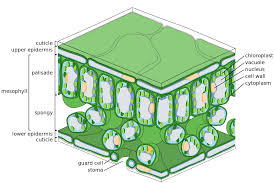
what is the function of cuticle?
a)
protects the underlying tissues
b)
transport water
c)
transport mineral and nutrients
d)
reduce loss of water through transpiration
46.
what is the function of xylem tissue?
a)
transports water and minerals salt 
b)
control the opening and closing of stoma
c)
carry out photosynthesis
d)
provide support for young plant
47.
Which of the following structures allows for gas exchange between a leaf and the atmosphere?
a)
Cuticle
b)
Phloem
c)
Stomata
d)
Xylem
48.
What is the function of vascular tissue?
a)
physical support of the plant
b)
transport water and nutrients
c)
defend against predators
49.
Where is the site of photosynthesis in plants?
a)
stomata
b)
guard cells
c)
chloroplasts
d)
waxy cuticle
50.
What type of vascular tissue is responsible for transporting the sugars made in photosynthesis from the leaves to the roots?
a)
Cuticle
b)
Phloem
c)
Stomata
d)
Xylem
51.
Vegetables and Taproots store energy underground for plants. Vegetables and taproots are part of the plants ________ system.
a)
Photosynthesis
b)
Shoot
c)
Root 
d)
Hydrotropism
52.
Everything above the ground in plants is called...
a)
Photosynthesis
b)
Xylem
c)
Root
d)
Shoot
53.

What is the collective term for the male part of the flower?

a)

Carpel

b)

Sepal

c)

Petal

d)

Stamen

54.

Which part of the flower becomes the fruit

a)

Ovule

b)

Root

c)

Anther

d)

Ovary

55.

What is the name of number 3?

a)

Filament

b)

Stigma

c)

Anther

d)

Pistil

56.

Which of these is the correct equation for photosynthesis? (select the best choice even if sunlight is not present in any of the choices)

a)

6O2 + C6H12O6 --> 6CO2 + 6H2O

b)

6O2 + 6CO2 --> C6H12O6 + 6H2O

c)

6CO2 + 12H2O --> C6H12O6 + 6H2O + 6O2

d)

6CO2 + 6H2O --> 6O2 + C6H12O6

57.
Which one is NOT an example of a decomposer?
a)
mushroom
b)
leaves
c)
mold
d)
worm
58.
What is a producer?
a)
an organism that gets energy from eating other organisms
b)
an organisms that uses sunlight to make its own food
c)
an organism that gets energy from eating dead organisms, non-living material or waste
d)
an organism that uses chemical energy to make its own food
59.
In the energy pyramid here, which organisms have the most energy available?
a)
Producers
b)
Carnivores
c)
Herbivores
d)
Top Predator
60.
In the energy pyramid below, which organism has the least amount of energy available?
a)
Producers
b)
Herbivores
c)
Carnivores
d)
Top Predator
61.
If there is 1000 Kcal available in the producers in trophic level 1, how much energy is available in the herbivores in trophic level 2?
a)
10 Kcal
b)
1 Kcal
c)
100 Kcal
d)
1000 Kcal
62.
If these organisms were arranged in a food pyramid, which organism would have the least amount of total energy available?
a)
coyote
b)
insect
c)
lizard
d)
shrub
63.
A third-level consumer has to be which type?
a)
Carnivore.
b)
Decomposer.
c)
Producer.
d)
Herbivore.
64.

What amount of percentage does the energy decrease as it goes up the pyramid?

a)

100%

b)

1000%

c)

10%

d)

1%

65.

How does the energy flow in an energy pyramids?

a)

up the pyramid

b)

down the pyramid

66.
Which is the smallest level of an ecosystem?
a)
organsism
b)
population
c)
community
d)
ecosystem
67.
Biodiversity is 
a)
the variety of species within an ecosystem
b)
a large number of the same species in an ecosystem
c)
an abundant amount of the same primary consumers 
d)
the ability to have an abundant source from the same species
68.

Photosynthesis is important because...

a)

it makes carbon dioxide

b)

it makes food for the food webs

c)

it makes water

d)

it's not important