
 Worksheets
Ms. Morey Bio Unit 8
Total questions: 61
Worksheet time: 39mins
Which of the following is NOT a factor in evolution?
Change in the population size
Mutations
Gene Flow
Environmental conservation
What advances to modern biology have supported Darwin's Theory of Evolution?
Discovery of DNA
Understanding Genetics
Fossil Record
All of these
What is survival of the fittest?
The strongest and fastest organisms survive and reproduce
The organisms with the most offspring survive and reproduce
The organisms that are best adapted to their environment survive and reproduce
The organisms that are the most intelligent survive and reproduce
Which of the following best describes Darwin's idea of Unity of Life?
The concept that all living organisms are made up of cells
The idea that all living things share a common ancestry and are therefore related to each other
The belief that all organisms are created equal and have the same value
The understanding that all living things are fundamentally different from each other and cannot be compared
Which of the following terms represents the movement of individuals into or out of an area?
gene flow
mating
adaptation
mutation
These cause variations.
mutations
adaptations
a desire to change
breeding

When a farmer breeds only his or her best livestock, the process involved is.......
natural selection
artificial variation
artificial selection
survival of the fittest

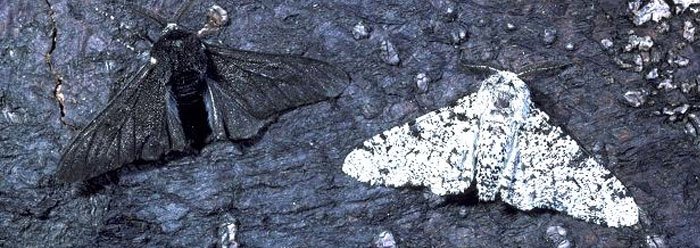
What is most likely to happen to moth populations in the picture shown?
Light moths--hunted easily, dark moths--population increase
Dark moths--hunted easily, dark moths--population increase
Light moths--hunted easily, light moths--population increase
Lights moths will change their color to match dark moths.


What is the process of which humans breed organisms for certain traits?
artificial selection
survival of the fittest
inheritance of acquired characteristics
natural selection
The female birds of paradise tend to look for the most colorful, best dancing males to make babies together.
Genetic Drift
Non-random mating
Gene flow
Mutation


What type of natural selection is this?
Stabilizing
Directional
Disruptive
Selective

What type of natural selection is this?
Stabilizing
Directional
Disruptive
Selective

What type of natural selection is this?
Stabilizing
Directional
Disruptive
Selective

Starlings produce an average of five eggs. If there are more than five the parents cannot adequately feed the young. Fewer than five and predators may destroy them. As a result, five eggs becomes the most common number.
Stabilizing
Directional
Disruptive

Seed cracker birds have either large beaks or small beaks. They do not have medium sized beaks because medium sized beaks do not allow for adequate cracking of seeds.
Stabilizing
Directional
Disruptive

A scientist measures the circumference of acorns in a population of oak trees and discovers that the most common circumference is 2 cm. There are very few acorns with circumferences of 3 cm or circumferences of 1 cm. Only the 2 cm circumference acorns survive.
Stabilizing
Directional
Disruptive

A population of Madagascar hissing cockroaches lives in a woodpile. The cockroaches are eaten by lizards. Because the lizards have small heads, the lizards are unable to eat the very largest adult cockroaches, and instead prey upon small and medium sized adults. Over time, only the large headed lizards survive.
Stabilizing
Directional
Disruptive

Female birds that lay close to the optimum number of eggs have the most surviving offspring. Those that lay fewer or more eggs have lower relative fitness.
Stabilizing
Directional
Disruptive
What is the primary mechanism by which evolution occurs?
Genetic Drift
Natural Selection
Gene Flow
Mutation
Which of the following best describes genetic drift?
A change in allele frequencies due to random events
The movement of alleles between populations
The process by which organisms better adapted to their environment survive and reproduce
The introduction of new genetic material into a population
What is the primary cause of genetic variation in a population?
Natural selection
Mutations
Gene flow
Genetic drift
Which of the following is an example of gene flow?
A population of birds migrates to a new area and breeds with the local population
A random mutation occurs in a single organism
Natural selection favors a specific trait in a population
A natural disaster reduces the population size
What is the result of stabilizing selection?
Increased genetic diversity
Elimination of extreme phenotypes
Formation of new species
Increased mutation rates
Which of the following is an example of directional selection?
A population of moths where darker individuals become more common due to industrial pollution
A population of birds where the average beak size remains constant over time
A population of fish where both very small and very large individuals are favored
A population of plants where the average height remains the same
Which of the following best describes the bottleneck effect?
A large population is suddenly reduced in size due to a natural disaster
A small group of individuals colonizes a new area
Allele frequencies change due to random events
New genetic material is introduced into a population
What is the primary cause of the founder effect?
Natural disasters
Migration of a small group to a new area
Random mutations
Artificial selection
Which of the following is an example of directional selection?
Increase in average beak size in a bird population
Maintenance of average birth weight in human babies
Development of two distinct forms in a population
Random changes in allele frequencies


Why were the beaks on Darwin's finches so Important?
They showed the finches always existed as Darwin found them.
They showed that the finches could mutate their beaks whenever they want.
They showed variability in the finches species. All finches were equally adaptable to all islands.
They show that the finches adapted to their environments. Their beak shape matched the food available on each island.
Which of the following do scientists not use as evidence for evolution?
Fossils
Vestigial Structures
Embryology
Radiation

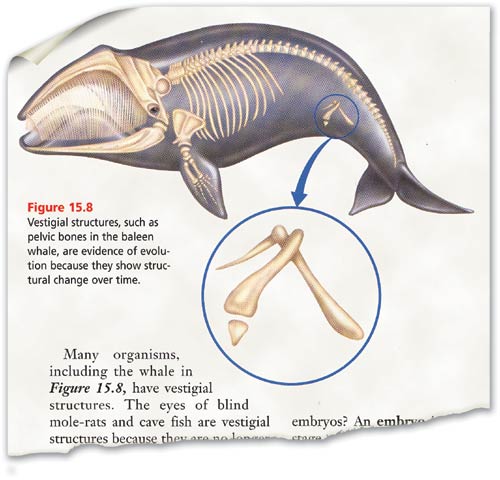
Why are vestigial structures evidence for evolution?
They are useful in the organism and show natural selection at work.
They are not useful in the organism but they were probably useful in some ancestor of that species.
They show that these organs or behaviors help an organism adapt to new environments

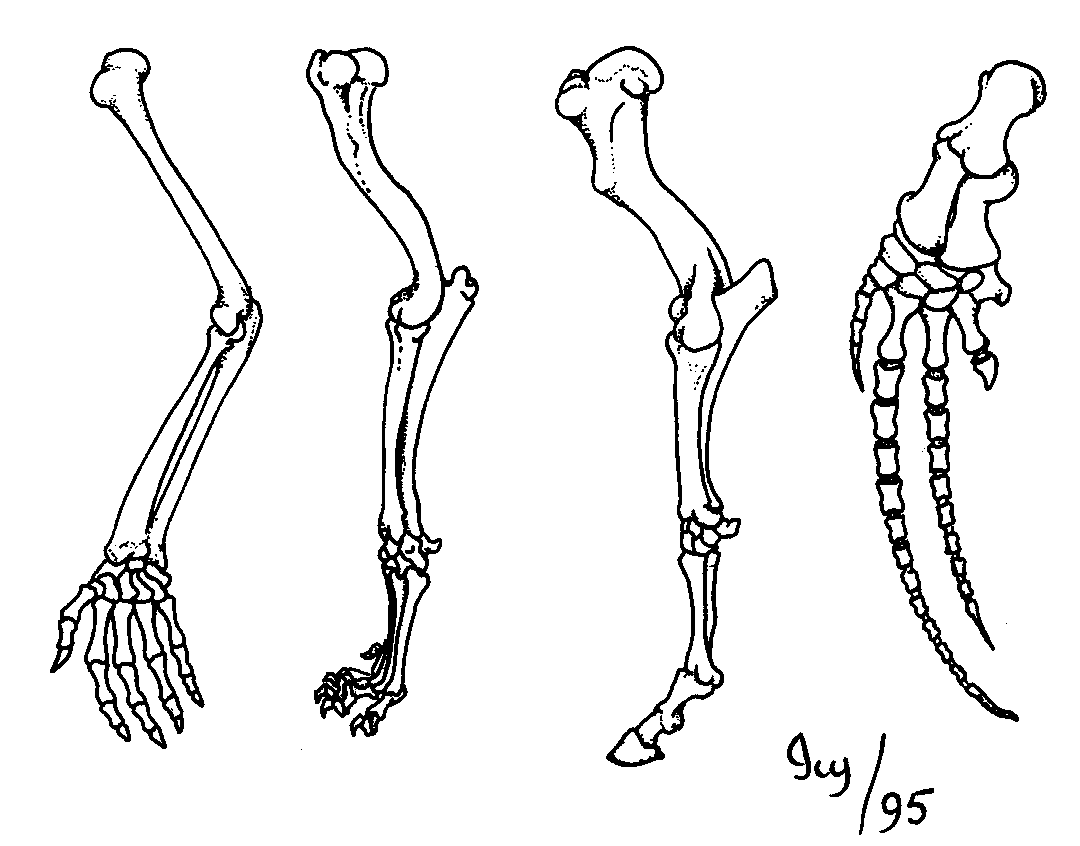
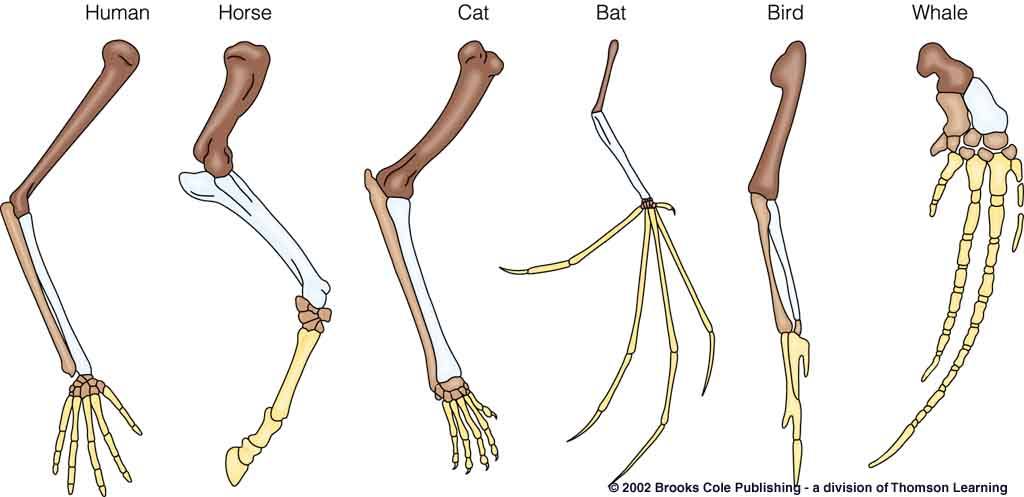
Why are homologous structures important to the theory of evolution?
Scientists use them as evidence that many species must have had a common ancestor.
Scientists use them as evidence that many species must have independently evolved and are not related to other species.
Scientists use them as evidence to show that all kinds of structures in our bodies work to help us survive.

How do scientists use embryology to support the theory of evolution?
Embryos of many species have a lot of similar characteristics when they are first forming showing different creatures must have a common ancestor
Embryos of many species have very little in common until they start developing for long periods of time
Features like gills and tails prove that all animals are really just fish
What effect can bottleneck events have on populations that have nearly become extinct?
Bottleneck events lead to increased gene flow and genetic diversity.
Bottleneck events have no impact on populations that have nearly become extinct.
Bottleneck events lead to the founder effect and eventually increase genetic diversity.
Bottleneck events reduce the size of the population and greatly reduce genetic variation.

