
 Worksheets
Day 6 Quiz Redo
Total questions: 65
Worksheet time: 2hrs 48mins

Which group is not represented in the food web?
producers
primary consumers
secondary consumers
decomposers

What do the arrows in the food chain indicate about the flow of energy in an ecosystem?
Energy is continuously recycled by the organisms in an ecosystem.
Energy flows in one direction in an ecosystem, from producers to consumers.
More of the available energy in an ecosystem is given to large animals than to small animals.
Organisms at the end of the food chain receive more energy than those at the beginning.

In this energy pyramid, which organism would most likely be in level 2?
bird
fox
caterpillar
tree
Which one of the following is true of grass in an ecosystem?
It converts oxygen to glucose.
It produces carbon dioxide from oxygen and water.
It produces glucose from carbon dioxide and water.
It converts water to energy.

How would the removal of earthworms from the food chain affect the other organisms?
The number of bass will increase.
The number of crayfish will decrease.
The crayfish will get their energy directly from the sun.
The number of bass and ospreys (bird) will increase.

Interactions in an ecosystem result from the transfer of matter and energy from producers to consumers and eventually decomposers. What are the forms of energy transfer from numbers 1 through 4?
Chemical energy to chemical energy
Light energy to chemical energy
Chemical energy to heat energy
Heat energy to mechanical energy

The diagram shows part of an aquatic food web for a stable lake ecosystem in Connecticut. What is the source of energy for the algae?
waves
sunlight
bacteria
rotifers, water fleas and tadpoles

Suppose that a new predator of the rabbit migrated to this ecosystem. What is the most likely initial effect on the other organisms?
More competition among the mice for food
More competition among the hawks for food
Less competition among snakes for food
Less grass available for food

For the food chain shown, which of the following changes would have the most severe consequences?
a drastic decrease in rainfall, causing a drought
the poaching of predatory hawks by game hunters
the introduction of a second predator that eats field mice
a parasitic infestation that reduces the cricket population

The diagram provided shows a marine food chain. In this food chain, the zooplankton are
primary producers.
primary consumers.
secondary consumers.
tertiary consumers.

The picture provided shows an ocean bay food chain. Sea otters move into the ocean bay. They eat all of the sea urchins. This change will cause the
kelp to have less food.
crabs to have more food.
sea ducks to have less food.
arctic foxes to have more food.

The picture shows an energy pyramid. What will most likely happen to the foxes and the wolves if the rabbits are removed?
The foxes will eat more wolves.
The foxes will eat fewer wolves.
There will be more foxes and wolves.
There will be fewer foxes and wolves.

The diagram provided shows a simple food web. Which group of organisms is not represented in the diagram?
prey
decomposers
consumers
producers

A student examines the information in the table. The student concludes that Organism W should be placed at the base of the food web to represent the feeding relationships in the marine ecosystem. However, the student later learns that Organism W's cells do not contain chloroplasts. Based on the new information, which conclusion would be appropriate?
Another organism in the marine ecosystem is a producer.
Organism W is a secondary consumer in the marine ecosystem.
The role of Organism T in the marine ecosystem changes during its life.
This marine ecosystem does not have any producers.
Which of these organisms would most likely be found at the top of an energy pyramid?
clams
sardines
sharks
kelp (seaweed)
A chemical pesticide was applied to an area of this ecosystem by a landowner to control the mouse population. There was a decrease in the mouse population due to the presence of this pesticide. Which one of the following would most likely occur due to this change in the ecosystem?
The amount of grass would decrease.
The snake population would increase.
The rabbit food supply would increase.
The snake food supply would increase.

The picture shows the energy flow through a meadow community. Which of the following would most likely occur to the populations within the community of organisms immediately after a wildfire burns the environment?
Hawks would increase and foxes would increase.
Hawks would decrease and foxes would increase.
Meadow plants would increase and rabbits would decrease.
Meadow plants would decrease and rabbits would decrease.
Which of these organisms would most likely be found at the bottom of a biomass pyramid?
giant squids
sand sharks
sea cucumbers
green algae

In this energy pyramid, which organisms have the most energy available?
Producers
Carnivores
Herbivores
Top Predator

In this energy pyramid, which organism has the least amount of energy available?
Producers
Herbivores
Carnivores
Top Predator


What does a pyramid of numbers compare?
the number of individual organisms at each trophic level
the number of individuals in each population
the number of predators and prey in an ecosystem
the number of different populations at each trophic level

After completing your calculations, what is the average amount of energy transferred from one trophic level to the next?
90%
70%
50%
10%

Which of the following statements about this food web is FALSE?
the ultimate source of energy for the whole food web is the radiant energy of the SUN
radiant energy from the sun is converted into chemical energy (glucose) by producers
arrows in a food web show the direction that energy moves from one trophic level to another
100% of the energy made by the vegetation is passed to the geese and mute swans
energy is used up by each trophic level, and ultimately lost as heat energy

Using the diagram provided, which of the following energy pyramids best represents the data?


What is the ultimate source of energy for an ecosystem?
Producers
Decomposers
Tertiary Consumers
Sun
What is the average amount of energy transferred from one trophic level to the next?
90%
10%
20%
50%

If there is 1000 Kcal available at the producers level, how much energy is available in the primary consumers level?
100 Kcal
10 Kcal
1 Kcal
1000 Kcal

Most of the energy in the trophic level below is NOT available to the organisms that eat them. Therefore, the ecosystem can only support the number of organisms that can have enough to eat.
Why can the ecosystem only support small numbers of consumers compared to a large number of producers?
There is not enough energy available to support more consumers
There is too much energy available to the consumers
There is not enough food available for decomposers
There is not enough sunlight available to support more consumers

What will most likely happen to the hawks and rodents if the insects were removed?
There will be more hawks and rodents
The rodents will eat more hawks
There will be fewer rodents and hawks
The hawks will eat more rodents

Primary succession

pioneer species

abiotic factor

secondary sucession

climax community
___ are the first organisms to colonize an area and begin the process of ecological succession.
foundational organisms
introductory organisms
primary organisms
pioneer species
Primary succession occurs in an area that has:
Has Soil
Has No Soil
Has Some Soil
none of these
What is the main difference between primary and secondary ecological succession?
Primary begins WITHOUT soil; Secondary begins WITH soil
Primary is the first state and secondary is the second stage
Primary builds plant community; secondary builds animal community.
Primary begins WITH soil; Secondary begins WITHOUT soil
What is an example of an area that is likely to undergo primary succession?
Glaciers melt and leave exposed rock
Plants die from drought and decompose
Land is bulldozed and soil remains


After a volcanic eruption, volcanic rock is present (but no soil). Which of the following states the most likely order of succession that would be seen?
Lichens → Shrubs → Grasses → Trees
Lichens → tree → shrubs→Grasses
Grasses → Lichens → Shrubs → Trees
Lichens → Grasses → Shrubs → Trees

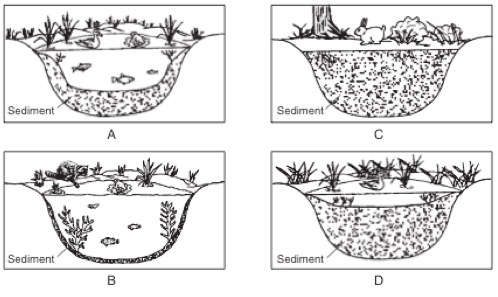
Primary or secondary ecological succession?




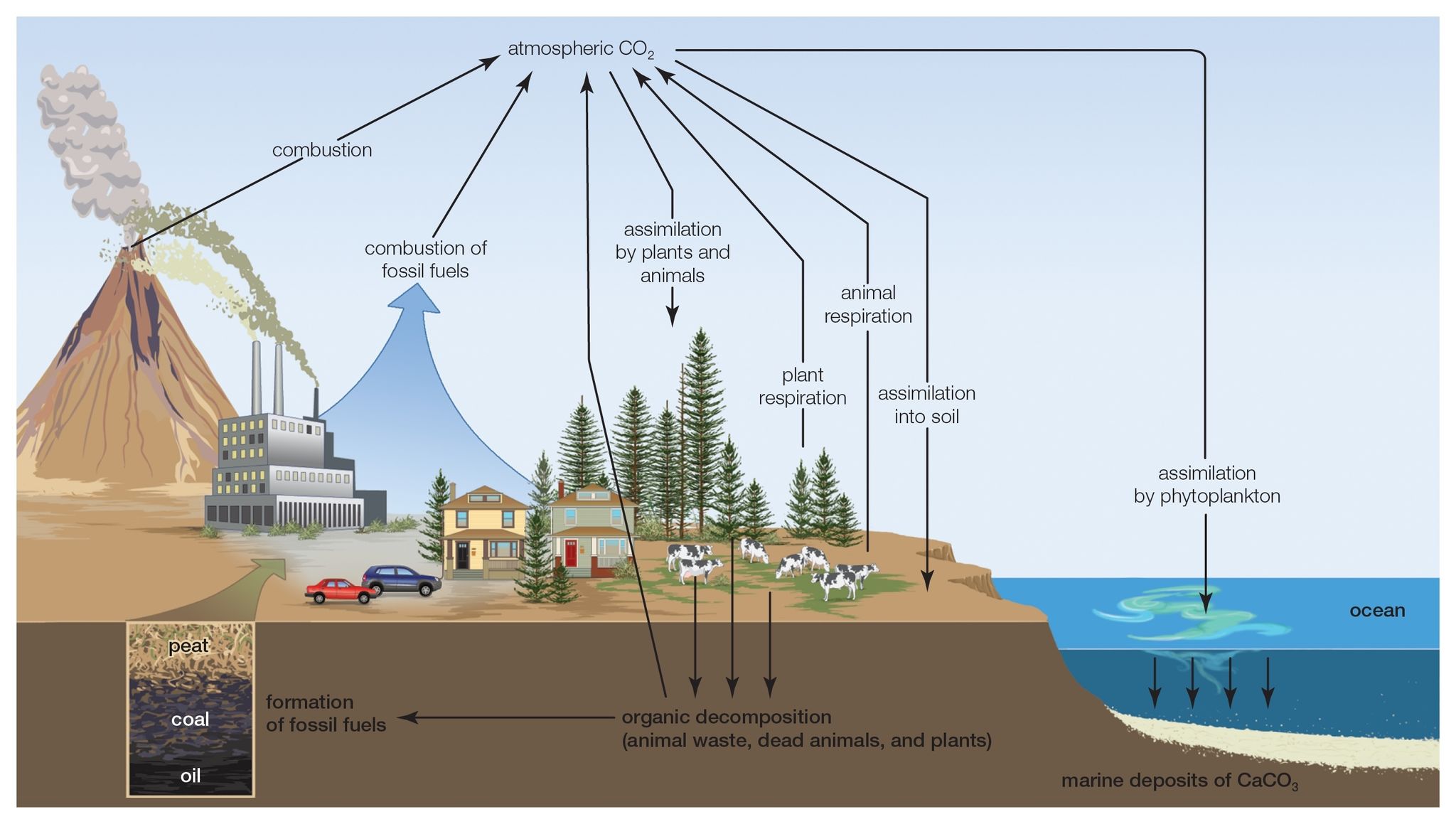
How does carbon in a grass plant get into a lion?
The lion eats an antelope that ate the grass
Carbon from grass doesn't end up in a lion.
The lion absorbs the carbon given off by transpiration
The lion breathes in carbon given out by the plant
features of environment that are alive or were once alive
biotic
abiotic
inbiotic
biography
All of the carbon in existence is continually recycled in the carbon cycle.
Which describes the relationship between plants and animals in the carbon cycle?
Plants produce and release oxygen that animals need
Plants produce and release carbon dioxide that animals need
Animals produce and release oxygen that plants need
Animals produce oxygen that plants turn into carbon dioxide
Carbon molecules cannot be created or destroyed
True
False
Not enough information to answer

