
 Worksheets
DNA, RNA Genetics Review
Total questions: 101
Worksheet time: 1hrs 19mins
Hershey and Chase set out to determine what molecule served as the unit of inheritance. They completed a series of experiments in which E. coli was infected by a T2 virus. Which molecular component of the T2 virus actually ended up inside the cell?
protein
DNA
RNA
ribosome
The shape of a DNA molecule is most like
beads on a string.
a wooden ladder.
a twisted rope ladder.
a set of railroad tracks.
What type of chemical bond joins the bases of complementary DNA strands?
Covalent
Hydrophilic
Hydrogen
Ionic
Which of the following enzymes catalyzes the elongation of a new DNA strand?
DNA polymerase
RNA polymerase
reverse transcriptase
DNA Ligase
What is the transcription product of the sequence GCTAGCGATGAC?
CGUTCGCUTCUG
CGTUCGCUTCUG
CAGTAGCGATCG
CGAUCGCUACUG
What protein sequence does the RNA sequence CUAGCUCGAUAUCUC code for?
Leu - Gly - Tyr - Ala - Leu
Asp - Ala - Arg - Ile - Leu
Leu - Ala - Arg - Tyr - Leu
Val - Arg - Ala - Phe - Stop
What is meant by the description "antiparallel" regarding the two strands that make up the DNA double helix?
The 5' to 3' direction of one strand runs counter to the 5' to 3' direction of the other strand.
One strand contains only purines and the other contains only pyrimidines.
Base pairings create unequal spacing between the two DNA strands.
The double helix structure of DNA creates nonparallel strands.
How many nucleotides make up a codon?
Two
Four
Three
Five
Who discovered the structure of DNA?
Franklin
Hershey and Chase
Watson and Crick
Pauling
If adenine makes up 20% of the bases in a DNA double helix, what percent of the bases are guanine?
30%
60%
20%
40%
Which of the following options best depicts the flow of information when a gene directs the synthesis of a cellular component?
protein → RNA → DNA
DNA → tRNA → mRNA → protein
DNA → RNA → protein
RNA → DNA → RNA → protein
Consider the following sentence: "The dog did not eat." Which of the following variations of this sentence is most like a base substitution mutation?
The dog dog did not eat.
The dog did not et.
The doe did not eat.
The did dog not eat.
If one strand of a DNA double helix has the sequence GTCCAT, what is the sequence of the other strand?
CAGGUA
CAGGTA
ACTTGC
TGAACG
If a strand of DNA has the sequence AAGCTC, transcription will result in a(n) ______.
single RNA strand with the sequence TTCGAG
DNA double helix with the sequence AAGCTC for one strand and TTCGAG for the complementary strand
RNA double helix with the sequence UUCGAG for one strand and AAGCUC for the complimentary strand
single RNA strand with the sequence UUCGAG
RNA contains the nitrogenous base ______ instead of ______, which is only found in DNA.
uracil... thymine
uracil... guanine
thymine... uracil
a deoxyribose sugar... a ribose sugar
The backbone of DNA consists of ______.
paired nucleotides
a repeating sugar-nucleotide-sugar-nucleotide pattern
a repeating sugar-phosphate-sugar-phosphate pattern
nitrogenous bases
Which enzyme catalyzes the elongation of a new DNA strand in the 5' → 3' direction?
primase
helicase
DNA polymerase III
DNA Ligase
Where is translation accomplished?
nucleoli
smooth endoplasmic reticulum
Lyosomes
Ribosomes
In DNA replication, the resulting daughter molecules contain one strand of the original parental DNA and one new strand. What is the explanation for this phenomenon?
RNA synthesis is conservative.
DNA replication is not conservative.
DNA replication is conservative.
DNA replication is semiconservative.
What nucleotide sequence would be found on the complementary DNA strand of the strand shown here? ACTGT
TGACA
UGAGA
TGUGU
ACTGT
Enzyme that unwinds DNA
(a)
Fragments of copied DNA created on the lagging strand
(a)
The strand that is copied in a continuous way, from the 3' to 5' direction.
(a)
Binds Okazaki Fragments
(a)
Builds a new DNA strand by adding complementary bases
(a)
Stabilizes the DNA molecule during replication
(a)
Initiates the synthesis DNA by creating a short RNA segment at replication fork.
(a)
Place the events in the correct order:
a) DNA polymerase adds nucleotides in the 5' to 3' direction
b) Replication Fork is formed
c) DNA polymerase attaches to the Primer
d) Okazaki fragments are bound together by ligase
e) DNA helicase unwinds DNA
e - b - c - a - d
b - e - d - c - a
d - c - a - e - b
e - d - b - c - a
Replication is called "semi-conservative" because the template strand is a parent strand
True
False
Convert the codon charts to Amino Acids: CCC, CAG, GAA, UUU
Pro, Gln, Glu, Phe
Ser, Tyr, Arg, Pro
Glu, Phe, Arg, Pro
Pro, Glu, Glu, Phe
Convert the codon charts to Amino Acids: AGU, UAC, CGU, CCA
Ser, Tyr, Arg, Pro
Pro, Gln, Glu, Phe
Pro, Gln, Ser, Tyr
Glu, Phe, Arg, Pro
The Four Nucleotides found in DNA are:
Cytosine, Thymine, Guanine and Adenine
Cytosine, Uracil, Guanine and Adenine
Cytosine, Myramine, Guanine and Adenine
Gytosine, Thymine, Guanine and Adenine
Replication of DNA is (a) meaning half of the new strands of DNA are paer of the original DNA strand.
Why does DNA replicate?
In preparation for Mitosis and Meiosis
To Produce Proteins
To unwind the Helix
To Repair Damaged Cells
Where does DNA Replication occur in a eukaryotic cell?
(a)
Order the following steps in the order they happen during DNA replication:
a) Two new molecules of DNA are created.
b) DNA Polymerase attaches nucleotides to the unwound DNA strand
c) Helicase begins to unwind DNA
d) single stranded binding proteins hold DNA strands apart
e) Topoisomerase relieves strain of unwinding DNA molecule
c - d - e - b - a
a - c - d - e -b
c - e - d - b - a
a - e - d - c - b
Identify the 4 nucleotides found in RNA.
Cytosine, Uracil, Guanine and Adenine
Cytosine, Thymine, Guanine and Adenine
Mytosine, Thymine, Uracil and Adenine
Cytosine, Thymine, Uracil and Adenine
The process by which a copy of DNA is made into mRNA is called...
(a)
Is the transcription and translation true or false?
DNA: TAC GCG CCT AGG GGG TGG
mRNA: AUG CGC GGA UCC CCC ACC
AA: START Arg Gly Ser Pro Thr
True
False
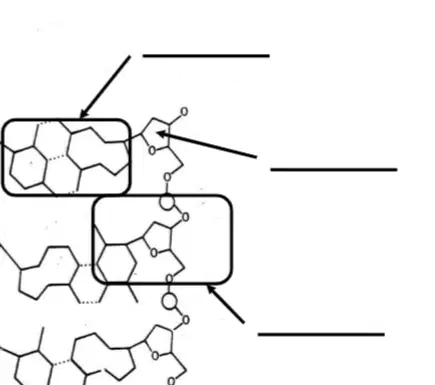
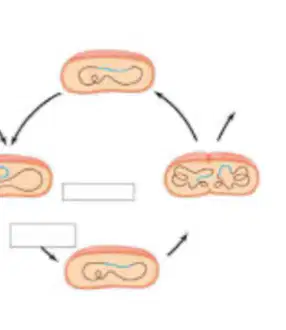
Label top to bottom (DNA)
(a)
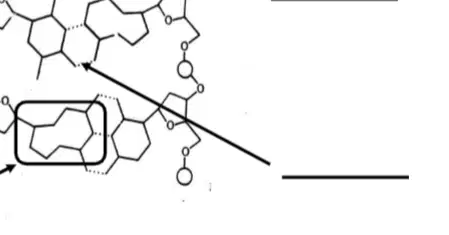
Label (DNA)
(a)
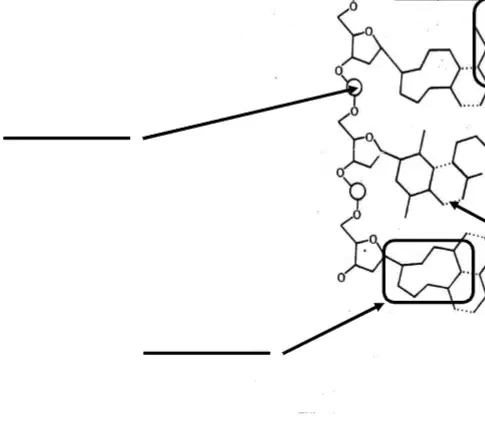
Label top to bottom (DNA)
(a)
In which direction are new nucleotides added during replication?
(a)
Which enzyme is responsible for “unzipping” the DNA double helix?
(a)
DNA replication is said to be semiconservative because:
both RNA and DNA synthesis are involved in the process
part of the telomere is lost during each round of replication
a new double helix contains one old and one new strand
each new strand is complementary, not identical, to its template
List the 3 steps of DNA replication
(a)
Which enzymes are involved in holding the strands unzipped?
Single-Strand Binding Proteins
Helicase
Topoisomerase
DNA Ligase
What enzyme is involved in preventing “stress” and tension on the unwound strands?
Helicase
Single-Strand Binding Proteins
Topoisomerase
DNA LIgase
What are the fragments called that are produced on the lagging strand?
Okazaki Fragments
DNA Primase
DNA LigIase
snRPS
Which enzyme is responsible for “gluing” together the fragments of the lagging strand?
DNA Ligase
DNA Primase
Helicase
Single-Strand Binding Proteins
Below is an unwound strand of DNA. Below each letter write the complementary strand of DNA.
A – T – G – C – G – G – C – G – A – T – T – T – A – A – G – C
(a)
How many different kinds of bases can be found on DNA?
(a)
What base is found on RNA but not on DNA?
(a)
Transcription takes place in the______ and translation occurs in the______.
cytoplasm, nucleus
nucleus, mitochondria
ribosome, nucleus
nucleus, cytoplasm
The letters “DNA” stand for
Deoxyribonucleic Acid
Ribonucleic acid
Deoxy Acid
Di-Nitrogenous Acid
DNA is composed of subunits (“building blocks”) known as
Nucleotides
Amino Acids
Sugars
Proteins
DNA looks like a twisted ladder and is actually a shape known as a
Double Helix
Single Helix
Spiral
Coil
The two molecules that make up the sides of the ladder or the side portion of a DNA molecule are
(a)
The molecules that meet across the middle, forming the steps/rungs of the “ladder’” are known as
(a)
The nitrogenous bases are held together by
(a)
The process in which DNA builds an exact duplicate of itself is known as
(a)
During replication, the two DNA strands (Blank), via the enzyme (Blank),and each strand serves as a (Blank) for a new strand
(a)
DNA strands are held apart using (Blank)
(a)
enzymes known as (blank) relieve the strain of the untwisting strands.
(a)
The enzyme called (blank) moves along the separatedstrands assembling the new chains of DNA
(a)
When replication is complete, two (blank) copies of the DNA molecule have been produced and the cell is ready to begin (blank)
(a)
Because one strand is awkwardly positioned for the enzymes to elongate the new strand, the two strands being built are built in different ways, with this awkward strand called the (Blank) strand formed in pieces called (Blank), and then “glued” together by the enzyme (Blank)
(a)
Each DNA molecule resulting from replication has one original strand and one new strand
True
False
The letters “RNA” stand for
Ribonucleic Acid
Deoxynucleic Acid
Deoxyribonucleic Acid
Ribose Acid
In RNA, adenine always pairs with the nitrogen base known as
(a)
RNA has one strand while DNA is double stranded.
True
False
RNA uses Uracil in place of Thymine which is used in DNA
True
False
RNA uses the sugar Ribose rather than the DNA’s Deoxyribose
True
False
There are three kinds of RNA. (Blank) carries the information from the nucleus to the ribosomes in the cytoplasm. (Blank) reads the message and binds to a specific (Blank) which it brings to build the protein. (Blank) is the most abundant form of RNA and makes up ribosomes.
(a)
The process of making a strand of RNA from a strand of DNA is called
(a)
(Blank) are the primary enzymes that synthesize RNA copies from DNA. These enzymes bind to specific regions of the DNA molecule called (Blank)
(a)
Many RNA molecules copied from eukaryotic genes have sections called (Blank) edited out of them before they become functional. The remaining pieces called (Blank) are then spliced together and exit the cell.
(a)
RNA transcripts are also modified with the addition of a (Blank) at the 5’ end and a (Blank) at the 3’ end, to avoid degradation by hydrolytic enzymes before leaving the nucleus.
(a)
Proteins are made in the cytoplasm by structures called
(a)
The sequence of nucleotides in mRNA is (Blank) into a sequence of (Blank), that comprise a polypeptide.
(a)
A group of 3 nitrogen bases forms a
(a)
Each group of 3 bases codes for a(n) (Blank). In the codon chart, there are (Blank) different codes
(a)
All amino acids are specified by only one codon.
True
False
(Blank) occurs in the ribosomes in the cytoplasm, taking themRNA message and resulting in protein products.
(a)
The (Blank) codon begins everything, and the protein synthesis process ends when a (Blank) codon is reached. tRNA molecules enter the ribosome at the site (Blank), where they await their turn, then move to the site (Blank), where they attach their amino acid to the growing polypeptide, and then leave at the site (Blank).
(a)
Mutations that occur at one single nitrogen base are referred to as (Blank) mutations. A mutation involving the insertion or deletion of a nucleotide is called a (Blank) mutation.
(a)
An (Blank) includes the promotor, operator, and genes, that all together control gene expression.
(a)
If a gene needs to be stopped from being expressed, because its transcription is always on, it is part of a(n) (Blank) operon. An example of this type of operon is the (Blank) operon
(a)
When an operon must be activated, due to the presence of a substance that needs to be broken down, that is known as a(n) (Blank) operon. An example of this type of operon is the (Blank) operon.
(a)
The control of gene (Blank) is important in multicellulareukaryotes, for cell differentiation and development
(a)
Viruses are considered non-living because they cannot reproduce on their own, nor carry on metabolic activities without a host cell
True
False
The protein shell of a virus is called its
(a)
Viruses that infect bacteria are called
(a)
Phages that go through a lytic cycle are called (Blank) Phages.
(a)
(Blank) phages are capable of both lytic and lysogenic cycles
(a)
RNA viruses are known as (Blank), and can be converted to DNA via the enzyme (Blank)
(a)
(Blank) help to fight viruses, though there is no cure at this point
(a)
(Blank) are circular RNA molecules that infect plants, and (Blank) are proteins that lead to degenerative brain diseases.
(a)
Bacteria have different defense mechanisms for fighting viruses, including making themselves (Blank) to viruses and using (Blank) enzymes to cut up virulent DNA that infects a host bacterial cell
(a)
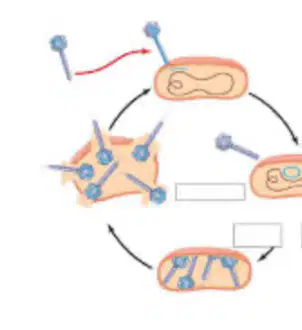
Lytic Cycle
Lysogenic Cycle
Lytic Cycle
Lysogenic Cycle

