wayground logo

Free Printable Worksheets

Font size

S
M
L
XL
Worksheets

Chemistry II Final: Review

Total questions: 88

Worksheet time: 2hrs 15mins

Name
Class
Date
1.
What is the formula for density?
a)
density = mass x volume
b)
density = mass / volume
c)
density = mass + volume
d)
density = mass - volume
2.
What is the volume of 150 grams of lead if it has a density of 11.3 g/cm3?
a)
13.3 g
b)
13.3 cm3
c)
.075 g
d)
1695 cm3
3.
7,000 g = ____ kg
a)
70
b)
700
c)
7
d)
0.07
4.
648 g = ____ mg
a)
6,480
b)
64,800
c)
648,000
d)
64.8
5.

100 °C = _____ K

a)

173 K

b)

373K

c)

273 K

d)

0 K

6.

What is the sum of 3.35 + 1.4 + 3.65?

a)

8.4

b)

8.40

c)

8

d)

8.0

7.
How many significant figures: 216 m
a)
1
b)
2
c)
3
d)
0
8.
How many significant figures: 153.0 mL
a)
1
b)
2
c)
3
d)
4
9.
How many significant figures: 0.012 km
a)
1
b)
2
c)
3
d)
4
10.
Calculate 1.23 m x 0.89 m and give your answer with the correct number of significant figures.
a)
1.0 m2
b)
1.1 m2
c)
1.0947 m2
d)
1.095 m2
11.
Which statement correctly and completely identifies a trend?
a)
Atomic radius decreases across a period and increases down a group.
b)
Electronegativity decreases across a period and decreases down a group.
c)
Ionization energy increases across a period and increases down a group.
d)
Ionic radius increases across a period and increases down a group.
12.
Ionization energy is...
a)
the energy required to add an electron to a specific atom
b)
how much energy it takes to remove an electron from an atom
c)
the energy required to shield the outer electrons from the nucleus
d)
a measure of the ability of an atom to attract electrons
13.
Electronegativity is...
a)
how good an atom is at attracting electrons
b)
the ability of an atom to lose electrons
c)
the energy required to remove an electron from a specific atom
d)
how easy it is to make friends. 
14.
As you move across the periodic table atoms tend to get smaller because, ______________.
a)
the atoms have more mass.
b)
the atoms have less mass
c)
the atoms have more protons.
d)
the atoms have less electrons.
15.
Which has the greater EN: 
Cl or Al?
a)
Cl
b)
Al
16.

Atoms are made up of what?

a)

molecules

b)

compounds

c)

elements

d)

subatomic particles

17.

Which subatomic particle has a positive charge?

a)

proton

b)

neutron

c)

electron

d)

midichlorian

18.

Which subatomic particle has a negative charge?

a)

proton

b)

neutron

c)

electron

d)

cybertron

19.

Which subatomic particle as no charge, also known as a neutral charge?

a)

proton

b)

neutron

c)

electron

d)

chakra

20.

What is the center of an atom called?

a)

The headquarters

b)

The centrometer

c)

The hypothesis

d)

The nucleus

21.

The nucleus of an atom contains which subatomic particles?

a)

protons and electrons

b)

protons and neutrons

c)

electrons and neutrons

d)

protons, electrons, and neutrons

22.

which explanation of this notation is correct?

a)

12 is proton #

b)

6 tells you there are 6 neutrons

c)

6 tells you there are 6 protons

d)

12 is not a mass # here

23.

What is the mass number of "F"

a)

9

b)

18

c)

17

d)

19

24.
How many neutrons does the isotope of lithium have?
a)
8
b)
3
c)
4
d)
5
25.
Contains only one kind of atom.
a)
Element
b)
Compund
c)
Mixture
26.
Contains two or more atoms combined
a)
Elements
b)
Compounds
c)
Mixtures
27.
The air is a _________. 
a)
element 
b)
mixture 
c)
compound 
d)
energy 
28.
Write 3.2 x 10in standard form.
a)
3.200
b)
3200
c)
32000
d)
.0032
29.
Write 9,450,000 in scientific notation.
a)
9.45 x 10⁴
b)
9.45 x 10⁵
c)
9.45 x 10⁶
d)
.945 x 107
30.
Write the answer in scientific notation.
4.1 x 10⁶ +   5.5 x 106  =

a)
5.91 x 10⁶
b)
9.6 x 10⁶
c)
9.6 x 10¹¹
d)
4.65 x 10⁵
31.
Multiply:
(9.4 x 10⁶)(3.2 x 10⁵)
a)
30.08 x 10¹¹
b)
3.8 x 101
c)
3.008 x 10¹²
d)
2.9375 x 101
32.
What atom matches this electron configuration?
1s22s22p63s23p64s23d10
a)
Zinc
b)
Copper
c)
Nickel
d)
Germanium
33.
Identify the Electron Configuration for Aluminum (Al)
a)
1s2s2p3s3p1
b)
1s2s2p3s3p3
c)
1s2s2p3s4p1
34.
What is the formula for aluminum fluoride?
a)
AlF
b)
Al2F3
c)
AlF3
d)
Al3F2
35.
A chemical bond resulting from the electrostatic attraction between positive and negative ions is called a(n)
a)
covalent bond.
b)
ionic bond.
c)
charged bond.
d)
dipole bond.
36.
How do the following two elements bond together?
Al3+  O2-         
a)
AlO
b)
Al2O3
c)
Al3O6
d)
Al3O2
37.
Metals tend to 
a)
gain electrons
b)
lose electrons
38.
What is the correct formula for the compound, lithium oxide?
a)
LiO
b)
Li2O
c)
LiO2
d)
Li2O2
39.
What two types of atoms make a covalent bond?
a)
2 Nonmetals
b)
1 Nonmetal and 1 Metal
c)
2 Metals
d)
2 Noble Gases
40.

Beryllium and sulfur will form a ______ bond

a)

ionic

b)

covalent

c)

metalloid

41.

Carbon and Oxygen will make a ___________ bond.

a)

ionic

b)

covalent

c)

metallic

42.

Nitrogen and Oxygen will make a ____________ bond

a)

ionic

b)

covalent

c)

metallic

43.
How many valence electrons does nitrogen have?
a)
3
b)
2
c)
5
d)
1
44.
What can be generalized about covalent bonds?
a)
Electrons will be exchanged.
b)
Electrons will be transferred.
c)
Electrons will be given and taken.
d)
Electrons will be shared.
45.

What is it called if there are three-pairs of electrons being shared?

a)

Triple Bond

b)

Three Single Bonds

c)

Tribond

d)

Double and Single Bond Combo

46.

Which of the following is the best representation of a molecule of fluorine (F2)?

a)

A

b)

B

c)

C

d)

D

47.

Carbon is in 4A, so how many bonds can it form based on electrons needed to fill its outer shell?

a)

1

b)

3

c)

4

d)

5

48.
What two types of atoms make a covalent bond?
a)
2 Nonmetals
b)
1 Nonmetal & 1 Metal
c)
2 Metals
d)
2 Noble Gases
49.
What is a diatomic element?
a)
a metal bonded with a nonmetal
b)
2 or more nonmetals bonded together
c)
2 or more metals bonded together
d)
2 atoms of the same element bonded together
50.
How many electrons are shared in a double bond?
a)
2
b)
4
c)
6
d)
8
51.

When two nonmetals do not share electrons evenly, the resulting covalent bond will be

a)

nonpolar

b)

polar

c)

ionic

d)

metallic

52.

Which formula is for phosphorus trichloride?

a)

KCl3

b)

PCl3

c)

K3Cl

d)

P3Cl

53.
The chemical formula of sulfur hexabromide is
a)
SBr₆
b)
S₆Br
c)
S(VI)Br
d)
S6Br
54.

Silicon dioxide is the compound in sand. What is its formula?

a)

SO2

b)

NaO2

c)

SiO2

d)

SiO

55.

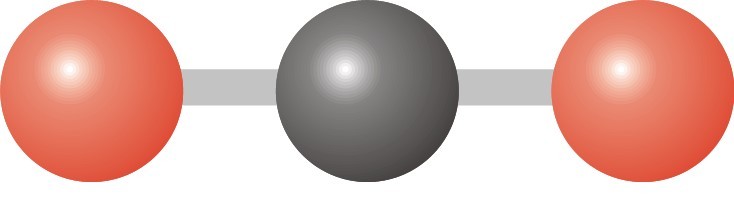
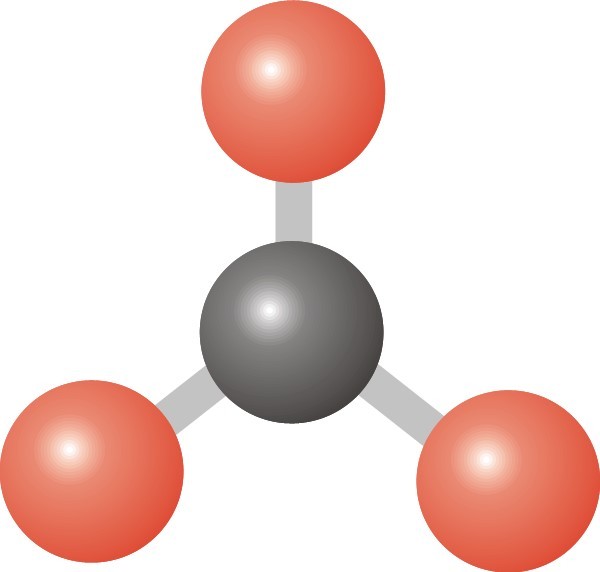
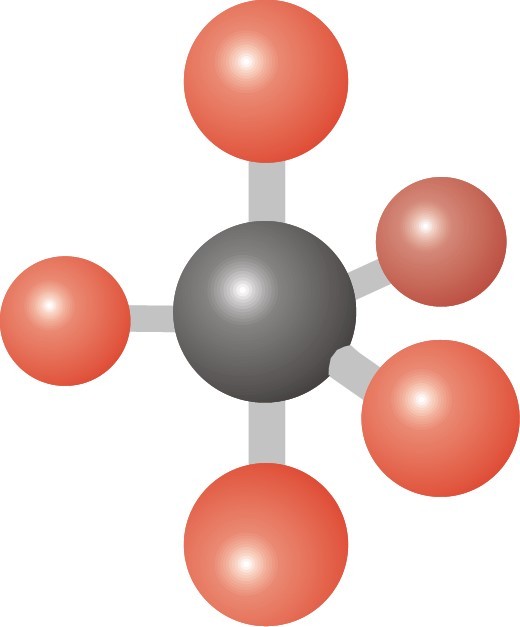
Which is the correct molecular structure for carbon dioxide?

a)
b)
c)
d)
56.
Which of the following is the correct Lewis structure for the compound PBr3?
a)
structure A
b)
structure B
c)
structure C
d)
structure D
57.
What is the correct name for NO?
a)
Mononitrogen Monoxide
b)
Nitrogen Monoxide
c)
Mononitrogen Dioxide
d)
Nitrogen Oxide
58.
P2O5
a)
Phosphorus Oxide
b)
Pentaphosphorus Dioxide
c)
Diphosphorous pentoxide
d)
Phosphoric Oxygen
59.
 A lone pair is defined as
a)
A pair of bonding electrons
b)
One non-bonding electron
c)
A pair of non-bonding electrons
d)
A pair of electrons on the central atom
60.
What is the VSEPR theory used to predict?
a)
Bond Strength
b)
Polarity
c)
Molecular Shape
d)
Electronegativity
61.
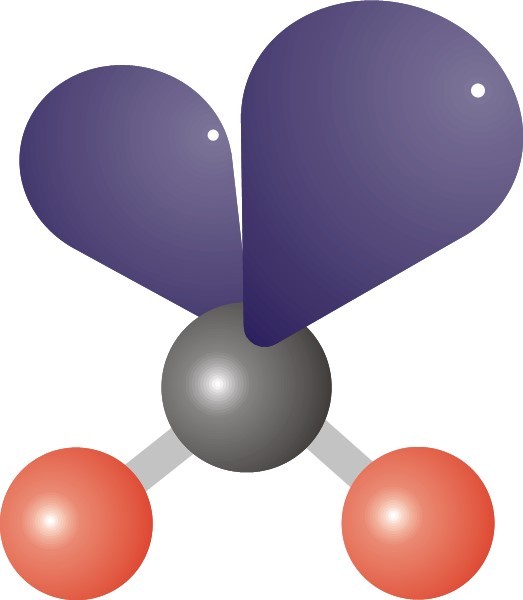
Which molecule would have this molecular geometry?
a)
BF3
b)
CH4
c)
PCl5
d)
CO2
62.
What molecule could this be? 
a)
BF3
b)
CH4
c)
H2O
d)
CO2
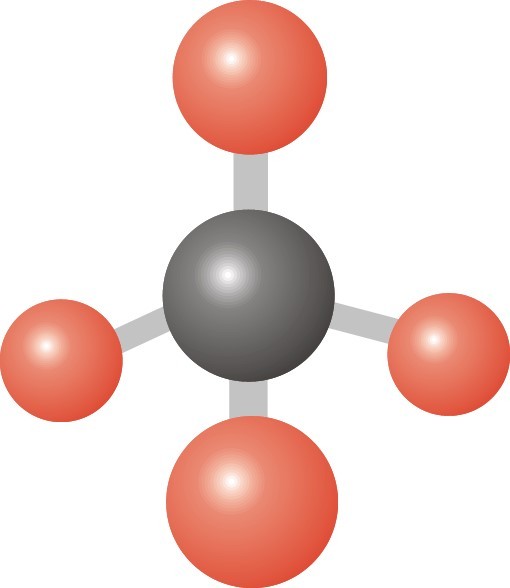
63.
What molecule could this be? 
a)
H2O
b)
CCl4
c)
PCl5
d)
NaCl
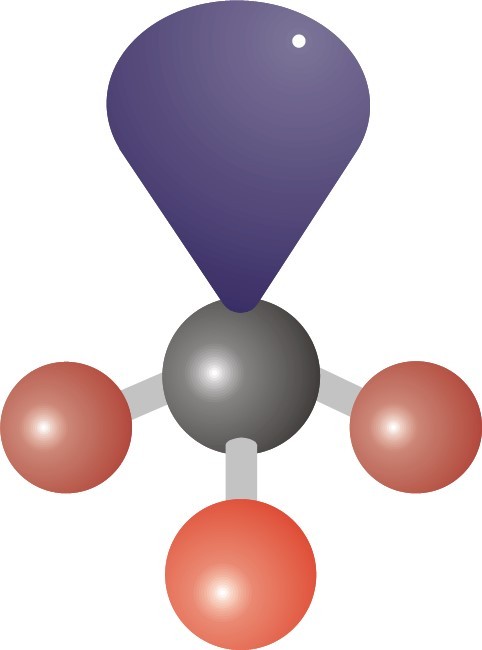
64.
Who could this be? 
a)
CO2
b)
NH3
c)
H2S
d)
CH4
65.
Who could this molecule be?
a)
CH4
b)
CO2
c)
PCl5
d)
BF3
66.
Who could this be?
a)
H2O
b)
NH3
c)
CO2
d)
CH4
67.
Choose the correct shape for this molecule:
a)
linear
b)
Trigonal pyramidal
c)
Bent
d)
Tetrahedral
68.
*
a)
trigonal pyramid
b)
linear
c)
bent
d)
angular
69.

A sour taste is a characteristic of:

a)

acids

b)

bases

c)

neutral

d)

pH scale

70.

Which is a characteristic of a base?

a)

tastes sour

b)

found mostly in foods

c)

feels slippery

d)

turn litmus paper red

71.

According to Arrhenius, what is the definition of an ACID?

a)

a substance that contains hydroxide and ionizes to produce OH-

b)

a substance that contains hydrogen and ionizes to produce H+

c)

a substance that contains hydrogen and ionizes to produce OH-

d)

a substance that contains hydroxide and ionizes to produce H+

72.

NaOH is:

a)

an Arrhenius base

b)

an Arrhenius acid

c)

neither an acid nor a base

d)

both an acid and a base

73.
If a solution is basic which ion will be more present?
a)
H+
b)
K+
c)
OH-
d)
H-
74.
phosphorous acid
a)
H3PO4
b)
H2PO4
c)
H3P
d)
H3PO3
75.
hydrochloric acid
a)
HCl
b)
HClO
c)
H3ClO3
d)
HClO3
76.
Mg(OH)2
a)
magnesium hydroxide acid
b)
hydromagnesium acid
c)
magnesium oxygen hydride
d)
magnesium hydroxide
77.
NaOH
a)
sodium oxide
b)
sodium hydrogen
c)
sodium hydroxide
78.

Balancing the following:

____ Al + ____ HCl → ____ AlCl3 + ____ H2

a)
1,3,1,2
b)
2,3,2,3
c)
2,6,2,3
d)
3,2,6,2
79.

Which type of reaction is:

2 NaBr + Ca(OH)2 → CaBr2 + 2 NaOH

a)
Synthesis
b)
Single Displacement
c)
Double Displacement
d)
Combustion
80.
Which type of reaction is: C2H4 + 3 O2 → 2 CO2 + 2 H2O
a)
Synthesis
b)
Decomposition
c)
Single Displacement
d)
Combustion
81.

Which type of reaction is:

2 H3AsO4 → As2O5 + 3 H2O

a)
Synthesis
b)
Decomposition
c)
Single Displacement
d)
Combustion
82.

Which type of reaction is:

2 NH3 + H2SO4 → (NH4)2SO4

a)
Synthesis
b)
Decomposition
c)
Single Displacement
d)
Double Displacement
83.

Which type of reaction is:

3 Pb + 2 H3PO4 → 3 H2 + Pb3(PO4)2

a)
Synthesis
b)
Single Displacement
c)
Double Displacement
d)
Combustion
84.
Balance the following: Fluorine and Aluminum oxide react to produce Aluminum fluoride and Oxygen
a)
6,2,4,3
b)
3,4,2,6
c)
5,1,3,2
d)
3,2,4,3
85.
What is the molar mass of fluorine gas?
(beware!)
a)
18.998 g/mol
b)
38 g/mol
c)
9 g/mol
d)
18 g/mol
86.
What is the mass of one mole of aluminum?
a)
27 g
b)
13 g
c)
54 g
d)
14 g
87.
2NaClO3 (s)  2NaCl (s) + 3O2 (g)  
12.00 moles of NaClO3 will produce how many grams of O2?
a)
256 g of O2
b)
576 g of O2
c)
288 g O2
88.
Cl2 + 2KBr → Br2 + 2KCl
How many grams of potassium chloride (KCl) can be produced from 356 g of potassium bromide (KBr)?

a)
749 g
b)
223 g
c)
479 g
d)
814 g