
Font size
 Worksheets
EOC Review
Total questions: 65
Worksheet time: 1hrs 24mins
Water sticks well to many materials. What term relates to this property of water?
cohesion
adhesion
density
surface tension
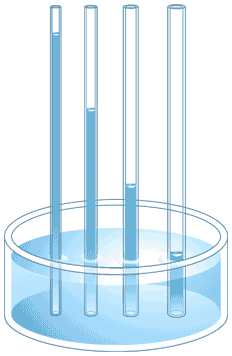
What is the term for water's ability to defy gravity and climb up a tube?
Capillary Action
Specific Heat
Universal Solvent
Magic
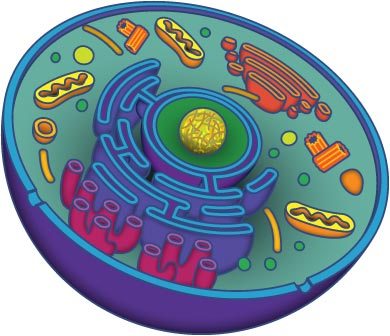

What is the function of the cell membrane?
To control what comes in and out of the cell
To break down food inside the cell
to serve as a barrier
to eat the cells food

Which organelle produces the energy a cell needs to carry out its function
Mitochondria
Golgi Bodies
Cytoplasm
Nucleus

Chromatin is
tiny strands inside the nucleus that contain the instructions for directing the cell's function
found inside the nucleus
needed to make proteins
Which of the following elements are found in all macromolecules? (Select all that apply).


What is the purpose of photosynthesis?
To release energy
To create glucose
To grow
To get oxygen for respiration
Which of these is the correct equation for photosynthesis?
6O2 + C6H12O6 --> 6CO2 + 6H2O
6O2 + 6CO2 --> C6H12O6 + 6H2O
6CO2 + 12H2O --> C6H12O6 + 6H2O + 6O2
6CO2 + 6H2O --> O2 + C6H12O6
What are the products of photosynthesis?
Oxygen and Energy
Carbon Dioxide and Glucose
Glucose and Oxygen
Oxygen and Water
Main products of the Calvin Cycle
Oxygen, NADP+, ADP
Glucose, CO2, ADP
ADP, NADP+, Glucose
ATP, NADPH, Oxygen
Glucose is broken down into pyruvic acid during which process
Which of the following do at least one stage of cellular respiration
plants
animals
bacteria
fungi

What is a population?
One individual member of a species
a group of individuals of the same species that live in the same area
a community of different species and their environment
Which definition best fits the term BIOTIC?
The study of the interactions between animals and their environment
Factors in the environment that are considered not alive
Factors in the environment that are considered living or the remains of living things
One species benefits, the other is unaffected
symbiosis
parasitism
mutualism
commensalism
Honey guide birds alert and direct badgers to bee hives. The badgers then expose the hives and feed on the honey first. Then, the honey guide birds eat as well.
symbiosis
parasitism
mutualism
commensalism

Predator
Autotroph
Producer
Decomposer
The ecological role an organism performs in their specific environment is considered the organism's...
Habitat
Population
Biome
Niche


Producers /Autotrophs
Consumers /Heterotrophs
Decomposers
Scavengers

What happens to the amount of available energy in the pyramid as it moves up through the different levels?
it increases
it decreases
it remains the same

Genetic information is passed from the nucleus to the cytoplasm through
RNA
DNA
Proteins
None of the above
What are the TWO components of the DNA backbone?
nucleotide and phosphate group
deoxyribose sugar and nitrogen base
nitrogen base and nucleotide
phosphate group and deoxyribose sugar
Which best defines a gene?
A gene is a unit of protein that contains the genetic code.
A gene is a unit of DNA that contains code for the creation of one protein.
A gene is a unit of DNA that contains the code for the creation of amino acids.
None of the above
Copying of DNA to RNA is known as
transcription
translation
replication
All are types of RNA EXCEPT
mRNA
tRNA
rRNA
pRNA
Which base-pair rules apply to the double helix structure?
A-G, C-T
A-T, C-G
A-C, G-T
Which organelle makes proteins?
the ribosome
the mitochondria
the Golgi apparatus
the nucleus

Which of the following genotypes is homozygous dominant?
Yy
yY
yy
YY
B=Brown fur
b=tan fur
What percent of the offspring would be tan when you cross BbxBb?
75%
25%
50%
100%
Only the strong will survive refers to
Natural selection
Artificial selection
Dichotomous key
Homologous evolution
vestigial structures, like the tail bone, are
No longer used
Serve an important role in our body
allow us to connect with animals
serve multi-purposes
Structures that serve a similar purpose but the organisms do not share ancestors are
Homologous
Analogous
Vestigial
Dichotomous
Structures from the same ancestors but have changed over time are
homologous
analogous
Vestigial
Dichotomous
When Darwin was studying the finches and noticed the different types of beaks, this was an example of (a)
(a) evolution is when species from a similar ancestor have their sturctures evolve differently to adapt to their surroundings, like horse legs and people legs.
I have cell walls
I am an autotroph
I am multicellular
What am I?
Plant
Animal
Eubacteria
Protist
I have no cell walls
I am eukaryotic
I reproduce sexually
I am multicellular
What kingdom do I belong to?
Plant
Animal
Protist
Fungi
What is the correct order?
Domain, Kingdom, Class, Phylum, Family, Order, Genus, Species
Domain, Kingdom, Phylum, Class, Order, Family, Genus, Species
Kingdom, Domain, Order, Class, Family, Phylum, Genus, Species
Domain, Kingdom, Family, Class, Order, Genus, Phylum, Species

The end of mitosis results in ____ to each other.
2 cells that are identical
4 cells that are identical
2 cells that are not identical
4 cells that are not identical
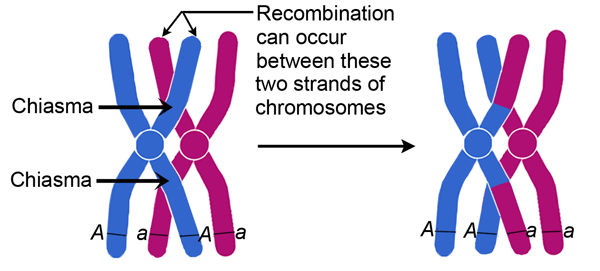
segregation of sister chromatids
condensation and segregation of alleles
mutationin which the DNA content of the gene is altered
crossing - over in which genes are exchanged
During meiosis, if an organism has 10 chromosomes, how many will the new daughter cells have?
10
8
5
2
During mitosis, if an organism has 10 chromosomes, how many will the new daughter cells have?
10
8
5
2

