
 Worksheets
Physical Science End of Course Review
Total questions: 52
Worksheet time: 39mins
Mass, temperature and volume are examples of this kind of data.
qualitative
quantitative
What is the best instrument in the science lab to measure volume?
graduated cylinder
beaker
erlenmeyer flask
florence flask

What is the density of pyrite?
150 g/ml
30 g/ml
3 g/ml
2.77 g/ml

241 grams
141 grams
41 grams
40 grams
What does the F stand for on a free-body diagram?
Free
Fan
Net
Force
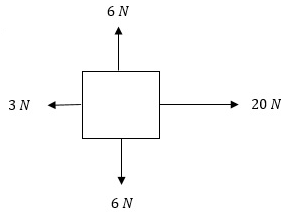
What is the NET FORCE of this diagram?
17 N, right
17 N, left
23 N, right
12 N, up
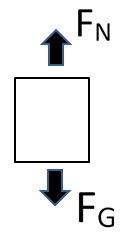
Which of the following is true about this free-body diagram?
the forces are are balanced
the object is free-falling
the object is moving upward
the forces are unbalanced

Use the picture as reference. If the force of the girl pushing is 30N, and the force of the boy who is also pushing is 30N, what is the net force?
0N
60N
900N
1N
A soccer ball is sitting in the middle of a field. The ball will remain at rest until an outside force like a players foot or the wind acts upon it. Which of Newton's laws is represented by this?
1st
2nd
3rd

What Newtons law does this picture represent
Newtons 1st law
Newtons 2nd law
Newtons 3rdt law
Newtons 4rth law

If we put the same force on a bowling ball and a soccer ball, the soccer ball will move faster! Which law explains this?
1st
2nd
3rd
When a student runs and kicks a ball, they have applied an ___________ force to move the ball.
Balanced
Magnetic
Spring
Unbalanced
What Unit do we Measure Force in?
Newtons
Joules
Force
Kilograms
What is mass?
The amount of space an object takes up
The amount of matter in a given space
The amount of matter in an object
What is volume?
The amount of space an object takes up
The amount of matter in a given space
The amount of matter in an object
What is density?
The amount of space an object takes up
The amount of matter in a given space
The amount of matter in an object
Why is a hot air balloon able to rise into the sky?
The hot air is less dense then the atmosphere, so it rises
The hot air is more dense then the atmosphere, so it rises
The hot air has the same density as the atmosphere, so it rises

What does pH measure?
the amount of hydrogen (H+) ions
the amount of hydroxide (OH-) ions
amount of water
all of the above
The positive particles of an atom are ___________.
electrons
protons
neutrons
An atom with atomic number 6 would have how many protons?
6
12
3
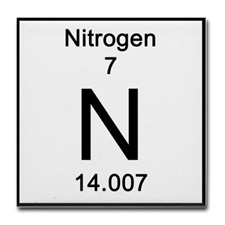

a negatively charged subatomic particle that orbits the nucleus of an atom
proton
neutron
electron
matter
a row on the Periodic Table of Elements
family
period
row
isotope

Which color on the image of the periodic table corresponds with the metalloids.
bright yellow
gold
teal
light blue

Which elements are colored red?
nonmetals
metals
metalloids

Which of the following describes covalent bonds?
Bonds form because of opposite charges
electrons are shared to fill outer electron shells
Electrons are transferred between atoms
Covalent bonds are magical

Which type of reaction is:
2 NH3 + H2SO4 → (NH4)2SO4
What is the part of the chemical equation in green called?
Fe + S → FeS
products
reactants
yield
input
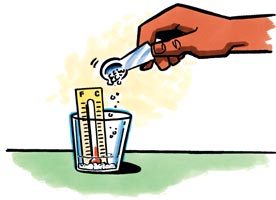
Fe + O2 -> Fe2O3
HgO --> Hg + O2

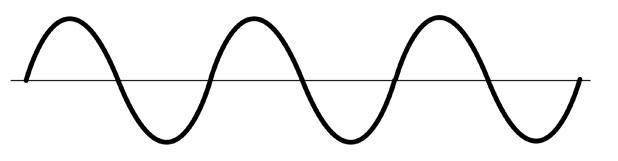
What type of wave is pictured?
Transverse wave
Longitudinal wave
Wave, what wave?
Slinky wave

All waves carry ______________.
Sound
Light
Water
Energy

This is the distance from the equilibrium position to the crest or to the trough.
crest
trough
wavelength
amplitude
Matter that carries sound waves is called a _________
particle
object
medium
matter

The color of visible light that has the longest wavelength is (a) .
Materials that absorb certain frequencies of light are said to be _______________ to those frequencies.
transparent
opaque
translucent
visible

