
 Worksheets
Circulatory, Respiratory, and Cellular Respiration REVIEW
Total questions: 62
Worksheet time: 36mins
What does it mean to transport?
Move something from one place to another
Stay in the same place
What do veins do?
Carry blood towards the heart
Store food
Nothing
Match the following parts of the circulatory system
two large veins that enter the heart
venae cavae
a lower chamber of the heart
ventricle
the largest artery in the body
aorta
little door like flaps
valves
an upper chamber of the heart
atrium
Which 2 body systems function together to move oxygen throughout the body?
circulatory and
digestive
digestive and nervous
nervous and skeletal
respiratory and circulatory
Which system breaks down foods and liquids into smaller pieces, moves food through the body, and absorbs nutrients through foods and liquids
circulatory
digestive
muscular
respiratory
Vessels that carry blood back to the heart
circulatory system
arteries
veins
capillaries
The blood vessels, heart, and blood
circulatory system
arteries
vessels
capillaries
This blood cell is the most numerous in your body and gives blood its red color.
plasma
platelets
red blood cells
white blood cells
Help fight germs and bacteria
plasma
platelets
red blood cells
white blood cells
The liquid part of the blood. It carries digested food and important materials to the cells.
plasma
platelets
red blood cells
white blood cells
Prevent and stop bleeding
plasma
platelets
red blood cells
white blood cells
A thin flap of tissue that acts like a one-way door
atria
ventricles
valve
septum
Lower chambers of the heart
atria
ventricles
valve
septum
The heart is about the size and shape of your . . .
head
fist
hand
foot
How does the heart work?
It pumps blood first to the lungs, back to the heart and then around the rest of the body.
It pumps blood first to the rest of the body, back to the lungs and then to the heart.
It pumps blood around the rest of the body, back to the heart and then to the lungs,
The part of the blood that carries oxygen is called
Red blood cells
White blood cells
The type of blood vessel that normally carries de-oxygenated blood back to the heart from body cells
arteries
veins
capillaries
The type of blood vessel that normally carries oxygenated blood from the heart to the body cells?
arteries
veins
capillaries
The type of blood vessel where exchange of gases, nutrients, and wastes occurs?
arteries
veins
capillaries

(a) is the liquid part of blood.

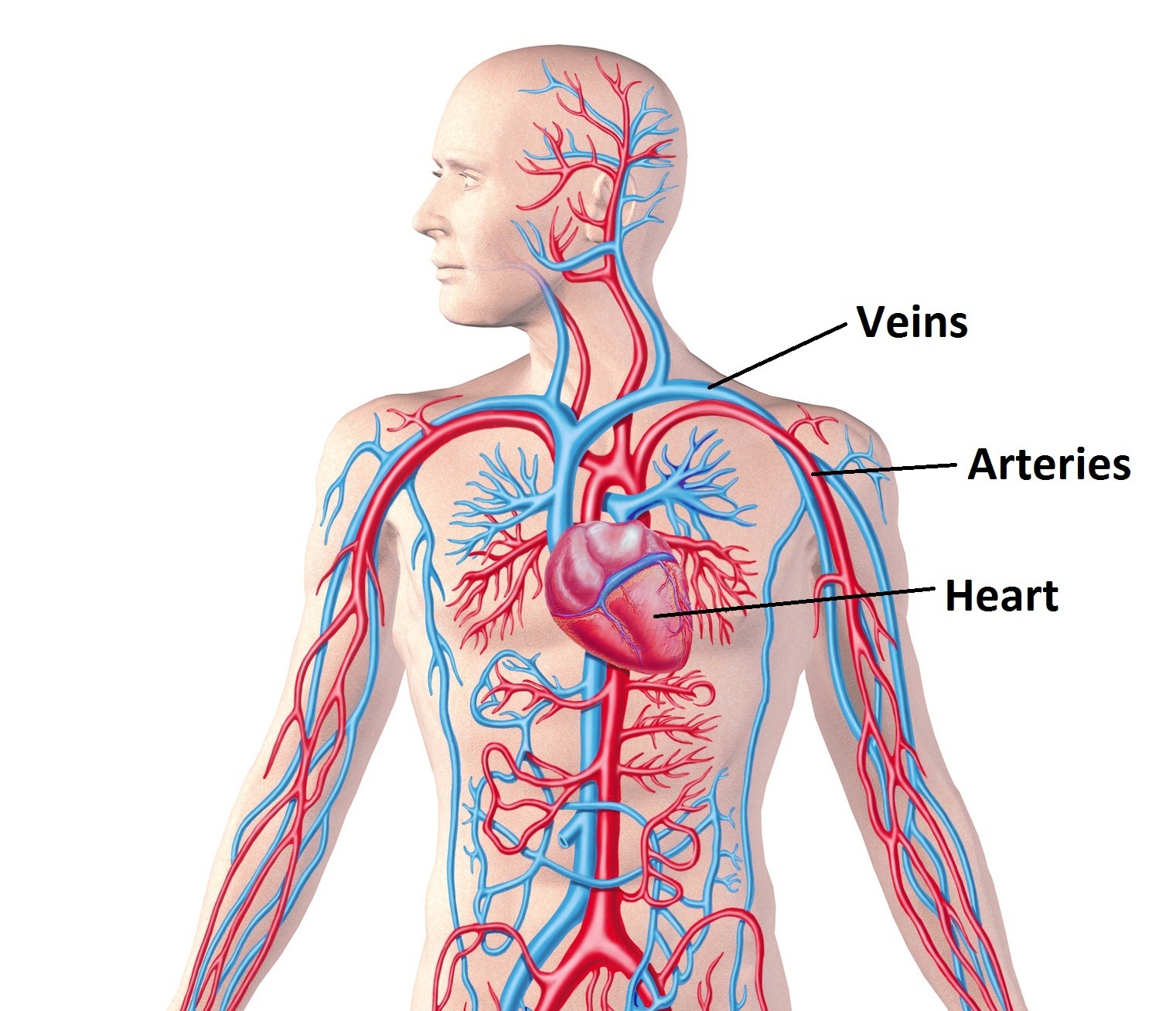
What is the circulatory system made up of?
Lungs, blood, blood vessels
Liver, kidneys, and stomach
Heart, Blood Vessels, and Blood
What do all organisms need to survive?
energy
blood
carbon dioxide
soil
What is the main function of the circulatory system?
secrete enzymes
digest proteins
produce hormones
transport materials

State the general relationship between exercise and heart rate in humans.
If a person exercises, then their heart rate will not change
If a person exercises, then their heart rate will increase
If a person exercises, then their heart rate will decrease
Person exercising and heart rate are not related
We breathe in _____& breathe out ______.
oxygen, carbon dioxide
carbon dioxide, oxygen
What is the muscle called that assists with inhaltion & exhalation?
diaphragm
alveoli
bronchus
It is also called as air sac.
Alveoli
Bronchi
Larynx
Pharynx
It is also called as your windpipe.
Larynx
Lung
trachea
Bronchi
Which is the primary organ of the Respiratory System?
Bronchioles
Lungs
Bronchi
Trachea
What gas does the Respiratory System absorb?
Carbon Dioxide
Oxygen
What gas does the Respiratory System release?
Oxygen
Carbon Dioxide
Where are the alveoli located?
Between the larynx and pharynx
Between the bronchi and bronchioles
At the end of the bronchioles
The Respiratory and Circulatory systems work together to give the body the (a) it needs.
Microscopic sacs where gas exchange takes place; are called:
alveoli
bronchi
villi
capillary beds
When you exhale, the diaphragm
moves upwards
moves downwards
flattens
none of the above
Reorder the structures in the order that air would flow from the nose through the respiratory system where oxygen is delivered to the arterial blood to be sent out to the body.
nasal cavity - pharynx
larynx - trachea
bronchi - bronchioles
alveoli - lung capillaries
arterial blood supply - body
Label the image.
Cellular respiration occurs in
chloroplasts
mitochondria
golgi aparatus
thylakoid
What is the correct chemical equation for Cellular Respiration?
C6H12O6 (Glucose) + H2O (Water) -----> CO2 (Carbon Dioxide) + H2O (Water) + ATP
C6H12O6 (Glucose) + O2 (Oxygen) -----> CO2 (Carbon Dioxide) + H2O (Water) + ATP
C6H12O6 (Glucose) + O2 (Oxygen) -----> CO2 (Carbon Dioxide) + H2O (Water) + ADP
Which organ in a cell produces a large amount of ATP through cellular respiration?
chloroplast
mitochondrion
nucleus
ribosome
___ is the process that cells use to take energy from glucose.
cellular respiration
photosynthesis
transpiration
excretion
___ is needed for cellular respiration, it is absorbed from the air.
oxygen
glucose
carbon dioxide
water
___ is needed for cellular respiration, it comes from food.
glucose
water
oxygen
carbon dioxide
What two things are needed for cellular respiration to happen in a cell?
glucose & oxygen
water & carbon dioxide
oxygen & carbon dioxide
glucose & water
The primary purpose of cellular respiration is to produce ___.
ATP
sugar
glucose
heat
Both ___ are leftover as waste products after cellular respiration.
water & carbon dioxide
oxygen & glucose
carbon dioxide & oxygen
water & oxygen
In the human body, our ___ system moves our blood - which contains both glucose and oxygen - to every cell.
circulatory
digestive
respiratory
nervous
In the human body, our ___ system collects oxygen from the air.
respiratory
digestive
circulatory
nervous
In the human body, our ___ system breaks food down into tiny glucose molecules.
digestive
respiratory
circulatory
nervous

