wayground logo

Free Printable Worksheets

Font size

S
M
L
XL
Worksheets

Semester Test Spring - Chemistry

Total questions: 107

Worksheet time: 9hrs 51mins
Name
Class
Date
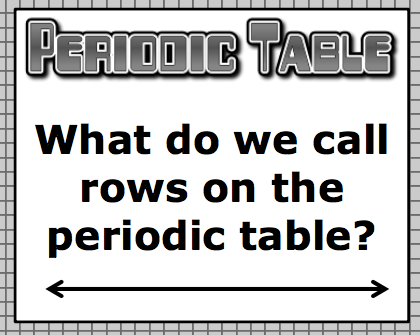
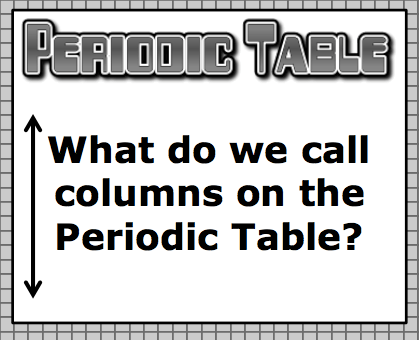
1.
a)
Periods
b)
Groups
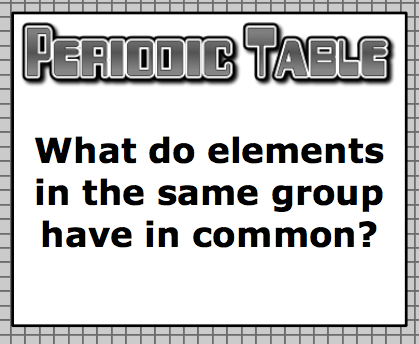
2.
a)
Periods
b)
Groups
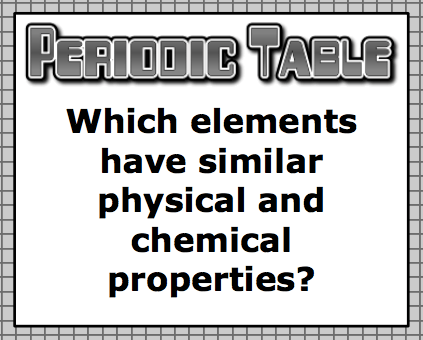
3.
a)
energy levels
b)
valence electrons
c)
protons
d)
neutrons
4.
a)
energy levels
b)
valence electrons
c)
protons
d)
neutrons
5.
a)
Same group
b)
Same period
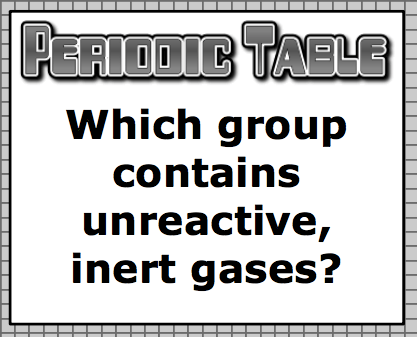
6.
a)
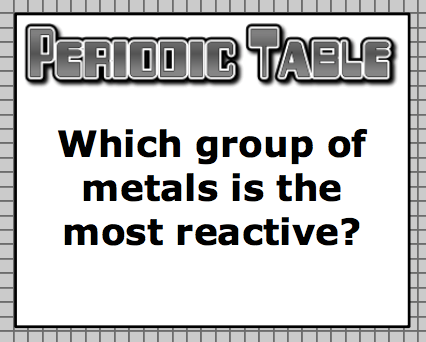
Group 1
b)
Group 17
c)
Group 2
d)
Group 18
7.
a)
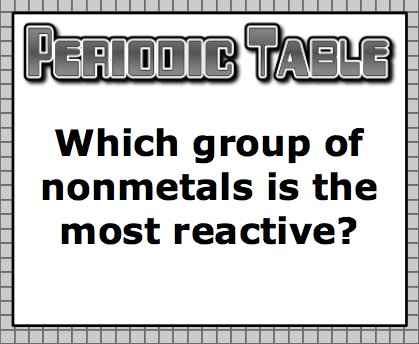
Group 1
b)
Group 17
c)
Group 18
d)
Group 2
8.
a)
Group 1
b)
Group 17
c)
Group 18
d)
Group 2
9.
a)
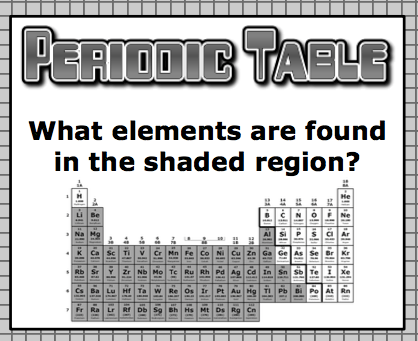
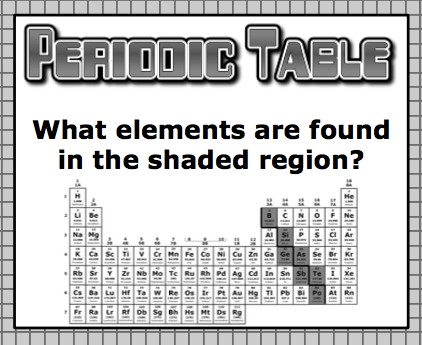
Metals
b)
Nonmetals
c)
Metalloids
10.
a)
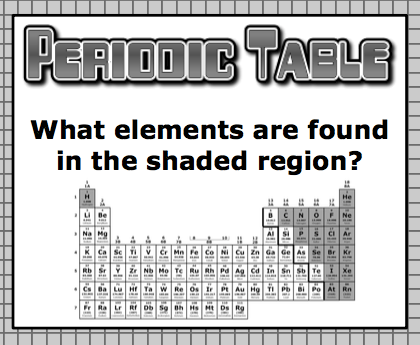
Metals
b)
Nonmetals
c)
Metalloids
11.
a)
Metals
b)
Nonmetals
c)
Metalloids
12.
a)
Metals
b)
Nonmetals
c)
Metalloids
13.
a)
Metals
b)
Nonmetals
c)
Metalloids
14.
a)
Metals
b)
Nonmetals
c)
Metalloids
15.
a)
Metals
b)
Nonmetals
c)
Metalloids
16.
a)
Metals
b)
Nonmetals
c)
Metalloids
17.

Who invented the Periodic Table?

a)

Mendeleev

b)

Bohr

c)

Lewis

d)

Democritus

18.

The first energy shell can hold ______ electrons.

a)

2

b)

8

c)

18

19.

Valence means......

a)

inside

b)

outside

c)

full

20.
The majority of elements on the periodic table are
a)
man made.
b)
nonmetals.
c)
metals.
d)
gases.
21.
Name group 1A on the periodic table.
a)
alkali metals
b)
alkaline earth metals
c)
noble gases
noble gases
d)
halogens
22.
Name group 2A on the periodic table.
a)
alkali metals
b)
alkaline earth metals
c)
noble gases
d)
transition metals
23.
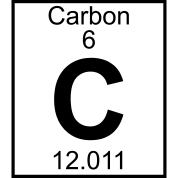
What does the 6 represent?
a)
atomic mass
b)
atomic number
c)
element name
d)
chemical symbol 
24.
What does 12.011 represent?
a)
atomic mass
b)
atomic number
c)
element name
d)
chemical symbol 
25.
Name group 18 on the periodic table.
a)
alkali metals
b)
alkaline earth metals
c)
transition metals
d)
noble gases
26.
Name groups 3 - 12 on the periodic table.
a)
noble gases
b)
halogens
c)
metalloids
d)
transition metals
27.
Name group 17 on the periodic table.
a)
transition metals
b)
metalloids
c)
halogens
d)
alkali metals
28.
What three sub-atomic particles consist of (make up) the atom/element
a)
Protons, Neutrons, and Electrons
b)
Protons, Atomic Mass, and Density
c)
Boiling Point, Protons, and Electrons 
d)
Protons, Quarks, and Neutrons 
29.

This subatomic particle identifies the element.

a)

electron

b)

proton

c)

neutron

d)

ion

30.

This subatomic particle holds the atom together.

a)

proton

b)

neutron

c)

electron

31.

This subatomic particle determines reactivity.

a)

electron

b)

proton

c)

neutron

32.

The nucleus contains

a)

protons and neutrons

b)

protons, neutrons, and electrons

c)

protons only

d)

electrons

33.

Atomic Number =

a)

protons plus neutrons

b)

number of protons

c)

number of neutrons

d)

number of electrons in a charged atom

34.
What is Niels Bohr responsible for discovering?
a)
That electrons are inside the nucleus
b)
That electrons are in fixed orbits around the nucleus
c)
That electrons are small
d)
That electrons are negative
35.

A neutron has what charge?

a)

Positive

b)

Negative

c)

Neutral

36.

A proton has what charge?

a)

Positive

b)

Negative

c)

Neutral

37.

What piece of equipment is shown in the picture?

a)

beaker

b)

test tube

c)

erlenmeyer flask

d)

pipette

38.
This item is used to simply hold or approximately measure a liquid.
a)
beaker
b)
flask
c)
graduated cylinder
d)
test tube
39.
What is used to measure the volume of liquids more precisely in milliliters?
a)
Beaker
b)
Flask
c)
Graduated Cylinder
d)
Test tubes
40.

Ionic bonding occurs between a _________ and a __________.

a)

metal, metal

b)

metal, nonmetal

c)

nonmetal, nonmetal

d)

metallic, sea of electrons

41.

A covalent bond occurs between a __________ and a __________.

a)

nonmetal, nonmetal

b)

metal. metal

c)

metal, nonmetal

d)

sea of electrons, metallic

42.

In an ionic bonds electrons are ____________.

a)

transferred

b)

shared

c)

transferred and shared

d)

arrange like a sea of electrons

43.

In a covalent bond electrons are _____________.

a)

transferred

b)

shared

c)

depends on ionization energy

d)

connect through a sea of electrons

44.

In an ionic bond metals will have a _______________ charge.

a)

positive

b)

negative

c)

neutral

d)

protonic

45.

According to the octet rule most elements need _______ valence electrons.

a)

2

b)

8

c)

6

d)

18

46.

Why do all bonds form?

a)

so the number of protons equals the number of electrons

b)

so an atom can become unstable

c)

to fill the outermost energy level

47.
 Which of the following is the correct formula for these two ions:
Al+3 +  S-2
a)
AlS3
b)
Al2S3
c)
Al3S2
d)
Al3S
48.
How do the following two elements bond together?
Cr3+  O2-         
a)
CrO
b)
Cr3O2
c)
Cr2O3
d)
CrO3
49.
What is the correct formula for the compound, lithium oxide?
a)
LiO
b)
Li2O
c)
LiO2
d)
Li2O2
50.
phosphorus trichloride
a)
KCl3
b)
PCl3
c)
K3Cl
d)
P3Cl
51.
silicon dioxide
a)
SO2
b)
NaO2
c)
SiO2
d)
SiO
52.
Fe2O3
a)
iron oxide
b)
iron oxygen
c)
iron II oxide
d)
iron III oxide
53.

Groups 3-12, transition metals, have a charge

a)

that varies

b)

+1

c)

+3 to +12

d)

0

54.

Group 1 has _________ valence electrons.

a)

1

b)

2

c)

varies

d)

4

55.

Group 13 has _________ valence electrons.

a)

13

b)

3

c)

14

d)

-13

56.

Group 18 has _________ valence electrons.

a)

8

b)

18

c)

-18

d)

unknown

57.
Metals tend to 
a)
gain electrons
b)
lose electrons
58.
When an ionic compound is formed, its charge is 
a)
negative
b)
neutral (no charge)
c)
positive
59.

In the modern periodic table, elements are arranged by:

a)

atomic mass

b)

atomic number

c)

valence electrons

d)

number of isotopes

60.
Atoms make up, what?
a)
Everything living and nonliving
b)
Energy
61.
Which model is this?
a)
Thomson Model
b)
Rutherford Model
c)
Cloud Model
d)
Bohr Model
62.
This number gives the number of protons in each atom of an element.
a)
mass number
b)
atomic number 
c)
atomic mass
63.
An atom's mass number equals the number of...
a)
protons plus the number of electrons
b)
protons plus the number of neutrons
c)
protons
d)
neutrons
64.

Which atom has the largest atomic radius?

a)

potassium

b)

rubidium

c)

francium

d)

cesium

65.
As you move down the periodic table atoms get bigger.  This is because ____________.
a)
The atoms have more mass.
b)
The atoms have more protons.
c)
The atoms have more energy levels
d)
The atoms have more nuetrons
66.
As you move across the periodic table atoms tend to get smaller because, ______________.
a)
the atoms have more mass.
b)
the atoms have less mass
c)
the atoms have more protons.
d)
the atoms have less electrons.
67.
Electronegativity is...
a)
how good an atom is at attracting electrons
b)
the ability of an atom to lose electrons
c)
the energy required to remove an electron from a specific atom
d)
how easy it is to make friends. 
68.
The element with the largest electronegativity in the halogens is - 
a)
At
b)
F
c)
Cl
d)
Br
69.
Francium (Fr) has the lowest ionization energy in Group 1 because - 
a)
it has the smallest number of valence electrons
b)
it has the greatest atomic mass
c)
it has the greatest number of protons, so it attracts its electrons the strongest
d)
its 1 valence electron is very far from the nucleus, so little energy is needed to remove it
70.

Poly means

a)

one

b)

two

c)

multiple

d)

zero

71.

A tightly-bound group of atoms that is covalently bonded, yet carries a net charge:

a)

monatomic ion

b)

polyatomic ion

72.

An ion is an atom with a

a)

different number of neutrons

b)

different number of protons

c)

charge, it can be positive or negative

d)

neutral atom

73.

An -ate or -ite at the end of a compound name usually indicates that the compound contains _____________.

a)

fewer neutrons than protons

b)

a polyatomic ion

c)

electons

d)

a neutral atom

74.

OH-

a)

permanganate

b)

chlorate

c)

hydroxide

d)

nitrate

75.

Who is buried in Grant's tomb?

a)

Lincoln

b)

The unidentified soldier

c)

Reagan

d)

Grant

76.

A mole is a

a)

unit of measurement

b)

a little mouse

c)

a dozen

d)

100 grams

77.

What is Avogadro's number?

a)

6.02 x 10²³

b)

1 mole

c)

600 million

d)

6.02

78.

602 hexillion atoms take up a lot of space

a)

True

b)

False

79.

Atoms can be seen with your eye.

a)

True

b)

False

80.

The base unit for measurement/ length in the metric system.

a)

Meter

b)

Liter

c)

Gram

d)

Inch

81.

The base unit for mass in the metric system.

a)

Gram

b)

Meter

c)

Liter

d)

Pound

82.

The base unit for volume in the metric system.

a)

Liter

b)

Meter

c)

Gallon

d)

Gram

83.
It is a measure of how close measurements come to each other when they are made in the same way
a)
Accuracy
b)
Precision
c)
Error
d)
Extrapolation
84.

How close a measurement is to the accepted value is called..

a)

Accuracy

b)

Precision

c)

Significant

d)

Estimate

85.
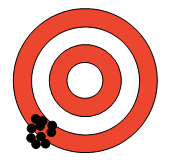
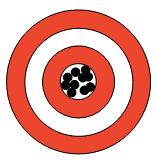
This bullseye demonstrates...
a)
High Accuracy & High Precision
b)
High Accuracy & Low Precision
c)
Low Accuracy & High Precision
d)
Low Accuracy & Low Precision
86.
?
a)
High Accuracy & High Precision
b)
High Accuracy & Low Precision
c)
Low Accuracy & High Precision
d)
Low Accuracy & Low Precision
87.
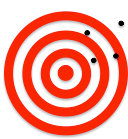
Describe the accuracy and precision of the image
a)
Accurate and Precise
b)
Accurate and not precise
c)
Not Accurate and Precise
d)
not accurate and not precise
88.

In gas laws the temperature must be in

a)

Kelvin

b)

Celcius

c)

Torr

d)

Atmosphere

89.
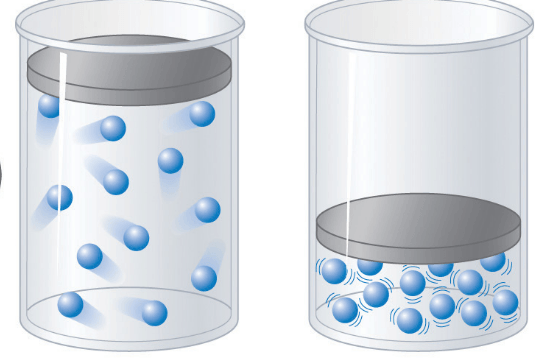
Which container will have a lower pressure?
a)
left
b)
right
c)
they both have the same pressure
d)
I don't know
90.
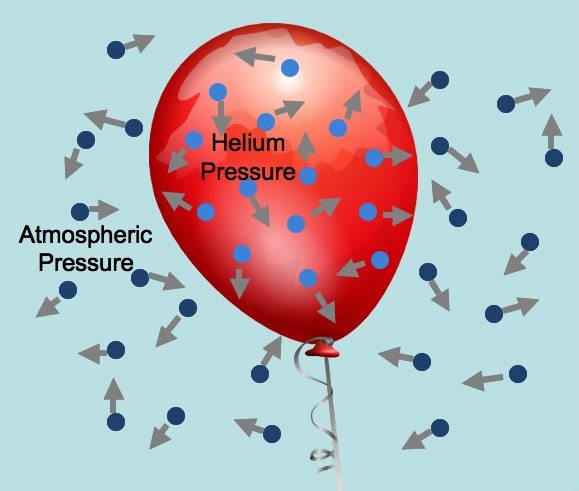
What causes pressure?
a)
The walls of the container
b)
The vacuum in the container
c)
The collisions of the particles
d)
Atmospheric pressure acting on the outside walls
91.
According to Boyle's law of PV, at constant temperature, as the pressure of a given sample of gas is increased, the volume will –
a)
Increase
b)
Decrease
c)
Remains the same
92.
If a balloon is cooled what will happen to the volume?
a)
Volume will increase
b)
Volume will decrease
c)
Volume will not change
93.
Which of the following would increase the (gas) pressure of a system?
a)
Increase the Temperature
b)
Pump in more gas
c)
Decrease the volume
d)
All of these
94.

Kyle measured the length of his truck and it was 534 centimeters long. How many meters long is his truck? (1 meter = 100 centimeters)

a)

5.34 meters

b)

53.4 meters

c)

5,340 meters

d)

0.0534 meters

95.

Mrs. O'Hare ordered 58 pounds of chocolate to sell at school. How many ounces of chocolate did Mrs. O'Hare order? (1 lb = 16 oz)

a)

3.625 oz

b)

928 oz

96.

The Science lab had 2,300 milligrams of salt to use for a science experiment. How many grams of salt did the Science lab have? (1 g = 1,000 mg)

a)

2,300,000 grams

b)

2.3 grams

c)

23 grams

d)

230 grams

97.

Mitchell raced Jeremiah at recess. They both ran a total of 450 meters. How many centimeters did they run? (1 meter = 100 centimeters)

a)

45,000 cm

b)

450,000 cm

c)

4,500 cm

d)

.45 cm

98.
Gavin's water bottle holds 800 ml of water. Paige's water bottle holds 0.8 L of water. Who's water bottle holds more water?
a)
Gavin's
b)
Paige's
c)
they hold the same
99.
38cm = ____mm
a)
0.38mm
b)
3.8mm
c)
380mm
d)
3,800mm
100.
What is the molar mass of CO2?
a)
12
b)
16
c)
32
d)
44
101.

What is the molar mass of Cl2?

a)

17 g/mol

b)

35.5 g/mo;

c)

71.0 g/mol

d)

89 g/mol

102.
Atoms have no electric charge because they...
a)
have an equal number of charged and non charged particles
b)
have neutrons in their nuclei
c)
have an equal number of electrons and protons
d)
have an equal number of neutrons and protons
103.
In the Thomson Model, he discovered the existence of what particle?
a)
Electrons
b)
Protons
c)
Neutrons
d)
Quarks
104.
What did James Chadwick discover?
a)
neutrons
b)
electrons
c)
the atomic theory
d)
protons
105.
This number gives the number of protons in each atom of an element.
a)
mass number
b)
atomic number 
c)
atomic mass
106.

Examples are diamonds (C) and Uranium (U)

a)

elements

b)

mixtures

c)

compounds

107.

A bag of chips contains 100 chips. I estimated the bag contained 120 chips. What is the error?

a)

20

b)

-20

c)

120

d)

100