Wayground logo

Free Printable Worksheets

Font size

S
M
L
XL
Worksheets

Practice Final Exam

Total questions: 72

Worksheet time: 1hrs 4mins

Name
Class
Date
1.
A place or object used for comparison to determine if another object is in motion is called a
a)
comparison point
b)
reference point
c)
point of view
d)
motion detector
2.

The best reference points are stationary (not moving).

a)

true

b)

false

3.

The distance between Nur-Sultan and Almaty is

a)

1 200 kilometres

b)

1 200 centimetres

c)

1 200 millimetres

d)

1 200 metres

4.

The length of this pencil is about

a)

13 km

b)

13 mm

c)

13 m

d)

13 cm

5.
After completing one trip on a roller coaster, the roller coaster's ________ is zero.
a)
displacement
b)
reference point
c)
length
d)
distance
6.
What is the total displacement of the object represented in this motion graph?
a)
5 meters
b)
4 meters
c)
2 meters
d)
0 meters
7.

Scott travels north 5 miles and then goes west 3 miles before coming straight back south 2 miles. What is his DISTANCE?

a)

10 mi

b)

7 mi

c)

8 mi

d)

6 mi

8.
If a car moves 12 km North, 19 km East, and 12 km South, what is its displacement?
a)
12 km
b)
19 km, East
c)
31 km
d)
43 km, East
9.

Distance ÷ Time =

a)

velocity

b)

speed

c)

acceleration

d)

direction

10.

The speed at which an object is moving at a given instant in time.

a)

speed

b)

Instantaneous speed

c)

Average speed

d)

final speed

11.

What is speed?

a)

It is how far you go

b)

It is the distance traveled over a period of time

c)

It is how fast you accelerate

d)

It is the change in the postilion of a object
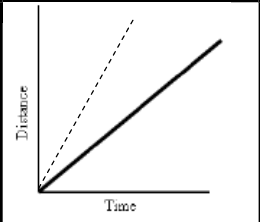
12.
What is the difference between instantaneous speed and average speed?
a)
Average speed happens in a particular instant, Instantaneous speed is the speed of an object over a longer period of time.
b)
Instantaneous speed is never right, average speed is always right
c)
Instantaneous speed happens in a particular instant, Average speed is the speed of an object over a longer period of time.
d)
Do not pick this answer
13.
What does this graph represent?
a)
Constant Speed
b)
Acceleration
c)
Not moving
14.
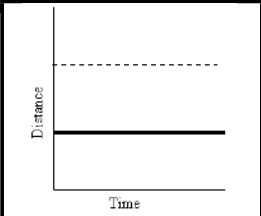
What does this graph represent?
a)
Constant speed
b)
Acceleration
c)
Not moving
15.

Match the description to the graph:

"The car is coming back."

a)
b)
c)
d)
16.

Describe the motion in the graph:

a)

Constant Speed (positive slope)

b)

Stopped (at rest)

c)

Acceleration (increasing speed)

d)

Return Home (negative slope)

17.

Describe the motion in the graph:

a)

Constant Speed (positive slope)

b)

Stopped (at rest)

c)

Acceleration (increasing speed)

d)

Return Home (negative slope)

18.

What is the resultant of these two vectors?

a)

+17 m

b)

+3 m

c)

-17 m

d)

-3 m

19.

A vector includes ______ and ________.

a)

direction, magnitude

b)

magnitude, units

c)

direction, units

d)

scalars, scalars

20.
A roller coasters accelerates from an initial velocity of of 6.0 m/s to a final velocity of 70 m/s over 4 seconds.  What's the acceleration?
a)
24 m/s2
b)
18 m/s2
c)
16 m/s2
d)
16 m/s
21.

What are the three ways an object can accelerate?

a)

Speed up, slow down or change direction

b)

Go forward, go backward or stop

c)

Turn left, turn right or go straight

d)

distance, displacement or speed

22.

A force that opposes motion between any surfaces that are in contact.

a)

gravity

b)

acceleration

c)

friction

d)

direction

23.

Which type of friction is shown in the picture?

a)

rolling

b)

fluid

c)

static

d)

sliding

24.

Which type of friction is shown in the picture?

a)

fluid

b)

static

c)

rolling

d)

sliding

25.

Which type of friction is shown in the picture?

a)

rolling

b)

static

c)

no friction at all

d)

sliding

26.

This photo represents...

a)

Air resistance

b)

water resistance

c)

friction force between 2 solid bodies

27.

_____________ friction acts on objects that are not moving.

a)

sliding

b)

rolling

c)

static

d)

fluid

28.

Sliding friction is when two _____________ surfaces slide over one another.

a)

liquid

b)

oil

c)

solid

29.

What is a force?

a)

A force

b)

car

c)

A push or pull causing motion

d)

an educated guess

30.
You and your dad are moving the couch from one side to another. Your dad pushes with a force of 35 N to the right and you push with a force of 25 N right. What is the net force on the couch?
a)
60 N right
b)
10 N left
c)
60 n right
d)
50 N left
31.
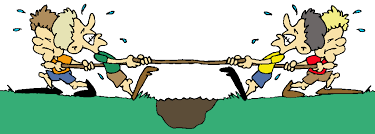
If these teams are pulling with the same amount of force what will happen?
a)
The boy in blue will win.
b)
They will not move at all.
c)
The boy in red will win.
d)
Both will fall down.
32.
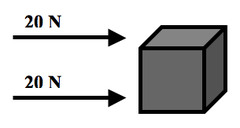
What is the net force?
a)
40 N left
b)
0 N Balalnced
c)
400 N right
d)
40 N right
33.
In a tug of war the left team pulls with a force of 200N. The right team pulls with a force of 150N. What is the resultant force?
a)
50N to the left.
b)
350N to the left.
c)
350N to the right.
d)
50N to the right.
34.

The upward force which is exerted against a falling object is

a)

gravity

b)

terminal velocity

c)

air resistance

d)

intertia

35.

A force which causes objects to fall is

a)

weight

b)

gravity

c)

air resistance

d)

absorbency

36.

A ball thrown straight up takes 8 total seconds to complete its journey all the way up and down. 1 second into its journey and 7 seconds into its journey the magnitude of its velocity will be ______________ and its direction _______________.

a)

opposite, the same

b)

the same, opposite

c)

the same, the same

d)

opposite, opposite

37.

The initial horizontal velocity of a projectile is ____ its final horizontal velocity.

a)

less than

b)

equal to

c)

greater than

38.
the tendency of an object to resist a change in its motion
a)
acceleration
b)
inertia
c)
mass
d)
frame of reference
39.
Because of inertia, a resting object will remain at ________.
a)
rest
b)
a constant speed
c)
school
d)
inertia 
40.

Newton's 1st Law is know as the law of _____.

a)

staying in motion

b)

staying at rest

c)

balanced forces

d)

inertia

41.

Objects in motion want to maintain _____.

a)

their same speed

b)

their same location

c)

their same direction.

d)

their same mass.

42.

What is Newton's First Law known as? The Law of

a)

Friction

b)

Mass

c)

Inertia

d)

Gravity

43.

Which type of force(s) will cause a change in an object's motion?

a)

gravity

b)

zero net force

c)

balanced forces

d)

unbalanced forces

44.
What is Newton's First Law
a)
F=ma
b)
Every action has an equal and opposite reaction
c)
An object at rest stays at rest, an object in motion stays in motion. 
d)
Friction 
45.

Acceleration depends on the object's mass and on the net force acting on the object. What law of motion is this?

a)

1st Law

b)

2nd Law

c)

3rd Law

46.

For every action, there is an equal and opposite reaction.

a)

Newton's

1st

Law of Motion

b)

Newton's

2nd

Law of Motion

c)

Newton's

3rd

Law of Motion

47.
The momentum of an object depends upon the object's ___________&_____________.  
a)
size and shape
b)
mass and speed
c)
mass and veloctiy
d)
mass and energy
48.
Which has more momentum: a car stopped at a red light or a bike moving at 15 mph?
a)
car
b)
bike
c)
they are equal
d)
cannot determine using the info provided
49.

The Law of Conservation of Momentum states:

a)

The total momentum before a collision is equal to the total momentum after a collision.

b)

The total momentum before a collision is greater than the total momentum after a collision.

c)

The total momentum before a collision is less than the total momentum after a collision.

d)

The total momentum before a collision is not related to the total momentum after a collision.

50.

Work is

a)

having a job

b)

movement

c)

energy transfer

d)

energy transfer to an object

51.

The unit of work is

a)

watt

b)

hertz

c)

joule

d)

pascal

52.
What is the SI unit for power?
a)
watt
b)
joule
c)
newton
d)
kilogram
53.
Power is
a)
the ability to do work.
b)
the rate at which work is done.
c)
the force applied to an object for a distance.
d)
none of the above.
54.
Which is not a type of simple machines?
a)
spring
b)
screw
c)
pulley
d)
wedge
55.
Identify this simple machine
a)
Lever
b)
Wheel & Axle
c)
Inclined Plane
d)
Screw
56.
How does a pulley make work easier? 
a)
It changes the direction of the input force.
b)
It changes the distance over which the input force is applied.
c)
It changes the amount of the input force applied 
d)
It changes direction and increases the effect of your input force
57.

The mechanical advantage of a machine without friction. This can be predicted:

a)

IMA

b)

AMA

c)

efficiency

d)

mechanical advantage

58.

The mechanical advantage in a real situation. Measure the true input force and true output force of the machine.

a)

power

b)

efficiency

c)

IMA

d)

AMA

59.

A ___________ is a wheel with a rope wrapped around it that can be used to lift or PULL heavy objects by changing the direction or amount of force.

a)

Lever

b)

Wedge

c)

Pulley

d)

Inclined Plane

60.
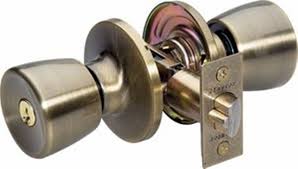
What type of simple machine is this?
a)
wheel and axle
b)
gear
c)
lever
d)
inclined plane
61.
Name this simple machine.
a)
Lever
b)
Wedge
c)
Pulley
d)
Inclined Plane
62.
What type of simple machine is found on the cap of a pickle jar?
a)
lever
b)
inclined plane
c)
screw
d)
wheel and axle
63.
What type of simple machine is found on the floor of a bathtub?
a)
screw
b)
inclined plane
c)
wedge
d)
pulley
64.

When two or more simple machines work together, they become a -

a)

combined machine

b)

compound machine

c)

complex machine

d)

constructed machine

65.
What is kinetic energy?
a)
energy of work
b)
energy of motion
c)
energy of gravity
d)
energy of power
66.

Gravitational Potential Energy comes from ________

a)

The Earth's Gravity

b)

The ability to walk on water

c)

Energy is in motion

67.

Which statement is true.

a)

The further you are from the ground, the gravitational pull increases

b)

The closer you are to the ground, the gravitational pull increases

c)

The further you are from the ground, the gravitational pull descreases

68.
What kind of energy is represented in this picture?
a)
Thermal
b)
Potential
c)
Nuclear
d)
Mechanical
69.
Energy that is stored in bonds between atoms is:
a)
Mechanical energy
b)
Chemical energy
c)
Kinetic energy
d)
Nuclear energy
70.
Energy can be created.
a)
True
b)
False
71.
Energy cannot be destroyed.
a)
True 
b)
False
72.
What are the 3 main fossil fuels?
a)
Coal, Oil, and Gasoline
b)
Coal, Oil, and Natural Gas
c)
Electricity, Gasoline, Petroleum
d)
Coal, Oil, Non-renewable Resources