
 Worksheets
2023 Astronomy Spring Final Exam Review
Total questions: 201
Worksheet time: 2hrs 56mins
Which astronomer most influentially suggested a heliocentric model?
Plato
Brahe
Copernicus
Newton
Who was the first astronomer to use a telescope for astronomy?
Brahe
Newton
Hubble
Galileo
What did Kepler develop?
The geocentric model
The first telescope
Spectroscopy
The laws of planetary motion
Who published the theory of gravity?
Hubble
Newton
Brahe
Galileo
Where is the earth in the heliocentric model?
orbiting in the middle of the solar system
At the center of the solar system
orbiting the outskirts of the solar system
Not in a solar system
Where is earth in the geocentric model?
Orbiting around the middle of the solar system
At the center of the solar system
orbiting in the outskirts of the solar system
Not in a solar system
Why was the discovery of Jupiter’s moons so important?
It proved the theory of gravity
It supported the heliocentric model
It proved Kepler's Laws
It proved there could be multiple moons
What did Edwin Hubble do?
Created the first light telescope
Discover Neptune
Propose the theory of gravity
Confirm there are other galaxies
Ancient Greeks believed, the earth to be the centre of the universe. What do we call this model?
Copernican Model
Geocentric Universe
Heliocentric Universe
Developed the 3 laws of planetary motion.
Kepler
Newton
Copernicus
Galilleo
When is Earth closest to the Sun?
January
March
July
September
What causes Earth’s seasons?
Earth’s distance from the Sun
The ocean
Earth’s tilted axis
Fluctuating heat from the Sun
What is an equinox?
When Earth is the furthest from the Sun
The hottest or coldest day of the year
When Earth is closest to the Sun
When there are equal hours of day and night

During which season in the Northern Hemisphere is Earth closest to the Sun?
winter
spring
summer
fall

Which of these light types cannot be captured by a telescope?
Radio waves
Microwaves
Ultraviolet
All of them can be captured

Shortest wavelength, highest frequency wave
UV
Radio
Microwave
Gamma
The main advantage of using orbital observatories like the Hubble Space Telescope is that __________.
they are easier to use than land-based telescopes.
they are cheaper to build than land-based telescopes.
they can look anywhere in the universe at any time.
they avoid the distortion and absorption of electromagnetic waves by the atmosphere.
The interpretation of patterns and brightness of waves of light.
Law of matter
Spectroscopy
Law of Light
Astronomy
Spectral lines are considered the ______ of an astronomical object.
brain
strength
fingerprint
birth
The James Webb Space Telescope collects ______ light.
visible
infrared
ultraviolet
microwave
When you look at a galaxy that is 2 billion light years away, you see the galaxy as it was ___________ years ago.
2 billion
2 million
zero
20 billion
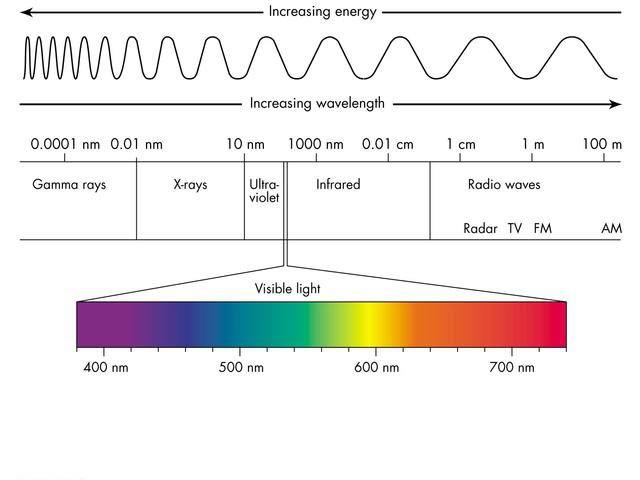
What is the correct order of the visible light spectrum?
Red, yellow, orange, blue, violet, indigo
Violet, purple, indigo, blue, green, yellow, orange
Green, yellow, blue, indigo, red, orange,
Red, orange, yellow, green, blue, indigo, violet
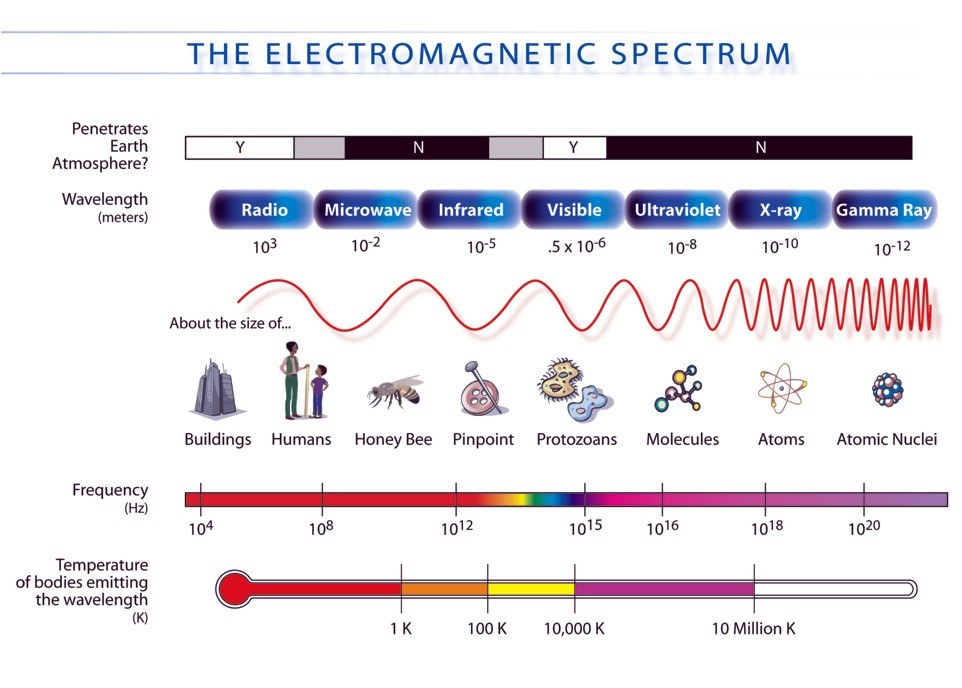
What wave has the longest wavelength and lowest energy?
Gamma rays
Infrared
Radio
Visible light
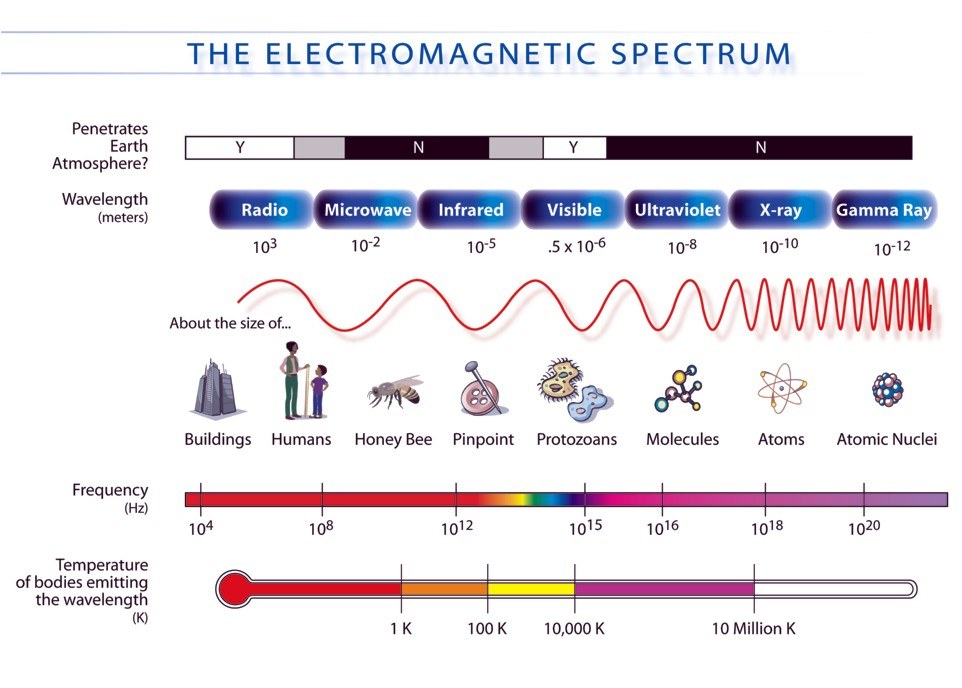
An example of a wave with a short wavelength and high energy is a
Gamma Ray
Microwave
Visible light wave
Infrared wave
X-rays are absorbed by the atmosphere. Where is the best location for an x-ray telescope?
On top of a mountain
At sea level
In space
Underground
Why do we use light years and astronomical units to measure distances in space?
Scientists want to sound smart.
Hubble discovered these units and wanted to use them.
Space is too small to use km, it wouldn't make sense.
Space is too big, vast, enormous to use traditional units, like miles or kilometres.
Which process produced Star’s energy?
combustion
decomposition
nuclear fission
nuclear fusion
There are _____ constellations named by early astronomers.
78
88
68
98


These constellations circle the North Star and never appear to go below the horizon.
Circumpolar Constellations
Northern Constellations
Southern Constellations
Zodiac Constellations
Why are some constellations not seen in certain months?
Because the earth revolves around the sun.
Because the brightness of the sun outshines their visibility.
Because of the gravity that affects the rotation and revolution of the earth.
Because of the tidal waves attracting each other, creating a huge tsunami that washed out the constellation.
Why does Polaris not seem to move during the night?
Because it is located directly above the North Pole
Because it is fixed in the sky
Because Ursa Minor does not move
Because it revolves around the Sun with Earth
Stars are still in the sky during the day, we just can't see them because of the sun's light.
True
False
When the Moon casts a shadow on Earth.
New Moon
Full Moon
lunar eclipse
solar eclipse

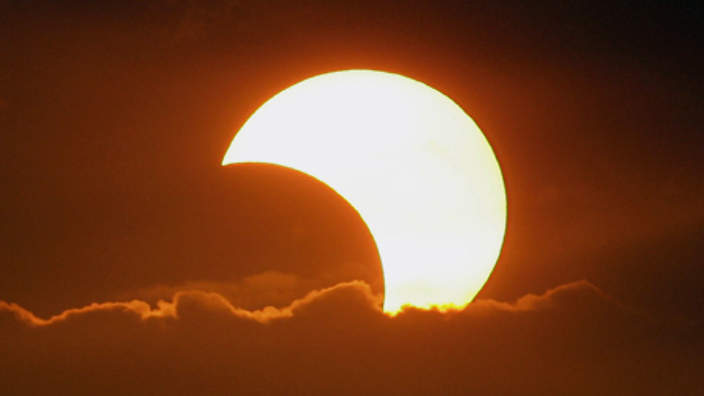
Which eclipse is this?
solar eclipse
lunar eclipse
When the Moon moves into Earth's shadow.
solar eclipse
nighttime
lunar eclipse
What is the moon phase during a lunar eclipse?
Full Moon
New Moon

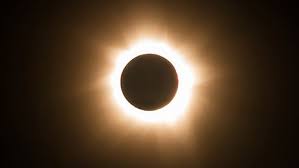
Which type of eclipse is this?
solar eclipse
lunar eclipse
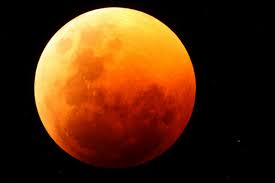

What is this moon phase?
waxing crescent
1st quarter
waning gibbous
3rd quarter
What is this moon phase?
waxing crescent
1st quarter
waning gibbous
3rd quarter

What is this moon phase?
new moon
full moon
1st quarter
waxing gibbous

What is this moon phase?
waning gibbous
waxing gibbous
new moon
full moon

What is this moon phase?
1st quarter
waning crescent
waxing crescent
waxing gibbous

What is this moon phase?
full moon
waxing gibbous
waning gibbous
3rd quarter

What is this moon phase?
3rd quarter
1st quarter
waning gibbous
waxing crescent

What is this moon phase?
new moon
waxing crescent
3rd quarter
waning crescent
What does waxing mean?
illumination is getting smaller on the left
illumination is getting smaller on the right
illumination is getting bigger on the left
illumination is getting bigger on the right
What does waning mean?
illumination is getting bigger on the right
illumination is getting smaller on the left
illumination is getting smaller on the right
illumination is getting bigger on the left
What causes moon phases?
The moon is half illuminated by the sun and as it orbits the earth, we see different amounts of that illumination.
Mrs. Turman causes moon phases.
The moon is always completely illuminated by the sun and as it rotates we see some of it.
The moon is never illuminated by the sun and as it spins around we see none of it.
Which statement best explains why the same side of the Moon is viewed from Earth as the Moon goes through its phases?
The Moon does not rotate as it revolves around Earth.
The Moon’s period of rotation equals Earth’s period of rotation.
The Moon’s period of rotation equals Earth’s period of revolution around the Sun.
The Moon’s period of rotation equals the Moon’s period of revolution around Earth.

What is the moon's source of light?
The Earth
The Sun
It naturally glows by itself
Other Planets

What makes a habitable planet?
It is very close to its star.
It has liquid water.
It can sustain life.
It can not have oxygen.
What is a star?
A sphere of burning gas
A sphere of plasma attracted to a solid iron core
A sphere of plasma held together by its own gravity undergoing nuclear fusion
A very large planet that can perform nuclear fusion
What is the heaviest element that stars can fuse?
Helium
Oxygen
Gold
Iron
How do low mass stars die?
They cool slowly as red dwarfs
They become white dwarfs
They undergo a supernova
They become black holes
Which layer of a star do we see?
Corona
Photosphere
Radiative zone
The core
Which layer of the Sun can only be seen during a total solar eclipse?
Corona
Photosphere
Convective zone
Sunspots
How do high mass stars die?
They become neutron stars
They become blackholes
They become a white dwarf
They become neutron stars OR They become blackholes
How do average mass stars die?
They become a planetary nebula
They become blackholes
They become a white dwarf
They become a planetary nebula with a White Dwarf at their center
Which stars live the longest?
High Mass Stars
Low Mass Stars
Average Mass Stars
All stars live the same amount
What part of a star is where energy from nuclear fusion is radiated out from the core?
Covective Zone
Core
Photosphere
Radiative Zone
What part of a star is where currents transport heat away from the center and toward the outer layers?
Corona
Core
Photosphere
Convective Zone
What are two reasons that stars in the night sky could appear brighter than other stars?
The distance of the star and the power of the star
The distance of the star and the color of the star
The power of the star and the size of the star

The Hertzsprung-Russell diagram graphs stars' luminosity and ....
color
size
temperature
distance
The Sun is a ___________ star.
red giant
main sequence
protostar
white dwarf

Ninety percent of all stars are ______ .
white dwarfs
supergiants
red giants
main sequence stars
A star's temperature determines its ________.
size
color
name
health


In Nuclear Fusion....
Hydrogen is converted into Helium
Protons are converted into Electrons
Gas is converted into Dust
White Dwarves are converted into Red Giants
The luminosity of a star describes its ______________.
brightness
temperature
age
color


Watching for solstices and equinoxes helped ancient cultures plan:
when to start planting and harvesting seasons.
when to declare war
when to look for constellations
when to reset the calendar
What term names the four inner planets of our solar system?
sidereal planets
terrestrial planets
close planets
life planets
Which of the inner planets has the hottest average temperature?
Mercury
Venus
Earth
Mars
Of all the planets in our solar system, which planet, overall, is the MOST like Earth?
Jupiter
Mars
Mercury
Venus
How many years ago did the Sun form?
4.5
4.5 million
4.5 billion
4.5 trillion
How does the path of the sun in the sky change with our seasons?
It is highest at noon and has a longer arc during the summer.
It is lowest at noon and has a largest arc during the winter.
It is lowest at noon and has the largest arc in summer.
It is highest at noon and has the smallest arc during the summer.
How are energy and wavelength related within the electromagnetic spectrum?
as wavelength decreases energy increases
as wavelength increases so does energy
energy has no effect on wavelength
as wavelegth decreases so does energy level
What do both emission and absorption spectra tell us about the matter involved in their creation
density of the matter
mass of the matter
composition of the matter
volume of the mattter
What caused the inner planets to develop like they did?
being far from the Sun's heat allowed them to accumulate large amounts of volatiles
being near the Sun's heat left them with only rocky and metallic materials
being in the Oort cloud allowed their volatiles to freeze and become stable
their large gravity allowed them to hold onto a large amount of volatiles
What type of material is the asteroid belt primarily made of?
ice and gas
rock and metal
gas
ice
How is the age of our solar system determined
relative dating of Earth's layers
radiometric dating of rocks and meteors
direct observation
comparing our solar system to others the galaxy
Why is Pluto not a planet?
it is not speherical
it has not swept its orbit clear of similar sized objects
it has a highly eliptical orbit
it has a retrograde orbit
The theory describing the formation of our solar system is the:
Big Bang Theory
Solar Nebula Theory
Giant Impact Theory
Stellar Evolution Theory
Which two parts of the solar system host most comet nuclei?
the Oort Cloud and the Asteroid Belt
the Oort Cloud and Kuiper Belt
the Asteroid Belt and Kuiper Belt
The Rings of Jupiter and Saturn
Which of the following represent the correct sequence of events in planet formation
condensation--- protoplanetary disk -- interstellar cloud --- accretion of planetesimals-- planet formation
interstellar cloud--- protoplanetary disk -- condensation--- accretion of planetesimals-- planet formation
condensation--interstellar cloud---protoplanetary disk--accretion of planetesimals-- planet formation
accretion of planetstimals -- condensation -- interstellar cloud--protoplanetary disk -- planet formation
What is not a type of galaxy
circular
spiral
eliptical
irregular
Galaxy collision can explain the appearance of many __________ galaxies.
irregular
elliptical
young
spiral
Order the planets from greatest mass to least mass
Earth, Mercury, Venus, Mars, Neptune, Jupiter, Uranus, and Saturn
Mercury, Venus, Earth, Mars, Jupiter, Saturn, Uranus, and Neptune
Earth, Venus, Mars, Mercury, Jupiter, Saturn, Uranus, and Neptune
Jupiter, Saturn, Uranus, Neptune, Earth, Venus, Mars, and Mercury
Which planet has a ring system?
Jupiter
Saturn
Neptune
All of the above
What do all of the inner planets have in common?
They all have rings
They all have abundant liquid water
They all have many moons
They all are small and have rocky surfaces

The ____________ the planetary surface is, the ____________ craters should be present.
older / younger
younger / more
older / more
older / fewer

How many years are in a sunspot cycle
4.5 million
29
11
19

These can disrupt electronics on Earth.
Sunspots
Solar flares
Prominences
Meteorites

Which of these stars is hottest and brightest?
Spica
Vega
Polux
Centauri B

Which star would you call a red giant?
Polaris
Sirius
Betelgeuse
DX Cancri


Which star is the brightest?
Sirius
Alderban
Rigel
Sun
The Milky Way galaxies is a(n) _______________ galaxy.
Spiral
Barred Spiral
Irregular
Eliptical

In the Milky Way where would you find our solar system?
in the center
near the center
one of the spiral arms
on the outside edge


Select the description that best describes galaxies
a collection of stars
a collection of stars held together by gravity
a collection of gas and stars held together by gravity
a collection of dust, gas and stars held together by gravity
Because the spectrum of the galaxies has a redshift they are moving
away from us
towards us
at the same speed as us
very, very slowly
Dark matter is inferred to exist because:
we see lots of dark patches in the sky
it explains how the expansion of the universe can be accelerating
we can observe its gravitational influence on visible matter
it doesn't emit light
What is meant by "dark energy"?
energy associated with dark matter through E=mc2
doesn't emit any light
the repulsive agent causing the universal expansion to accelerate
highly energetic particles that are believed to constitute dark matter


Which star is a white dwarf?
Aldebaran
Sirius B
Polaris
Naos

Which star is a main sequence star?
Aldebaran
Sirius B
Polaris
Vega

Which star is most likely to produce a supernova?
Aldebaran
Sirius B
Polaris
Naos

Which star is the hottest?
Aldebaran
Sirius B
Vega
Naos

Which star has a spectral class of F?
Aldebaran
Polaris
Vega
Naos

Which stars are the oldest?
Main Sequence
White dwarf
Supergiant
Red Giant


Which elements are most
abundant in the visible
universe?
Hydrogen and Carbon
Carbon and Helium
Hydrogen and Oxygen
Hydrogen and Helium
Choose what is being described in each statement by checking the correct box.
Stony or metallic object smaller than planets
Asteroid
Comet
Meteoroid
Who supported the Geocentric system?
Ptolemy
Aristotle
Copernicus
Galileo
What does the Geocentric system look like?
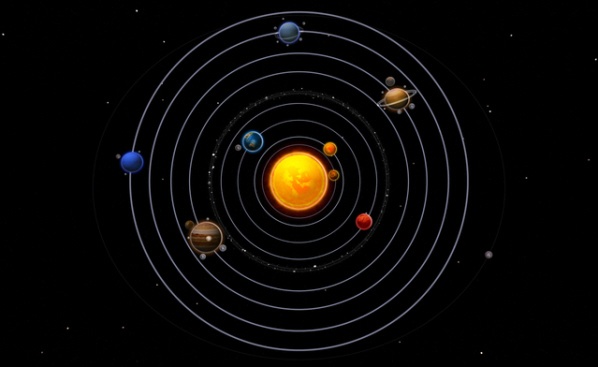
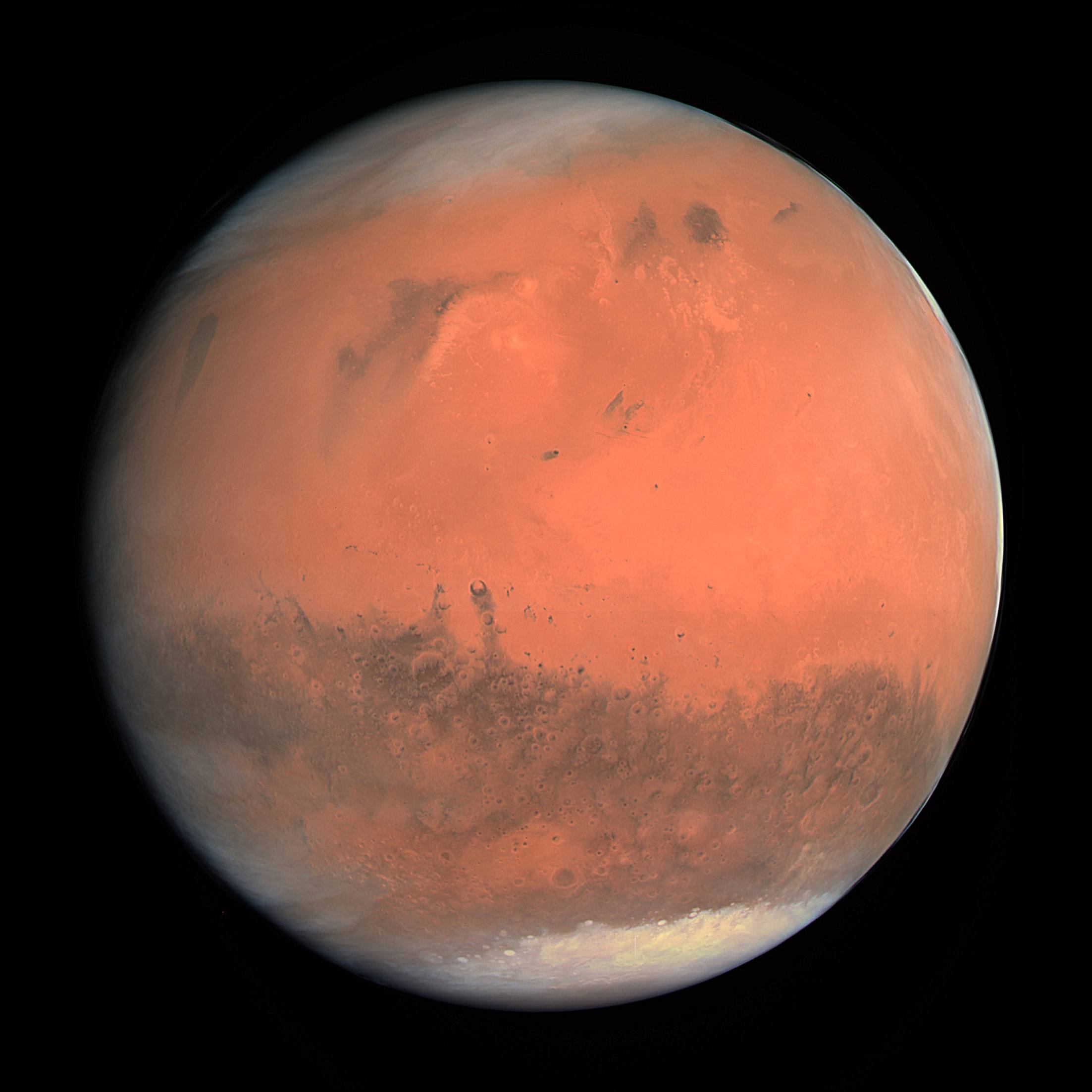
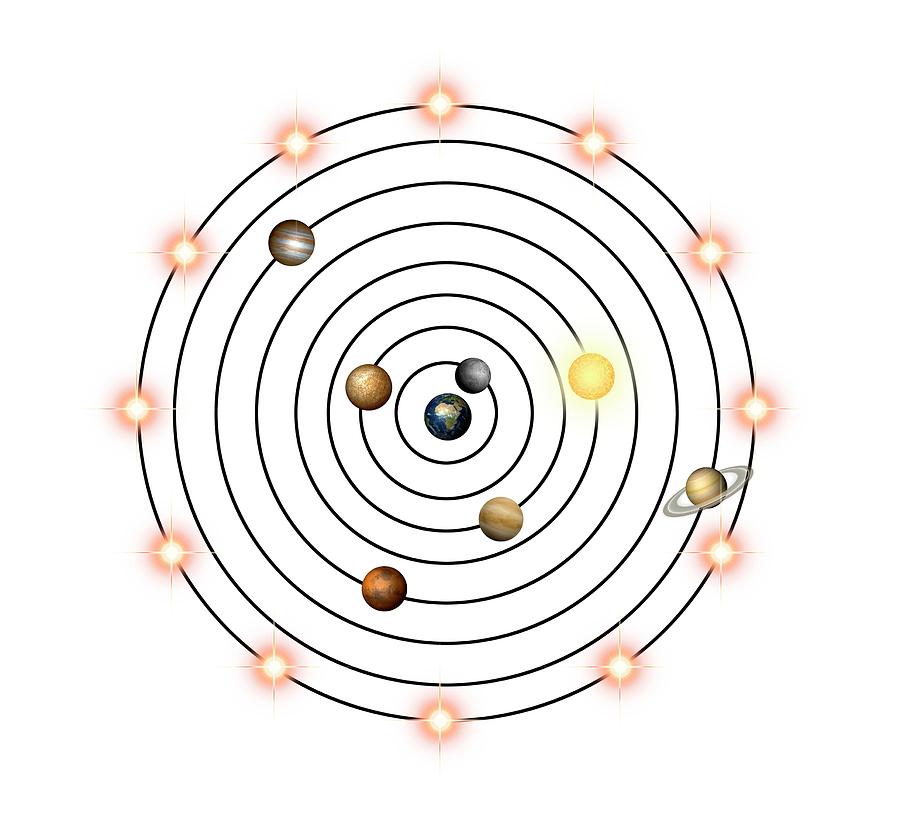
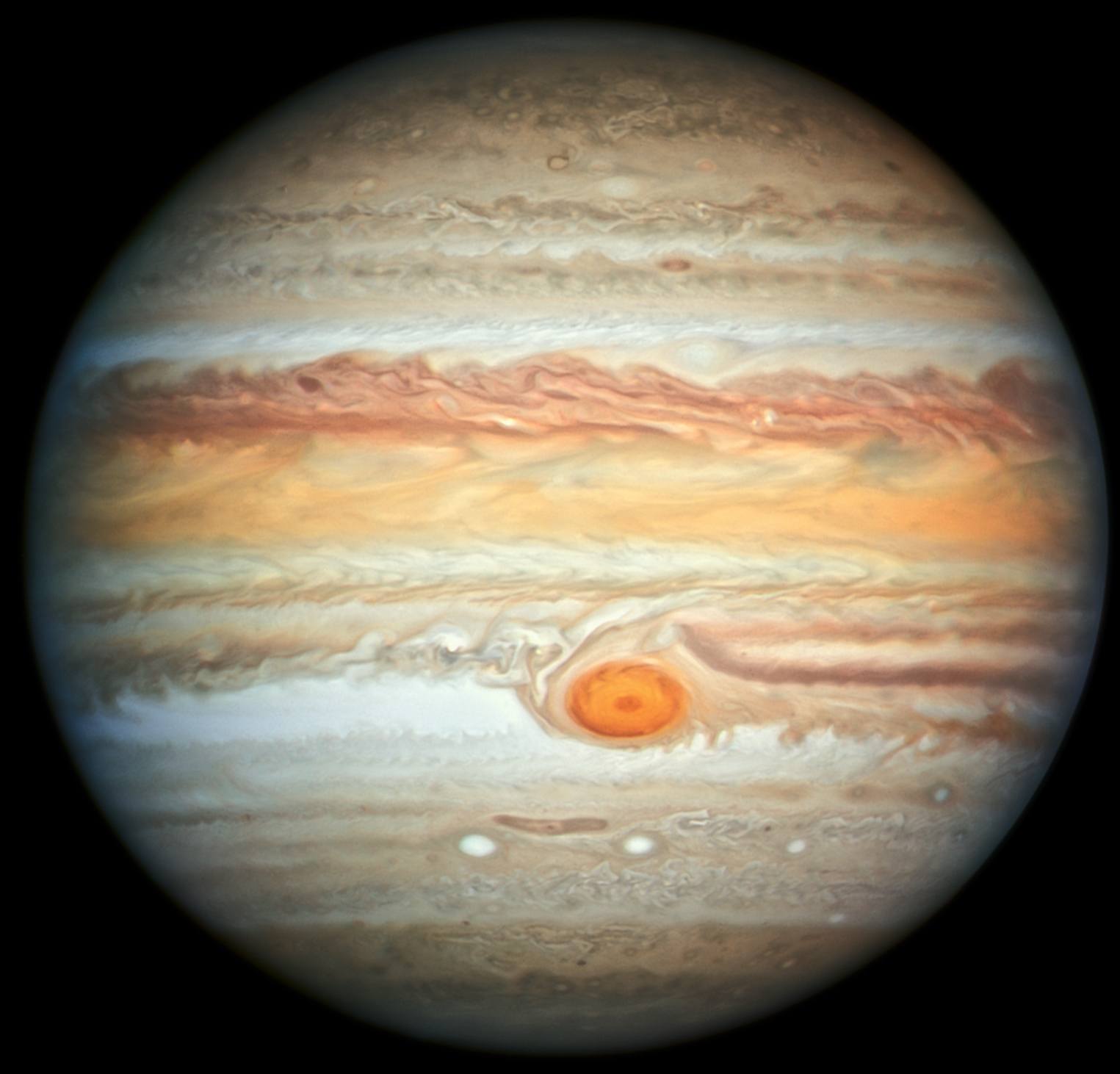
What does the Heliocentric system look like?


Which astronomer first observed the phases of Venus and Jupiter's moons with the help of a telescope?
Gailieo
Aristarchus
Kepler
Aristotle
Copernicus
Stars are round due to a balance of forces. What is the name of the balance?
radiation pressure
nuclear fusion
gravity
hydrostatic equilibrium
Why will our sun not become a supernova?
It is too bright
It is too small
It is too large
It is too old
What are the 5 properties of stars?
Mass, size, distance, color, and dimension.
Mass, size, brightness, temperature, and color.
Size, dimension, distance, color, and temperature.
Distance, brightness, color, mass, and size.
The processes responsible for virtually all surface geology are:
convection, conduction & radiation
impact cratering, volcanisms, tectonics & erosion
accretion, differentiation & radioactive decay
eruptions, lava & gases

What is a solar wind?
The surface of the sun
Darker, cooler areas of the sun
Outer layer of the sun
Constant flow of tiny, fast, electrically charged particles
What is needed for fusion to occur
High density and low pressure
High temperatures and low pressure
High pressure and high temperature
Low pressure and temperature

These are the pretty lights that occur at the north and south poles. They are also known as the Northern and Southern Lights.
Photosphere
Aurora
Radiation Zone
Solar wind

Identify part 7. It is cooler, darker areas on the surface of the sun.
sunspot
solar flare
corona
radiation zone
Which of the following theories states that the universe began as a single point and has been expanding ever since?
The Big Bang Theory
Simultaneous formation theory
Impact Theory
Collision Theory
Select all of the alternatives names to the "outer planets" (Jupiter, Saturn, Uranus, Neptune)
Jovian Planets
Gas Giants
Terrestrial Planets
Rocky Planets
Select all of the common characteristics of the inner (terrestrial) planets
Have the layers: crust, mantle, core
Have evidence of once having geologic activity (volcanoes, earthquakes)
Once had ice rings that have since melted
Have ice at the center of their cores
Jovian planets share which of the following characteristics, making them very different from terrestrial planets like Venus or Mars?
large mass, no solid surface, many moons, ring systems
rocky surface, few or no moons, liquid water
plate tectonics, many impact craters, small size
ring systems, few or no moons, rocky surface
Though all four Jovian planets have ring systems, only Saturn possesses a bright set of rings that are spectacularly visible from Earth with a small telescope. Why do scientists believe Saturn's rings are so much brighter than the rings of other planets?
Saturn's rings have a lot more reflective ice in them, probably because they are younger than those of other planets.
They are probably kept glowing white hot by tidal heating from Saturn's gravity.
They are tilted in the direction of Earth, so they are more visible to us.
Saturn's rings are made of larger particles.
A prediction based on observations that is testable.
Conclusion
Inferences
Hypothesis
Observations
A massive explosion at the end of a stars life?
Supernova
Implosion
Black Hole
Main Sequence
Where do Jovian planets form relative to the sun?
close to the sun where temperatures are cooler
close to the sun where temperatures are warmer
further away from the sun where temperatures are cooler
further away from the sun where temperatures are hotter

