
 Worksheets
6th Grade Final Exam
Total questions: 75
Worksheet time: 37mins
One of the main differences between the outer and inner planets is __________.
The inner planets all have water
The inner planets are much bigger than the outer planets
The outer planets are gas planets
The outer planets do not have rings and the inner planets do
Which planet has a very hot surface and is most similar to Earth in size?
Venus
Mercury
Mars
Uranus
Which property makes Earth unique compared to other planets in the solar system?
It orbits the Sun.
It is a rocky planet.
It has liquid water.
It rotates on its axis.
Which factor contributes to Earth’s ability to sustain life?
The atmosphere allows all of the sun’s radiation to enter because of Earth’s distance from the sun.
The atmosphere prevents all space debris from reaching the surface because of the ozone layer.
The atmosphere is extremely thin because of the temperatures of the sun.
The atmosphere is breathable due to its unique mixture of gases.
Which planet experiences extreme temperatures because it has no atmosphere?
Earth
Jupiter
Saturn
Mercury
Which planet has the most extensive ring structure, is the second largest in the solar system, has at least 31 moons (the largest being Titan), and has thick outer rings composed of hydrogen, helium, ammonia, methane, and water vapor?
Jupiter
Neptune
Saturn
Pluto
The four inner planets are rocky and small. Which description best fits the next four outer planets?
They are also rocky and small.
They are very large and have no moons.
They are small and made of ice.
They are very large, made of gases with no solid surface.
Which is the eighth planet from the Sun, orbits the Sun once every 164.8 years, and is blue in color?
Neptune
Jupiter
Saturn
Mars
Which of the following is ordered from largest to smallest?
Universe -> Galaxy -> Solar System -> Planet
Planet -> Galaxy -> Solar System -> Universe
Planet -> Solar System -> Galaxy -> Universe
Universe -> Solar System -> Galaxy -> Planet
The inner planets are also called:
Gas giants
Terrestrial planets
Large planets
Asteroid
Name the region that contains all 8 planets, the Sun, asteroids, and other celestial objects.
The Solar System
The Degoba System
Asteroid Belt
Kuiper Belt system
The sun is a...
planet
star
comet
asteroid
What is the object that all planets in our solar system orbit?
The moon
The sun
The Milky Way
Mercury
Which of these planets would have the greatest gravitational pull on a nearby object?
Mars
Mercury
Jupiter
Neptune

divergent boundary
convergent boundary
transform boundary

divergent boundary
convergent boundary
transform boundary

divergent boundary
convergent boundary
transform boundary
This type of boundary is found along the San Andreas Fault in California.
divergent
convergent
transform
This type of boundary creates folded mountains.
transform
divergent
continental-continental convergent
continental-oceanic convergent
This feature is found along a divergent boundary.
mid-ocean ridge
folded mountains
deep sea trench
At which of these boundaries would you find a deep-sea trench?
transform
divergent
oceanic-oceanic convergent
Which feature is formed when two oceanic plates collide?
mid-ocean ridge
volcanic island arc
folded mountains
Subduction means...
one plate goes under another plate
two plates slide past each other
two plates collide and form folded mountains
The process that causes tectonic plates to move is called...
subduction
transform
convection
Sea-floor spreading explains how...
new crust is created at a divergent boundary
volcanoes are formed on continents
deep sea trenches are formed

This area is called the...
Arc of Volcanoes
Ring of Fire
Horseshoe of Magma
Which of the following best describes a balanced force?
A force that causes an object to move
A force that causes an object to accelerate
A force that causes an object to remain at rest
A force that causes an object to change direction
Which of the following is an example of an unbalanced force?
A book sitting on a table
A soccer ball rolling on a flat field
A car accelerating on a straight road
A person standing still
Which of the following is an example of a simple machine?
A bicycle
A baseball
A pencil
A bookshelf
Which simple machine consists of a bar that pivots on a fixed point?
Lever
Pulley
Wheel and Axle
Inclined Plane
Which of the following is an example of a third-class lever?
A seesaw
A wheelbarrow
A pair of scissors
A fishing rod
Which simple machine is an inclined plane wrapped around a cylinder?
Screw
Wedge
Pulley
Wheel and Axle
Which of Newton's laws states that for every action, there is an equal and opposite reaction?
First Law of Motion
Second Law of Motion
Third Law of Motion
Law of Universal Gravitation
Which of the following is an example of a balanced force?
A closed door
Kicking a soccer ball
Pulling a wagon uphill
Sliding down a slide
Which simple machine is a flat, sloping surface?
Lever
Pulley
Wheel and Axle
Inclined Plane
Which of the following is an example of a second-class lever?
A seesaw
A wheelbarrow
A pair of scissors
A fishing rod
Which simple machine consists of a rope or chain wrapped around a grooved wheel?
Screw
Wedge
Pulley
Wheel and Axle
Which of the following is an example of an unbalanced force?
Sitting on a chair
A ball rolling at a constant speed
A car moving at a constant velocity
Pushing a heavy box
Which simple machine is a sharp, pointed object?
Screw
Wedge
Pulley
Wheel and Axle
Which of Newton's laws states that an object in motion will continue to move in a straight line at a constant speed unless acted upon by an external force?
First Law of Motion
Second Law of Motion
Third Law of Motion
Law of Universal Gravitation
A force that tries to pull two objects towards each other is
gravity
inertia
mass
speed
What two factors affect gravity?
mass and inertia
mass and distance
mass and force
mass and weight
Objects with more mass are...
harder to speed up or slow down
easier to speed up or slow down
Which of the following does a simple machine do?
allows the user to apply less force over a longer distance
reduces the amount of force needed to do work
changes the direction of the applied force
all of the above
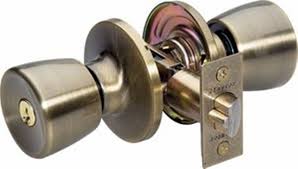
What type of simple machine is shown in the image?
wheel and axle
gear
lever
inclined plane
What mineral is found in pencils? You can write with it.
feldspar
magnetite
graphite
kaolinite
The color of a mineral in its powdered form is called?
hardness
specific gravity
luster
streak

Which of the following correctly matches the tool with what it measures?
Penny - streak
Graduated cylinder - volume
Glass - volume
Triple beam balance - mass
The way a mineral breaks unevenly and unsmoothly refers to its ______.
Cleavage
Fracture
Hardness
Shatter

Why is coal not considered a mineral?
It's not a solid
It is man-made
It is organic
It is made of carbon

How a mineral reflects light from its surface is called:
crystal
luster
streak
refraction

Rock made of layers of compressed sediment.
metamorphic rock
igneous rock
sedimentary rock
school house rock

Sediment that is left behind in rivers, lakes, and oceans.
weathering
erosion
cementation
deposition

Preserved parts or traces of animals and plants that lived in the past.
natural gas
imprints
photos
fossils
a flammable liquid made from the remains of marine organisms
oil
natural gas
coal
energy
What kind of rock is formed when debris is buried, compressed, and cemented together?
Metamorphic
Magma
Sedimentary
Igneous

What type of rock forms from molten magma beneath the surface?
Sedimentary
Extrusive Igneous
Intrusive Igneous
Metamorphic

This type of rock is formed when melted rock cools.
Sedimentary
Igneous
Metamorphic
Lava Rock
If the cooling rate of a rock is fast, the crystals in the rock will be ...
large
small
What are the two types of igneous rocks?
intrusive and extrusive
extrusive and chemical
chemical and clastic
foliated and nonfoliated
The three major groups of rocks are:
igneous, metamorphic, sedimentary
sedimentary, metamorphic, igneous
metamorphic, igneous, sedimentary
lava, magma, cement
The process by which dissolved minerals crystallize and glue particles of sediment together into a single mass.
caldera
clastic
cementation
crust
Granite has only recently been exposed at a location on Earth's surface. What must happen first for granite to become sedimentary rock?
A thick layer of humus must form on top of the granite.
The granite must be broken into smaller pieces by weathering processes.
Erosion by wind and water must move pieces of granite to other locations.
Microorganisms must begin to break down the remains of plants and animals.
The process by which sediment is moved from one place to another. Can be caused by water, wind, ice, and gravity.
Rock Cycle
Uplift
Deposition
Erosion

