
 Worksheets
2nd Semester Test Sci
Total questions: 60
Worksheet time: 4hrs 53mins
What is NOT one of Earth's systems
Geosphere
Atmosphere
Watersphere
Biosphere
The Biosphere is made up of what
the water
air
rocks
all living things
The Atmosphere is made up of what
all the air that surrounds Earth
the water
the solid land on Earth
the living things on Earth
The Geosphere is made up of?
all of the water on Earth
the living things
the air on and around Earth
all of the solid land on Earth and in Earth
The Hydrosphere is made up of what?
all of the air in and around Earth
all of the water on Earth
all of the living things
all the solid land in and on Earth
What is a nickname given to Earth because of it's water?
Water planet
Nasa
Blue Planet
Wet Planet
Acid rain deposits_____ in the soil. (Geosphere)
nitrogen
methane gas
corn plants
Pick the Earth's systems (4)
hydrosphere
atmosphere
biosphere
geosphere
abiosphere
The prefix "bio" means
water
rain
living things
the Earth's crust
The word "hydro" means
living things
water
rain
atmosphere
The prefix "geo" means
geography
having to do with the Earth's solid land
things in the atmosphere
What does the word "sphere" mean?
cude
three-dimensional ball
cone-shaped
Earth
What two gases are most abundant in the atmoshere?
oxygen and carbon dioxide
oxygen and nitrogen
carbon dioxide and nitrogen
carbon dioxide and hydrogen
When water vapor is cooled and forms droplets?
evaporation
condensation
transpiration
When water is heated in the ocean by the sun and turns into water vapor?
transpiration
condensation
evaporation
What is the main reason water evaporates?
ocean breezes
changing tides
heat from the sun
moon's gravitational pull
Earth completes on full _________ on its axis every 24 hours.
revolution
resolution
reservation
rotation
About how long does the Moon take to revolve around Earth?
one day
14 days
29 days
365.25 days
Earth spins on an imaginary line called its _________.
hemisphere
meridian
axis
poles
A force of attraction between any two objects is called ______
revolution
gravity
rotation
meteor
Day and night are caused by Earth's ________, in addition to Earth's tilt on its axis.
rotation
revolution
orbit
tides
Earth's ________ is a complete pass around the sun that takes about 365 1/4 days and is the reason we have different season on Earth.
rotation
moon phases
revolution
orbit
A(n) ________ is the path one object takes around another object.
moon phase
orbit
gravity
force
The sky is divided into ____ constellations.
11
22
44
88
A(n) ___________ is a community and its physical environment together.
Ecosystem
Environment
Habitat
Animal
A(n) ____________ is an environment that meets the needs of an organism.
Environment
Ecosystem
Habitat
Consumer
A(n) ________ is all of the living and nonliving things surrounding an organism
Ecosystem
Environment
Habitat
Producer
Click on ALL the resources living things need to survive.
Water
Food
Space
Humans
The main source of energy for ecosystems.
Sun
Habitat
Consumer
Producer
A series of organisms that depend on one another for food.
Producer
Consumer
Food Chain
Food Web
A living thing, such as a plant, that can make its own food.
Producer
Consumer
Food Chain
Food Web
A living thing that feeds on the wastes of other animals.
Consumer
Producer
Decomposer
Describes a nonliving part of an ecosystem.
(ex: sun, water, rocks)
Abiotic
Biotic
Animals
Elements
An animal that eats plants only.
Herbivore
Carnivore
Omnivore

A Sea Lion is a ________.
Producer
Consumer
Decomposer
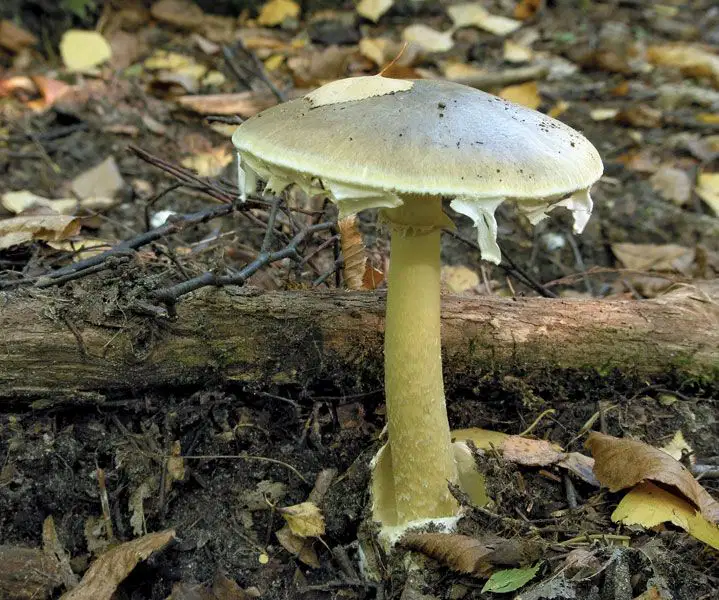
A mushroom is a ________.
Producer
Consumer
Decomposer
An animal that hunts other animals for food.
Predator
Prey
Dinner
sun-->plant --> caterpillar--> bird--> snake
What is the primary consumer?
Snake
Plant
Caterpillar
Bird
Melting means:
The mixture of liquid with a solid such as salt.
When solid changes into liquid.
Click on the term that is not a physical state of matter.
gas
liquid
solid
water
anything that has mass or takes up space.
mass
matter
volume
state
The amount of space something takes up.
volume
mass
weight
state
a solution is made when one substance ______ is another.
settles at the bottom
moves
dissolves
is suspended
the amount a solute can dissolve in a liquid is its ____
ability
mixing
solubility
dilution
Mixtures CANNOT be separated.
True
False
When a mixture is created it creates a __________ change.
Chemical
Physical
Matter that has its own shape and takes up space.
solid
liquid
gas
plasma
Matter that always fills the shape in a container, such as air.
solid
liquid
gas
plasma
Milk takes the shape of its container because it is a:
solid
liquid
gas
plasma
Which thing is a huge ball of hot gases that gives off heat and light?
a moon
a star
Out of the 8 planets in our solar system which is the largest?
Earth
Jupiter
Sun
Which planet is between Mercury and Earth?
Mars
Venus
the Moon
Compared to Earth, does Saturn take a longer or shorter amount of time to orbit the sun?
longer
shorter
How many planets does the solar system have?
1
9
8
6-7
The Sun is made up of...
smoke
gases
water
molten rock
Select the types of energy that the Sun provides for the Earth. (Pick 2)
Thermal Energy
Sound Energy
Mechanical Energy
Light Energy
The sky is divided into ____ constellations.
11
22
44
88
Polaris always points
East
West
South
North
If its ____ in the Northern hemisphere, then its fall in the Southern hemisphere.
summer
spring
fall
winter
How many HOURS does it take for Earth to complete 1 full revolution around the Sun?
696 hours
24 Hours
8,766 Hours
8,760 Hours

