
 Worksheets
Physics Final Review
Total questions: 82
Worksheet time: 2hrs 42mins

At which point does the car have it's highest potential energy?
x
a
b
d

At which point does the car have it's highest kinetic energy?
x
a
b
d

If point B is the fastest the roller coaster will go and it has 6,000,000 Joules of kinetic energy, how much potential energy did the roller coaster have?
0 Joules
6,000,000 Joules
3,000,000 Joules
12,000,000 Joules

If at point x, PE = 6,000,000 and the roller coaster has max kinetic energy at point b, how much potential energy does the cart roughly have at point A?
0 Joules
6,000,000 Joules
3,000,000 Joules
12,000,000 Joules

A 115.67 kg linebacker running at 7.62 m/s tackles a 90.26 kg receiver as he comes down from a jumping catch. What is the velocity of the two football players after the collision?
m1v1(initial) + m2v2(initial) = v(final)(m1+m2)
4.28 m/s
3.81 m/s
7.62 m/s
2.07 m/s

Assume this 95 kg man on the skateboard is at rest; not moving. If he were to toss his 19 kg backpack forward at 6.7 m/s, at what velocity would he roll back with?
m1v3 = -m2v4
-1.34 m/s
-1.16 m/s
-32.3 m/s
6.7 m/s
The Law of Conservation of Energy states that energy is never __________________ or _________________, only transferred.
created, destroyed
created, subtracted
added, subtracted
destroyed, subtracted
Which of the following statements is not correct concerning momentum?
Momentum is a vector quantity.
An object moving at a constant speed has momentum.
If an object's velocity changes, then its momentum will also change.
Momentum is never conserved.
According to the Law of Conservation of Momentum, when two objects collide:
both objects lose momentum.
both objects gain momentum
momentum is neither lost nor gained.
momentum is always lost or gainer.

Imagine they add a clown to a circus car every six seconds. What would happen to the speed of the car if they maintained a constant momentum of 36,000 kg·m/sec.
The speed of the car would decrease because of conservation of momentum.
The speed of the car would increase because of conservation of momentum.
The speed of the car would decrease because of conservation of energy.
The speed of the car would increase because of conservation of energy.

Your crazy smart friend is testing their machine and making energy measurements. If negligible energy is lost due to friction, which of the following is the most accurate statement based on these measurements.
ME = KE + PE
It's not a very efficient machine, losing 63 Joules of potential energy every 10 minutes.
The measurements are wrong. It violates the laws of conservation of energy by creating energy.
The measurements are wrong. It violates the laws of conservation of energy by destroying energy.
Its an efficient machine, gaining 23 Joules of kinetic energy, every 10 mins.

If a 0.17 kg cue ball crashes into a 0.16 kg #11 ball at 2.45 m/s, what will the speed of the #11 ball be after it bounces off the cue ball going 0.45 m/s?
m1v1 + m2v2 = m1v3 + m2v4
2.13 m/s
3.40 m/s
2.45 m/s
2.00 m/s
If both the mass and velocity of a moving object are doubles, how will the object's momentum change?
p = m x v
Momentum will be quadrupled
Momentum will also be doubled
Momentum will remain unchanged
Momentum will be reduced by half.
What is the velocity of a 2,500 kg car with 10,000 kg·m/sec of momentum?
4 m/s
25,000 m/s
7,500 m/s
0.25 m/s

Fighter strikes with the force of 1,100 N for 0.1 seconds. Calculate the impulse of the punch.
impulse(Δp) = force x time
110 kg·m/sec
11,000 kg·m/sec
1,100 kg·m/sec
10 kg·m/sec

A man raises 1,200 N of weight a distance of 2.0 meters in 0.5 seconds.
p = (force x distance) / time
4,800 w
1,200 w
300 w
2,400 w

A volleyball is hit with 700 N of force for 0.2 s. What is the change in momentum of the baseball.
impulse = force x time
140 kg·m/sec
3,500 kg·m/sec
350 kg·m/sec
1,400 kg·m/sec
What is the kind of energy in a car battery?
Kinetic energy due to the movement of protons inside the battery
Thermal energy due to the heat dissipated in the battery
Solar energy due to the movement of photons in the battery
Potential energy due to the chemical reaction in the battery

A pendulum is released with the goal of reaching a target located at a height just above the release height, but on the opposite side as shown.
What needs to be done to ensure the target is reached?
Make sure the pendulum's mass is large enough.
Give the pendulum a large enough push when it is released.
It isn't possible for the pendulum to reach the target if released from that position.
Nothing. The target will be reached no matter what when the pendulum is released.
Two positively charged particles are brought to a rest near each other in empty space. The two charges will repel from each other when released from rest.
What form of potential energy must the charges have had before being released?
Elastic potential energy
Electric potential energy
Gravitational potential energy
Kinetic energy
What is the best example of kinetic energy being transformed into potential energy?
A ball rolling up a hill
Bending a paper clip
Coasting down a hill on a bicycle
Starting an automobile engine
Which of the following does not contribute to the potential energy of an object?
Height of the object above the Earth's surface
Gravitational constant, or g, of the Earth
Velocity of the object
Mass of the object
In an experiment, a student drops two identical marbles from the same height. Marble A falls straight down, while marble B slides down a frictionless ramp. Which marble is moving faster when they reach the bottom?
Marble A will be faster since the force of gravity is acting on it.
Marble B will be faster since the contact with the ramp will speed it up.
The speed of Marble B cannot be calculated unless the length of ramp is known.
Both masses will have the same speed since they have the same potential energy.

It took 500 Newtons of force to push a car four meters. How much work was done?
work = force x distance
2000 J
125 J
0.008 J
500 J
You notice a branch in your backyard is hanging precariously over your yard. It may fall in the next storm. You estimate it has a mass of 12.7 kg and will fall 5 meters. What is the branch's potential energy?
pe = mgh
622. 3 J
820 J
782.5 J
63.5 J
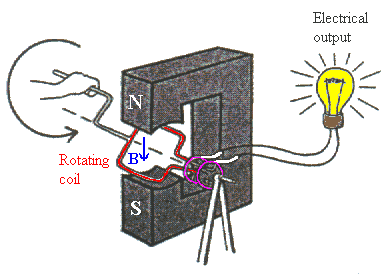
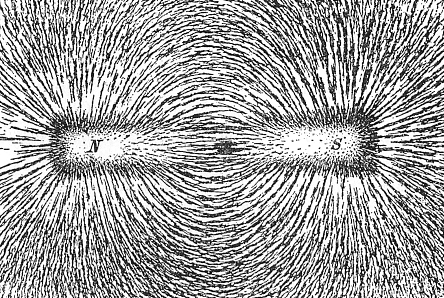
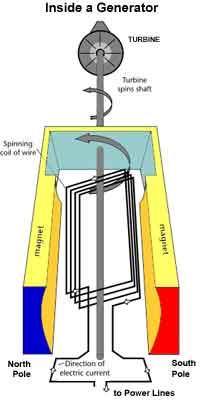
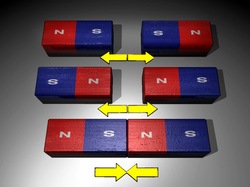
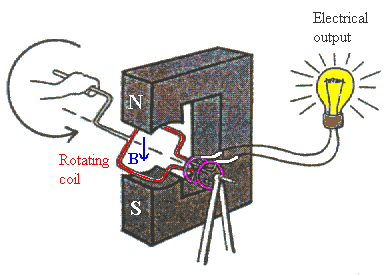
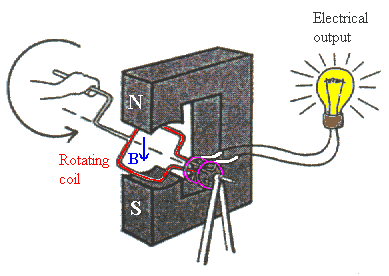
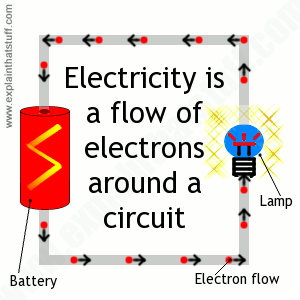
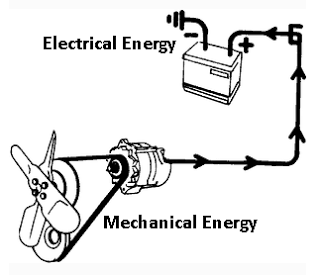
kinetic -> electrical


Why is electrical wiring usually are covered with a layer of plastic?
To make it look pretty
To help electricity flow along the wire
To make it safe
To add more energy

Why is electrical wiring usually made from copper?
Because copper is shiny
Because copper conducts electricity
Because copper is not magnetic
Because copper insulate electricity
Which of the following materials is an electrical conductor?
Plastic spoon
Silver-colored plastic spoon
copper spoon
wooden spoon
A material that does NOT let electricity pass through it is called ...
An electrical conductor
An electrical insulator
An electrical source
An electric appliance

What is a circuit with several paths for electricity to flow?
conductor
series circuit
parallel circuit
open circuit

What is a circuit that only has ONE path for electricity to flow?
series circuit
closed circuit
parallel circuit
light bulb

To complete the circuit, a wire should be placed from —

When the switch is closed the buzzer will sound because -


Can a steel nail pick up a paperclip?
Always
Never
Only if the nail is touching a temporary magnet
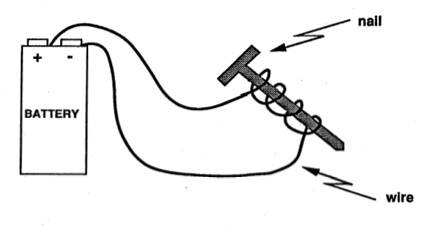

The area around a magnet is called the .....
attraction zone
work area
magnetic field
hot zone
What happens when an electric current flows through a wire?
The wire begins to spin.
Nothing happens.
A field of gravity is created around the wire.
A magnetic field is created around the wire.
As two oppositely charged particles approach each other, what happens to the electrical force between them?
The attractive force increases
The magnitude of the electric force decreases
The repulsive force increases
The magnitude of their charges increases
If one of the charges doubles, what happens to the force?
it doubles
it gets cut in half
it quadruples
it is cut by 1/4
What happens to the force between two charged objects when you halve the distance between them?
2X
1/2X
4X
1/4X
A point charge (q1) has a magnitude of 3x10⁻⁶ C. A second charge (q2) has a magnitude of -1.5x10⁻⁶ C and is located 0.12 m from the first charge. Determine the electrostatic force each charge exerts on the other.
-4.52 x 10⁻³ N
-83 N
-2.81 N
-9 x 10³ N

If a toaster produces 12 ohms of resistance in a 120-volt circuit, what is the amount of current in the circuit?
5A
10A
15A
20A
How many watts of power can a circuit produce with a 8 ohms and 10 amps?
1.25 watts
80 watts
10 watts
800 watts

A wave that can only travel through matter is called:
solid waves
longitudinal waves
transverse waves
mechanical waves
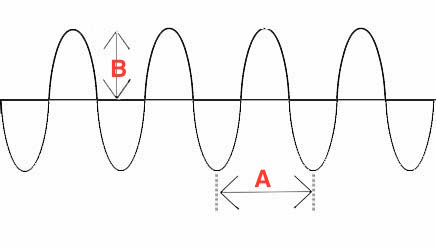
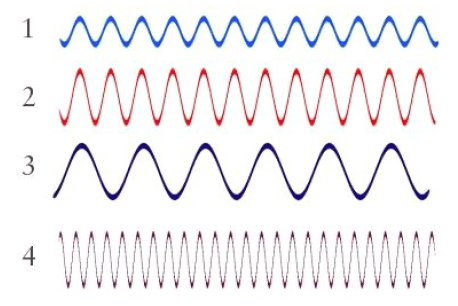
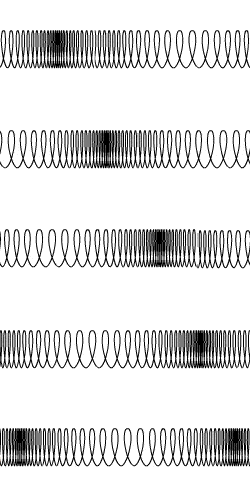

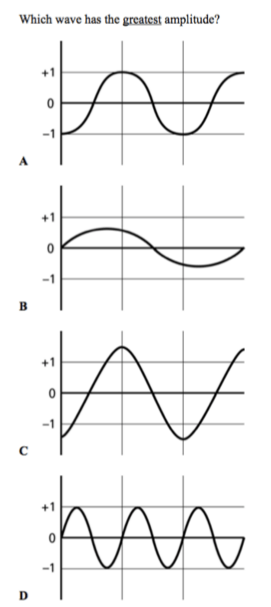

What is the amplitude of this wave?
4
8
2
6.3
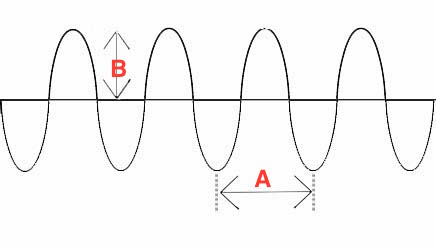
What is the wavelength of this wave?
4
8
3.3
6.3

