
 Worksheets
radioactivity
Total questions: 81
Worksheet time: 1hrs 21mins
The process by which nuclei having small masses are combined to form a single larger nucleus is called nuclear ____.
fusion
fission
reactivity
waste
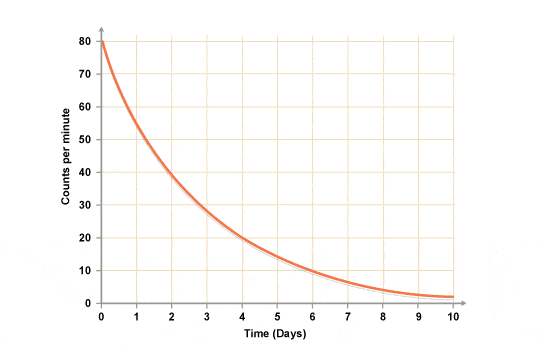


What percent of an isotope will remain after 2 half lives?
50%
35%
12.5%
25%
Which particle below will be attracted to negatively charged matter?
alpha particle
beta particle
gamma ray
Which particle below will be attracted to positively charged matter?
alpha particle
beta particle
gamma ray

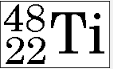

When two nuclei are combined into one nucleus, there is a slight change in mass and the release of a large amount of energy. What is this process called?
Fission
Fusion
Conversion
Hydration
How do the nuclear reactions that power the Sun compare to the nuclear reactions that occur in a reactor at a nuclear power facility?
Power plants release radiation and the sun does not
Nuclear reactions on the sun are less powerful than nuclear reactions in power plants
The Sun is powered via nuclear fusion while a nuclear power facility harnesses energy from nuclear fission
Fission occurs on the sun while fusion occurs in a nuclear power facility
External-beam radiation therapy for cancer patients is delivered in the form of a high radiation photon beam directed at cancer cells. What type of radiation provides the high energy photons that can penetrate deep into patients’ tissues?
Alpha
Beta
Acids
Gamma

Finish the following alpha decay reaction:


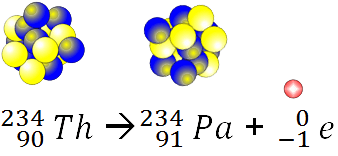
Complete the following beta decay reaction:


What is the splitting of an atomic nucleus into two smaller parts?
Fusion
Separation
Decay
Fission
What is an isotope?
forms of the same element that contain equal numbers of electrons but different numbers of protons
forms of the same element
forms of the same element that contain equal numbers of protons but different numbers of neutrons
An atom with no nucleus
An isotope of an element has the same number of _________, but a different number of _________.
Protons, electrons
Protons, neutrons
Electrons, neutrons
Neutrons, protons

Which type of radiation releases an electron?
Alpha radiation
Beta radiation
Gamma radiation
Theta radiation
What particle is released when an unstable isotope undergoes alpha radiation?
a helium nucleus
an electron
a photon of light
a neutron
describes radioactive element decay
quarter life
whole life
wonderful life
half life
When nuclei decay, massive amounts of __________ is released.
energy
electrons
protons
neutrons

A radioactive nuclide has a ____ stable nucleus than a non-radioactive nucleus of the same element.
more
less
identical
small

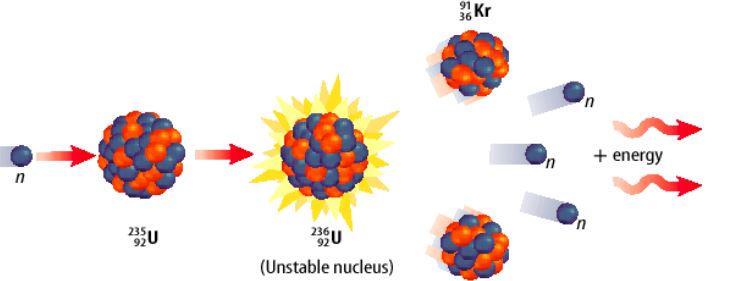
The picture shows the process of __________
fission
fusion
alpha decay
beta decay
What is a PRO about nuclear energy?
The amount of energy produced far excess what is produced using fossil fuels.
It is very safe and stable
Both of these are true
What is a CON about nuclear energy?
It causes global warming
It generates hazardous waste that can get people sick
Both of these are true
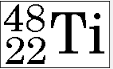
After the second half-life, how much of the sample is left?
1/2
1/3
1/16
1/4
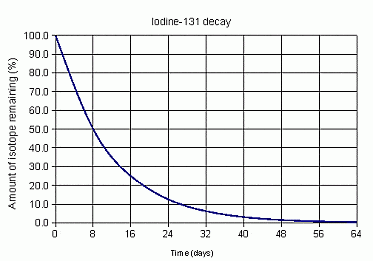
The % of the parent isotope remaining after 1 Half Life.
50%
25%
12.5%
6.25%
The % of the parent isotope remaining after 2 Half Lives.
50%
25%
12.5%
6.25%
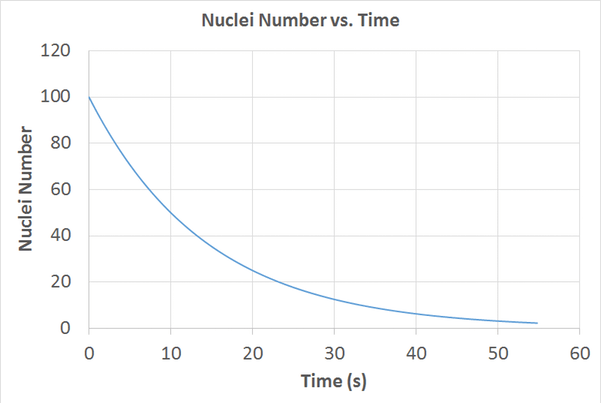
What is the Half life of this isotope?
5 seconds
10 seconds
15 seconds
20 seconds
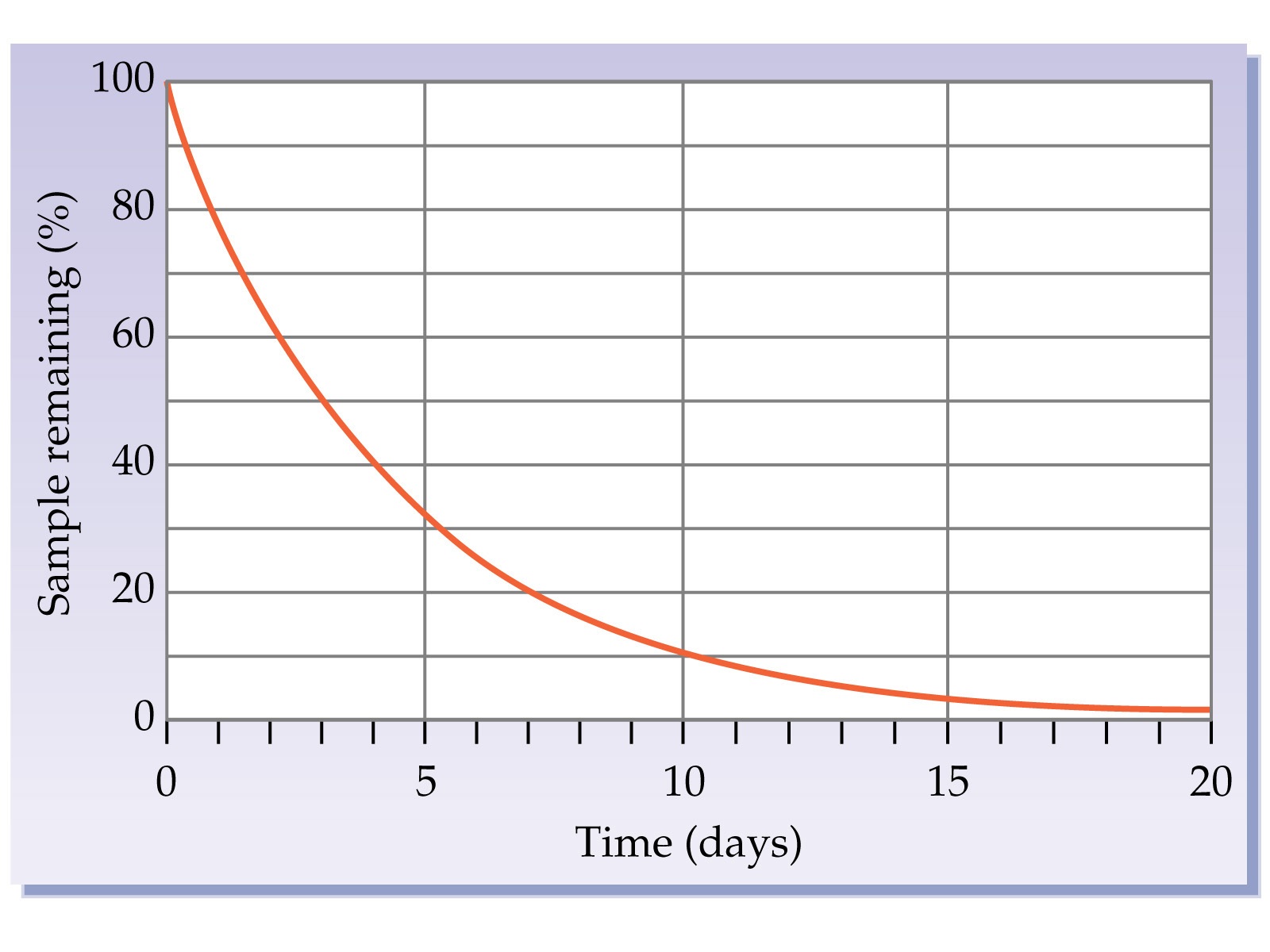
What is the Half Life of this isotope?
3 days
5 days
8 days
10 days


Nuclear power plants have many disadvantages. One of those disadvantages is...
reduced CO2 emissions
stable power
nuclear waste
reduced pollution to our atmosphere

