wayground logo

Free Printable Worksheets

Font size

S
M
L
XL
Worksheets

Semester 2 Final Review PS

Total questions: 90

Worksheet time: 2hrs 58mins

Name
Class
Date
1.

What unit is used to measure current?

a)

Ohms

b)

Omega

c)

Volts

d)

Amps

2.

What unit is used to measure resistance?

a)

Ohms

b)

Omega

c)

Volts

d)

Amps

3.

What is the current in a circuit with 6 ohms of resistance and a battery containing 24 Volts?

a)

1/4 A

b)

144 A

c)

4 A

d)

0.4 A

4.

What is the resistance of a lightbulb that experiences 9 Volts and 3 amps of current?

a)

1/3 ohms

b)

3 ohms

c)

27 ohms

d)

9 ohms

5.

What is the voltage of a circuit with 4 ohms of resistance and 3 amps of current?

a)

12 V

b)

21 V

c)

4/3 V

d)

3/4 V

6.
In a ________ circuit there are multiple paths for the current to take.
a)
Series
b)
Parallel
7.
In a _________ circuit, if one bulb goes out then the entire circuit doesn't work.
a)
Series
b)
Parallel
8.
What kind of circuit is this?
a)
Series
b)
Consecutive
c)
Parallel
d)
Training
9.
Lightning is an example of _________.
a)
static electricity
b)
current electricity
c)
watts
d)
voltage
10.
What type of circuit is pictured?
a)
series
b)
Parallel
11.
Electrons have ___ charge. 
a)
no
b)
negative
c)
positive
12.

Which of these describes static electricity?

a)

Charges that move quickly

b)

A build up of charges

c)

Charges that move slowly

d)

All of these

13.
Protons have ___ charge.
a)
no
b)
positive
c)
negative
14.
____________________  is the number of waves that move past one spot in a second
a)
energy
b)
amplitude
c)
wavelength
d)
frequency
15.
One end of the rope is vibrated to produce a wave with a wavelength of .25 m.  The Frequency of the wave is 3.0 Hz.  What is the speed of the wave?
a)
3.00 m/s
b)
2.50 m/s
c)
.75 m/s
d)
1.25 m/s
16.
 A wave has frequency of 50 Hz and a wavelength of 10 m. What is the speed of the wave?
a)
500 m/s
b)
50 m/s
c)
5 m/s
d)
0.5 m/s
17.
 A wave has frequency of 5 Hz and a speed of 25 m/s. What is the wavelength of the wave?
a)
25 m
b)
125 m
c)
5 m
d)
25 m/s
18.
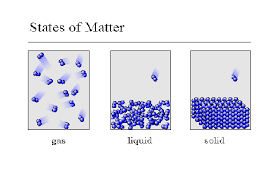
What are the states of matter?
a)
solid, liquid, and juice
b)
solid and liquid
c)
solid and gas
d)
solid, liquid, and gas
19.

What does viscosity mean?

a)

How close the particles are together.

b)

The amount of matter in a substance.

c)

How easily a fluid flows.

d)

How dense a fluid is.

20.
When pressure is applied to a confined fluid, the increase in pressure is transmitted equally to all parts of the fluid. This fact is called________.
a)
Pascal's Principle
b)
Newton's Principle
c)
Archimedes' Principle
d)
Bernoulli's Principle
21.

Which principle do airplanes take advantage of to fly?

a)

Archimedes' Principle

b)

Bernoulli's Principle

c)

Pascal's Principle

22.
Archimedes' Principle states that... 
a)
The buoyant force acting on an object equals the volume of the fluid displaced by the object. 
b)
The buoyant force acting on an object equals the weight (force of gravity) of the fluid displaced by the object.
c)
The buoyant force acting on an object will always be equal. 
23.

The term fluids generally applies to:

a)

solids and liquids

b)

liquids and gases

c)

solids and plasma

d)

solids and gases

24.
A force is applied in a closed container, the pressure increases the same amount. EX: squeezing a water bottle or toothpaste
a)
Archimede's Principle
b)
Pascal's Principle
c)
Bernoulli's Principle 
25.
What principle is this hydraulic press showing?
a)
Archimedes' Principle
b)
Bernoulli's Principle
c)
Pascal's Principle
d)
Principle Testa
26.

A 28.965 L sample of Kr experiences a change in pressure from 358.34 kPa to 729.71 kPa. What is the resulting volume in liters? Express answer with correct number of sig figs.

(a)  

27.

What is the formula for Boyle's Law?

a)

P1V1=P2V2

b)

P1V1/P2V2

c)

P1V2=P2V1

d)

P1/V1=P2/V2

28.
A gas occupies 4.98 L at 2.6 atm of pressure. What volume does it occupy at 1.8 atm pressure?
a)
12.9 L
b)
0.72 L
c)
7.2 L
d)
3.44 L
29.
A gas at a volume of 4 liters is at a pressure of 2 atm. The volume is changed to 16 Liters, what must the new pressure be?
a)
2 atm
b)
12 atm
c)
10 atm
d)
0.5 atm
30.
What is the formula Charles' Law?
a)
V = T
b)
VT = VT
c)
T1 / V1 = T2 / V2
d)
V1 / T1 = V2 / T2
31.

(Charles Law) There are 65 liters of helium in a balloon at 35 K. If the temperature of the balloon is increased to 40 K, what will the new volume of the balloon be?

a)

40 L

b)

70 L

c)

74.3 L

d)

75.9 L

32.

(Charles Law) There are 40 liters of helium in a balloon at 100 K. If the temperature of the balloon is increased to 200 K, what will the new volume of the balloon be?

a)

80 L

b)

45 L

c)

54 L

d)

45.33 L

33.
A gas
a)
has a definite shape but no definite volume
b)
has a definite volume but no definite shape
c)
has fast-moving particles
34.

The state of matter that has no definite size or shape is

a)

Solid

b)

Liquid

c)

Gas

35.

Particles of a liquid

a)

are tightly packed together and stay in a fixed position.

b)

are free to move around one another but still touch.

36.

Definite shape and definite volume

a)

Solid

b)

Liquid

c)

Gas

37.

Has a definite volume but not a definite shape

a)

Solid

b)

Liquid

c)

Gas

38.

Two or more different elements chemically combine to form compounds.

a)

Agree

b)

Disagree

39.

Represented by an unique chemical symbol

a)

Elements

b)

Compounds

c)

Both

40.

Can be broken down into a simpler substance

a)

Elements

b)

Compounds

c)

Both

41.

Located on the Periodic Table

a)

Elements

b)

Compounds

c)

Both

42.

Composed of at least two different elements

a)

Elements

b)

Compounds

c)

Both

43.

Cannot be broken down into a simpler substance

a)

Elements

b)

Compounds

c)

Both

44.

This picture represents which of the following?

a)

element

b)

compound

45.

This picture represents which of the following?

a)

element

b)

compound

46.
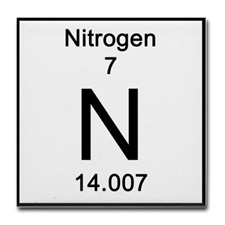
What is the number of protons that the element in this image contain?
a)
14
b)
7
c)
15
d)
18
47.
The positive particles of an atom are 
a)
Electrons 
b)
Positrons 
c)
Neutrons 
d)
Protons 
48.
The central region of an atom where its neutrons and protons are is its _______.
a)
Nucleus 
b)
Electron cloud
c)
Core 
d)
Center 
49.
The particles that are found in the nucleus of an atom are _____.
a)
Neutrons and electrons
b)
Electrons only
c)
Protons and neutrons
d)
Protons and electrons
50.
What are the 3 particles that make-up the atom?
a)
Protons, neutrons, and isotopes
b)
Neutrons, isotopes, and electrons
c)
Positives, negatives, and electrons
d)
Protons, neutrons, and electrons
51.

What does the 1.00794 stand for?

a)

Hydrogen

b)

atomic number

c)

atomic mass

d)

atomic explosion

52.

If an atom has 10 protons, 10 neutrons, and 10 electrons, what is the mass of the atom?

a)

10

b)

20

c)

30

53.

What is this?

a)

Element

b)

Compound

c)

Homogeneous Mixture

d)

Heterogeneous Mixture

54.
Chicken noodle soup
a)
heterogeneous mixture
b)
homogeneous mixture
55.
a)

Element

b)

Compound

c)

Homogeneous Mixture

d)

Heterogeneous MIxture

56.

What is it?

a)

element

b)

mixture

c)

compound

d)

Mixture of elements

57.

Just one substance; the simplest form

a)

Element

b)

Compound

c)

Homogeneous Mixture

d)

Heterogeneous Mixture

58.

Homogeneous mixtures are ______________________ distributed out on a microscopic level.

a)

evenly

b)

differently

c)

chemically

d)

unevenly

59.

This mixture includes substances that are not evenly spread out.

a)

Homogeneous

b)

compounds

c)

Lemonade

d)

Heterogeneous

60.

Kool-Aid

a)

Heterogeneous mixture

b)

Homogeneous mixture

c)

element

d)

compound

61.

Coffee

a)

element

b)

compound

c)

homogeneous mixture

d)

heterogeneous mixture

62.
When metals bond with non-metals they form what type of bonds
a)
covalent
b)
ionic
c)
cooperative
d)
lewis
63.

Which two elements would NOT form an ionic bond?

a)

calcium and lithium

b)

calcium and oxygen

c)

lithium and oxygen

d)

calcium and carbon

64.

Name for NaH

a)

sodium hydrogen

b)

potassium hydride

c)

sodium hydride

d)

potassium hydrogen

65.

Formula for barium sulfide

a)

B2S3

b)

BaS

c)

Ba2S

d)

BaS2

66.

Name for PBr2

a)

phosphorus bromide

b)

phosphorus dibromide

c)

phosphorus dibromine

d)

phosphorus bromine

67.

Formula for Disilicon Heptasulfide

a)

SiS6

b)

SiS7

c)

Si2S6

d)

Si2S7

68.

Name for CO

a)

carbon monoxide

b)

carbon oxide

c)

monocarbon oxide

d)

carbide monoxide

69.

Valence electrons are found

a)

in the innermost energy level of an atom

b)

in the middle energy levels of an atom

c)

in the outermost energy levels of an atom

70.

How do covalent bonds form?

a)

By donating and receiving valence electrons between atoms.

b)

Scientists still aren't sure.

c)

Opposite slight charges attract each atom in the compound.

d)

Sharing valence electrons between atoms

71.

What two types of atoms make a covalent bond?

a)

2 Nonmetals

b)

1 Metal and 1 Nonmetal

c)

2 Metals

d)

2 Noble Gases

72.

Ionic Bonds

a)

metal with nonmetal

b)

nonmetal with nonmetal

73.
How many Hydrogen are in 4H2O?
a)
6
b)
8
c)
2
d)
4
74.
How many Oxygen are in H2O?
a)
1
b)
2
c)
0
d)
4
75.
How many Magnesium are in 10MgCl2?
a)
10
b)
5
c)
20
76.
2H2 + O--------> 2H2O What  are the reactants?
a)
----->
b)
2H2O
c)
2H2 +O2
77.
How many O's are in Al₂(SO₄)₃
a)
4
b)
12
c)
7
d)
24
78.
Number of H in 3(NH₄)₂CrO₄
a)
4
b)
2
c)
8
d)
24
79.

compound ---> element + element

a)

synthesis

b)

decomposition

c)

combustion

d)

single replacement

80.

What reaction has the following general formula:

A + CD --> C + AD

a)

Combination

b)

Decomposition

c)

Single Replacement

d)

Double Replacement

e)

Combustion

81.

What reaction has the following general formula:

AB + CD --> CB + AD

a)

Combination

b)

Decomposition

c)

Single Replacement

d)

Double Replacement

e)

Combustion

82.

What type of reaction is the following:
BaCl2+2KI > 2KCl + BaI2BaCl_2+2KI\ ->\ 2KCl\ +\ BaI_2  

a)

Combination

b)

Decomposition

c)

Single Replacement

d)

Double Replacement

e)

Combustion

83.

What type of reaction is the following:
2KI > 2K + I22KI\ ->\ 2K\ +\ I_2  

a)

Combination

b)

Decomposition

c)

Single Replacement

d)

Double Replacement

e)

Combustion

84.

What type of reaction is the following:
Zn + 2HCl > ZnCl2+H2Zn\ +\ 2HCl\ ->\ ZnCl_2+H_2

a)

Combination

b)

Decomposition

c)

Single Replacement

d)

Double Replacement

e)

Combustion

85.

The Law of Conservation of Matter

a)

tells how many atoms of an element are contained in one molecule or formula unit.

b)

the starting materials in a chemical reaction

c)

the new substances that are formed in a chemical reaction

d)

A law stating that atoms are not created or destroyed during a chemical reaction.

86.
What coefficient should be used to make the following equation balanced?
N2+O2--> _NO 
a)
1
b)
2
c)
3
d)
4
87.
Is the following equation balanced or unbalanced?
Fe + S --> FeS
a)
balanced
b)
unbalanced
88.
How many atoms of aluminum are on each side of the following equation: 4Al + 3O--> 2AlO3
a)
2
b)
6
c)
1
d)
4
89.
Why is the following chemical equation not balanced?
H2 + O2 --> H2O
a)
each side of the equation has a different number of oxygen atoms
b)
each side of the equation has a different number of hydrogen atoms
c)
each side has the same mass
90.
Is this balanced?...
Al + O2 --> 2Al2O3
a)
Yes!
b)
NO!