wayground logo

Free Printable Worksheets

Font size

S
M
L
XL
Worksheets

Marine Science Final Exam Review

Total questions: 100

Worksheet time: 1hrs 26mins

Name
Class
Date
1.

The one factor that a scientist changes during an experiment. (It affects the results of the experiment).

a)

Controlled Variable

b)

Dependent Variable

c)

Independent Variable

2.

The variable that is measured. It is the result of the experiment.

a)

Controlled Variable

b)

Dependent Variable

c)

Independent Variable

3.

The factors that stay the same throughout the experiment.

a)

Constant

b)

Dependent Variable

c)

Independent Variable

4.
What is changed by the researcher, it causes a change.
a)
hypothesis
b)
interpolate
c)
dependent variable
d)
independent variable
5.
The vertical axis that holds the dependent variable.
a)
y axis
b)
x axis
c)
vertical
d)
horizontal
6.
The horizontal axis that holds the independent variable.
a)
y axis
b)
x axis
c)
vertical
d)
horizontal
7.
This graph is used to show patterns over time and to show the IV makes the DV happen.
a)
line graph
b)
bar graph
c)
circle graph
d)
chart or table
8.
This graph displays information that is counted and can compare.
a)
line graph
b)
bar graph
c)
circle graph
d)
chart or table
9.

What element do all ancient seafaring societies have in common?

a)

They used the stars for navigation.

b)

They were all located near the Pacific Ocean.

c)

They conquered every new location they found.

d)

They developed their own version of the compass.

10.

The Chinese contributed which of the following to medieval marine science?

a)

the compass

b)

improved sails

c)

motorized engines

d)

the first maps of the Atlantic

11.

What was new about Jacques Cousteau’s study of the ocean?

a)

He created an underwater laboratory.

b)

He documented life in the deep ocean.

c)

He was the first to scientifically catalogue undersea life.

d)

He was the first naval officer to also consider marine biology.

12.

Jacques Cousteau was all of the following EXCEPT a/an

a)

inventor

b)

musician

c)

filmmaker

d)

naval officer

13.

Why is the field of Marine Biology important?

a)

The ocean supplies a lot of food

b)

Lots of medicines come from the ocean

c)

Marine organisms can help predict the affect of human activities

d)

All answers are correct

14.

How do marine organisms affect the Earth as a whole?

a)

They help regulate the climate (remove carbon dioxide from atmosphere)

b)

They produce more than half of the oxygen in our atmosphere

c)

They can show us how human activities affect the ocean

d)

All answers are correct

15.

What people explored much of the North Atlantic and parts of North America?

a)

Phoenicians

b)

Greeks

c)

Vikings

d)

Polynesians

16.

What was one of the most significant scientific trips in the history of marine biology?

a)

Ferdinand Magellan circumnavigating the globe for the first time (or least some of his crew)

b)

Captain James Cook voyaging multiple times around the Earth (until he met his end in Hawaii)

c)

The HMS Challenger's three and half years expedition

17.

What is the first step in the scientific method?

a)

Observation

b)

Asking a question

c)

Hypothesis

d)

Experiments or Further Observations

18.

When a hypothesis is well supported with experimental data and/or further observations it becomes a

a)

Law

b)

Conclusion

c)

Theory

d)

Belief

19.

What pH does a neutral substance have?

a)

5

b)

6

c)

7

d)

8

20.

The purpose of a buffer is to ___________.

a)

Neutralize an acid or base and maintain pH.

b)

Make your car's new wax look shiny.

c)

Add volume to your hair.

d)

All of the above.

21.
A(n) ______ is a substance with a pH less than 7
a)
Acid
b)
Alkaline
c)
Base
d)
Buffer
22.
A(n) _______ is a substance with a pH greater than 7.
a)
Base
b)
Acid
c)
Buffer
d)
Water
23.
The pH scale is a range from:
a)
1-7
b)
0-14
c)
1-14
d)
1-20
24.
According to the pH range which substance is more acidic than lemon juice
a)
Hydrochloric acid
b)
cabbage
c)
milk
25.
What word describes when water is attracted to other substances?
a)
cohesion
b)
adhesion
c)
capillary action
d)
surface tension
26.
Why does ice float?
a)
As water freezes, it expands and its density decreases.
b)
As water freezes, it takes up more hydrogen from the atmosphere, causing it to have a greater buoyancy.
c)
As water freezes, air becomes trapped between the hydrogen bonds of water molecules.
d)
As water freezes, it takes up more oxygen from the atmosphere, causing it to have a greater buoyancy.
27.
Which end of the water molecule has a slightly positive charge?
a)
the oxygen end
b)
the hydrogen end
c)
both ends are slightly positive
d)
neither end is positive
28.
Water is a universal solvent because it...
a)
It can be found anywhere
b)
It freezes when it gets cold
c)
floats when frozen
d)
Dissolves most substances
29.
Which of the following is LEAST likely to dissolve in water?
a)
nonpolar fats and oils
b)
polar sugar molecules
c)
salt made of a positive sodium ion and a negative chloride ion
d)
all of the substances will dissolve easily in water
30.
Large bodies of water, such as lakes and oceans, do not quickly fluctuate in temperature. What is the reason for this phenomenon?
a)
Water is an acid.
b)
Water is a versatile solvent.
c)
Water has a high heat capacity.
d)
 Water acts as a buffer.
31.
The fact that ice floats on liquid water is due to the fact that water's solid is ___________ than it's liquid form
a)
less polar
b)
more polar
c)
less dense
d)
more dense
32.
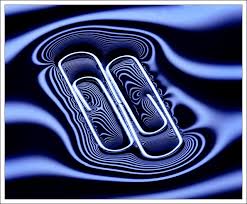
The tightness across the surface of water that enables paper clips to float is ____________.
a)
adhesion
b)
capillary action
c)
surface tension
d)
polarity
33.
When a molecule has an opposite electrical charge on each end, it is known as what?
a)
cohesion
b)
polar molecule
c)
hydrogen bond
d)
solution
34.
When water molecules stick easily to other water molecules, this is called what?
a)
cohesion
b)
adhesion
c)
solution
d)
polar molecule
35.
Which of the following causes Earth's tectonic plates to move?
a)
Energy from the Sun
b)
Magnetic Pole Reversal
c)
Convection currents in the mantle
d)
Faults in Mountain Ranges
36.
What type of event will occur at this boundary?
a)
Earthquake
b)
Volcano Eruption
c)
Tornado
d)
Mountain Building
37.
What type of plate boundary is this?
a)
Plate
b)
Divergent
c)
Convergent
d)
Transform
38.
A divergent boundary occurs when plates ....
a)
Pull apart
b)
Come together
c)
Slide past each other
d)
subducting
39.

Which of the following is the name of the ancient supercontinent formed 280 Million Years ago.

a)

Pangea

b)

Gondwanda

c)

Laurasia

d)

Neverland

40.
What geologic feature/event would you most likely to find at a divergent boundary between two pieces of oceanic crust?
a)
Rift Valley
b)
Mid-Ocean Ridge
c)
Island Arc
d)
Flat land
41.
What geologic feature/event would you most likely to find at a convergent boundary between two pieces of continental crust?
a)
Volcano
b)
Mountain
c)
Rift
d)
Island Arc
42.
What evidence did Wegener use in his theory?
a)
Continents and fossils fitting together/matching-up like puzzle pieces 
b)
glacier scars and evidence from temperature
c)
mountain ranges and coal deposits line up across continents
d)
all of the above
43.
What feature is formed on the continental crust at an oceanic-continental convergent boundary?
a)
volcanoes
b)
mid-ocean ridge
c)
ocean trench
d)
none of these features are formed at a oceanic-continental convergent boundary
44.
Wegener’s proposal of a supercontinent was supported by:
a)
earthquake data
b)
seafloor magnetism
c)
rock, fossil, and climate data.
d)
convection currents in the mantle.
45.
the ratio of the mass of a substance to the volume of the substance
a)
salinity
b)
profit
c)
density
d)
weight
46.
free-floating microscopic plants and animals
a)
plankton
b)
kelp
c)
crustaceans
d)
boats
47.
this factor is affected by the amount of solar energy an area receives and by the movement of water
a)
pack ice
b)
thermocline
c)
density
d)
ocean temperature
48.
a measure of the amount of dissolved solids in a given amount of liquid
a)
DDT
b)
plankton
c)
salinity
d)
icee
49.
Why is the ocean called a carbon sink?   
a)
Ocean water destroys trace carbon elements.   
b)
Organisms in the water release carbon dioxide into the air. 
c)
Ocean water dissolves carbon dioxide from the atmosphere.     
d)
Ocean water becomes saltier with high carbon levels
50.

What decreses steadily in the ocean as latitude increases?

a)

salinity

b)

temperature

c)

density

d)

pH

51.

Which type of water will sink?

a)

Warm, less salty

b)

Warm, more salty

c)

Cold, less salty

d)

Cold, more salty

52.
In what zone does approximately 90% of all ocean life live?
a)
sunlight
b)
twilight
c)
midnight
53.
Animals that can use their bodies to make light are called _______________.
a)
magic
b)
shiny
c)
amazing
d)
bioluminescent
54.
As oceans become deeper, the water pressure ___________________.
a)
increases
b)
decreases
c)
stays the same
55.
Which zone has the warmest water temperature?
a)
sunlight
b)
twilight
c)
midnight
56.
Sunlight allows ________________ to occur in the sunlight zone.
a)
bioluminesence
b)
transpiration
c)
photosynthesis
d)
voting
57.

What is the deepest zone of the ocean called?

a)

Sunlight

b)

Twilight

c)

Abyss

d)

Trench

58.
the gently sloping shallow sea bed surrounding a continent
a)
abyssal
b)
bathyal
c)
littoral
d)
continental shelf
59.
a division of the benthic zone, the bottom from the continental slope out to the open ocean
a)
bottom zone
b)
abyssal zone
c)
epipelagic zone
d)
bathyal zone
60.
a division of the benthic zone, the ocean bottom in deep water
a)
abyssal zone
b)
bottom zone
c)
epipelagic zone
d)
neritic zone
61.

Which of the following is the deepest of the ocean waters

a)

mesopelagic

b)

abyssalpelgic

c)

epipelagic

d)

hadal pelagic

62.

Elements like carbon and nitrogen are cycled through __________.

a)

cells

b)

species

c)

organisms

d)

ecosystems

63.

What is one of the importances of carbon?

a)

it provides water to all organisms

b)

it is the source of light for producers

c)

it provides carbon dioxide to consumers

d)

it is a source of glucose for organisms

64.

What process do the oxygen and carbon cycle directly rely on to cycle?

a)

photosynthesis

b)

precipitation

c)

nitrogen fixation

d)

transpiration

65.

What is the role of bacteria in the nitrogen cycle?

a)

convert nitrogen

b)

produce sugars

c)

burn carbon dioxide

d)

decay organisms

66.

Which process is part of the carbon cycle?

a)

transpiration

b)

nitrification

c)

combustion

d)

sedimentation

67.

What is called when water vapor is released by leaves of trees?

a)

precipitiation

b)

evaporation

c)

transpiration

d)

filtration

68.

What is the largest reservoir for water?

a)

the ocean

b)

rocks and minerals

c)

the atmosphere

d)

glaciers

69.

What source is responsible for moving water in the water cycle?

a)

the sun

b)

the ocean

c)

the oraganisms

d)

the atmosphere

70.

What process do consumers do to contribute to the carbon-oxygen cycle?

a)

photosynthesis

b)

cellular respiration

c)

decomposition

d)

transpiration

71.
Which of the following removes carbon from the atmosphere?
a)
Combustion
b)
Respiration
c)
Photosynthesis
d)
Death
72.
Identify the cycle pictured.
a)
The Water cycle
b)
The Carbon cycle
c)
The Nitrogen cycle
d)
The Phosphorus cycle
73.
If the process of evaporation was unable to occur on Earth, what would we expect to happen?
a)
An increase in ocean levels and an increase in precipitation
b)
An increase in ocean levels and an decrease in precipitation
c)
An decrease in ocean levels and an increase in precipitation
d)
An decrease in ocean levels and an decrease in precipitation
74.

Coal, natural gas, and oil are examples of _________

a)

the carbon cycle

b)

products of photosynthesis

c)

good fuels for barbecues

d)

fossil fuels

75.
Carbon dioxide is added to the atmosphere by
a)
Burning fossil fuels 
b)
Cellular respiration
c)
Decomposing organic matter
d)
All answers are correct
76.

Animal cells can be distinguished from plant cells easily because of which of the following?

a)

Animal cells have mitochondria and plant cells do not.

b)

Plant cells have lysosomes and animal cells do not.

c)

Only plant cells have centrioles around their nucleus.

d)

Only plant cells have large central vacuoles and cell walls.

77.

Jared observes a cell in biology lab with the light microscope. The cell has the following structures: nucleus, cell wall, and chloroplast. Identify the type of cell that Jared is observing.

a)

animal

b)

plant

c)

fungus

d)

bacteria

78.

Identify this type of cell.

a)

animal

b)

plant

c)

protist

d)

bacteria

79.

Look at the cell organelles. Which of these organelles transports organic molecules that are responsible for providing structure and controlling cellular processes?

a)

endoplasmic reticulum

b)

mitochondria

c)

ribosomes

d)

Golgi apparatus

80.

Prokaryotes do not have a nucleus. Which of the following organelles is also NOT found in a prokaryote?

a)

cell wall

b)

ribososme

c)

flagellum

d)

mitochondria

81.

Which structure within the cell plays an important role in energy production for the cell?

a)

ribosome

b)

endoplasmic reticulum

c)

mitochondria

d)

Golgi apparatus

82.

Makes food for the plant cell.

a)

Ribosome

b)

nucleus

c)

chloroplast

d)

cytoplasm

83.

Surrounds the plant cell and maintains the cell shape and structure.

a)

Cell wall

b)

Cell membrane

c)

Nucleus

d)

Ribosome

84.

Controls what goes in and out of the cell.

a)

cell membrane

b)

cell wall

c)

organelle

d)

cell

85.

The "garbage can" of the cell; digestion and waste removal.

a)

cell wall

b)

cell membrane

c)

lysosome

d)

nucleus

86.

Houses gel-like fluids that support cell organelles and holds them in place.

a)

cytoplasm

b)

endoplasmic reticulum (e.r.)

c)

golgi bodies

d)

nucleus

87.

The control center for the cell.

a)

ribosome

b)

cytoplasm

c)

nucleus

d)

cell membrane

88.

Which of the following organisms belong to Phylum Annelids?

a)

Snake

b)

Salamander

c)

Earth Worm

d)

Snail

89.

Which phyla has a soft unsegmented body and can be protected by a shell?

a)

Porifera

b)

Mollusks

c)

Echinoderm

d)

Annelid

90.

This phylum means spiny skin and lives in water

a)

Echinoderm

b)

Arthropods

c)

Annelids

d)

Cnidarians

91.

This phylum has a medusa and polyp stage, stinging tentacles, and radial symmetry. What phyla is it?

a)

Arthropods

b)

Annelids

c)

Cnidarian

d)

Mollusks

92.

Identify the phyla which is an invertebrate.

a)

Fish

b)

Arthropods

c)

Amphibians

d)

Birds

93.
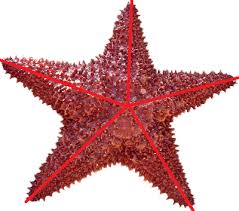
What type of symmetry is displayed in the picture?
a)
asymmetry
b)
bilateral symmetry
c)
radial symmetry
d)
photosynthesis
94.
What type of symmetry is pictured?
a)
bilateral symmetry
b)
radial symmetry
c)
asymmetry
d)
cellular respiration
95.

Organisms, like sponges, lacking body tissues and body symmetry belong to which of the following phyla?

a)

Cnidaria

b)

Mollusca

c)

Arthropods

d)

Porifera

96.

Mollusks include which of the following?

a)

Octopus, Squid, Clams, Snails

b)

Fish, Squid, Jellyfish, Sea cucumbers

c)

Earthworms, Sea cucumbers, sea urchins

d)

Birds, Fish, Whales, Sponges

97.

Which of the following are examples of echinoderms?

a)

Jellyfish, Hydrozoa, Squid

b)

Slugs, Snails, Mussels

c)

Sea stars, sea urchins, sea cucumbers

d)

spiders, crabs, crayfish

98.
An animal that only eats other animals is a _______________.
a)
carnivore
b)
omnivore
c)
herbivore
d)
decomposer
99.
A living thing that makes its own food is called a __________________________.
a)
consumer
b)
producer
c)
carnivore
d)
herbivore
100.

Which of these organisms would most likely be found at the bottom of a biomass pyramid?

a)

giant squids

b)

sand sharks

c)

sea cucumbers

d)

green algae