
 Worksheets
Revision KS3 year 7
Total questions: 98
Worksheet time: 1hrs 14mins
Nucleus
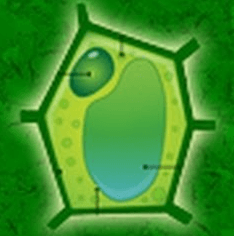


What part of the animal cell represents the cell membrane?
5
1
2
4

What part of the plant cell represents the cell wall?
5
3
6
4

When a thin slice from an onion is viewed through a microscope, lots of little box-like shapes are seen. These shapes are most likely
atoms
cells
dust
bubbles
Which type of specialized cell carries oxygen from the lungs all over the body?
red blood cells
squamous (skin) cells
muscle cells
white blood cells (macrophages)
nerve cells (neurons)
Which type of specialized cell carries oxygen from the lungs all over the body?
red blood cells
squamous (skin) cells
muscle cells
white blood cells (macrophages)
nerve cells (neurons)
Which type of specialized cell carries oxygen from the lungs all over the body?
red blood cells
squamous (skin) cells
muscle cells
white blood cells (macrophages)
nerve cells (neurons)
Which type of specialized cell carries oxygen from the lungs all over the body?
red blood cells
squamous (skin) cells
muscle cells
white blood cells (macrophages)
nerve cells (neurons)
Which type of specialized cell carries oxygen from the lungs all over the body?
red blood cells
squamous (skin) cells
muscle cells
white blood cells (macrophages)
nerve cells (neurons)
Which type of specialized cell carries oxygen from the lungs all over the body?
red blood cells
squamous (skin) cells
muscle cells
white blood cells (macrophages)
nerve cells (neurons)
Which type of specialized cell carries oxygen from the lungs all over the body?
red blood cells
squamous (skin) cells
muscle cells
white blood cells (macrophages)
nerve cells (neurons)
Which type of specialized cell carries oxygen from the lungs all over the body?
red blood cells
squamous (skin) cells
muscle cells
white blood cells (macrophages)
nerve cells (neurons)
Which type of specialized cell keeps moisture in the body and germs out?
red blood cells
squamous (skin) cells
muscle cells
white blood cells (macrophages)
nerve cells (neurons)
Which type of specialized cell carries oxygen from the lungs all over the body?
red blood cells
squamous (skin) cells
muscle cells
white blood cells (macrophages)
nerve cells (neurons)
Which type of specialized cell keeps moisture in the body and germs out?
red blood cells
squamous (skin) cells
muscle cells
white blood cells (macrophages)
nerve cells (neurons)
Which type of specialized cell has many mitochondria and changes size (contracts)?
red blood cells
squamous (skin) cells
muscle cells
white blood cells (macrophages)
nerve cells (neurons)
Which type of specialized cell protects the body by destroying germs?
red blood cells
squamous (skin) cells
muscle cells
white blood cells (macrophages)
nerve cells (neurons)
Which type of specialized cell carries electrical signals through the body to the brain?
red blood cells
squamous (skin) cells
muscle cells
white blood cells (macrophages)
nerve cells (neurons)
Which type of specialized cell brings water from the roots to the leaves?
xylem
guard cells
epidermis cells
phloem
root hair cells
Which type of specialized cell opens and closes pores (holes) to let things in and out of the leaf?
xylem
guard cells
epidermis cells
phloem
root hair cells
Which type of specialized cell are waxy and waterproof to protect the plant?
xylem
guard cells
epidermis cells
phloem
root hair cells
Which type of specialized cell sends "food" from photosynthesis through the plant?
xylem
guard cells
epidermis cells
phloem
root hair cells
Which type of specialized cell sticks out into the soil, allowing water into the plant?
xylem
guard cells
epidermis cells
phloem
root hair cells

Red blood cells have a disk-shape with a lot of surface area.
This statement describes a STRUCTURE.
This statement describes a FUNCTION.

Guard cells are able to open and close pores in the plant.
This statement describes a STRUCTURE.
This statement describes a FUNCTION.
Red blood cells have room to carry more oxygen.
This statement describes a STRUCTURE.
This statement describes a FUNCTION.
Guard cells are thin on the outside and thick on the inside.
This statement describes a STRUCTURE.
This statement describes a FUNCTION.

Neurons have branches on the end of a long body.
This statement describes a STRUCTURE.
This statement describes a FUNCTION.
Neurons create a complex network of the branches of multiple neurons to carry signals.
This statement describes a STRUCTURE.
This statement describes a FUNCTION.

Root hair cells have thin walls and stick out.
This statement describes a STRUCTURE.
This statement describes a FUNCTION.
Root hair cells easily take in water from soil.
This statement describes a STRUCTURE.
This statement describes a FUNCTION.

Muscle cells are long, thin fibers.
This statement describes a STRUCTURE.
This statement describes a FUNCTION.
Muscle cells become shorter and thicker when they contract the muscle.
This statement describes a STRUCTURE.
This statement describes a FUNCTION.
Iron objects react with water and oxygen to form hydrated iron oxide
(a)
Iron objects react with water and oxygen to form hydrated iron oxide
(a)
Magnesium reacts with oxygen to form magnesium oxide
(a)
Carbon burns in a good supply of oxygen to form carbon dioxide
(a)
Carbon burns in a limited supply of oxygen to form Carbon monoxide
(a)
Hydrochloric acid reacts with magnesium to form magnesium chloride and hydrogen
(a)
Sodium hydroxide neutralises hydrochloric acid to form sodium chloride and water
(a)
Sulphur reacts with oxygen to form sulphur oxide
(a)
Nitric acid reacts with iron to form nitrate and hydrogen
(a)
Copper carbonate reacts with hydrochloric acid to form copper chloride, water and carbon dioxide
(a)
Calcium oxide reacts with nitric acid to form calcium nitrate and water
(a)
Which is the correct definition for an element?
A substance made up of only one type of atom that can be broken down
Two or more substances that are not chemically combined
Two or more different atoms that are chemically combined
A substance made up of only one type of atom that cannot be broken down
C is the correct chemical symbol for which element?
calcium
copper
carbon
caesium
The smallest part of an element is called...
a compound
a mixture
an element
an atom
Which is the correct definition for a compound?
A substance made up of only one type of atom that can be broken down
Two or more substances that are not chemically combined
Two or more different atoms that are chemically combined
A substance made up of only one type of atom that cannot be broken down
What is the missing word? The properties of a compound are __________ the elements it is made up of.
the same as
different to
Which is correct?
iron and sulfur are both metals
iron and sulfur are both non metals
iron is a non metal and sulfur is a metal
iron is a metal and sulfur is a non metal
What is the correct name for CO?
carbon dioxide
carbon monoxide
cobalt
carbon oxide
Which elements are present in H2SO4?
hydrogen and oxygen
hydrogen, oxygen and sodium
hydrogen, oxygen and sulfur
hydrogen, oxygen and silicon
How many atoms of aluminium are there in the chemical formula for aluminium oxide: Al2O3
2
3
5
1
Which element has the chemical symbol Ni?
nitrogen
nickel
sodium
neon
What is the chemical symbol for copper?
C
Co
Cp
Cu
What is the chemical symbol for gold?
Ag
Go
Gu
Au
Is water an element or a compound?
compound
element
How many different elements are there in Mg(OH)2
2
3
4
5
True or false: Hydrogen atoms go around in pairs called molecules
True
False
In a reaction A + B ----> C, reactant A has 5g and product C has 9g. How many grams does reactant B have?
4g
5g
9g
14g
32 g of Oxygen completely reacts with 8 g of Hydrogen to produce _____ g Water
8
12
24
40
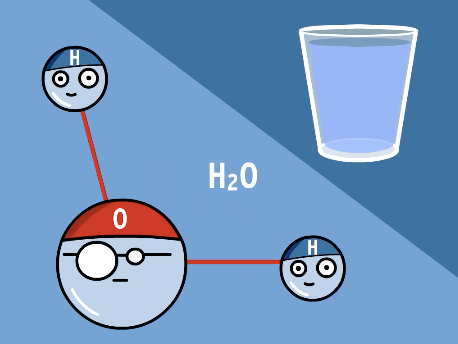
4 grams of hydrogen and 32 grams of oxygen will combine to form:
36 grams of water
28 grams of hydroxide
32 grams of oxygen
36 grams of deuterium
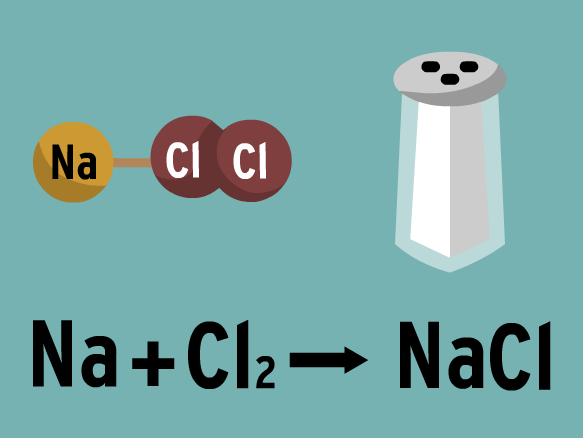
In a chemical reaction, 4 grams of sodium must combine with how many grams of chlorine to produce 10 grams of table salt?
4 grams
6 grams
8 grams
10 grams

Why does this picture demonstrate the Law of Conservation of Mass?
the number of atoms of each element are the same on both sides
they start out separate and end up combined
the same elements are used
it doesn't demonstrate the Law of Conservation of Mass
When a log is burned, what happens to the wood?
The mass stays the same, but becomes smoke and ash.
It disappears.
The mass changes as it goes away.
Nothing. You're imagining things.

What is the unit to MEASURE force?
Kilogram
Meter
Pounds
Newton

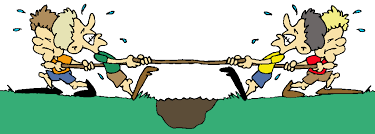


When an object is moving, friction acts in the _______ direction as the motion.
perpendicular
same
opposite
precise
A type of friction that occurs when air pushes against a moving object it to decelerate.
surface area
air resistance
velocity
gravity
A contact force is from
objects physically touching
far apart objects
not touching object
always a pull

The three examples pictured are of
Non-contact Forces
Contact Forces

The force between the phone and the mount is a
contact force
non-contact force

