
 Worksheets
Unit 8 review
Total questions: 100
Worksheet time: 1hrs 18mins
A group of ecosystems with similar climates and types of organisms is called
Ecosystem
Biome
Community
Hemisphere
Which biome consists of lakes, rivers, and streams and only includes 3% of the Earth’s water?
Marine open ocean
Marine coastal
Tundra
Freshwater

non-living things
always plants
living things


The average, year-after-year conditions of temperature, precipitation, winds, and clouds in an area:
Tropical Zone
Climate
El Niño
La Niña
Seasonal changes in daylight hours and climatic conditions are caused by
lunar phases
ocean currents
the 23.5 degrees tilt of Earth's axis
the annual change of distance from sun to Earth
Climate in a regions is
Determined only by seasonal daylight hours
Never affected by ocean currents
the atmospheric conditions on a given day
the long-term, prevailing atmospheric conditions
Which affects wind more?
Longitude
Latitude
Earth's tilt
Solar Activity
The greenhouse effect makes Earth
colder
warmer
none of the above
Global warming is known as the gradual increase in _________________ of the atmosphere.
precipitation
sun spots
temperature
ocean currents

Which zone is the tropical zone?
Zone B
Zone C
Zone D
Zone E

How are biotic and abiotic factors related?
they aren't
they both can affect the life of an organism
you can only have one
cousins
Levels of Ecological Organization consists of...(more than one answer)
An individual organism of a species
A population of a group of individuals that belong to the same species
A community of different populations living together in a defined area
An ecosystem where all organisms that live in a place, together with their physical environment
The biosphere includes...
Only weather and climate patterns
Only organisms
Only abiotic parts
All forms of life and their surroundings so it includes everywhere life exists
An abiotic factor is....
a population of bugs
a range of mountains
a clump of grass
a tree
What is a population?
A group of individuals of the same species living together in the same place at the same time.
A number of populations living together in the same place at the same time.
A big group of humans
What term is used for long-term averages of weather conditions?
Climate
Weather
Temperature
Ozone

All of Earth's water
Cryosphere
Geosphere
Hydrosphere
Biosphere
Contains all living things on Earth
Biosphere
Geosphere
Atmosphere
Hydrosphere

What is the biosphere?
all the air and gases on the planet
made up of living things
the non-living soil, rocks, and minerals of the Earth
the rivers, lakes, and oceans of the Earth

What is the atmosphere?
all the air and gases on the planet
made up of living things
the non-living soil, rocks, and minerals of the Earth
the rivers, lakes, and oceans of the Earth

Since 1880, global land-ocean temperatures have shown
a warming trend.
a cooling trend.
a cooling trend until 1950, then a rapid warming trend.
no trend.
Which two factors determine the climate in a particular region?
temperature and latitude
precipitation and humidity
temperature and precipitation
humidity and air pressure
What are the three main climate zones?
tropical, thermal, polar
tropical, temperate, polar
cold, super hot, blah
polar, tropical, humid
What climate zone is located near the equator where the sun is directly overhead all year?
polar
tropical
desert
temperate
Which factor does NOT affect the kind of climate an area has?
distance from the equator (latitude)
elevation
proximity to bodies of water
wind direction

Is the Earth heated evenly?
Yes
No
Which of the following refers to a community of living organisms and the way they interact with nonliving parts of their environment?
trophic
biome
habitat
ecosystem
The term ecologists use to describe the number of individuals moving away from a population is
Emigration
Immigration
The term ecologists use to describe the number of individuals moving into a population is
Emigration
Immigration
What is a population ?
Disturbance has removed vegetation but left soil intact.
The natural birth, growth and development of ecosystem.
All organisms of a species that live in the same area.
A community of interacting organisms and their environment.
If the number of births in a population is the same as the number of deaths in a population, what will happen to the growth of the population?
It will increase.
It will decrease.
It will stay the same.
It will fluctuate.
If the number of births is greater than the number of deaths in a population, what will happen to the growth of the population?
It will increase.
It will decrease.
It will stay the same.
It will fluctuate.
A small island nation is tracking its total population. It started with exactly 100 people. During the year, 10 people immigrated, while 20 emigrated. The birth rate was 15, and the death rate was 5. What is the new population of the country?
115
110
90
No change; the population is still 100.
One of the Factors that affect population size:
INCREASE: Number of ___________
Birth
Death
Emigration
None of them
One of the factors Factors that affect population size:
DECREASE: Number of ___________
Birth
Emigration
Immigration
None of them
Which factor might not contribute to an exponential growth rate in a given population?
lower death rates
higher birth rates
less competition
reduced resources

Does the graph represent an exponential growth or logistic growth?
Exponential Growth
Logistic Grwoth

What type of growth is shown on this graph?
Logistic
Exponential
Carrying Capacity
The carrying capacity of a population is the largest population the environment can support.
True
False
If a population is growing exponentially, it has met its carrying capacity.
True
False
Resources are limiting factors
True
False
What is a limiting factor?
Something that causes the growth of a population to decrease
Something that causes a population to grow a lot
What limiting factors do not usually depend on population density?
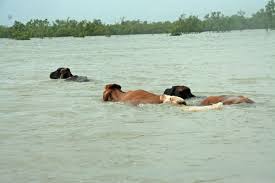
Natural disasters like a flood
Predators
Competition
Disease
Which of the following would be considered a density dependent limiting factor?
Floods
Tornadoes
Predators
Earthquake

A lion and a cheetah attempt to occupy the same niche. The more aggressive lion survives; the cheetah does not.
Density-Dependent: Competition
Density-Independent: Competition
Density-Dependent: Predator-Prey
Density-Independent: Predator-Prey
Which of the following is a density-dependent limiting factor?
human activities
unusual weather
competition
natural disaster

A massive tornado
density dependent limiting factor
density independent limiting factor
Due to stress, large numbers of female lemmings miscarry their young and fail to reproduce.
Density-Dependent
Density-Independent

At what population was carrying capacity met?
250
1000
400
720
Logistic population growth can be described as
growth when resources are limited
a s-shaped curve
reaching carrying capacity
all of the above

Density-independent limiting factors to population growth includes
stress from overcrowding
parasitism
competition
natural disasters
Three factors can affect population size
births, deaths,leaves or enters population
deaths, birth, buildings
photosynthesis, weather, deaths
houses, weather, heath


Which of the following shows the symbiotic relationship between the Rodent and the Bird?
Mutualism
Commensalism
Competition
Hermit Crabs live in shells made and then abandoned by snails.
Commensalism
Parasitism
Competition


The ecological role an organism performs in their specific environment is considered the organism's...
Habitat
Population
Biome
Niche
a relationship between two species in which both species compete for limited resources such that both species are negatively affected by the relationship
Symbiosis
interspecific competition
species richness
species-area effect
A relationship in which two different organisms live in close association with each other
interspecific competition
Mutualism
Symbiosis
Commensalism


What is a keystone species?
A species that helps to hold an ecosystem together
A species that lives in or around rocks
Keys and stones have nothing to do with ecology
A keystone isn't a living thing, it's just a stone

A habitat is ___________________.
the place or kind of place in which an animal or plant naturally lives.
is how plants produce their own food.
is an animal that only eats meat.
the place where only one animal lives.
A niche ________________.
is the function that an organism performs in the food web of that community.
includes everything else the organism does and needs in its environment.
is specific to each individual animal and plant.
All of the above.
where an organism lives and what it does "for a living"; an organism's "role" within an ecosystem
habitat
niche
competition
biome
the state or condition of feeding on plants
predator
prey
herbivory
resourcing

These images represent which phenomenon?
logistic growth
competitive exclusion
exponential growth
predator prey relationships


Which of the following tells you population density?
the number of births per year
the number of frogs in a pond
the number of deaths per year
the number of bacteria per square millimeter
If immigration and emigration numbers remain equal, which is the most important contributing factor to a slowed growth rate?
increased birthrate
constant death rate
decreased birthrate
constant birthrate
The movement of organisms into a range is called
immigration
emigration
population shift
carrying capacity
There are 12 Flamingos in 3 square kilometers of a wetland, what is the population density?
4 Flamingos/square km
12 Flamingos/square km
3 Flamingos/square km
9 Flamingos/square km

Where does most of the plastic end up?
landfills
schools
litter on the streets
oceans

