
 Worksheets
Micro Test 1
Total questions: 96
Worksheet time: 1hrs 21mins
Which part of the bacteria contains Peptidoglycan?
Lipoproteins
Cell wall
Cell membrane
Porin channel
Which type of bacteria contains more than 1 layer of phospholipids?
Gram Negative
Gram Positive
Both (-) and (+)
Which layer of the bacteria is dyed/stained purple?
Cell membrane
cell wall
capsule
slime layer

The shape of this bacterial cell is:
bacillus
coccus
spirillum
The shape of this bacterial cell is:
bacillus
coccus
spirillum
A cell that does not contain a membrane-bound nucleus is:
prokaryotic
eukaryotic

The shape of this bacterial cell is:
coccus
bacillus
spirillum

The shape of this bacterial cell is:
bacillus
coccus
spirillum
A prokaryotic cell has a cell membrane.
False
True
Bacterial cells can have one of three shapes. Which of the following is not a common shape of bacterial cell?
Spirilla
Cocci
Bacilli
Cube
Which of the following is the largest organism type?
Viruses
Eukaryotes
Prokaryotes
Bacteria are treated with:
Antibiotics
Vaccines
Antifungals
Chemotherapy
What are pathogens?
Eukaryotic cells that turned in to bacteria
Disease causing agents
Microorganisms that help clean up oil spills
Beneficial bacterial cells

The organelle described as a long, thin-like projection that helps with movement.
Ribosome
Nucleoid
Flagella
Cell Membrane

Organelle that creates proteins in bacteria.
Ribosome
Cell Wall
Mitochondria
Pili

Where is the DNA located in prokaryotic cells?
Nucleus
Cell Membrane
Cytoplasm
Chloroplast
In the bacterial cell, the chromosome or DNA is located floating freely in the cytoplasm in a region called the:
Ribosome
Nucleoid
Flagella
Cell Membrane
Bacteria have small, circular chromosomes separate from the nucleoid that they can easily exchange with other bacteria called:
Ribosomes
Plasmids
Capsules
Membranes

Bacteria that line up in chains have the prefix:
strepto-
staphylo-

Bacteria that arrange in clusters have the prefix:
strepto-
staphylo-
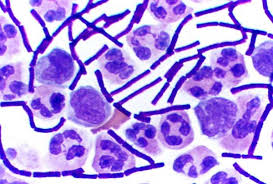
These bacteria are:
gram positive
gram negative
both gram positive and gram negative
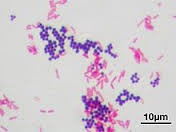
These bacteria are:
both gram positive and gram negative
gram positive
gram negative
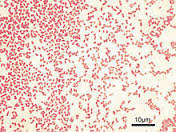
These bacteria are:
both gram positive and gram negative
gram positive
gram negative

What would be the gram stain results of a bacteria with this cell wall? (Hint: look at the peptidoglycan layer in the cell wall.)
gram positive
gram negative

Select all that apply to this bacteria:
cocci
bacilli
strepto-
staphylo-
Gram negative
These bacteria have a thick peptidoglycan cell wall and therefore no outer membrane (capsule).
True
False
These bacteria have a thin peptidoglycan cell wall and therefore have an outer membrane (capsule) to help protect them.
True
False
All viruses are different, but what are two parts that a virus must have?
Genetic Information (DNA or RNA)
a lipid membrane
a nucleus
a protein coat

Which of these statements is true?
A virus is unicellular, it has only one cell.
A virus may sometimes be multicellular, have many cells.
A virus has no cells
Which statement is true?
A virus has a nucleus, but no other organelles.
A virus has a nucleus and ribosomes.
A virus has no organelles, because it has no cells, and it is non-living.

A virus is so small that 250,000 viruses could fit inside
a grain of sand
an apple
a basketball

Cell membranes of living organisms are made of a bilayer (2 layers) of
lipids
proteins
carbohydrates
Which sentence is true
All viruses, although they are not living, have a lipid layer that surrounds them.
Many viruses, although they are not living, have a lipid layer that surrounds them. This includes the corona viruses.

The little sticks poking out of the sides of these viruses are called
sugar sticks
spike proteins
covid claws

Which sentence is true about this picture.
It shows a virus being made.
It shows a virus entering the cell of a human or animal.
It shows a virus being destroyed by soap.

At the top left of this picture, you can see the spike protein of a virus fitting perfectly into a receptor site on our cells. Which sentence below is true?
Humans have receptor sites for viruses on our cells because we want viruses to invade our cells.
Humans have receptor sites for viruses on our cells because those receptor sites were made for a different purpose, but viruses evolved to be able to use them.

Once the virus is attached to our cell, the lipid layer of our cell and the lipid layer around the virus can merge because
Lipids attract lipids
Lipids attract proteins
The DNA instructs them to do this.
Which sentence is true?
Soap destroys viruses because it dissolves the DNA or RNA
Soap destroys viruses because it bends the spike proteins
Soap destroys viruses because it breaks up the lipid layer and allows it to be washed away.
Soap destroys viruses because it is acidic.
Once a virus gets into a cell, it
Releases its DNA or RNA into the cell.
It begins to create DNA or RNA in the cell.
It destroys its own DNA and RNA in the cell.
Which of the following is NOT a unicellular kingdom?
Prokaryotes
Protists
Archaea
Fungi
You identify a small living organism that is eating something at your feet. It's visible but pretty tiny, you take it to a lab and find that it has cell walls made of chitin. Which is its domain and kingdom?
Prokaryote, Fungi
Eukaryote, Fungi
Prokaryote, Plant
Eukaryote, Plant
Which of the following is the correct order for least related to most related?
Domain
Kingdom
Phylum
Class
Order
Family
Genus
Species
Species
Kingdom
Phylum
Class
Order
Family
Genus
Domain
Species
Genus
Family
Order
Class
Phylum
Kingdom
Domain
Domain
Kingdom
Class
Phylum
Order
Genus
Family
Species

The lion and the tiger belong to different species as shown in the chart above. What is the scientific name of the Lion?
Panthera tigris
Felidae Panthera
Panthera leo
Prepares and packages material for excretion from the cell
E.R.
Golgi body
Vacuole
Centrioles
The digestion center of the cell
Golgi body
Vacuole
E.R.
Lysosome
The powerhouse of the cell
Nucleus
Nucleolus
Mitochondria
Chloroplast
Helps control what goes in and out of the cell
Cell membrane
Nuclear membrane
Cell wall
Nucleus
Proteins are made here
E.R.
Ribosomes
Nucleolus
Chloroplast
The site of photosynthesis
Chloroplast
Mitochondria
Ribosomes
Nucleolus
Short, hair-like structure used for movement
Flagella
Centrioles
Chromosomes
Cilia

Which of the following best describes the function of cilia?
A "fake foot" that helps the cell move & eat
Cell hairs that help the cell move
A cell tail that helps the cell move
It pumps water out of the cell

Which of the following best describes the function of flagella?
A "fake foot" that helps the cell move & eat
Cell hairs that help the cell move
A cell tail that helps the cell move
It pumps water out of the cell
a long, whip-like structure that helps a cell to move.
pasteurization
bacteria
flagellum
endospore


Biological contaminant that causes disease.
pathogen
hair
Organism that must live in another living thing in order to survive.
virus
parasite
Tiny structures that produce proteins inside bacteria
bacteria
ribosomes
cytoplasm
endospore
Parasitic worms that cause infection
protozoa
prions
fungi
helminths
Hermaphroditic means that
there are both male and female reproductive parts on one animal
there are separate male and female animals
the organism decays dead organic matter
the organism is a parasite
In general, how are helminth infections transmitted?
arthropod vectors
healthcare acquired infections
inhalation of spores
ingestion of eggs
This helminth infection is associated with children and causes them to have itchy butts, which contributes to the spreading of the helminth eggs
pinworms
tapeworms
Trichinella spirallis
hookworms
What is the correct order of lifecycle of a helminth?
egg -> larvae -> adult
egg -> spore -> larvae -> adult
egg -> proglottid -> adult
proegg -> egg -> proglottid -> larvae -> adult
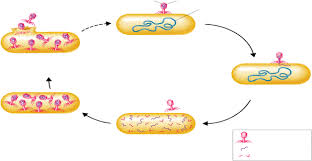
Which viral cycle takes the longest to show symptoms?
Lysogenic
Lytic
What is the first step to both cycles?
The virus attaches to a host
the virus injects genetic material
the host gets sick
the cell is destroyed
When the viral DNA becomes active in the lysogenic cycle, which life cycle does it enter?
lytic
lysogenic
cell cycle
DNA replication
Choose the 3 statements that is are part of the cell theory.
All living things are made of cells.
All cells come from other cells.
Cells are the basic unit of life.
Every form of matter is made of cells.
What is one thing that both prokaryotes and eukaryotes have?
mitochondria
chloroplast
DNA
membrane-bound organelles
True/False: Antibiotics are used to treat prokaryotic (bacterial) infections, NOT viral infections.
True
False
Viruses can be described as _________, while bacteria can be described as __________.
prokaryotic, eukaryotic
living, non-living
non-living, living
eukaryotic, prokaryotic

Which of the following matches this illustration?
Protein Pump
Endocytosis
Osmosis
Facilitated Diffusion
Which do BOTH prokaryotes and eukaryotes contain?
nucleus
mitochondria
ribosomes
cell wall
What part of a virus houses the genetic material (DNA/RNA)? It is also called a protein coat.
tail
nucleus
capsid
glycoprotein


A(n) _____ is a virus that enters a bacterial cell.
endospore
decomposer
plasmid
bacteriophage


Host DNA is compromised and viral DNA takes over in which phase?
1
2
3
4
Fungi obtain energy
Directly from the sun
From inorganic (unnatural) materials in their environment
By absorbing organic (natural) materials
From nuclear fusion
Fungi are important to an ecosystem as
Producers
Controllers
Decomposers
Regulators

This bread mold belongs to what phylum?
Basidomycota
zygomycota
Chytridiomycota
Glomeromycota
What are the cross-walls between fungal cells called?
fruiting body
hyphae
mycelium
septa
What are the filaments in a multicellular fungus called?
fruiting body
hyphae
mycelium
septa
Which is the most common fungi phylum and includes yeast?
Ascomycota
Basidiomycota
Chytridiomycota
Deuteromycota
Zygomycota

What is #6 in this picture?
mating strains
rhizoids
sporangia
spores
stolons

Organism B moves by means of -
a flagellum
cilia
pseudopodia
parasitism

