
 Worksheets
REVISION UPS 2 CHAPTER 3-6 SB025
Total questions: 100
Worksheet time: 2hrs 42mins
The best word to describe about natural selection that helps an organism survive in its environment is
Camouflage
Adaptation
Mutation
Evolution
In directional selection, the curve of the population after selection will
Shift to the selection pressure
Shift to the favored phenotype
Shift to the unfavored phenotype
Shift to the left and right
Choose the CORRECT explanation
Stabilizing selection promotes genetic variability as both extreme phenotypes are eliminated
Disruptive selection promotes genetic variability as both extreme phenotypes are favored
Stabilizing and disruptive selection will reduce genetic variability
Directional selection reduce genetic variability as both extreme phenotypes are eliminated
Artificial selection is also known as
Genetic manipulation
Selective hearing
Selective breeding
Random selection
What is means by "survival of the fittest"?
Being the strongest
Being the smartest
Being able to survive and produce offspring
Being able to collect as much resources as possible

The Western Skunk mates in the fall and the Eastern Skunk mates in the spring. This is a type of
prezygotic barrier
postzygotic barrier
allopatric barrier
polyploidy
A study shows that the average mortality rate among infants who are less heavy and very heavy is high. Which is true of this type of selection?
Elimination
Directional
Disruptive
Stabilising
Which statements about a population undergoing disruptive selection are true?
I A group of extreme phenotypes is selected.
II Individuals with intermediate phenotypes are the fewest in numbers.
III Human birth weight displays disruptive selection.
IV Reduce genetic variability.
I and III only
I and II only
II and III only
III and IV only
The occurrence of large beaks and small beaks in the absence of medium-sized beaks in finches is an example of
directional selection
the founder effect
disruptive selection
adaptive radiation
Which factors are involved as prezygotic reproductive barriers?
I Gametic isolation
II Temporal isolation
III Hybrid breakdown
IV Reduced hybrid viability
I and II
I and IV
II and III
III and IV
Genetic drift occurs when a few individuals of a species colonized an isolated area. This particular phenomenon is known as
the founder effect
habitat isolation
random mating
the bottleneck effect
X is a species of fish in a river. After a dam is constructed, individuals of species X upstream are separated from the individuals downstream. Gradually, the individuals in the upstream become a new species. This type of speciation is known as
allopatric
sympatric
inbreeding
outbreeding
Which of the following is NOT associated with speciation?
Reproductive isolation
Genetic drift
Adaptive radiation
Inbreeding
A few individuals from a population of butterflies in a forest migrate to another forest somedistance away and reproduce. The frequency of allele in this new population is different from that of the original population. A situation where the allele frequencies change due to the migration of a small subgroup of a population is known as
Mendelian effect
founder effect
bottleneck effect
habitat isolation
How can temporal isolation lead to speciation?
The courtship display and mating rituals by one sex is not recognized by the other.
The two populations have different genitalia which prevents successful copulation.
The two populations reproduce at different times, making them unlikely to reproduce with each other which may cause them to become separate species.
Two populations are separated by geographical barrier, preventing members of the two population from reproducing with one other, which may cause them to become separate species.
Populations of squirrels living in area north of the Grand Canyon do not mate with the squirrels in the south. They are isolated by a
sympatric barrier
geographical barrier
genetic barrier
mechanical barrier
Which of the following is the best definition of species?
A group of organisms that lives in the same habitat
A group o organisms that exploit the same ecological niche
A group of organisms that can interbreed and produce viable and fertile offspring
A group of organisms that have the same appearance
Different finch populations lived on separate islands with different environments. They evolved to best adapt to those particular environments and can no longer mate. What type of speciation is this?
Allopatric
Sympatric
Temporal
Mechanical

Monomer of enzymes are...
nucleic acids
proteins
lipids
carbohydrates
A holoenzyme consist of...
More than ONE answer.
Substrate
Inhibitor
Cofactor
Apoenzyme
Which of the following are factor that caused the denaturation of enzyme?
More than ONE answer.
Extreme pH
Competitive inhibitor
Heavy metal effects
High temperature
The enzyme increase the rate of reaction by
Shifting the position of equilibrium of the reaction.
Increasing the rate of random collisions of molecule.
Lowering the activation energy.
Supplying the energy required to start the reaction.
What happens to the enzyme when its denatured?
The activation energy is lowered.
The conformational shape of the enzyme molecule is changed.
The activation energy is doubled.
The optimal temperature for enzyme action is doubled.
Active site of maltase only for maltose as its reactant. This statement is refer to enzyme is _______.
fragile
reusable
specific
catalyst
Only protease can catalyses the breakdown of protein. This shows that enzyme
is a biological catalyst
is highly specific in action
able to speed up chemical reaction
may catalyses reversibly
These enzymes bring about oxidation and reduction reactions .
reductases
dehydrogenases
oxidases
oxidoreductases
Which class of enzyme catalyses the formation of bonds between two molecules using energy derived from the breakdown of ATP?
Oxidoreductases
Hydrolases
Ligases
Transferases
What happens when enzymes are heated at high extreme temperature?
The enzymes die.
The shapes of the enzyme are altered denature
The enzymes' amino acid sequence changes.
The enzymes remain the same
The pH at which an enzyme is most efficient is called the _________ pH of an enzyme.
neutral
optimum
minimum
experimental
What are the enzymes called when they are at high temperature or extreme pH?
denatured
Killed
inactive
normal
Which statement explains the increase in the rate of reaction at the beginning of an enzymatic reaction when the substrates concentration is increased?
More substrates bind to the enzyme
The speed of substrate movement increase
The active sites of the enzyme are saturated
The affinity of the enzyme towards the substrate increases
The protein part of an enzyme that binds to prosthetic group to form a functional enzyme is called
holoenzyme
apoenzyme
coenzyme
conjugated protein
Which of the following is TRUE about competitive inhibitors?
Have same shape with the substrate.
Compete for the same allosteric site.
Have similar shape with the substrate.
Example is isoleucine.
Which of the following is TRUE about non-competitive inhibitors?
More than ONE answer.
Have not similar shape with the substrate.
Compete for the same allosteric site.
Have similar shape with the substrate.
Bind to the allosteric site.
Which of the following statements regarding enzyme inhibition is CORRECT?
Non-competitive inhibition of an enzyme can be overcome by adding large amount of substrate.
Competitive inhibition is seen a substrate competes with an enzyme for binding to an inhibitor protein.
Non-competitive inhibition is seen when the substrate and inhibitor compete for the active site on the enzyme.
Competitive inhibition is seen when the substrate and the inhibitor compete for the active site on the enzyme.
What is the function of an enzyme?
enzymes involve directly in catalytic reaction
enzymes slow down chemical reactions
enzymes speed up chemical reactions
enzymes combine products to form reactants
What happens when enzymes are heated to a high temperature?
the enzymes will destroy
The conformation of active site of the enzyme will change
The enzymes' amino acid sequence changes.
the conformation of enzyme will change
Which best describe an enzyme?
it is globular protein
act as biological catalyst
its monomer is amino acid
speed up a chemical reaction
Only protease can catalyses the breakdown of protein. This shows that enzyme
is a biological catalyst
is highly specific in action
able to speed up chemical reaction
may catalyses reversibly
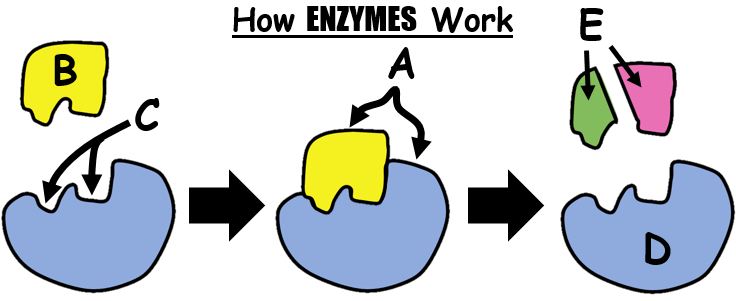
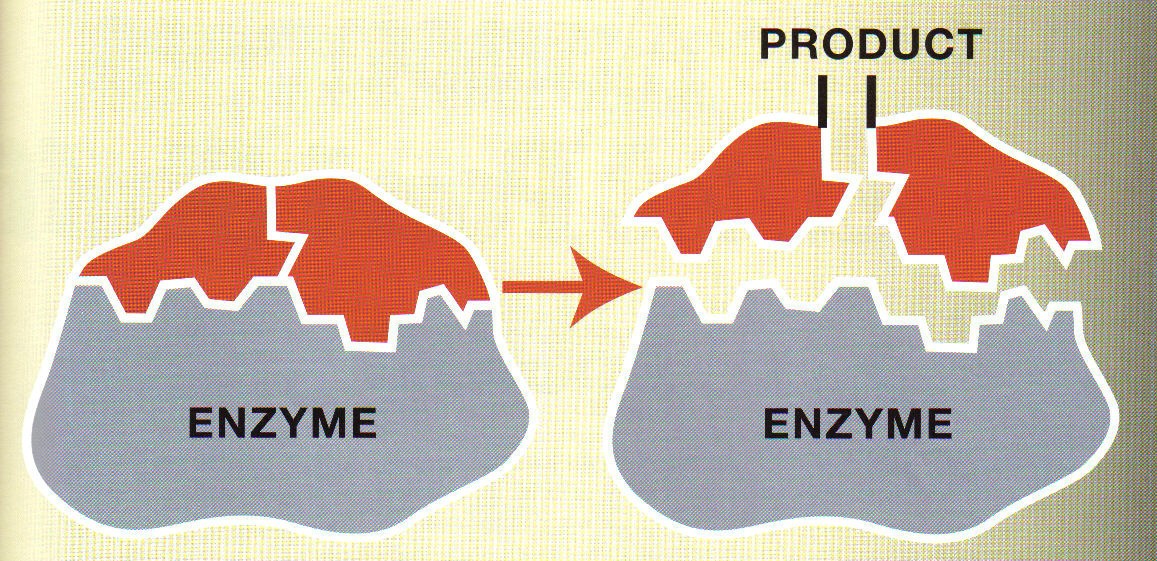
In the diagram, what is letter A?
subsrate -enzyme complex
substrate
enzyme-substrate complex
active site
Enzyme that catalyses the transfer of functional group of atoms from one molecule to another. This enzyme is
Isomerases
Transferases
Oxidoreductase
Lyases
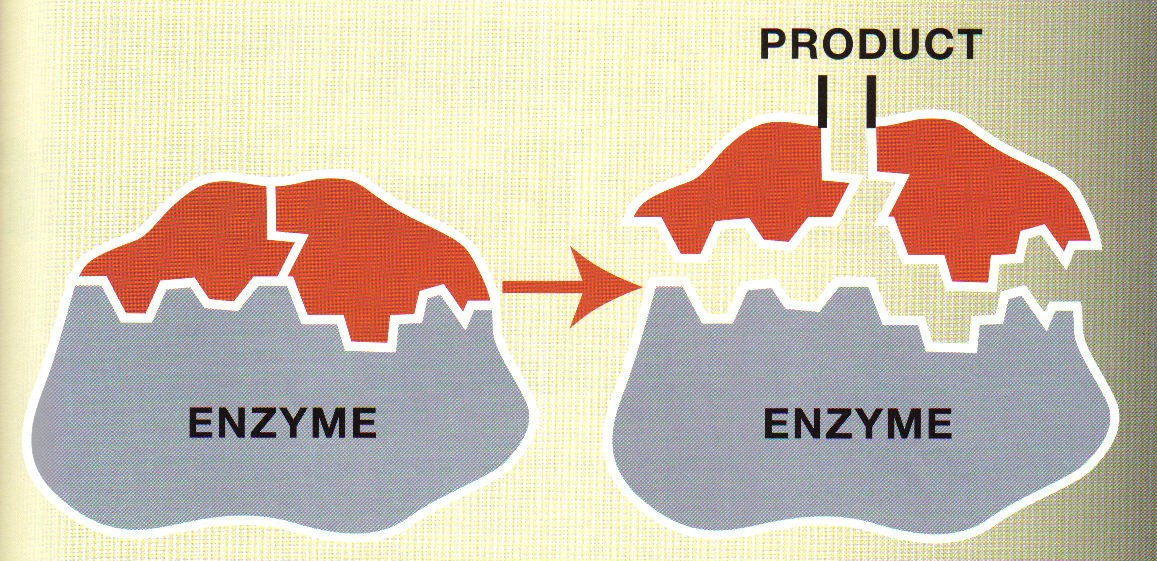
The area that the substrate fits into on the enzyme is called the:
Active Site
Allosteric Site
Binding site
Activation site
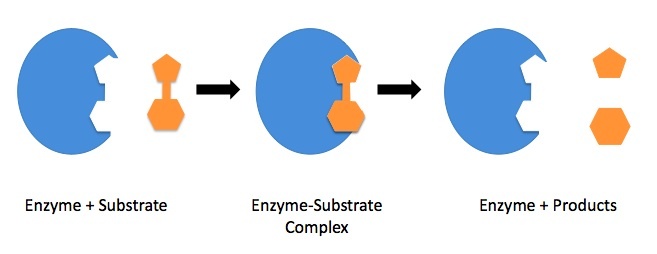
When a molecule can occupy the same active site as the substrate, a situation called __________________
Competitive lnhibition
Allosteric Regulation
Non-Competitive Inhibition
Feedback Inhibition
Molecules that bind to enzymes and enhance an enzyme's ability are called:
Coenzyme
Cofactor
Apoenzyme
Holoenzyme
Which of the following is TRUE about ATP.
(more than ONE answer)
Each molecule of ATP consist of nitrogenous base, Adenine
Each molecule of ATP consist of three phosphate group
ATP will be hydrolyzed when organism need energy
ATP will be synthesized through phosphorylation
Fermentation regenerates what substance so glycolysis can continue to occur?
ATP
FAD
NAD+
FADH2
What type of fermentation occurs in most organisms, including animals?
Aerobic
Alcoholic
Citric Acid
Lactic Acid

What is the correct order for aerobic cellular respiration?
glycolysis-->ETC--> Krebs Cycle
ETC-->glycolysis-->Krebs Cycle
glycolysis-->Krebs Cycle-->ETC
Krebs Cycle-->glycolysis-->ETC
In cellular respiration, redox reaction is occur when ________
(more than ONE answer)
Oxygen is reduced to water
Oxygen is oxidized to water
Glucose is oxidized to carbon dioxide
Glucose is reduced to carbon dioxide
During the process of reduction, _________________
Hydrogen are lost.
Oxygen are gained.
electrons are lost.
electrons are gained
Which of the following is NOT of metabolic process in aerobic respiration?
Glycolysis
Krebs cycle
Link reaction
Oxidative phosphorylation
State type of ATP production in Glycolysis.
Phosphorylation
Energy payoff phase
Oxidative phosphorylation
Substrate level phosphorylation
How many C atoms does acetyl CoA contain?
1
2
3
4
The products of the link reaction are
pyruvate and carbon dioxide
carbon dioxide and co-enzyme A
carbon dioxide, acetyl coA and NADH
NADH and carbon dioxide
Krebs cycle takes place in the:
Cytoplasm
Mitochondrial Matrix
Ribsome
InterMembrane Space
The number of ATP molecules produced out of Krebs cycle for 1 molecule of glucose is:
2
3
4
0
How many NADH molecules are produced in the Krebs cycle for 1 molecule of glucose?
2
3
4
6
At the end of aerobic respiration, how many ATPs produced per 1 molecule of glucose?
32
34
36
38
Where does oxidative phosphorylation take place?
Cytosol
Matrix of mitochondria
Innermembrane of mitochondria
Intermembrane space of mitochondria
The electrons that are transferred through the electron transport chain initially belonged to
NADH
FADH2
NADH and FADH2
Oxygen
Which of the following is an electron donor for succinate dehydrogenase in electron transport chain?
NAD+
FADH2
NADH
FAD
As electrons travel down the electron transport chain, they release
ADP
Energy
ATP
Hydrogen ion
In chemiosmosis, how many ATPs produced per 1 molecule of glucose through oxidative phosphorylation?
30
32
34
36

alcohol fermentation

Which phrase best describes the main role of fermentation?
converts glucose into pyruvate and
NADH
produces lactic acid to counteract an
oxygen deficit
allows glycolysis to continue making a
small amount of ATP
allowing anaerobic production of ADP

Why does a runner breathe hard for a few minutes after finishing a race?
The runner's cells need oxygen to make lactic acid.
The runner's cells continue the fermentation process.
The runner's cells are making up for an oxygen deficit
The runner's cells cannot perform glycolysis.

Why is fermentation important even though no more ATP's are made?
Lactate is an essential product for muscle growth
It regenerates NAD+ to be reused in glycolysis
Yeast need alcohol to survive
It splits the glucose into usable sized molecules
The role of water molecule in light dependent reaction is to …
Hydrolyse NADP+ at the end of the electron transport chain.
Involve directly in the production of ATP.
Replace the excited electron of reaction centre molecule in photosystem II.
Involve directly in Calvin cycle.
Complete equation for photosynthesis is
6CO2 +6H2O= 6C6H12O6 + 6O2
CO2 +H2O= C6H12O6 + O2
3CO2 +3H2O= 3C6H12O6 + 3O2
3O2 +3H2O= 3C6H12O6 + 3CO2
Which of the following are not the properties of light?
Light is a form of electromagnetic energy
The electromagnetic energy travels in waves
The entire range of radiation is known as the electromagnetic spectrum
A distance between the peaks of electromagnetic waves is called the amplitude
What is the wavelength of visible light
Between 380nm to 750nm
Between 100nm to 360nm
Between 760nm to 1500nm
Between 280nm to 550nm
which of the following reaction can't occur without sunlight?
Light independent reaction
Light dependent reaction
Both can occur
Both can't occur
Where does light dependent reaction occur in the chloroplast?
Membrane of thylakoid
Stroma
Granum
Inner membrane
Where does light independent reaction occur in the chloroplast?
Membrane of thylakoid
Stroma
Granum
Inner membrane
Which photosynthetic pigment is function as the primary pigment in the reaction center for Photosystem 1?
Chlorophyll a P700
Chlorophyll a P680
Chlorophyll b P700
Chlorophyll b P680
What is the general structure of a chlorophyll?
Consist of a porphyrin ring (with magnesium at the centre) & hydrocarbon chain
Consist of a porphyrin ring (with iron at the centre) & hydrocarbon chain
Consist of a porphyrin ring (with copper at the centre) & hydrocarbon chain
Consist of a porphyrin ring (with zinc at the centre) & hydrocarbon chain
A stack of thylakoid are known as.
Granum
Stroma
Chloroplast
Matrix

What is the main purpose of the light dependent reactions?
To provide the energy and electrons for the Calvin cycle
To capture light energy and make sugar
Which of the following is an example of an AUTOTROPH?
mosses
yeast
Mushroom
Human
The most effective colour of light for Photosynthesis.
blue and green
blue and yellow
blue and red
red and orange
What are the products of photosynthesis?
carbon dioxide and glucose
oxygen and glucose
water and carbon dioxide
oxygen and carbon dioxide

