
 Worksheets
A&P 1 2113- Chapter 3 Review
Total questions: 95
Worksheet time: 33mins
What is made in the mitochondria?
protein
energy
nucleotides
waste
Which process happens in the mitochondria?
photosynthesis
protein synthesis
DNA replication
cellular respiration
Where are proteins made?
nucleus
ribosome
Golgi Apparatus
vacuole
Which organic compound is the primary component of a cell membrane?
Lipid
Carbohydrate
Nucleic Acid
Protein
What is the purpose of the cell membrane?
To make protein
To protect the DNA
To regulate what enters the cell
To digest waste material
nucleoplasm
cytoplasm
cytosol


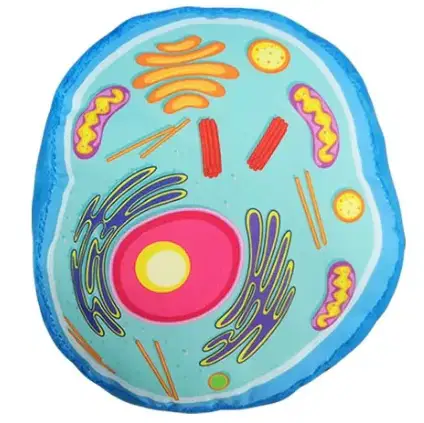
Made of a double membrane. It obtains energy for the cell.
Vacuoles
Lysosomes
Golgi apparatus
Mitochondria
Small organelles without a membrane composed of RNA and proteins. They synthesize proteins.
Centrioles
Ribosomes
Lysosomes
Cytoskeleton
Membrane system that forms a complex net of tubules and sacs with ribosomes attached to its surface.
Golgi apparatus
Endoplasmic reticulum
Rough endoplasmic reticulum
Smooth endoplasmic reticulum
Membrane system that forms a complex net of tubules and sacs with no ribosomes attached.
Rough endoplasmic reticululm
Smooth endoplasmic reticulum
Golgi apparatus
Vacuoles
Set of protein filaments that form complex networks. Related with movement and cell division.
Centrioles
Cytoskeleton
Ribosomes
Lysosomes

What is the organelle's name?
Centrioles
Ribosomes
Lysosome
Cytoskeleton

A
Microvilli
Nucleolus
Cell Membrane
Peroxisome
D
Centrioles
Nucleus
Smooth ER
Rough ER and Ribosomes
H
Cell Membrane
Lysosome
Centrioles
Mitochondria
Match the definition to the term: Engulfment of smaller particles and fluids from outside the cell into the lysosome
Phagocytosis
Autophagy
Endocytosis
Exocytosis
All living organisms consist of one or more ___________.
Cells
Tissues
Organs
Organ systems
The interior of the typical phospholipid membrane structures functions because it is __________________.
Hydrophobic
Hydrophillic
Aminophobic
Nucleophillic
________________ are organelles known for their ability to detoxify peroxides and other dangerous soluble substances in the cytoplasm.
Peroxisomes
Lysosomes
Central vacuoles
Mitochondria
This "organelle" is a series of very small hair-like structures that are attached to the external surface of the membrane and function to move the cell.
Cilia
Flagella
Transport proteins
Peroxisomes
There are channels that occur between animal cells that allow biochemical exchange between cells. These are ____________________.
Gap junctions
Tight junctions
Plasmodesmata
Anchor junctions
Which of the following are part of the plasma membrane?
Lipids, proteins, and carbohydrates
Lipids, portions and ribosomes
Nucleic acids, proteins and lipids
Nucleic acids, proteins and carbohydrates.
Which type of solution makes a cell shrink?
Hypotonic
Hypertonic
Isotonic

What type of transport is shown in the diagram?
diffusion
facilitated diffusion
endocytosis
exocytosis

What type of transport is shown in the diagram?
Ion pump
Facilitated diffusion
Endocytosis
Exocytosis

What type of transport is shown in the diagram?
Ion pump
Facilitated diffusion
Endocytosis
Exocytosis


What are the three types of passive transport?
osmosis, diffusion, active transport
active transport, facilitated diffusion, osmosis
diffusion, osmosis, facilitated diffusion

Which type of transport NEEDS NO ENERGY but TRANSPORTS WATER?
diffusion
osmosis
facilitated diffusion
Define hypertonic solution.
A hypertonic solution is a solution that has an equal concentration of solutes compared to another solution.
A hypertonic solution is a solution that has a higher concentration of solutes compared to another solution.
A hypertonic solution is a solution that has a lower concentration of solutes compared to another solution.
A hypertonic solution is a solution that has a higher volume compared to another solution.

The solution surrounding the cell in Diagram B, would be defined as:
hypertonic
hypotonic
isotonic


If the dots represent sugar what direction will the water flow?
Into the cell
Out of the cell
Both equally (equilibrium)


Which molecule is in equilibrium? How can you tell?
Molecule A; equal amounts inside and outside
Molecule B; passive movement into the cell
Molecule C; equal amounts inside and outside
Molecule C; all molecules are inside the cell


In an isotonic solution which way will the water flow
it will not flow at all
it will flow into the cell
it will flow both ways at equal rates
out of the cell

If the semipermeable membrane allows the green chemical to pass through it freely, where will the green chemical move?
right to left
left to right
up and down

The membrane does not allow the green molecules to pass through it. What will happen next?
Water will flow into side A.
Water will flow into side B.
Water will stay still.

Which organelle is found inside the nucleus and produces ribosomes
Nucleolus
Cell Membrane
Lysosome
Golgi Bodies
Plays an important role in cell division as sources of spindle fibers.
proteasomes
centrosomes
peroxisomes
The cytoplasm of a cell is made up of which of the following?
the plasma membrane and cytosol
the cytosol and the nucleus
the plasma membrane and organelles
the cytosol and organelles

Which of the labeled structures in the image is an example of a peripheral protein?
A
B
C
D
What type of endocytosis allows cells to "drink" (take up tiny droplets of extracellular fluid)?
exocytosis
pinocytosis
phagocytosis
transcytosis
What factors can increase the rate of diffusion?
Increasing steepness (magnitude) of the concentration gradient
Increase in temperature
Decrease in molecular size
All of these
A nurse is reviewing lab reports. The nurse recalls blood plasma is located in which of the following fluid compartments?
Intracellular fluid (ICF)
Extracellular fluid (ECF)
Interstitial fluid
Intravascular fluid
The sodium-potassium pump
pumps 3 sodium ions out of the cell and 2 potassium ions inside the cell
pumps 2 sodium ions out of the cell and 3 potassium ions inside the cell
pumps 2 potassium ions out of the cell and 3 sodium ions inside the cell
pumps 3 potassium ions out of the cell and 2 sodium ions inside the cel
The CORRECT sequence of stages of mitosis is
prophase, metaphase, anaphase, telophase
telophase, prophase, anaphase, metaphase
anaphase, interphase, prophase, metaphase, telophase
interphase, prophase, metaphase, anaphase, telophase
Which is checkpoint in the cell cycle is typically the most important?
G1
S
M
G2


Name the phase:
Hint: Chromosomes are moving apart.
Anaphase
Telophase
Metaphase
Prophase
If there are 20 chromosomes in the nucleus before mitosis how many will there be in each new daughter cell after cytokinesis?
20
10
40
200

Identify the highlighted stage of the cell cycle.
Prophase
Telophase
Anaphase
Metaphase
Interphase

Identify the phase of the highlighted cell.
Interphase
Metaphase
Anaphase
Telophase
Prophase

Identify the highlighted stage of the cell cycle.
Prophase
Metaphase
Anaphase
Telophase
Interphase
Select all stages of interphase?
G1
S
G2
Mitosis
Cancer cells do not pass cell cycle checkpoints, and so they undergo apoptosis and die.
True
False

