
 Worksheets
Population Dynamics: Population Characteristics
Total questions: 152
Worksheet time: 1hrs 24mins

what is the type of dispersion
clumped
uniform
random
Any factor in the environment that does not depend on the number of mem-bers in a population per unit area
biotic factors
density-independent factor
density-dependent factor
predation

what is the type of dispersion
random
clumped
uniform
density-dependent factor
disease
parasites
predation
all of the above
density-independent factor
temperature
disease
predation
parasites

what is the type of dispersion
clumped
uniform
random
Any factor in the environment that depends on the number of members in a population per unit are
density-independent factor
biotic factor
density-dependent factor
storms
Nesting birds often space themselves evenly from other nests.This pattern is called ?
uniform dispersion.
random dispersion
clumped dispersion
Which of the following will increase the size of a population?
emigration and births
immigration and birth
emigration and deaths
immigration and deaths
The number of individuals moving away from a population
emigration
immigration
The current population of earth is approximately?
7 billion
10 billion
5 billion
1 billion
Sustainable development is?
Meeting the needs of current generations without affecting the ability of future generations to meet their needs.
Consuming as much of the earth's resources as possible in the time that we have.
Not getting our needs so that future generations can get their needs.
Which of the below is NOT a main area of sustainable development?
Society
Environment
Economy
Health
The use solar panels to produce electricity is an example of what kind of sustainable development goal?
Environmental goal
Social goal
Economic goal
Political goal
Making education universal (available to everybody) is an example of what kind of sustainable development goal?
Economic goal
Social goal
Environmental goal
Strategic goal
Increasing jobs and reducing unemployment is an example of what kind of sustainable development goal?
Environmental goal
Social goal
Economic goal
Creative goal
A country with low Gross National Product (GDP); high birthrate; low life expectancy is?
Developed Country
Developing Country
Which of the countries below is considered a developed country?
Japan
Nigeria
Egypt
Columbia
Which of the following is an effect of population growth?
Water shortages
Unemployment
Poverty
All of the answers are correct
Demography is?
The study of human population
The study of human happiness
The study of human health
The study of human education

Study the graph. What kind of demographic data is it showing us?
Population Dynamics
Population Density
Population Distribution
Population Characteristics

Study the graph. It shows us that more people live in the northern hemisphere (the top half of earth) than the southern hemisphere (south half of earth). What kind of demographic data is this?
Population Dynamics
Population Density
Population Distribution
Population Characteristics

Study the graph. It shows the population of the UAE from 1971 to 2014. What kind of demographic data is this?
Population Dynamics
Population Characteristics
Population Distribution
Population Density

Study the graph. It shows the population of Egypt. The darker the color, the more people living in that area. What kind of demographic data is this?
Population Dynamics
Population Concentration
Population Characteristics
Population Distribution
The approximate population of the world today is..
7.6 Million
6.7 Billion
6.7 Million
7.6 Billion
What is the world's most populous country?
India
China
U.S.
Mexico
Which of the following is the world's fastest growing country?
India
China
U.S.
Mexico
One reason the world is growing so quickly is because...
The world has infinite resources for everyone
Birth rate is higher than death rate
There are more and more places for people to live
Death rate is higher than birth rate
Most of the world's population lives in...
North America
Europe
Africa
Asia


Number of deaths each year per 1,000 people
population growth
population density
birth rate
death rate
All of the people in a particular area
migration
demographics
population
census
Study of population patterns and change
census
demographics
migration
death rate
Number of births each year per 1,000 people
birth rate
population growth
population density
migration
Number of deaths each year per 1,000 people
population growth
population density
birth rate
death rate
All of the people in a particular area
migration
demographics
population
census
Study of population patterns and change
census
demographics
migration
death rate
Number of births each year per 1,000 people
birth rate
population growth
population density
migration
the pattern or spread of people in a given area
census
death rate
population distribution
demographics
the number of people in a defined area such as a square kilometre
population density
birth rate
death rate
population
Why do people live longer today than 200 years ago?
better health care
better restaurants
better hairstyles
better clothing
In order for population to grow
death rate must be higher than birth rate
heart rate must be lower than death rate
birth rate must equal death rate
birth rate must be higher than death rate
Why would an area be sparsely populated?
lack of natural resources
land is covered with ice
land cannot be developed
all of the above

What is population growth?
An increase in the amount of people in one area.
Population divided by the total area.
The number of people in a geographic area.
The pattern where people live.
Why is northern Russia so sparsely populated?
too hot
too cold
just right
This country covers two countires with MOST of the poulation living on the European side
Russia
Germany
United Kingdom
MOST people prefer to live in what type of climate?
cold
harsh
hot
mild

What would BEST account for the lack of population in the southwestern portion of Africa?
The Sahara Desert
The Kalahari Desert
dense tropical rainforests
repeated volcanic activity

The area indicated with the red arrow has a very low population density because it
floods annually.
is dominated by desert.
has been plagued by invasion.
is prone to outbreaks of disease.
The most populated city in Africa is _______.
Cairo
Lagos
Nairobi
Mogadishu
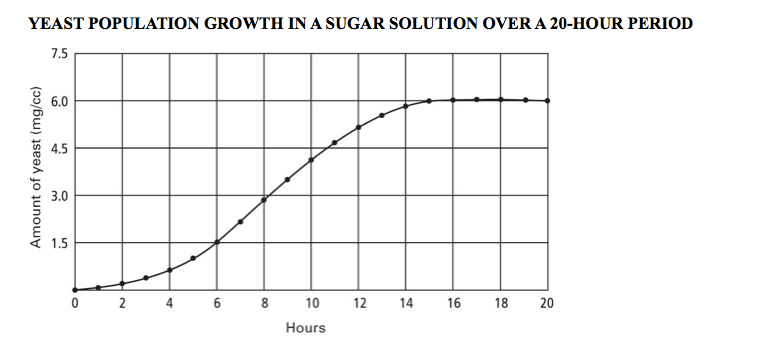
There are about _________ people alive right now.
2.6 billion
7.7 billion
10.6 billion
77.0 billion
Which is a biotic factor?
soil
air
bacteria
water
Which of the following is a density independent factor?
competition for resources
predation
disease
natural disasters

Number of deaths each year per 1,000 people
population growth
population density
birth rate
death rate
All of the people in a particular area
migration
demographics
population
census
Study of population patterns and change
census
demographics
migration
death rate
Number of births each year per 1,000 people
birth rate
population growth
population density
migration
the pattern or spread of people in a given area
census
death rate
population distribution
demographics
the number of people in a defined area such as a square mile
population density
birth rate
death rate
population
Birth Rate + Migration - Death Rate =
population growth
population density
Population divided by Area =
population density
population growth
Why do people live longer today than 200 years ago?
better health care
better restaurants
better hairstyles
better clothing
____________ is the pattern of spacing of a population within an area.
Dispersion
Population Density
Immigration
Carrying Capacity
What is emigration?
Movement of individuals away from a population
Population with zero growth rate
Movement of individuals into a population.
Population with positive growth rate
What is immigration?
Movement of individuals away from a population
Population with zero growth rate
Movement of individuals into a population.
Population with negative growth rate
A population is...
A group of one species in one area
Multiple species that live in one area
All of the living and nonliving things in
None of these
All of the living AND non-living things in an area that interact with each other are called a/an __________.
Community
Habitat
Population
Ecosystem
If the number of births in a population is the same as the number of deaths in a population, what will happen to the growth of the population?
It will increase
It will decrease
It will stay the same
It will fluctuate.
Food, water, sunlight, shelter, and space are resources that are often __________.
Limiting Factor
Wet
Messy
Found in rocks
Any thing or organism that regulates the size of a population of another organism is known as __________.
A limiting measure
Population
Limiting factor
Community
Which of the following are density dependent factors?
competition for resources
predation
disease
natural disasters
Which of the following are examples of a density independent factors?
Forrest fire
Seasonal cycles
Storms
Disease
Limiting factors can be population dependent and population independent.
True
False
The approximate population of the world today is..
7.6 Million
6.7 Billion
6.7 Million
7.6 Billion
density Dependent factor:
deseases
food
parasites
average temperature
density INdependent factor:
average temperature
air quality
tsunami
food
density INdependent factor:
forest fire
salt level in the water
pollution
diseases
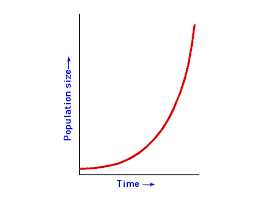


At what population was carrying capacity met?
250
1000
400
720
What factors contributed to the world's overall population growth in the last 150 years?
industrialization, health care, sanitation
deforestation, climate change, pollution
carrying capacity, death rates, ecosystem
Which country is an example of a "young" country?
Japan
India

How many people were on earth in the year 2015?
14 million
22 billion
Between 7 and 8 billion
1.5 trillion
An organism that tends to have a low life expectancy and increased birth rate is known as a
k-strategist.
r-strategist.
Organisms reach maturity in a relatively short amount of time.
r selected
K selected

The image shows an example of a:
r- Strategist
K- Strategist

The image shows an example of a:
r-Strategists
K- Strategists

Any factor in the environment that does not depend on the number of mem-bers in a population per unit area
biotic factors
density-independent factor
density-dependent factor
predation
Study of population patterns and change
census
demographics
migration
death rate
In what stage of the DTM are traditional tribes?
1
2
3
4
5
What does DTM stand for?
Demographic Transnational Modelling
Demographic Transition Model
Decreasing Thermal Medicines
Developing Transition Model
Which describes the birth and death rate of Stage 1 of the DTM?
The death rate is high but the birth rate is low
Both the death and birth rate are high
The death rate is low but the birth rate is high
Both the death and birth rate are low
Which describes the birth and death rate of Stage 2 of the DTM?
The death rate is decreasing and birth rate remains high
Both the death and birth rate are high
The death rate is low but the birth rate is high
Both the birth rate and death rate are decreasing
Which describes the birth and death rate of Stage 3 of the DTM?
The death rate is decreasing and birth rate remains high
Both the death and birth rate are high
The death rate is low but the birth rate is high
Both the birth rate and death rate are decreasing
Which describes the birth and death rate of Stage 4 of the DTM?
The death rate is decreasing and birth rate remains high
Both the death and birth rate are high
Both the death and birth rate are low and fluctuating
Both the birth rate and death rate are decreasing
In which stage of the DTM is the population growth the most rapid?
1
2
3
4
5
Which of these does the DTM not include?
Birth rate
Population
Migration
Death rate
In which stage would it be typical for vaccines and healthcare to be adequate?
1
2
3
4
5

In which stage of the DTM is this population pyramid?
1
2
3
4
5

In which stage of the DTM is this population pyramid?
1
2
3
4
5

In which stage of the DTM is this population pyramid?
1
2
3
4
5

In which stage of the DTM is this population pyramid?
1
2
3
4
5
Parents start to think more about family planning.
Stage 1
Stage 2
Stage 3
Stage 4
Stage 5
Children are warmer in bed each night because they have more brothers and sisters.
Stage 1
Stage 2
Stage 3
Stage 4
Stage 5
There are more Golden (50 years) Anniversaries being celebrated
Stage 1
Stage 2
Stage 3
Stage 4
Stage 5
A mother sobs over the grave of her last six children who died in a typhoid epidemic.
Stage 1
Stage 2
Stage 3
Stage 4
Stage 5
New home construction is rapidly increasing.
Stage 1
Stage 2
Stage 3
Stage 4
Stage 5
Fewer children share a bedroom.
Stage 1
Stage 2
Stage 3
Stage 4
Stage 5
Grandparents are very rare.
Stage 1
Stage 2
Stage 3
Stage 4
Stage 5
There are more grandparents than grandchildren.
Stage 1
Stage 2
Stage 3
Stage 4
Stage 5
High birthrate and high death rate means the total population is low
stage 1
stage 2
stage 3
stage 4
stage 5
Healthcare is more high tech and advanced in this stage and people are educated better about healthier diets and lifestyles.
stage 1
stage 2
stage 3
stage 4
stage 5
Why would healthy lifestyles and advanced medical care reduce the deathrate?
lower life expectancy
birthrate increases
higher life expectancy
gni falls
Give two reasons why the death rate is high in stage 1
high GNI
Poor access to education
Poor access and quality of healthcare and sanitation
Good access and quality of sanitation
Name the development indicator which is not found in the DTM.
Life expectancy
death rate
birth rate
How many stages are there is the demographic transition model?
3
4
5
6

Select the 2 that apply for Stage 1 of the DTM
Birth rate is low
Death rate is high
Population is low
Death rate is low
Select the 2 that apply for Stage 2 of the DTM
Death rate is falling
Birth rate is high
Population is decreasing
Death rate is high
Select the 2 that apply for Stage 3 of the DTM
Death rate is low
Birth rate is high
Population is increasing quickly
Population is increasing slowly
Select the 2 that apply for Stage 4 of the DTM
Birth rate is low
Birth rate is high
Population is increasing quickly
Population is high and stable
Select the 2 that apply for Stage 5 of the DTM
Birth rate is decreasing
Birth rate is high
Death rate is increasing
Population is declining

Identify the stage.
1st - High Stationary
2nd - Early Expanding
3rd - Late Expanding
4th - Low Stationary
5th - Declining

Identify the stage.
1st - High Stationary
2nd - Early Expanding
3rd - Late Expanding
4th - Low Stationary
5th - Declining

Identify the stage.
1st - High Stationary
2nd - Early Expanding
3rd - Late Expanding
4th - Low Stationary
5th - Declining

Identify the stage.
1st - High Stationary
2nd - Early Expanding
3rd - Late Expanding
4th - Low Stationary
5th - Declining

Identify the stage.
1st - High Stationary
2nd - Early Expanding
3rd - Late Expanding
4th - Low Stationary
5th - Declining

